
Solar panels: 84 million spent in Sardinia for over 5,000 families
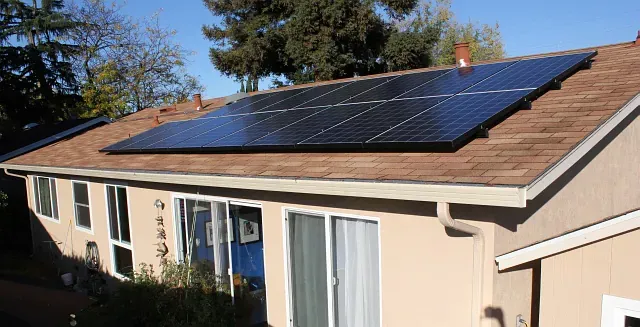
Sardinia lags behind in renewable energy utility-scale installations, which are essential for advancing decarbonization, but it has made significant progress in electrifying household consumption thanks to a program that has so far allocated 84.9 million in incentives to 5,351 supported families. Over 200 companies are involved, and 87% of the participating firms are from Sardinia. This results in 16 MW of new domestic photovoltaic capacity and approximately 26.8 MWh of storage capacity. It would have been more effective to invest in larger, higher-performance installations, but self-production is an equally important issue. Here, the goal is to stimulate electrification of consumption on the island, starting with electric mobility, which would become very cost-effective for families.
All eligible applications were funded, including the storage system
Sardinia region has completed the evaluation of the list of incentives intended for Sardinian families, covering not only the installation of domestic photovoltaic systems but also energy storage systems. With the latest decision, another 4,061 applications were funded, totaling 64.9 million euros: 2,569 applications from 2026 for 39.99 million euros, and 1,492 from 2027 for 24.91 million euros.
The process launched in 2025 is now complete. Of the 6,009 applications submitted, the first 1,290 were funded with 20 million euros in 2025; now the remaining applications have been covered. As the region emphasizes: “No eligible application remains without financial support.”
A grant program for families with an ISEE below 15,000 euros to combat energy poverty
Public Works Minister Antonio Piu: “We started in 2025 with an experimental project, and given the extraordinary level of participation, we decided to provide support to all families meeting the requirements. Today we can say that all eligible applications have been funded. The ecological transition thus becomes a concrete tool to combat energy poverty and reduce families’ expenses structurally.” Given the limitations in production capacity, social indicators are what matter most.
Sardinia: Thousands of solar panels set alight. And there have already been three attacks
"It’s not just about financing the installation of a system — continues Piu — but also about enabling families to reduce their energy costs in a sustainable way by producing and storing the energy they need for their consumption. The region fully covers the eligible expenses and, at the same time, strengthens a network of qualified companies spread across the entire regional territory."
In total, from the 2025 pilot project to the 2026-2027 period, 5,351 families have received funding, amounting to approximately 84.9 million in incentives. The program has also had an impact on the local production chain: more than 200 companies were involved during the pilot phase, and 87% of these companies were based in Sardinia.
New photovoltaic capacity of 16MW and 26.8 MWh of storage
The 5,351 financed projects represent at least 16 MW of new domestic photovoltaic capacity and approximately 26.8 MWh of storage capacity, according to the region. “Using the same estimation parameters already applied by the region for the residential sector—1,300 equivalent hours per year and an average self-consumption rate of 70%—the potential output is around 20.9 GWh of renewable energy per year, of which about 14.6 GWh could potentially be consumed by households, thereby reducing grid draws and electricity costs.”
Schlein to Meloni: 14 billion for climate and energy in 5 proposals
At this point, the region could launch an awareness campaign to encourage the electrification of various activities, starting with electric mobility. Not only solar panels but also the financed storage system ensure significant savings compared to fossil fuel alternatives for e-bikes, scooters, cars, and commercial vehicles.
That’s not all—another 28 million planned for 2028
The program does not end with the ranking for 2028; 27.9 million are planned, in addition to any savings from previous years, which will be used through a new call for proposals. “The new phase will expand the eligible population by raising the ISEE threshold and introduce greater benefits and incentives for large families and households with people with disabilities. It will also allow funding for more powerful systems when it is necessary to power high-energy-consuming life-saving medical equipment.”
Well done, good job. But be careful—the transition shouldn’t happen on rooftops. It’s a commendable, necessary effort that deserves funding, given that the power of a single wind turbine can exceed that of all funded solar panels combined. However, Sardinia’s regional policy on this issue isn’t entirely clear; focus is placed on gas pipelines, and celebrations often occur for rejected projects rather than approved ones. In recent days, Emilia-Romagna and Puglia have criticized Prime Minister Meloni, along with Sicilian business owners, for the obstacles imposed on offshore wind projects. Sardinia isn’t vocal on these matters; in fact, we recall President Alessandra Todde going to Giorgia Meloni to request the suspension of thirty renewable energy projects. But let’s repeat: decarbonization can start on rooftops, but it shouldn’t end there in homes and businesses.
READ ALSO: Those Excluded from Charging Stations Bonus Speak Out in Anger; Watch the VIDEO
Previous Article
Charging Stations in Beautiful Locations: Fossanova