
Oil-rich country creates electric vehicle brand
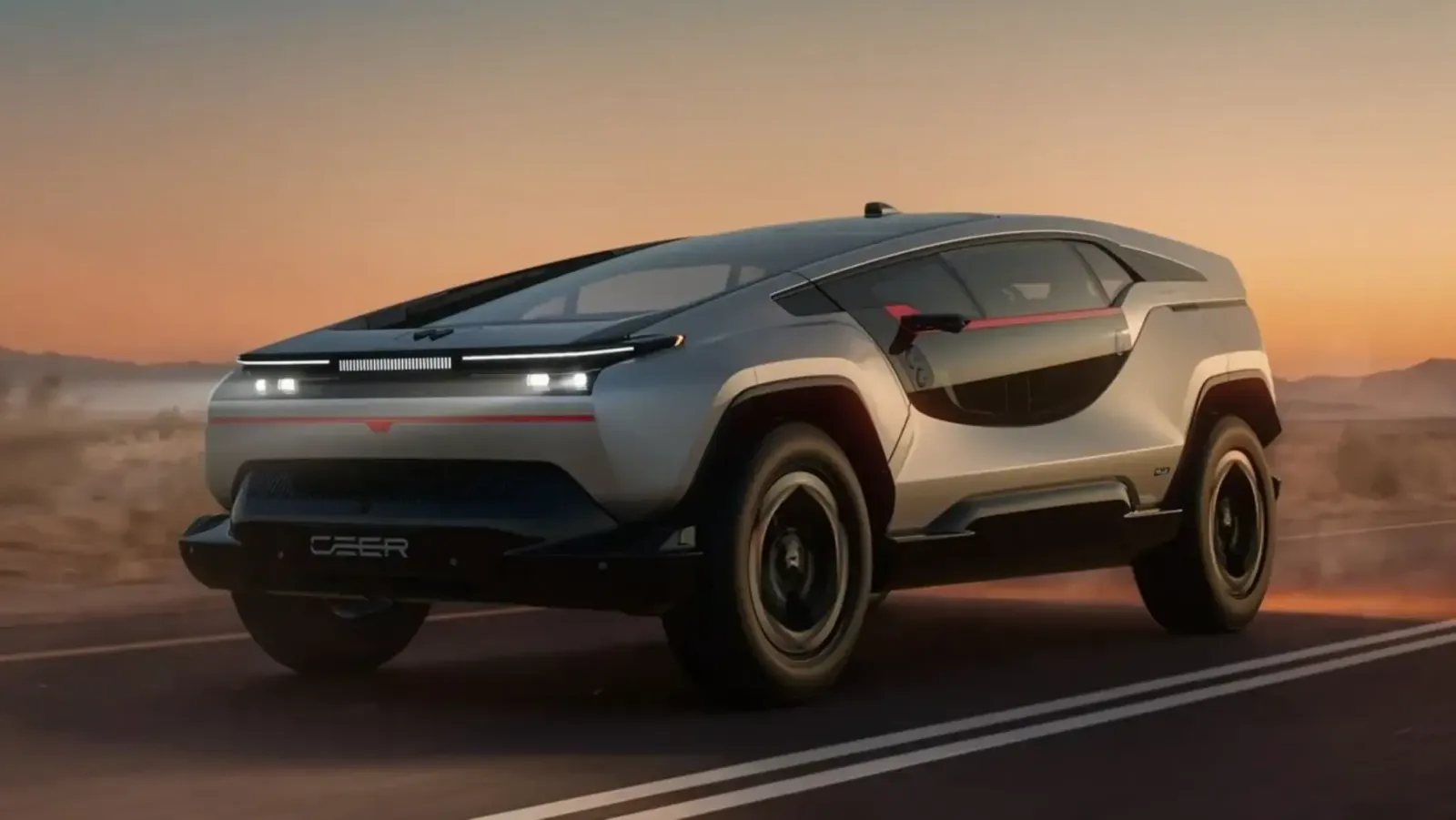
Saudi Arabia is known for its oil, but its first automobile brand, Ceer, debuts with a full commitment to electric vehicles.
This reflects the times. Saudi Arabia has built much of its wealth on oil, but when launching its first automobile brand, Ceer decided to go all in on electrification.
Founded in 2022, Ceer is part of Vision 2030, Saudi Arabia’s strategy to diversify its economy and reduce dependence on oil. The goal is not just to manufacture cars but to create a new industry in the country, with local suppliers, production capabilities, and technical expertise.
The young brand was created through a partnership between Saudi Arabia’s sovereign wealth fund PIF and Foxconn, a Taiwanese industrial giant known for producing electronic products for some of the world’s largest technology companies.
Ceer is currently building a factory in King Abdullah Economic City on the western coast of Saudi Arabia. The new industrial hub is also set to host a Lucid factory and several automotive suppliers.
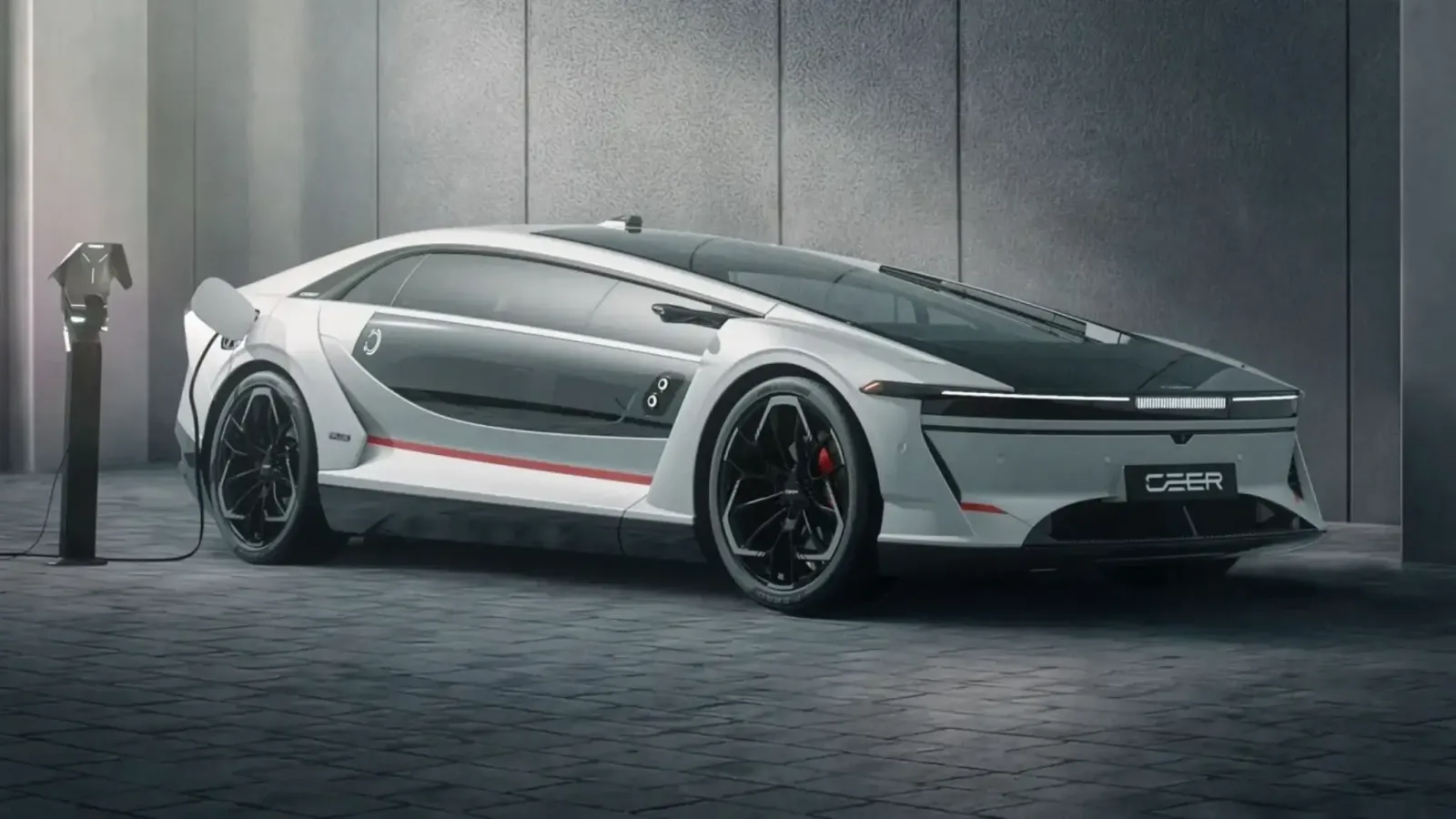
Four years after its establishment, Ceer debuts with two models that appear to have been straight out of a science fiction movie. These are just the first chapter of a much more ambitious project that aims to launch seven models by 2030.
Two electric vehicles that look like prototypes
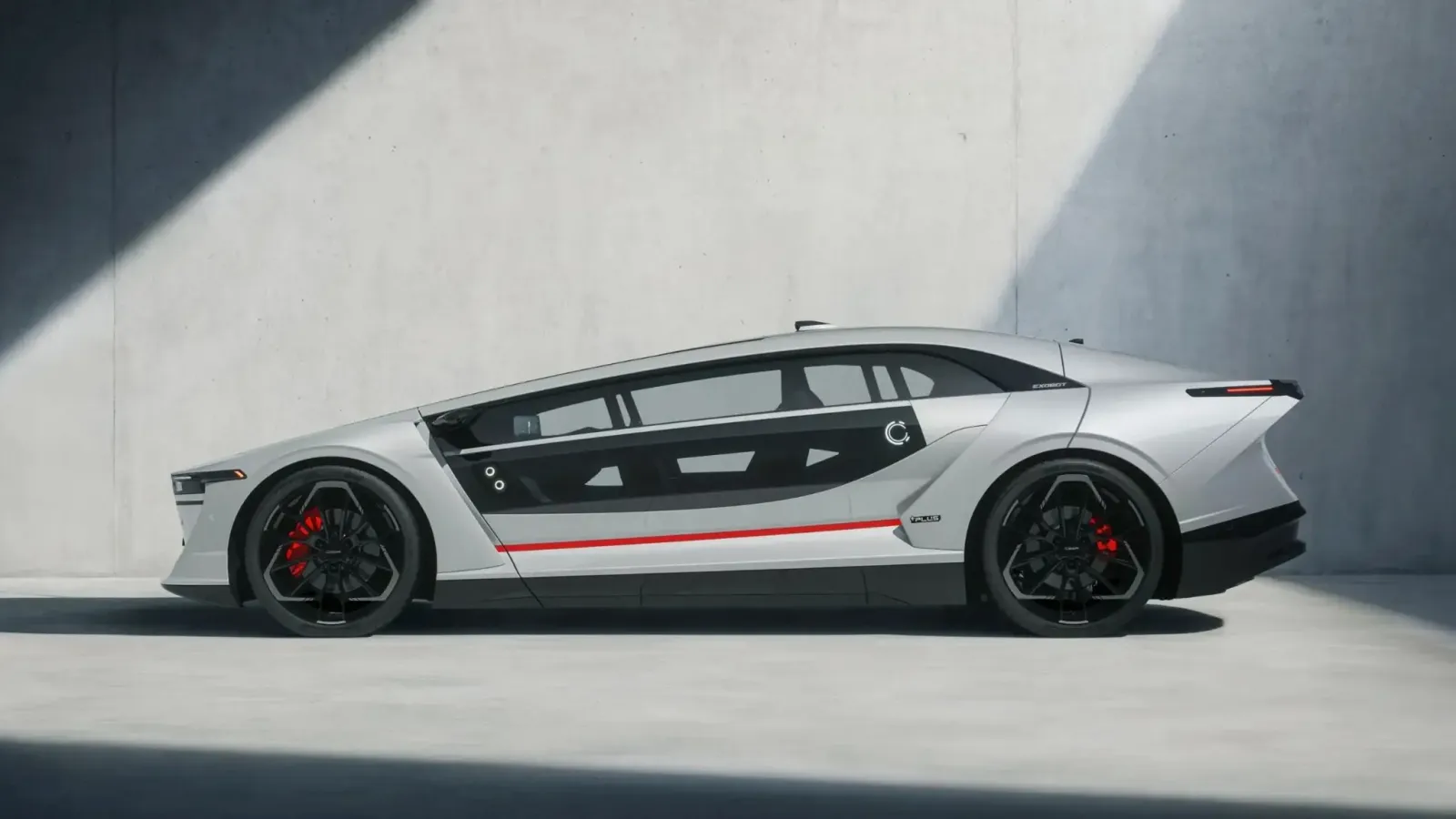
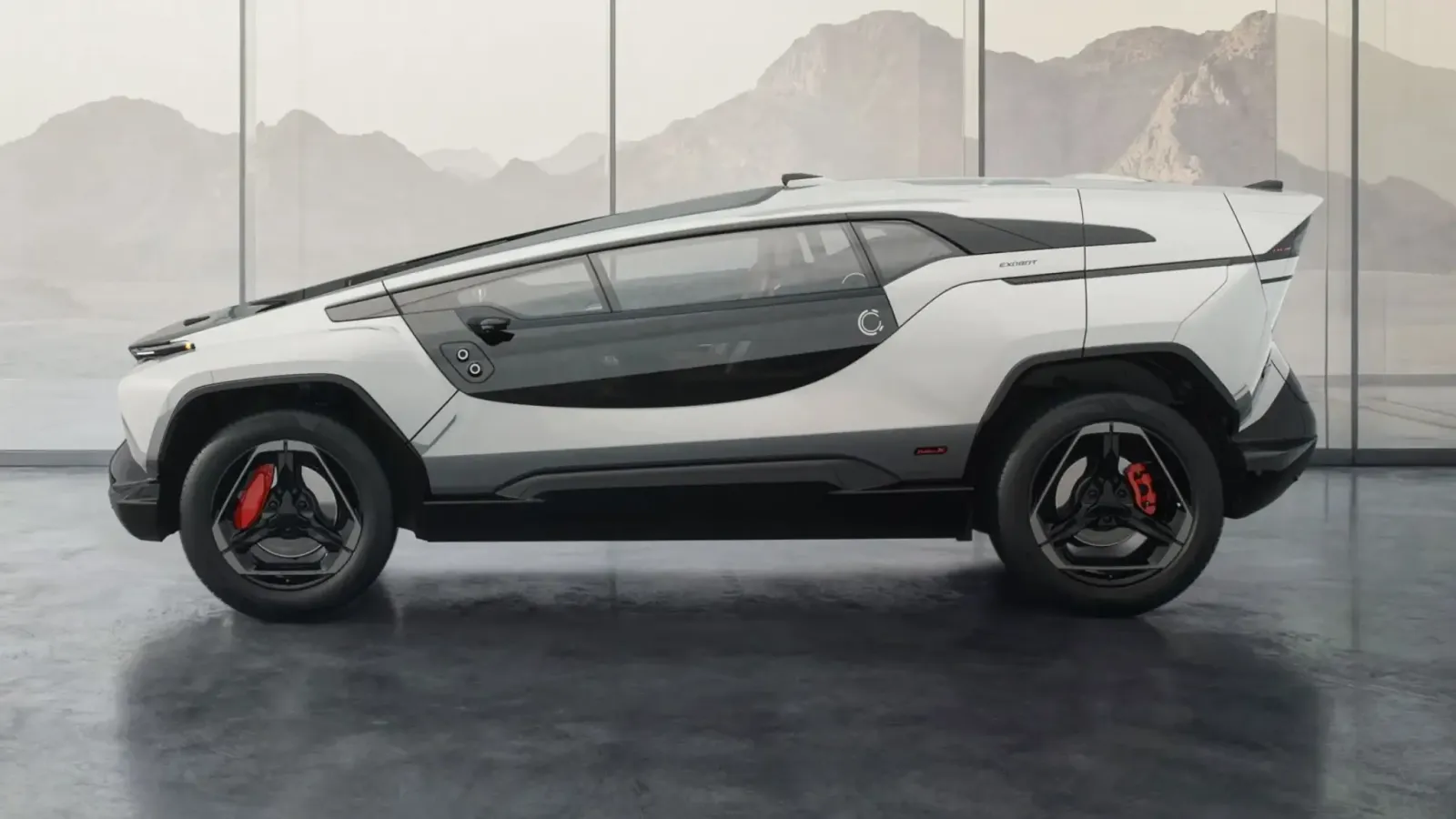
The first Ceer models are called Exobot and come in sedan and SUV forms. The sedan measures 5.26 meters in length, 2.10 meters in width, and just 1.43 meters in height. The SUV is slightly shorter at 5.02 meters, retains the same 2.10-meter width, but has a height of 1.69 meters.
Both models feature vertically opening doors inspired by the wings of the Shahin falcon, one of the country’s national symbols, which the brand has named “Shahin Wing Doors.” These are combined with large glass surfaces that eliminate the need for traditional center pillars.
This radical design wasn’t accidental. In an interview with Autocar, James DeLuca, Ceer’s executive director, revealed that the board was clear about its goals: “Don’t show us what the rest of the world is doing. We want something new, unique, and different.”
2 images
Along with the design, there are impressive specifications. In its most powerful version, the three electric motors generate 1126 hp (828 kW) and 1500 Nm of torque. The sedan accelerates from 0 to 100 km/h in 2.1 seconds and reaches 250 km/h, while the SUV takes 2.4 seconds to reach 210 km/h.
Both models feature a 112 kWh battery, enabling ranges of up to 670 km for the sedan and 560 km for the SUV. The 800 V architecture allows charging from 10% to 80% in less than 30 minutes.
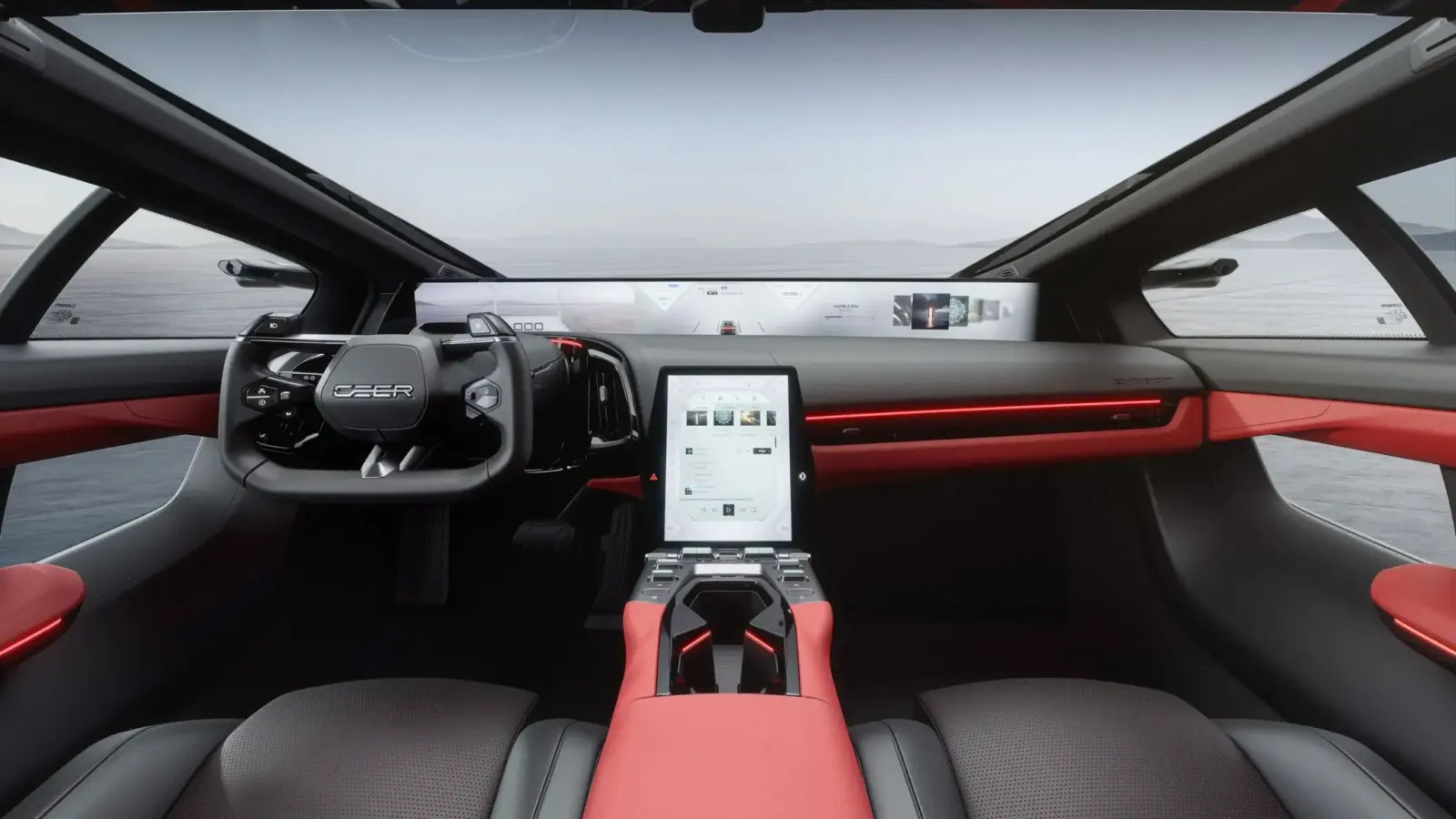
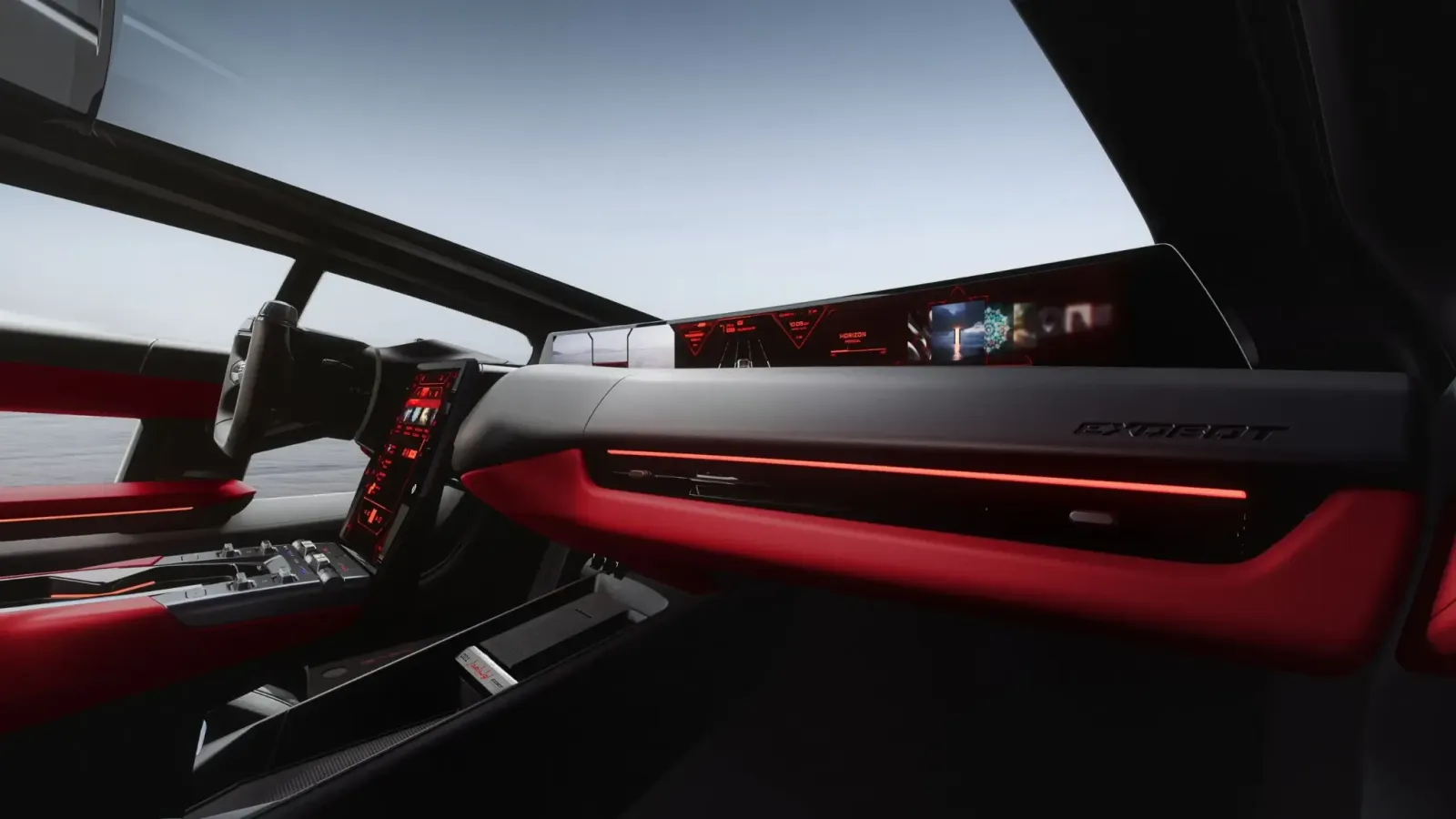
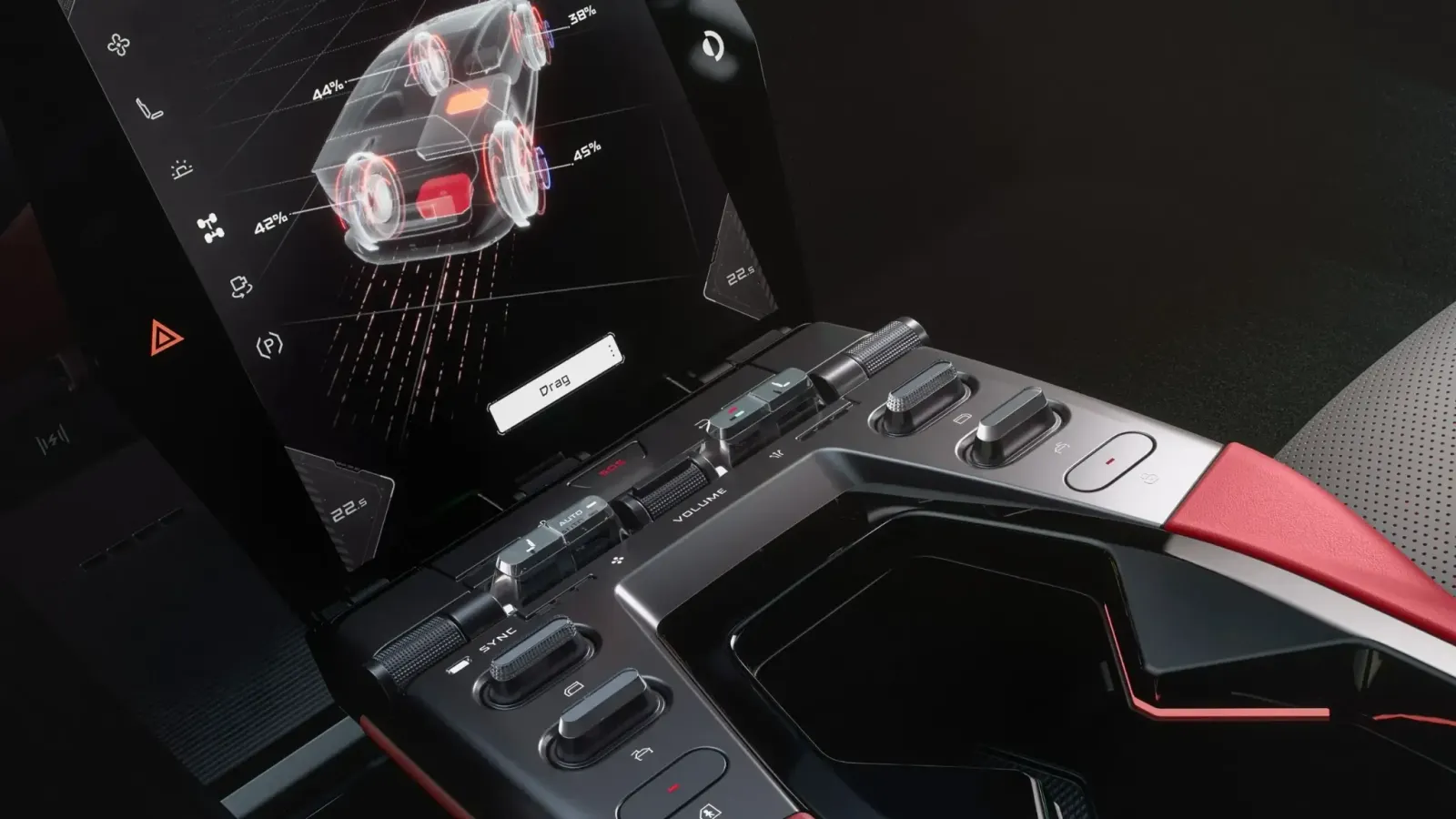
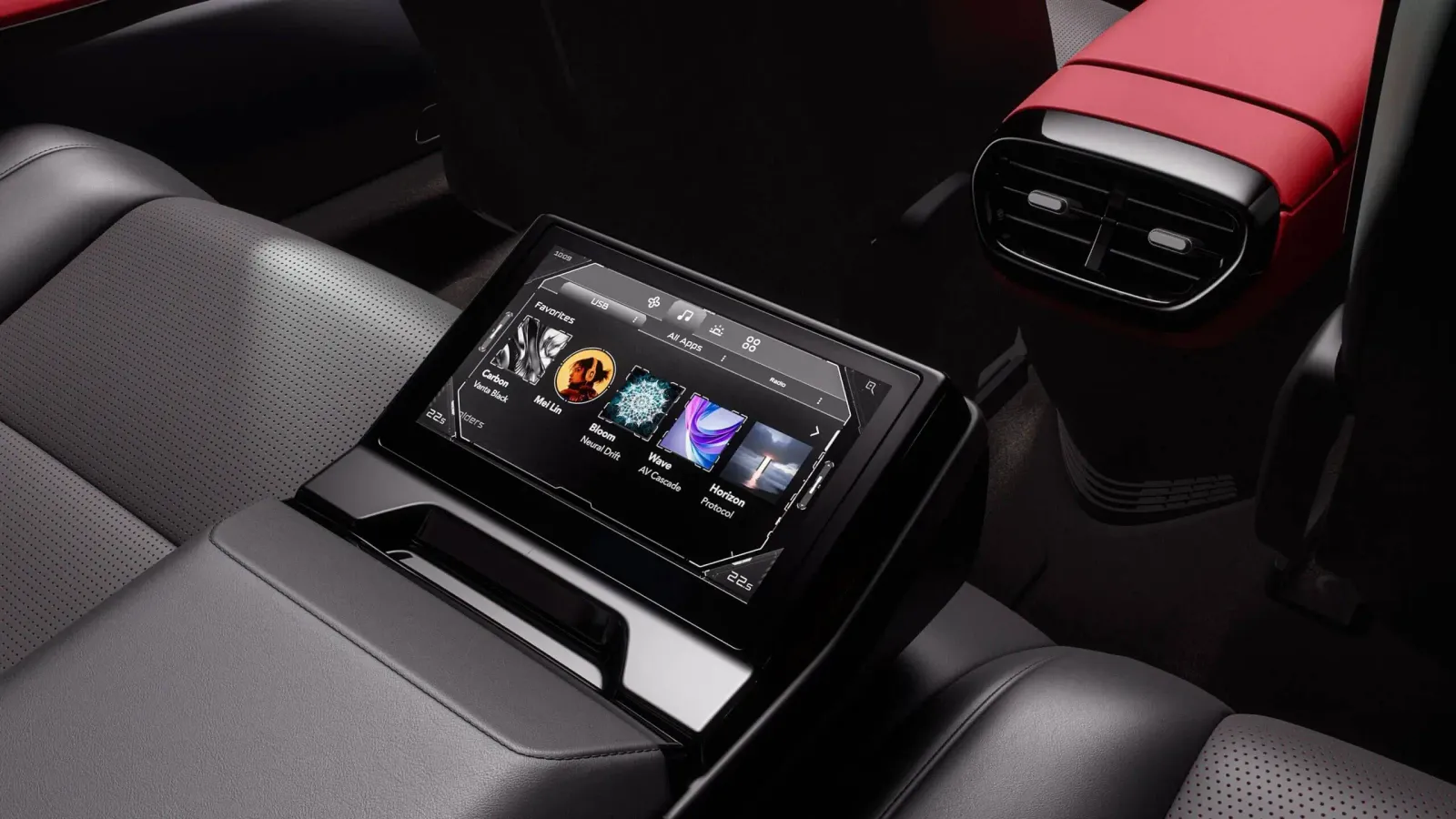
4 images
And there is also a solution designed to address one of the biggest challenges in the market where they will be sold: heat. The glass features a triple silver coating, and the climate control system can lower the cabin temperature from 65 ºC to 32 ºC in just 10 minutes.
The development involved Foxconn and BMW’s technology, while Rimac and Hyundai Transys are involved in the propulsion system. Despite their prototype appearance, these are actual production cars. Manufacturing is set to begin in January 2027, with first deliveries expected in March.
Seven models by 2030
The Exobot is only the first step. Ceer plans to launch five more models by 2030, including a sedan, an SUV, and a D-segment SUV coupe, followed by more compact models.
Although the priority is the Saudi market and other Gulf countries, the next models are being developed with the capability to meet the homologation requirements of other markets.
This does not mean Ceer is already preparing to enter Europe. DeLuca acknowledges this possibility but assures that the company does not want to grow too quickly.
I prefer to be that Italian restaurant on the corner that does everything well and only then starts expanding slowly,” he explained.
The technology itself will not necessarily be limited to electric vehicles. According to DeLuca, the platform was designed to accommodate different types of powertrains, including plug-in hybrids or range extenders, if that is what the market demands.
The goal is to create an industry
Ceer’s ambition thus goes far beyond putting two extravagant electric vehicles on Saudi roads. The company currently has around 2,300 employees, 46% of whom are Saudis, and aims to achieve 45% local content in its vehicles by 2034.
The project is estimated to create around 30,000 direct and indirect jobs, and more importantly, to establish a supply chain capable of supporting a true Saudi automotive industry: “We’re not just starting an automobile company; we’re launching an entire industry,” summarizes DeLuca.