
OTOMOTO: Poles search for cars online, but want to buy the traditional way. Only 3% make decisions online
In short:
How do we buy a car?
84% of Poles want to see the car in person before purchasing
Only 3% would be willing to go through the entire process entirely online, according to a OTOMOTO report
AI is playing an increasingly important role in car searches
Dealerships won’t disappear, at least for now
OTOMOTO: Poles prefer to see cars in person
The way cars are bought has changed significantly in recent years, but not quite as expected. According to the latest OTOMOTO report prepared in collaboration with K+Research, only 3% of respondents would like to complete the entire car purchase process online. Meanwhile, as many as 84% want to see the car in person before making a decision.
This does not mean, however, that the internet plays a secondary role. The opposite is true. Today, most purchasing journeys begin online. 43% of respondents start with an internet search engine, while 35% go directly to classified sites and marketplaces.
As a result, the dealership is increasingly becoming less of a place where customers first learn about a car. They often arrive there already with a list of models, compared prices, and specific questions.
“Thanks to technology, customers today enter a car dealership with specific questions, but what they found online must be verified in person: in the actual car, its history, and through what they hear from the seller,” said Agnieszka Czajka, Vice President Motors Professionals Europe at OLX Group / OTOMOTO.
AI is already helping with car selection
However, respondents expect digital sales to primarily save them time. 38% would like to see real-time availability of cars, 35% want the ability to easily compare offers from multiple dealers, and 28% desire the option to reserve a car online. The same 28% expect remote valuation for cars remaining on loan.
It’s not necessarily about replacing the dealership with the internet. Customers rather want to handle remotely everything they don’t need to do in person, arriving at the dealership only when it’s truly necessary.
Car inspections remain crucial
This is most evident in the case of used cars and customers with lower budgets.
In the group with a budget of up to 50,000 zł, 58% are most concerned about costly repairs. For 54%, the vehicle’s technical condition is crucial, for 40% it’s the price, and for 33% it’s the vehicle’s documented history.
Although price comparisons are mainly done online, 87% of customers in this group want to inspect the car in person, and 88% intend to pick it up personally.
This fairly explains why full online car sales are developing more slowly than, for example, electronics or home appliance sales. Cars are expensive, technically complex, and in the used car market, each vehicle has its own history.
Photos, VIN reports, and descriptions help eliminate uninteresting offers, but for most customers they still don’t replace seeing the car in person, test driving it, and talking to the seller.
Young people also don’t want to handle everything over the phone
The Gen Z example is also interesting. One might expect the youngest drivers to prefer buying a car entirely through an app. However, the data shows otherwise.
Gen Z respondents made up about one quarter of those surveyed, but 76% want to see the car in person before purchasing. 77% intend to pick it up at a dealership, while 69% prefer signing the contract traditionally on site.
Technology is important to young people, but it doesn’t mean they compromise on transaction security. As many as 39% are most concerned about hidden technical defects, so the car’s condition is more important to them than purely digital convenience in purchasing.
With a large budget, time becomes more important
What about those with a budget of over 200,000 zł? In this group, as high as 71% are looking for the latest technological innovations, while 62% are open to brands they haven’t tried before. At the same time, too many options are starting to be a problem—22% of respondents admit that the abundance of choices makes it difficult for them to make a decision.
Wealthier customers are also more willing to pay for convenience. As many as 64% say they would accept a higher price in exchange for a simpler and faster purchasing process, while 40% want to use a consultant’s help from the beginning of their search.
Interestingly, traditional car ownership still performs very well in this group. 84% recently bought a brand-new car, and 71% plan to visit a dealer when making their next purchase.
Poles are becoming less afraid of Chinese cars
The report also shows a significant shift in attitudes toward Chinese manufacturers. Only 5% of those surveyed say they would definitely not buy a car from a Chinese brand. This doesn’t necessarily mean the remaining 95% would actually purchase such a car. It does, however, illustrate how quickly the barrier associated with a brand’s origin has declined.
The biggest advantage cited for Chinese cars is price—mentioned by 42% of respondents. Long warranties come next at 32%, followed by safety confirmed through independent tests at 26%.
Purchasers also recognize the broader impact of Chinese brands on the entire market. 72% expect increased competition, 71% expect easier access to new cars, and 69% feel pressure on prices and higher standard equipment.
However, there are also concerns. 42% express uncertainty about quality and durability, while 35% worry about service efficiency and the availability of spare parts.
This shows that Chinese brands are no longer seen merely as exotic curiosities. They increasingly appear on lists of cars actually considered by consumers, but now they must convince buyers not only with price but also with post-purchase service quality.
In five years, the dealership won’t disappear, but it will operate differently
The respondents were also asked about what buying a car might look like in five years. 47% expect the widespread availability of trial driving services at specified locations. 41% believe systems will automatically generate customized offers for customers, while 39% anticipate that almost all paperwork will be handled online.
29% also expect 24/7 access to AI advisors and car displays using VR and AR technologies.
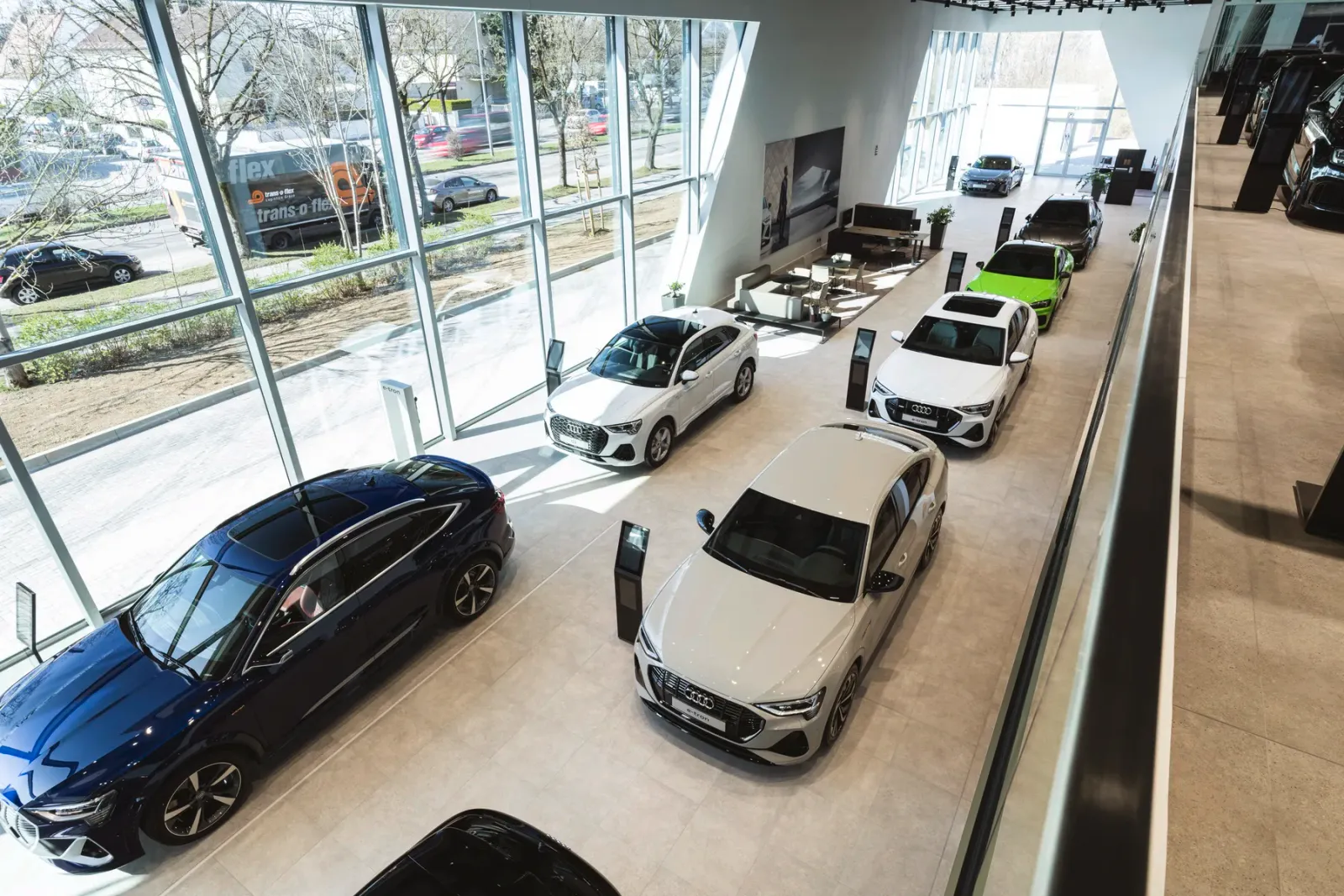
The most likely scenario therefore doesn’t resemble either a traditional dealership from 20 years ago or an online car store.
The customer first finds a car online, compares several offers, may ask AI for help in making a choice, checks availability, and books a test drive. Only later does the customer see the specific vehicle, talk to the seller, and make a decision. The internet has thus taken over search, but not yet the car itself.
The report “Customers of Tomorrow: Who Are the Buyers Shifting the Dealer Industry?” was prepared by OTOMOTO in collaboration with K+Research. The survey was conducted using CAWI methods between June 22 and July 17, 2026, among a sample of 1,562 people who purchased a car within the previous 24 months or intend to do so within the next 12 months. The survey was expanded to include 300 people who purchase or are considering Chinese-brand cars, as well as a qualitative component.
Piotr Sobczyk