
Here is Moravy’s major debut: Tesla Impact Report ’25? It covers the battery degradation of Tesla Model Y/3 and the energy consumption of Robotaxi.
In a recent interview that “is worth watching,” Lars Moravy, Tesla’s chief engineer after Musk, announced an important launch on July 7. It appears to be the release of the Tesla Impact Report 2025, a report on the company’s impact on the environment. The document contains plenty of data that Tesla has never shared before, and it can also be inferred from the details that Giga Texas is becoming Tesla’s key factory worldwide, playing a leading role in terms of new products.
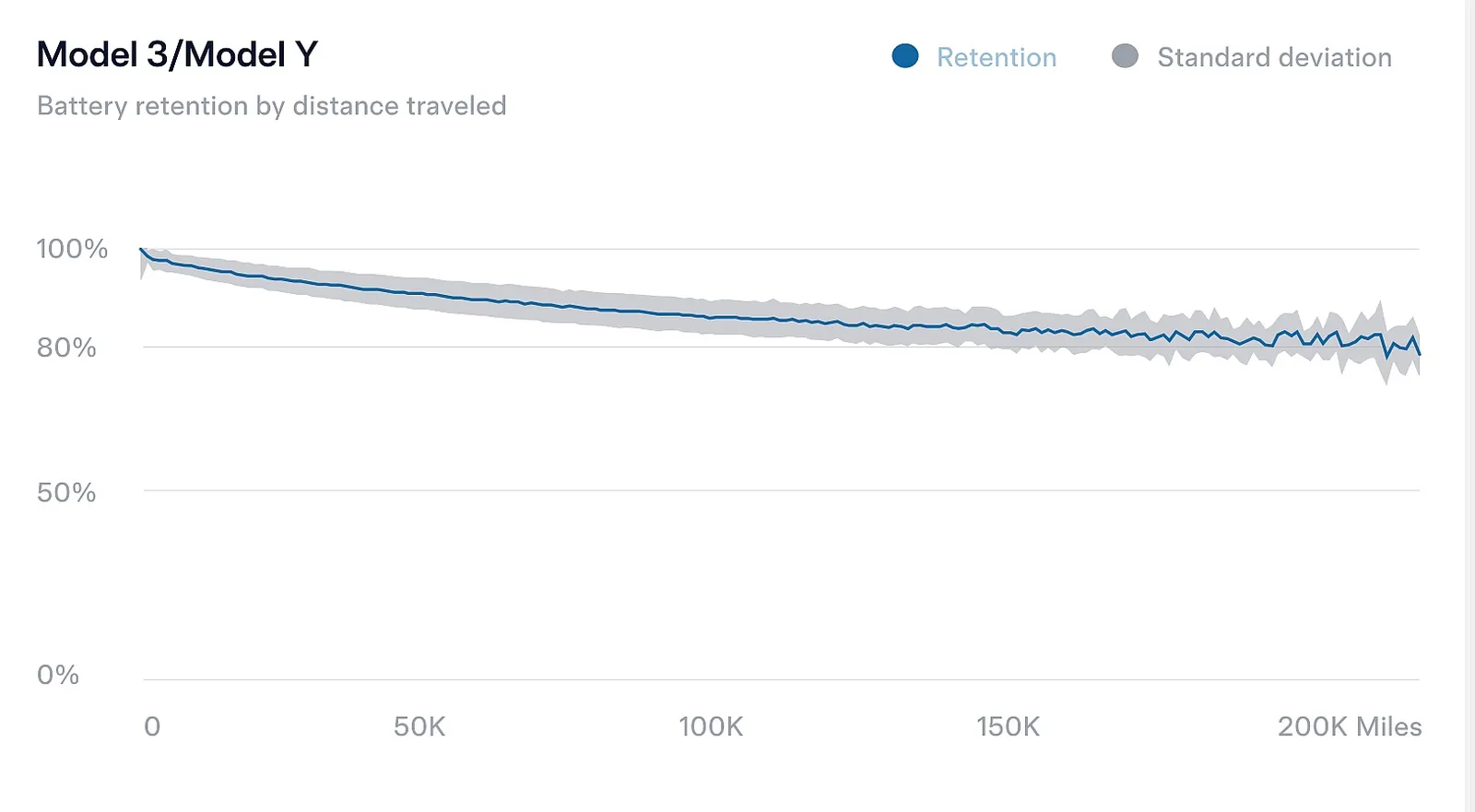
From the perspective of the widest audience, perhaps the most important message is the reported battery degradation in Tesla Model Y and 3 vehicles. The company has already shared such statistics for Model S and X, and now we have smaller cars as well. The manufacturer estimates that vehicles used in the United States reach the end of their useful life after 320,000 kilometers, while in Europe it is around 240,000 kilometers (which is 96,000 km according to Otomoto ). After those 320,000 kilometers, the battery capacity drops by an average of 20 percent.
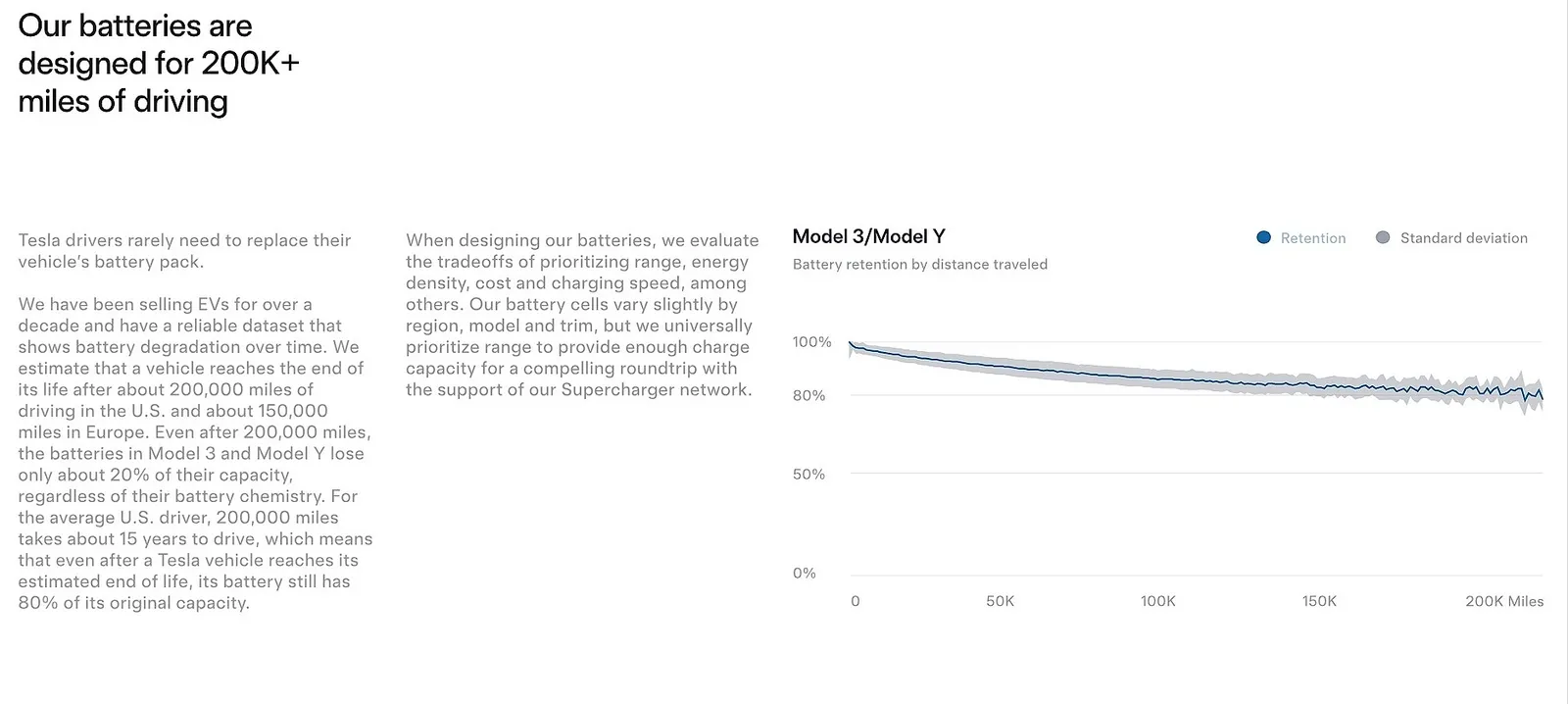
The graph reveals two interesting phenomena. The first is a certain number of failures shortly after purchasing the car. The second is the instability in the graph at mileage levels exceeding 240,000 kilometers, caused by a smaller number of samples and likely by large variations in degradation levels. Perhaps the least pleasant news for buyers is that they will notice a 10 percent drop in capacity around 800,000–1,000,000 kilometers of mileage. The additional percentage points to reach a full 80 percent of the original capacity will diminish more slowly.
Cybercaba Energy Consumption
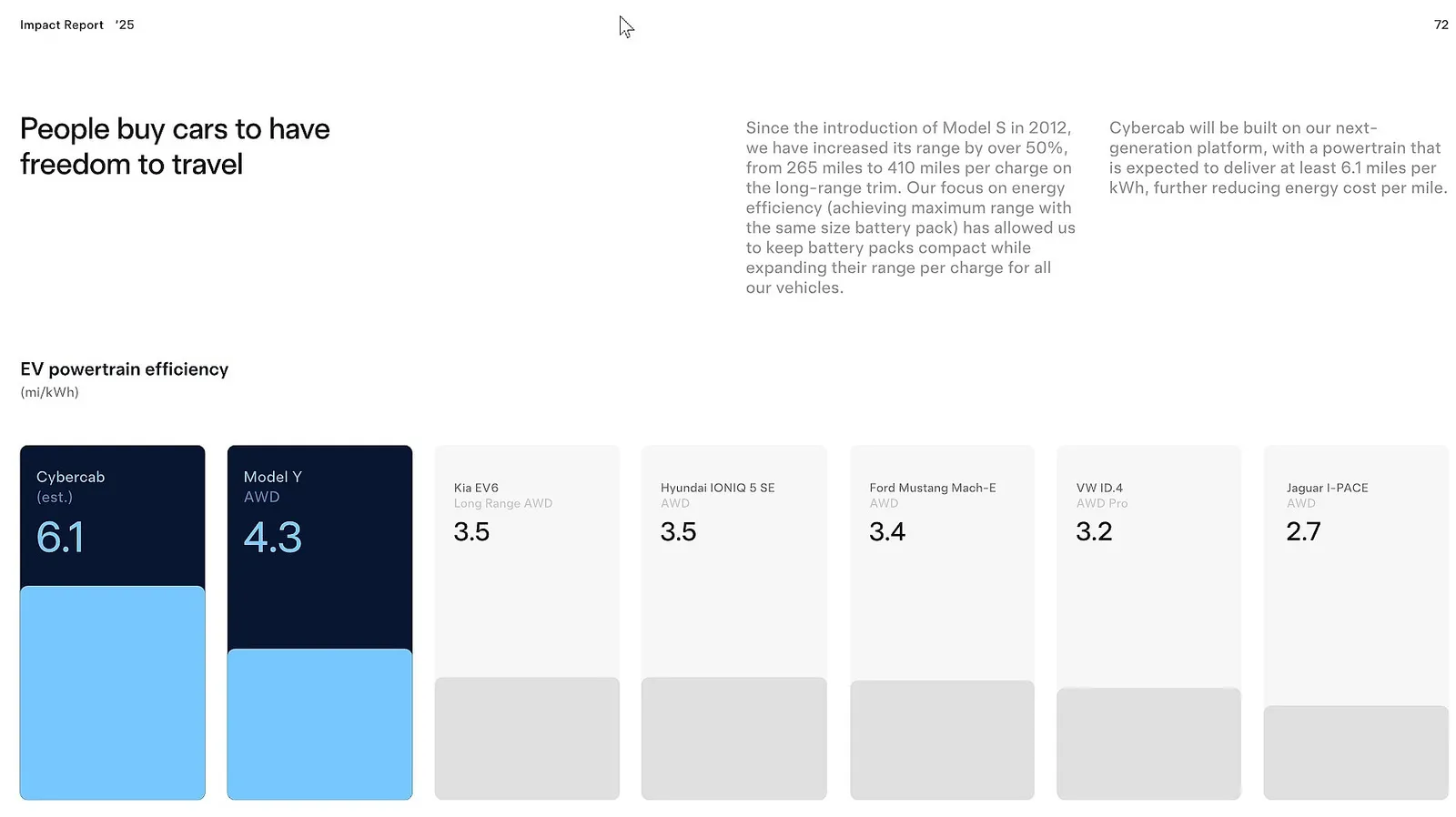
The document provides an estimated energy consumption figure for the Cybercab of 10.2 kWh/100 km. This is likely based on the U.S. EPA testing procedure, which yields more realistic values compared to those measured using WLTP. For comparison, the Tesla Model Y AWD requires 14.5 kWh/100 km, while the Kia EV6 Long Range AWD needs 17.8 kWh/100 km. In other words, the Cybercab with a 42.5 kWh battery will cover the same distance as a Kia EV6 LR AWD with a 77 (~74) kWh battery:
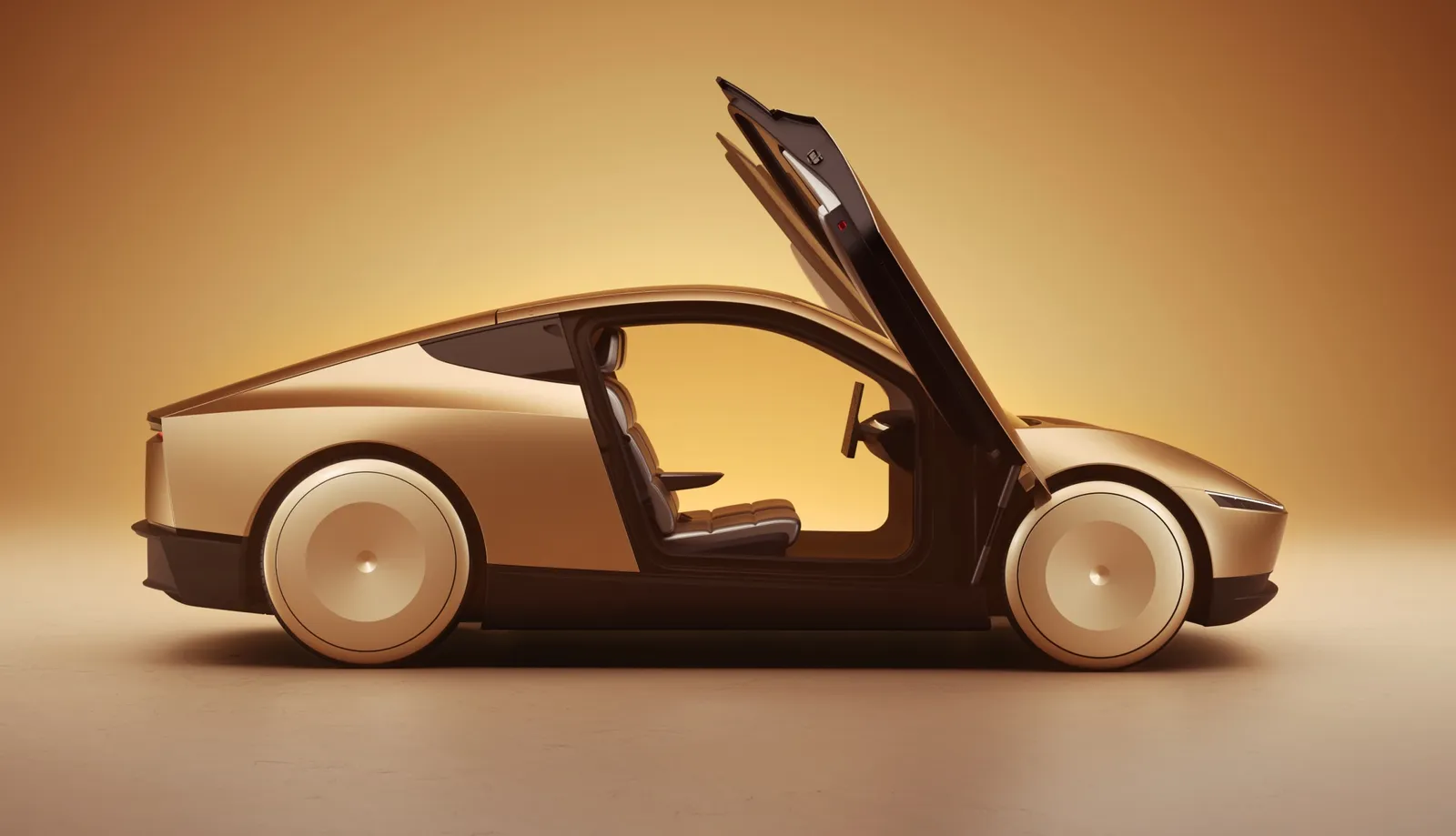
Additionally, the technical specifications for the Cybercaba /Robotaxi/ are already known: it features a battery with a capacity of 48 kWh, meaning the passenger (not the driver) has access to around 45 kWh. The vehicle also has an engine with a power output of 163 kW/223 HP and weighs 1.41 tons (source). It is powered by the front wheels, with a nominal voltage of 326 V. According to the EPA, the Robotaxi’s combined range is 672.9 kilometers, but this figure in official documents is further multiplied by certain factors, so the actual value will be closer to 484–498 kilometers per EPA rating, or approximately 567–583 units per WLTP standard [preliminary calculations by Elektrowozu’s editorial team; based on our observations, the factors are usually around 0.72–0.74].
Article Rating
Readers’ Ratings
[Total: 5 votes Average: 5]
Don’t miss new content — CLICK and FOLLOW Elektrowoz.pl on Google News. You might also be interested in the following ads: