
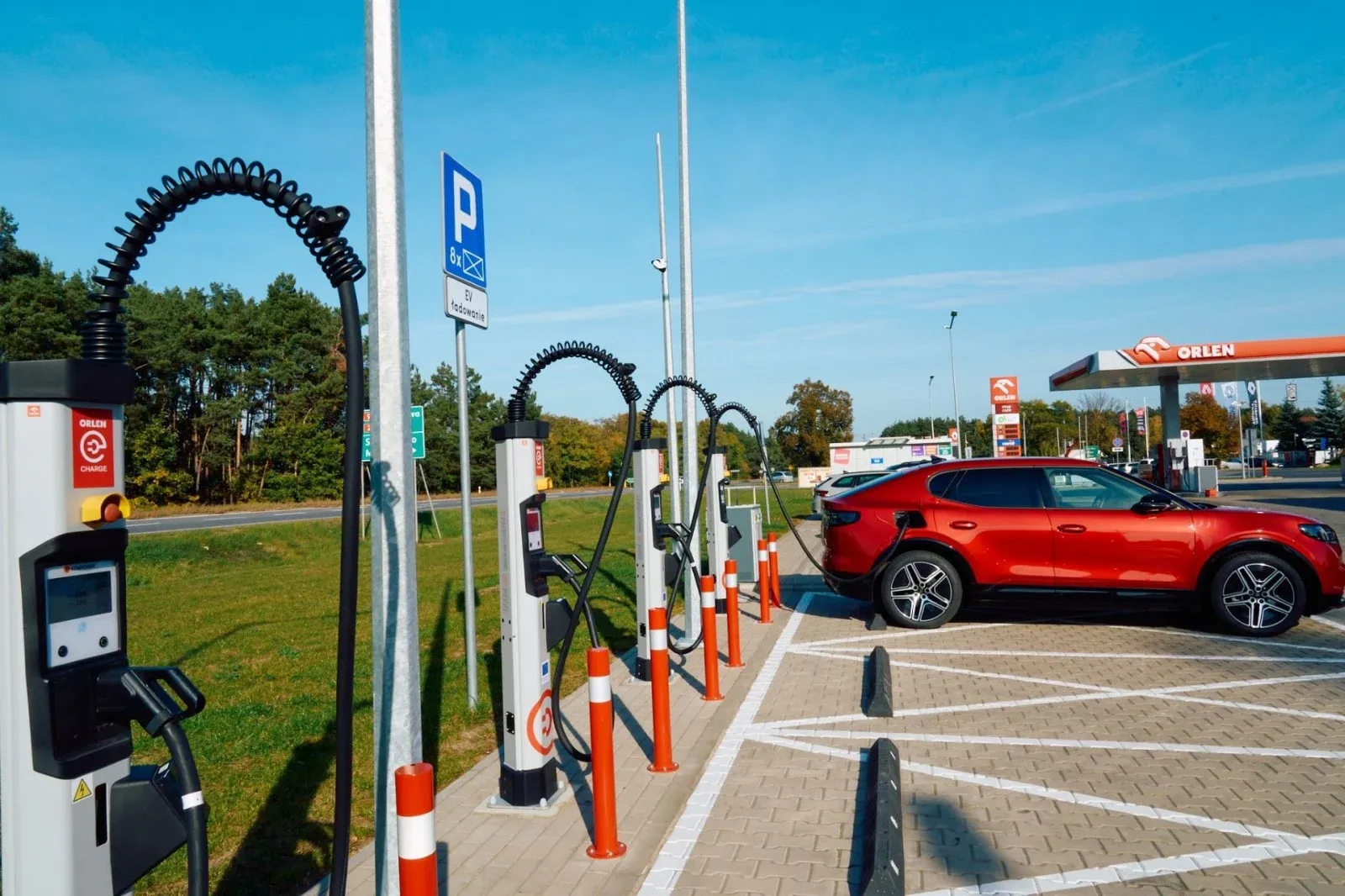
ORLEN is launching more 600 kW charging hubs. There are also megawatt chargers.
In the article
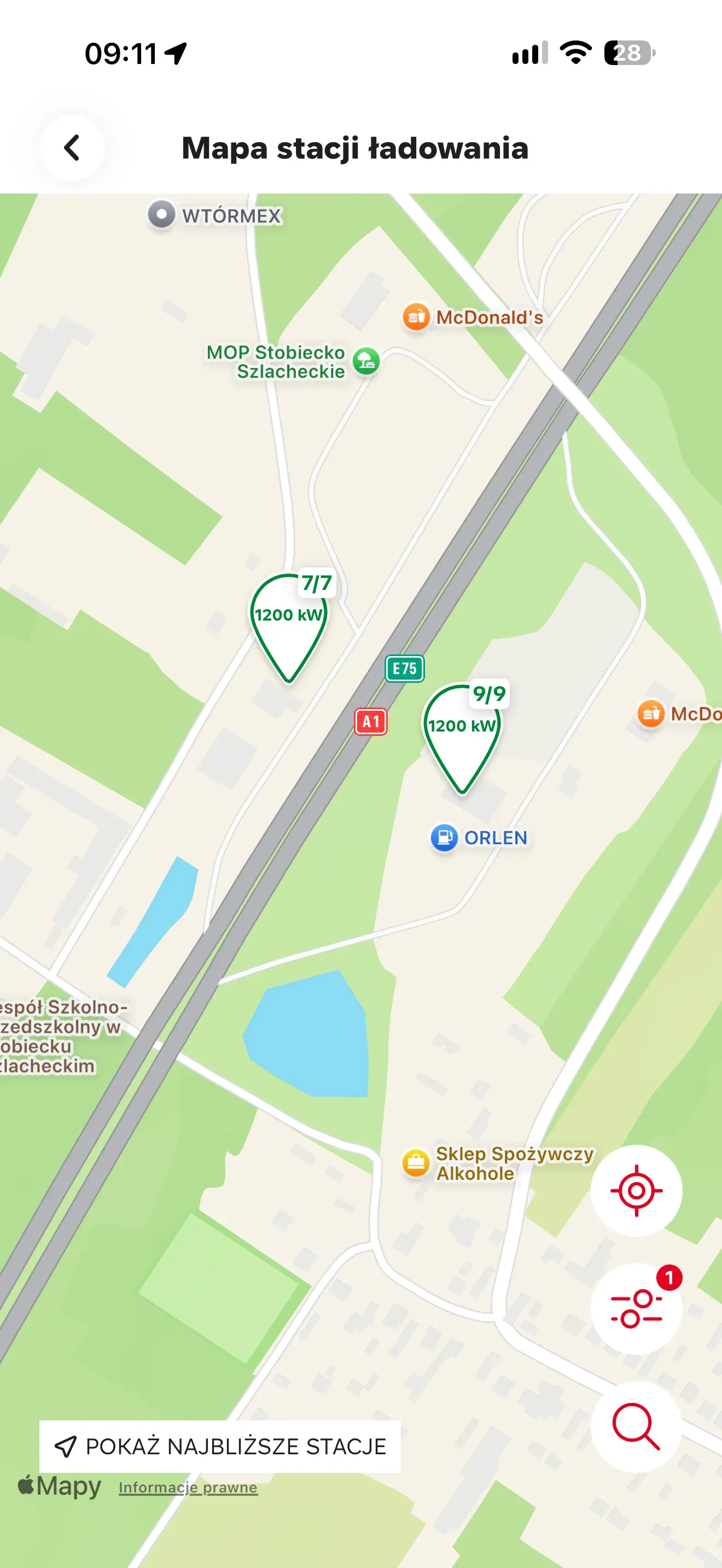
The new hubs are located at A1 in Stobieck Szlachecki and at S19 in Sobieszczany-Kolonia.
The strongest CCS connections offer up to 600 kW, while the MCS system in the ORLEN Charge app shows 1.2 MW.
This is another step in expanding the network of large, multi-station hubs along the most important routes.
The fast charging network along Polish roads is making further progress. After the hubs previously launched in places like Gruczno, Olsztynek, and other passenger service locations, ORLEN has made available more large-scale sites.
The first is located near the A1 highway in Stobiecku Szlacheckim, in the Radomsk area. The infrastructure is available on both sides of the highway – at the MOP Stobiecko Szlacheckie East and West. The second location is situated on the S19 route in Sobieszczany-Kolonia, south of Lublin. Here too, drivers traveling in both directions have access to high-capacity charging infrastructure.
In the Orlen Charge app, CCS connectors with a capacity of up to 600 kW and MCS connectors with a capacity of 1.2 MW are listed at both locations.
600 kW sounds impressive
In the case of passenger cars, the most interesting ones are CCS charging stations. A maximum power of 600 kW far exceeds the capabilities of most electric vehicles sold today. Even very fast-charging cars with 800 V systems typically achieve power levels around 250-350 kW nowadays, with only a few new models beginning to approach 400 kW or more.
This doesn’t mean that installing more powerful devices is pointless. Firstly, it provides a buffer for future generations of vehicles, and secondly, a large charging hub must handle multiple vehicles simultaneously. Therefore, it matters not only the maximum capacity specified on the charger but also the power available for the entire location and how it is distributed among the charging stations. A vehicle that can accept up to 200 kW, connected to a 600 kW station, will still charge at its maximum rate limited by its battery capacity, battery temperature, and current charge level.
In Stobieck: more than just 600 kW
The charging stations in Stobiecku Szlacheckim are more extensive than a single value shown on the map might suggest. On either side of A1, there are CCS stations with varying capacities. Public infrastructure data indicates, among other things, four 400 kW stations, two 600 kW stations, as well as additional infrastructure for heavy vehicles.
The most powerful station uses the Megawatt Charging System (MCS) standard, which is primarily designed for electric trucks. The ORLEN Charge app currently shows a capacity of 1.2 MW. However, ORLEN itself stated when launching the infrastructure that the facility in Stobieck was technically prepared for charging at up to 1.5 MW. The difference arises because the current configuration visible to drivers is one thing, while the maximum capacity the entire infrastructure is designed for is another.
Why Do Trucks Need Over a Megawatt?
In passenger cars, a power output exceeding 1 MW currently has limited applications. In heavy transportation, the situation is quite different. An electric tractor-trailer can have a battery with a capacity of several hundred kilowatt-hours. Charging such a battery at 150 or 200 kW would take too long for an electric truck to operate efficiently on long routes.
This is why the MCS standard is being developed. Its goal is to enable the transmission of power measured in megawatts and to replenish a large portion of the energy during the driver’s mandatory break. This is also one of the reasons why new charging hubs are being built along A1 and S19 — routes that are important not only for passenger cars but also for heavy transport.
Sobieszczany is another major location in eastern Poland
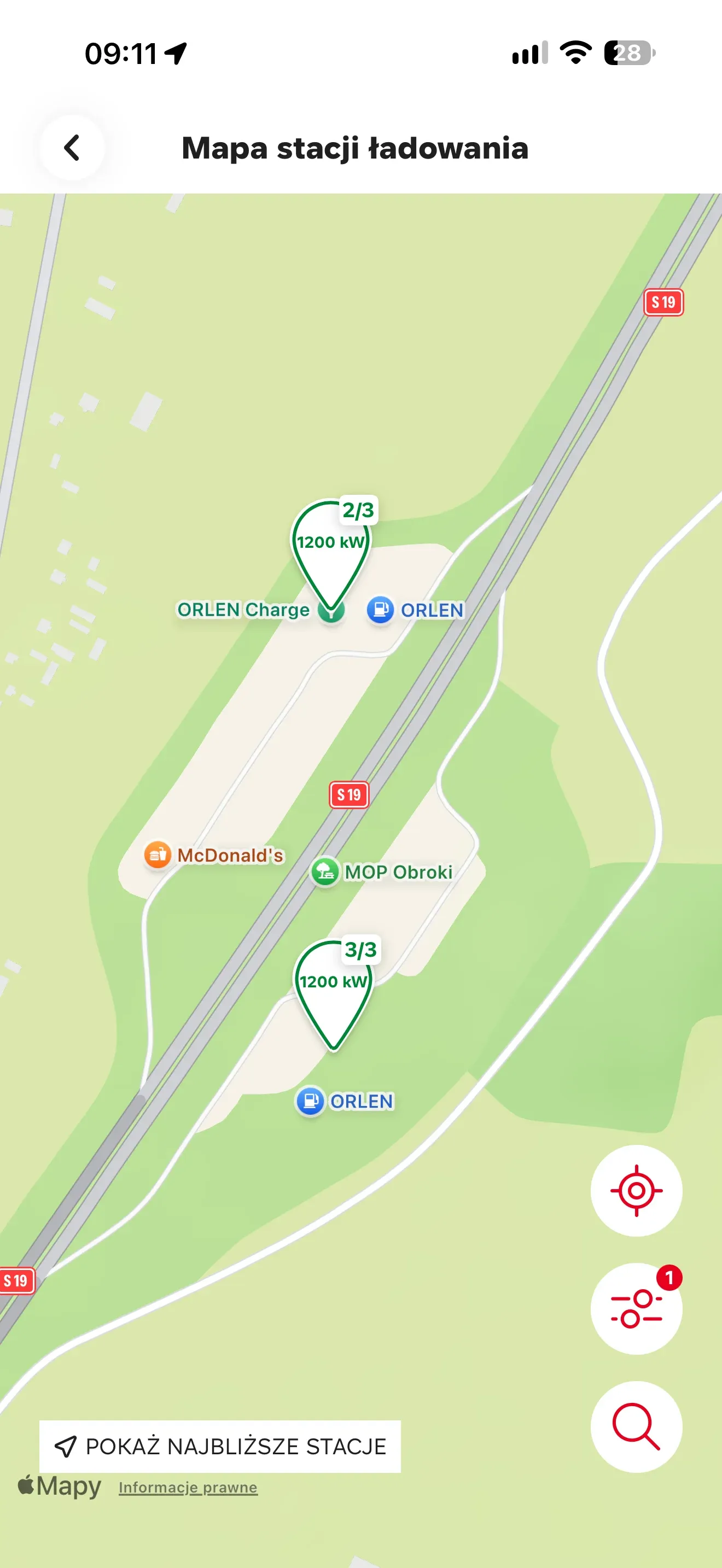
The new location in Sobieszczany-Kolonia is also interesting due to its location. S19 is one of the main components of Via Carpatia, a north-south corridor running through the eastern part of the country. According to the Alternative Fuel Infrastructure Registry, there are well-developed ORLEN stations on both sides of the route. Each station has 400 kW and 600 kW CCS stations as well as a 1.2 MW charging point. These stations were registered with the Technical Supervision Office on October 8, 2026, making them the newest of the major locations in the network.
Gruczno as a sign of change
ORLEN has previously established a large charging hub at MOP Gruczno Zachód. There, charging stations for passenger cars have been set up with capacities of up to 500-600 kW, while a separate area has been prepared for heavy vehicles.
Not long ago, a 150 kW charger along the route was considered fast in Poland. Later, 200 kW and 350-400 kW charging points became increasingly common. Now, at the largest hubs, the upper limit for CCS charging has risen to 600 kW, and nearby stations operate at capacities measured in megawatts rather than hundreds of kilowatts.
ORLEN is building larger hubs instead of individual charging columns
The way infrastructure is built is also changing. Instead of a single charger with two ports, there are increasingly locations where multiple cars can recharge simultaneously. ORLEN Charge already has over 1,400 charging points in Poland. The company plans to open several dozen more hubs and over a hundred standalone stations by the end of 2027.
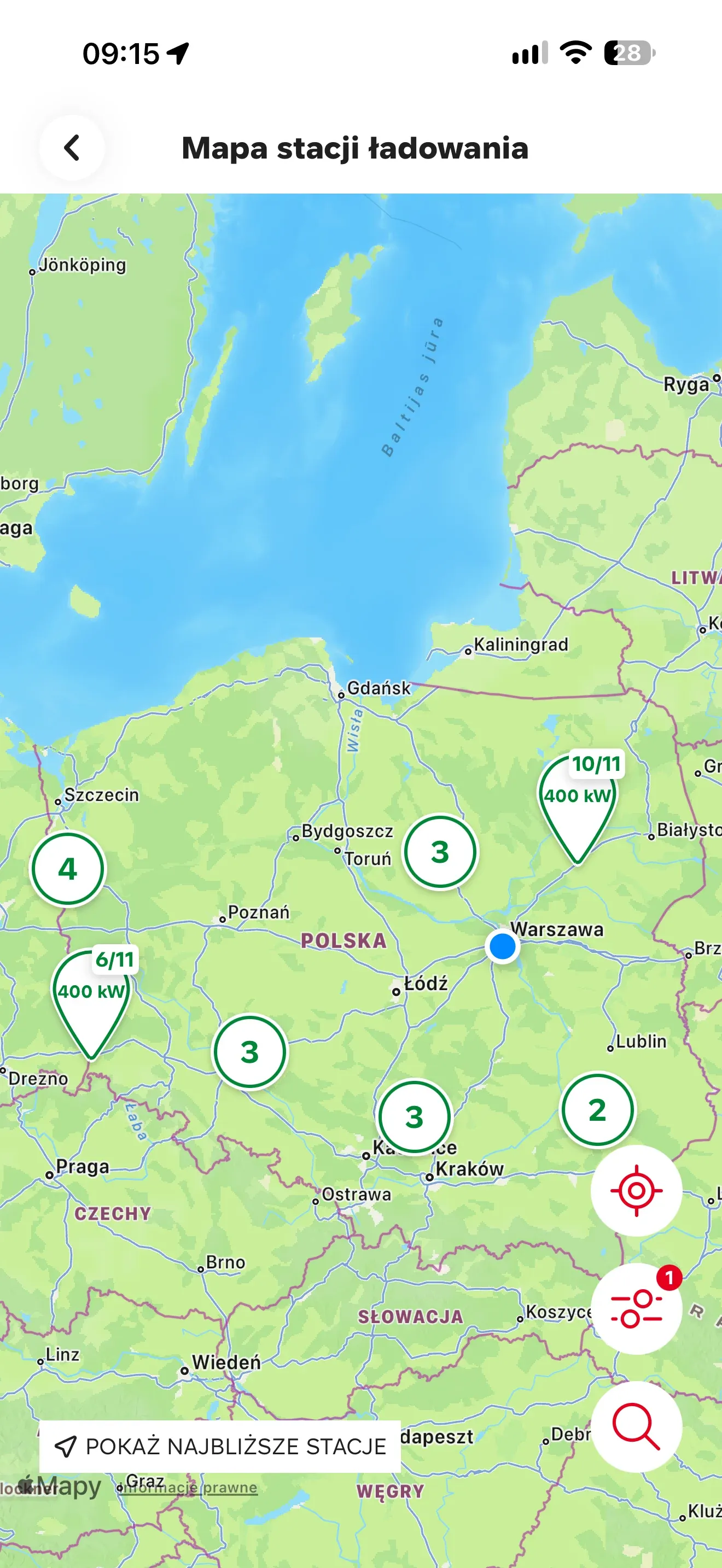
It’s more important than simply chasing record power. On busy routes, drivers needing over 600 kW per cable require several or even a dozen charging stations to avoid waiting in line upon arrival. The new locations in Stobiecku Szlacheckim and Sobieszczany-Kolonia confirm this approach. They are designed to serve multiple passenger cars simultaneously, while also being prepared for the upcoming electric trucks. Just a few years ago, 1.2 MW for a Polish route would have sounded like an experiment. Now, such stations are beginning to appear on regular charger maps.
Piotr Sobczyk