
ORLEN wants to integrate the Baltic Sea, refineries, and transportation. Hydrogen is at the heart of the plan.
In short:
Poland is now among the largest hydrogen producers in the European Union.
The development of hydrogen technology is hindered by costs, regulations, and a lack of infrastructure.
ORLEN demonstrated at an international forum how it plans to move toward industrial-scale hydrogen projects.
There are currently 13 hydrogen refueling stations in Poland, seven of which belong to ORLEN.
ORLEN is hosting the forum.
The hydrogen technology sector has passed the stage where almost every major energy company presented strategies, plans for future installations, and ambitious goals for the next decade. Now a much more difficult phase begins: finding customers, ensuring energy supply, building infrastructure, and creating a financially viable model.
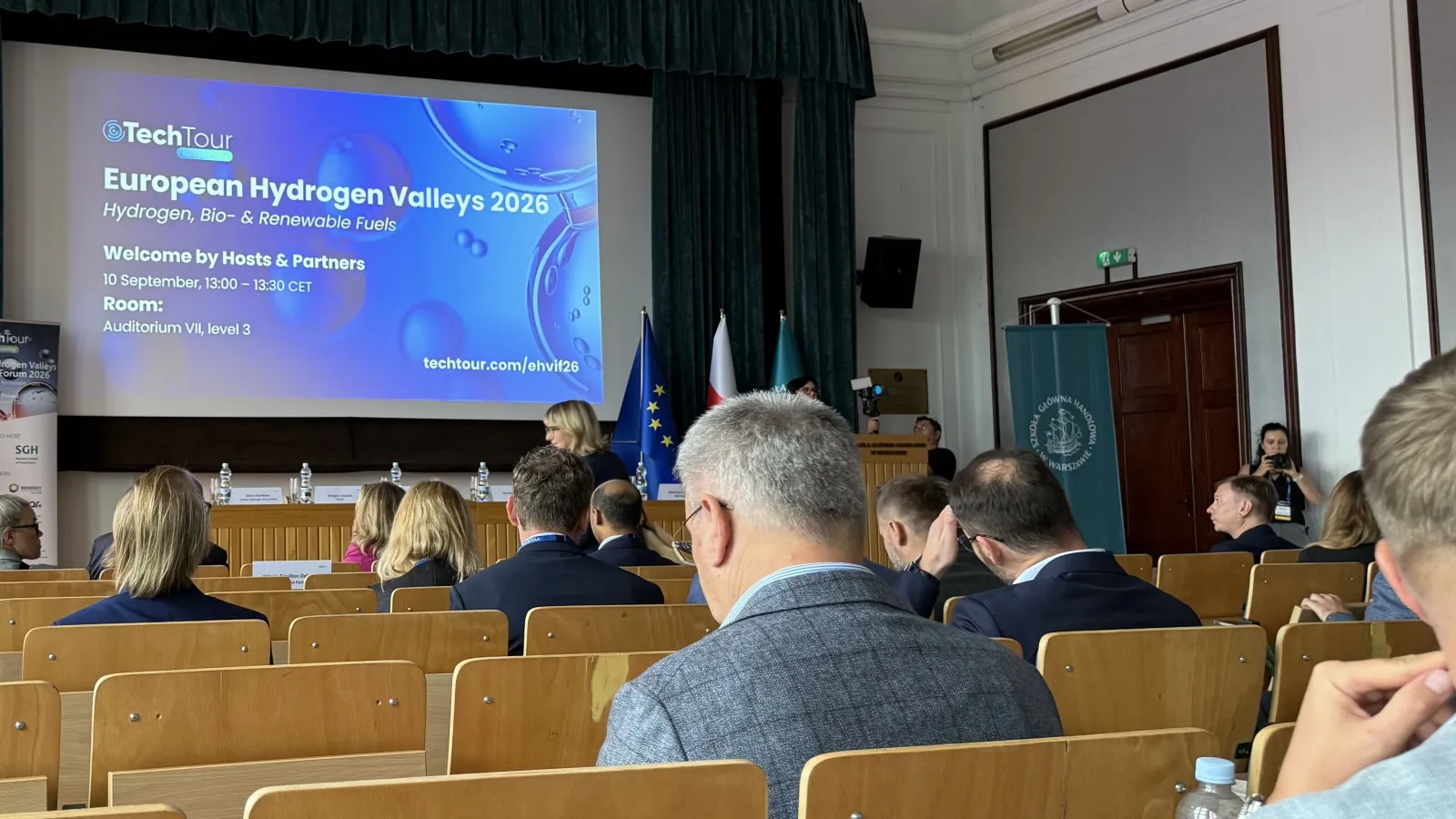
This was the focus of the Tech Tour European Hydrogen Valleys Investment Forum 2026, which took place on September 11 at the Warsaw School of Economics. Orlen hosted the event, with participants including representatives from business, government, academia, investors, and hydrogen valley projects from various parts of Europe.
The event was held in Poland for the first time, and one of its main topics was transitioning from pilots to projects that can be genuinely funded and implemented.
Poland produces a large amount of hydrogen. However, it is mainly traditional hydrogen.
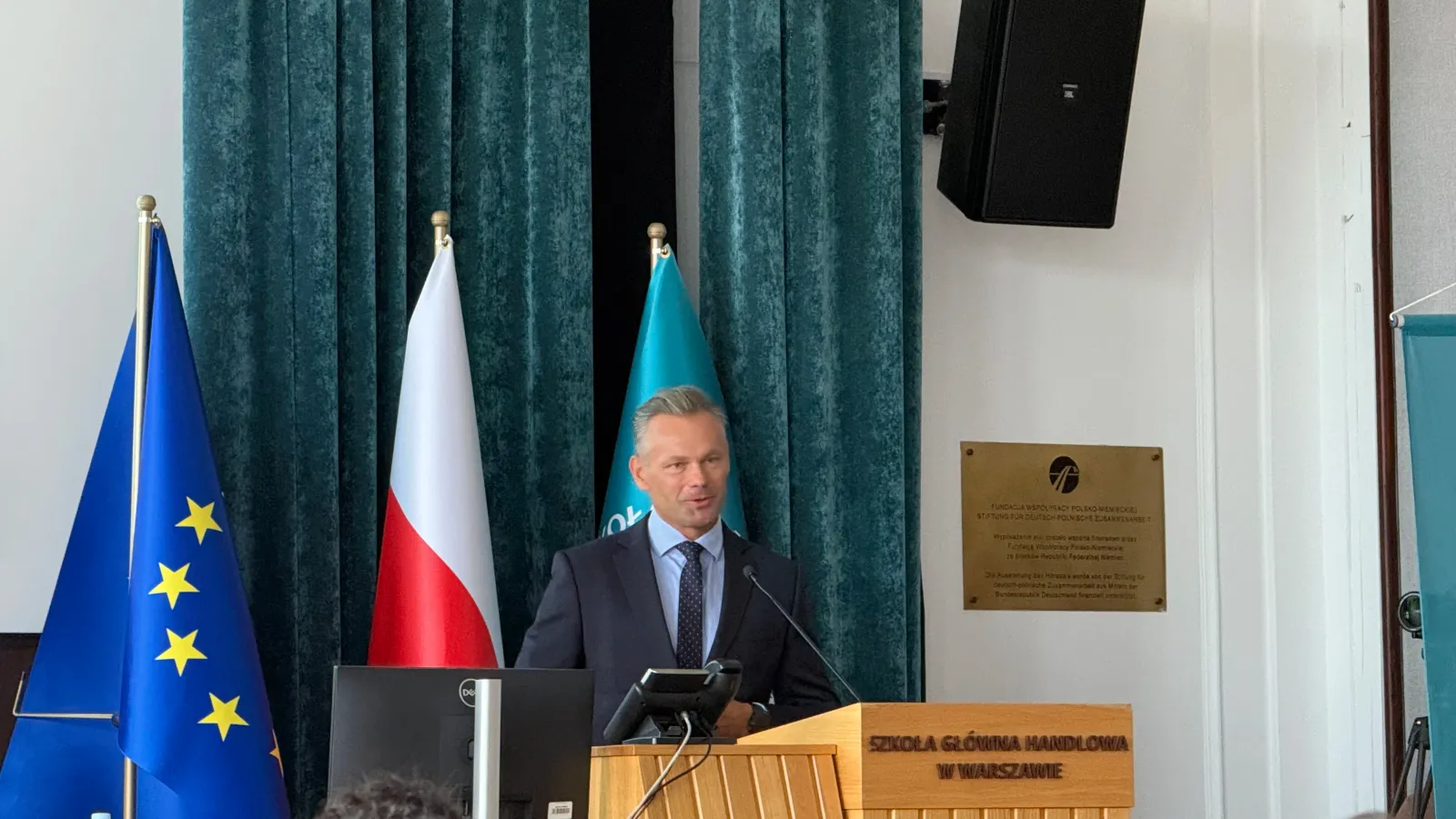
The starting point for the discussion is Poland’s position. Grzegorz Jóźwiak, Orlen’s executive director for biofuels and hydrogen, reminded attendees at the forum that Poland is the third-largest producer of hydrogen in the European Union.
This does not mean, however, that we already have a fully developed green hydrogen market. According to PARP data, around 665,000 tons of hydrogen were produced in Poland in 2024, accounting for 8.7% of total EU production. Yet only about 0.1% of this was green hydrogen. The vast majority still comes from fossil fuels and is primarily used in refineries and the chemical industry.
The existing demand from industry can be one of the foundations for a new market. During the panel “Building the Hydrogen Market in the Baltic Sea Region: Customers, Infrastructure and Demand,” Jóźwiak pointed out that there is still no hydrogen market comparable to the mature markets for other energy carriers. This does not mean, however, that it is impossible to develop specific projects today.
“Is there a liquid hydrogen market—in the sense in which we usually understand a market? Definitely not. But can we create a business case for projects that are feasible and make sense from a business, technological, and risk perspective? Absolutely yes,” said Jóźwiak.
Four years ago, projects were only on slides
The scale of change is most evident in transportation. During a later discussion, Jóźwiak summarized that a few years ago Poland’s market for low-emission and renewable hydrogen was just beginning to develop.
“I remember that four years ago we only discussed our projects on slides, and Poland was a blank spot when it came to solutions using low-emission or renewable hydrogen. Today, the situation is a bit different,” emphasized an ORLEN representative.
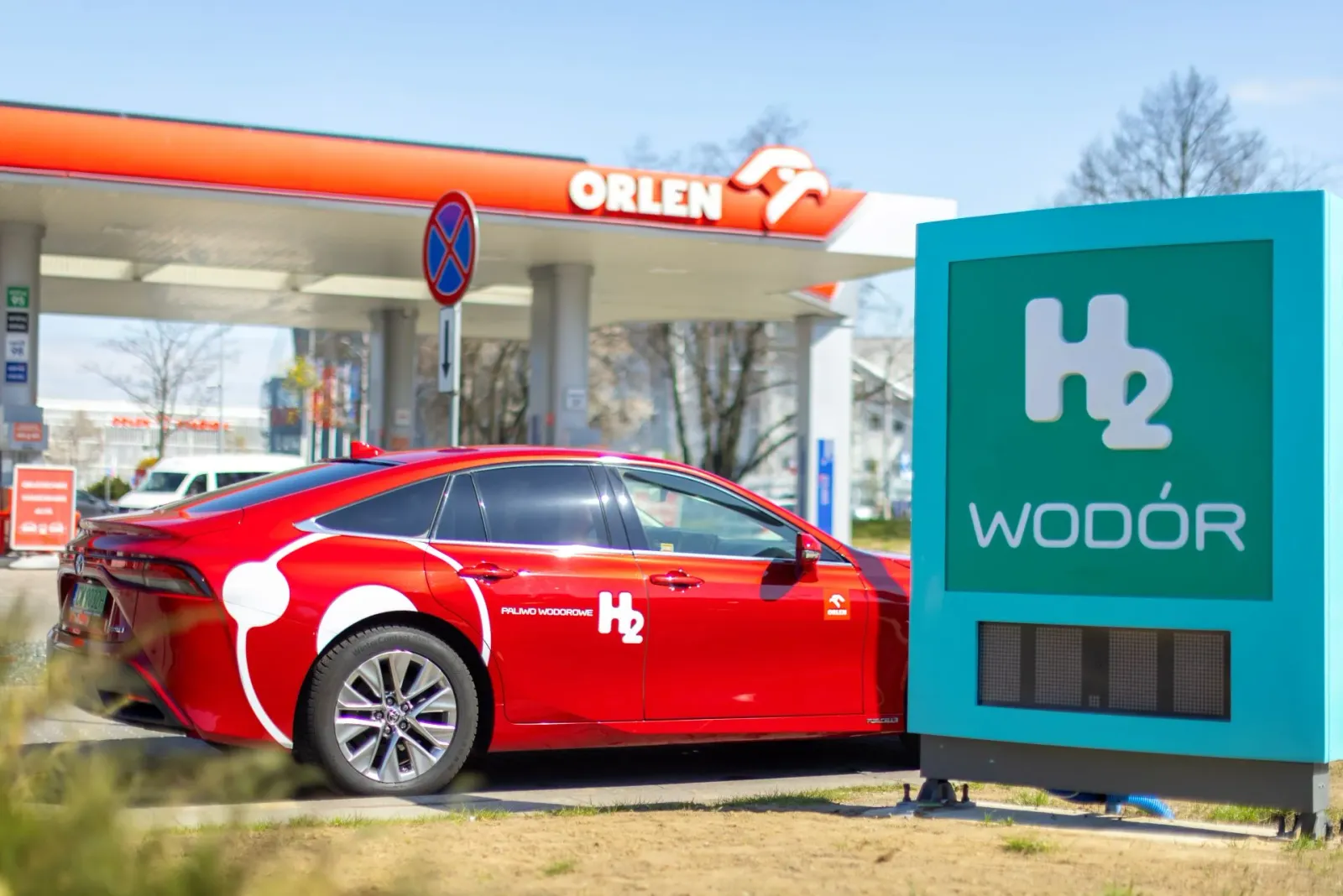
There are currently 13 hydrogen refueling stations in Poland. Seven of them belong to ORLEN. These are publicly accessible facilities located in Poznań, Katowice, Wałbrzych, Włocławek, Pile, Płock, and Gdynia. The most recent one was opened in June.
However, ORLEN did not build these stations assuming that thousands of private hydrogen vehicles would suddenly appear. The approach was primarily aimed at serving specific customers, usually bus fleets.
“We realized that investments need to be made on both sides. We must build hydrogen refueling stations, but at the same time we need to develop a market. That’s why we decided to locate stations where this fuel is truly needed,” explained Jóźwiak.
This is also important from an economic perspective. A station located near a fleet of regularly refueled buses has a much more predictable usage rate than one built solely in the hope that customers will appear in the future.
ORLEN wants to use hydrogen in refineries and for biofuel production as well
Transportation is however only part of the plan. ORLEN’s own industry could be a much larger consumer. The group’s strategy includes developing electrolyzers that will produce renewable hydrogen to replace some of the hydrogen currently produced from natural gas.
The Hydrogen Program portfolio includes electrolyzer projects with a total capacity of around 400 MW. In 2025, ORLEN received 1.7 billion zł in non-reimbursable funding from KPO for the Green H2 and Hydrogen Eagle programs. A significant portion of this support is allocated to electrolyzers with a capacity of 200 MW.
By 2035, the group aims to have approximately 0.9 GW of electrolyzer capacity. Together with facilities that will produce hydrogen from municipal waste, this will result in over 130,000 tons of renewable hydrogen per year.
Hydrogen is needed not only directly in refineries. Jóźwiak also mentioned the production of HVO or sustainable aviation fuels like SAF. Poland has a large supply of biological raw materials, while Nordic countries have access to abundant renewable energy. Combining these two elements could serve as one model for regional cooperation.
The issue lies in the regulations regarding green hydrogen
In the section on market development barriers, Jóźwiak emphasized regulations the most. Specifically, it refers to the rules for qualifying hydrogen as RFNBO, or renewable non-biological fuel.
Union regulations require, among other things, meeting the additionality criterion. Simply put, the energy used to produce renewable hydrogen should come from new or additional renewable energy sources, rather than existing facilities that previously supplied other consumers. Hydrogen production must also be properly timed and located in relation to the availability of green energy. The goal is to ensure that the development of electrolyzers truly leads to the creation of new renewable energy capacity, rather than indirectly increasing energy production from fossil fuels.
According to Jóźwiak, the current structure of these requirements may hinder large industrial plants from using electrolyzers.
“When we modeled the future operation of a 100 MW electrolyzer at a refinery, it turned out that the impact of variability and hourly correlations is so significant that there are even issues with steadily feeding this hydrogen into the refinery’s network,” he said.
ORLEN therefore wants greater flexibility, which would allow projects to achieve a positive economic outcome and move forward to a final investment decision.
Jóźwiak also emphasized another requirement: technological neutrality. In his view, EU policy should not be limited solely to RFNBO if other technologies can significantly reduce emissions.
– We want it to be possible to produce low-emission products using all available technologies. Technological neutrality is our first demand. We need not only renewable RFNBO hydrogen but also low-emission hydrogen if it is to help achieve the goals of transformation and decarbonization – he said.
HySPARK will connect Włocławek with Chopin Airport
An example of a project that aims to link several elements across the entire chain is HySPARK. Orlen is developing it together with an international consortium. The project has received nearly 9 million euros in support from the Clean Hydrogen Partnership program.
It’s not just about building a station. Hydrogen is to be produced in Włocławek, then delivered to Warsaw and used, among other things, by vehicles serving Chopin Airport as well as in urban transportation.
During the conference, Jóźwiak announced the next phase of the project.
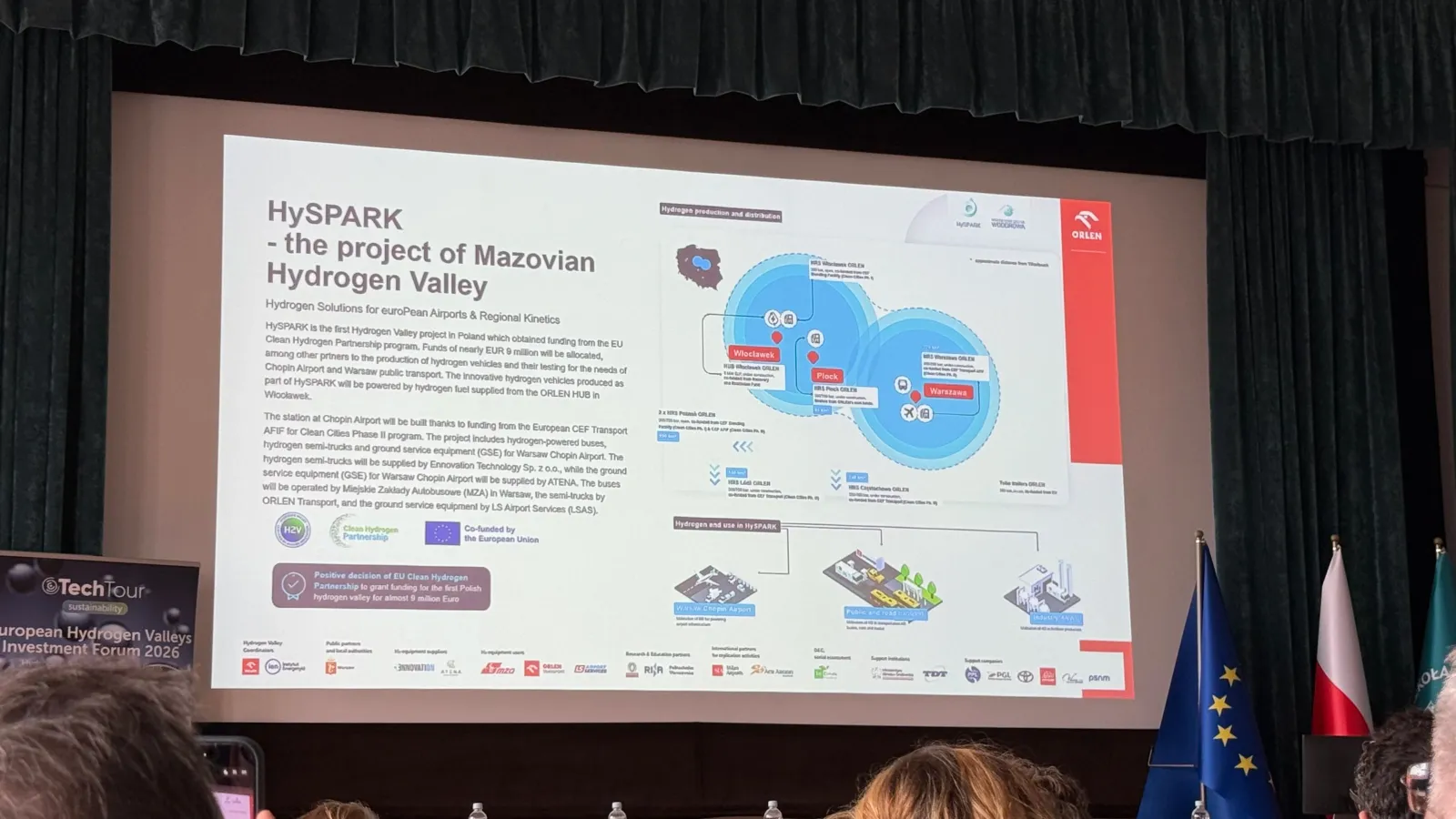
“Today we have reached one of the key milestones — we now have the first prototype of a hydrogen-powered truck. In the HySPARK project, we aim to have four such vehicles. They will deliver hydrogen from a hub in Włocławek to Warsaw,” he said.
The concept aims to reduce emissions not only during the final use of fuel but also throughout its supply chain.
The Baltic Sea is to connect cheap energy with high demand
The second direction involves regional cooperation. At the beginning of September, ORLEN and 13 other companies and organizations from nine countries established the Baltic Energy Initiative. One of the areas of cooperation is precisely the regional hydrogen market.
The logic is as follows: Finland, Sweden, and other Nordic countries have very favorable conditions for producing renewable energy, as well as cost-competitive hydrogen in the future. Poland and Germany, on the other hand, have strong industrial demand. What’s missing is one key element — infrastructure to connect these markets.
“Today, what’s lacking is a pipeline connection between the Nordic countries and Central Europe. This is truly a crucial issue: how to invest in this infrastructure so that we can fully utilize the potential of renewable energy and hydrogen from the north,” added Jóźwiak.
It was infrastructure, end-users, and project economics that dominated the forum more often than visions of hydrogen as the “fuel of the future.” The market is no longer in the stage of proving that hydrogen can be produced, pumped into buses, or used in refineries. The question now is whether it can be done cheaply enough, reliably, and on a large scale enough for these projects to function as normal businesses.
Against this backdrop, ORLEN is one of the companies in Poland that has truly moved from declarations to concrete investments. Operating fueling stations, projects for electrolyzers, developing HySPARK, and attempting to integrate hydrogen production with refineries and biofuels all show that the company is building an entire chain—from production, through logistics, to end-users.
This certainly doesn’t mean the market is already ready or that all projects will prove profitable. Orlen does have the advantage of being able to test various hydrogen applications on a large scale while simultaneously serving as a major consumer of it. It is projects like these that will show in the coming years where hydrogen truly makes economic sense and where it will remain a technology too expensive or too complex for widespread use.
Editor: Maciej Gis