
Orlen Charge will add several hundred points by the end of 2027. Chargers will have even 400 kW capacity.
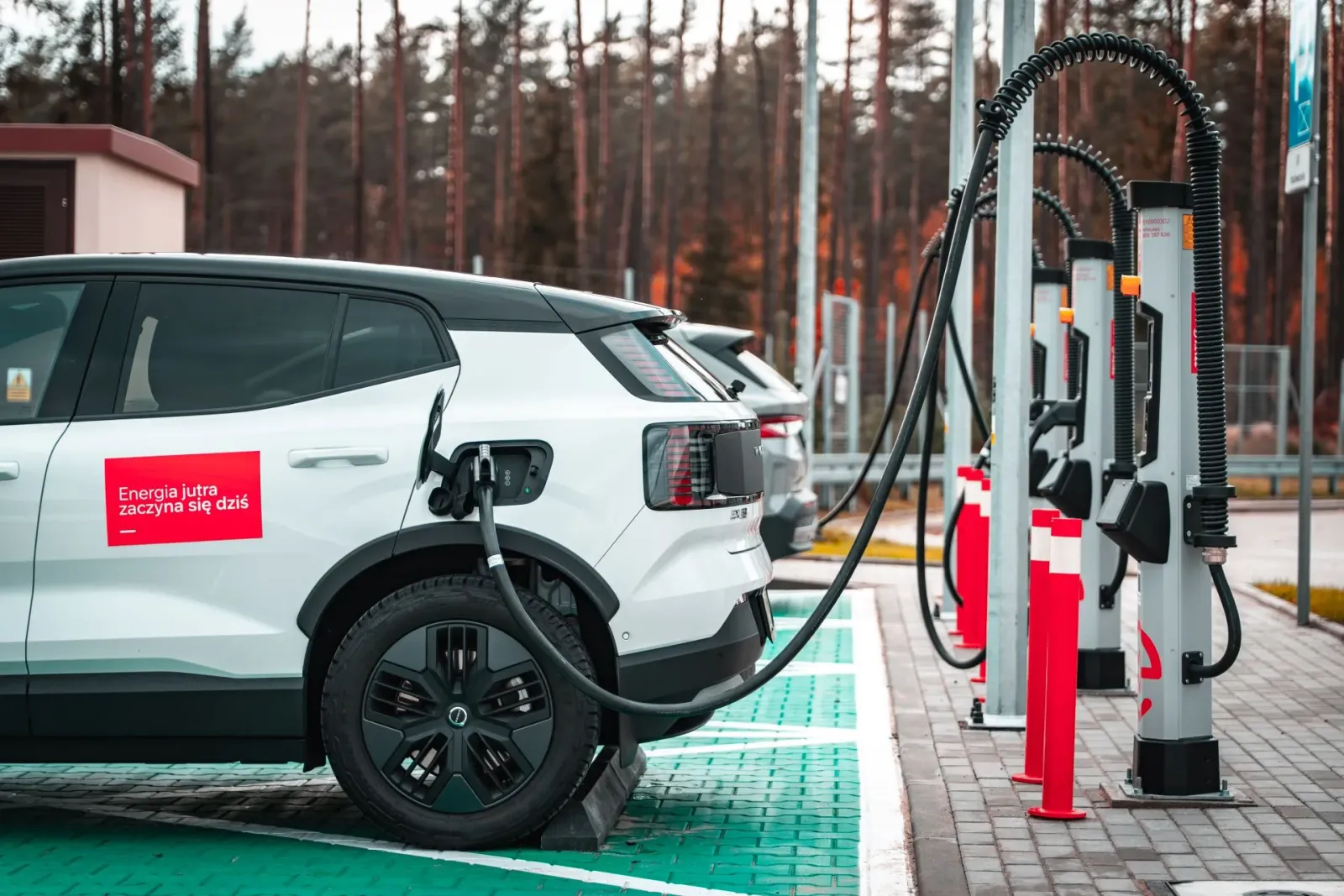
Orlen announced at the New Mobility Congress 2026 that it plans to expand its Orlen Charge network by several hundred stations by the end of 2027. The company aims to open over 100 stations at individual gas stations and dozens of hubs, typically with eight charging points each. The new locations will be capable of serving vehicles with a power output of up to 400 kW.
Currently, Orlen Charge has nearly 1,400 charging points. About 100 of these are located in multi-point hubs, each with an average of eight charging stations.
"As of now, the Orlen Charge network includes nearly 1,400 charging points, of which around 100 are multi-point charging hubs with an average of eight stations each," said Grzegorz Woliński, director of Orlen’s electric mobility infrastructure planning office.
Eight charging points instead of one charger
The first modern Orlen Charge hub opened at the end of 2025 at the MOP Olsztynek Południe location along route S7. It has eight charging stations, and a single vehicle can receive up to 400 kW of power. When fully occupied, the system distributes the available power among connected cars, so the “400 kW” label does not mean this value is available for each station simultaneously.
Similar facilities are already in operation in Szczecin, Gorzów Wielkopolski, and Nowy Dwór Gdański. Orlen is also evaluating locations with more than eight charging stations. This trend can already be seen in Wrocław. I have personally seen two stations where the company is building charging hubs.
In the new hubs, 400 kW power capacity is set to be the standard. At individual stations, 200 kW devices are most common, mainly due to electrical connection limitations. If the infrastructure permits, Orlen also plans to install 400 kW chargers there.
"In our assessment, this should provide drivers with comfort using the infrastructure in the coming years," said Woliński. During summer, some of the existing hubs already experience periods of full occupancy. Eight charging stations do not guarantee no waiting lines, but they offer a much better chance of quick connection compared to a single pole at a gas station.
New hubs are also set to be established outside of gas stations. Orlen is looking for locations along transit routes and in large cities, where it is not always cost-effective to build a complete facility with shops, restaurants, and fuel dispensers.
Orlen is considering acquisitions and expanding truck charging
The group does not rule out acquiring existing networks or individual assets. “There are such assets in Poland in the field of electromobility that could be considered from an M&A perspective,” said Woliński. No names of potential targets were mentioned, and each transaction is expected to have economic justification in the long term.
Acquiring existing infrastructure could shorten the path to obtaining locations and connections, which are often a bigger challenge than buying chargers themselves. Poland’s market remains fragmented, so Orlen has plenty to consider.
At the end of August 2026, the company also launched Poland’s first public MCS infrastructure for electric trucks. The stations at MOP Stobiecko Szlacheckie Wschód and Zachód along A1 have a capacity of 1.5 MW. CCS connections for trucks are available on both sides of the highway, along with four stations each for passenger cars with a capacity of up to 400 kW. This investment prepares the network to meet the requirements of the AFIR regulation.
The plans were presented during the seventh edition of KNM, organized by PSNM in Katowice from September 23-25, 2026. However, the real test won’t be the number of 400 kW stations, but rather the capacity available when all stations are in use. Which location does Orlen Charge need a large hub for the most?
LovEV Newsletter
Want more content like this?
Sign up — we’ll send you a weekly summary once the newsletter starts.