
Op-Ed: Upcoming Philippine Electric Vehicle Summit is an Audit of National Policy
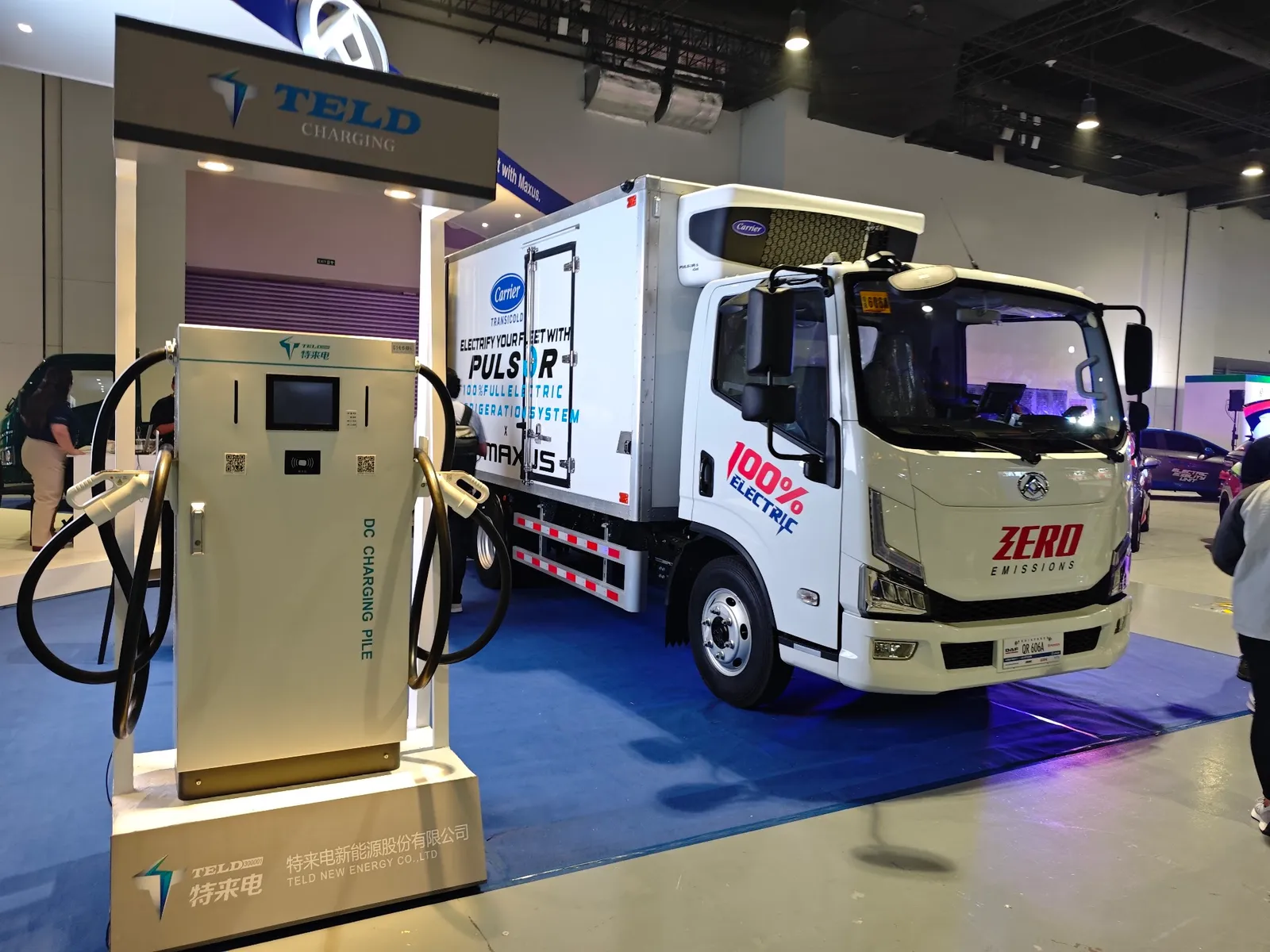
Maxus medium duty EV at the 13th PEVS. (Photo for Cleantechnica by author)
Support CleanTechnica's work through a Substack subscription, on Patreon, or on Stripe. Help us produce all of the high-quality, original content we publish week after week despite the challenges of content-scraping AI, antisocial media, inflation, and other hurdles.
Summit serves as an operational audit of
EV progress in the Philippines
MANILA, Philippines — When the 14th Philippine Electric Vehicle Summit (PEVS) opens its doors this October, the exhibition floor will look, to casual visitors, like a conventional automotive trade fair. Bright spotlights will bounce off polished sheet metal, commercial bank officers will run loan calculators, and sales agents will pitch home wallbox chargers to motorists tired of volatile pump prices.
Beneath the retail choreography, however, the gathering functions as an annual operational audit of state policy. Specifically, it tests the viability of the Department of Energy’s (DoE) Comprehensive Roadmap for the Electric Vehicle Industry better known as CREVI.
Codified under the Electric Vehicle Industry Development Act, (EVIDA or Republic Act 11697), the roadmap sets strict statutory benchmarks. The primary short-term goal requires the country to register 311,700 electric vehicles and deploy 7,300 dedicated charging stations nationwide by 2028, all heading toward an aggressive target of 50 percent fleet electrification by 2040 under the government’s clean energy scenario.
With the 2028 deadline just two years away, the summit floor reveals precisely where policy ambition meets ground-level commercial friction.
The volume gap and the commercial quotation
The short-term target of more than 300,000 units cannot be met through private passenger car sales alone. Premium electric sport utility vehicles and executive sedans dominate the marketing budgets of major distributors, but high upfront sticker prices restrict those models to affluent households in Metro Manila and Metro Cebu.
Meeting statutory targets requires volume, and volume in the Philippine context lives in light commercial platforms: two-wheelers, three-wheelers, delivery vans, and modernized electric public utility vehicles.
This operational reality explains why summit organizers, led by the Electric Vehicle Association of the Philippines (EVAP), have altered the exhibitor balance. Alongside legacy passenger vehicle distributors like Toyota Motor Philippines, Nissan Philippines, and ACMobility, the floor plan highlights commercial fleet suppliers, light delivery vehicle builders like NWOW International, and heavy transport fabricators such as Pioneer Trucks.
By pulling municipal transport cooperatives and commercial fleet buyers into the same room with battery assemblers and chassis fabricators, the summit attempts to accelerate the fleet conversion rates required by law.
Under the development act, government agencies and commercial cargo operators must ensure that electric vehicles make up at least five percent of their operational fleets. The hardware on display will show whether local commercial builders have achieved the production scale and durability necessary to displace diesel jeepneys and delivery vans at viable commercial margins.
The infrastructure bottleneck
A vehicle target without an accompanying charging grid is meaningless. The roadmap’s call for 7,300 charging stations by 2028 remains the most fragile link in the transition. As of mid-2026, the count of operational public charging stations hovers around 1,800, heavily concentrated in Luzon.
The presence of charging network operators, including Meralco, EVOxCharge, Intercharge Corporation, and WeCharge Hyperfast, reflects the scramble to close that deficit. Under government guidelines, commercial establishments, parking facilities, hotels, and expressway service areas are mandated to dedicate designated parking slots equipped with charging hardware.
The technical displays at the summit signal a necessary operational shift away from low-capacity alternating-current wallboxes installed inside shopping malls toward high-voltage direct-current fast chargers along regional transport corridors. Operators cannot persuade cross-country freight lines or long-distance bus operators to electrify until a driver can replenish battery reserves in thirty minutes along national expressways rather than waiting six hours on a slow plug.
The hardware shown by participating technical suppliers will demonstrate whether charging providers are building an actual inter-provincial network spine or simply cluttering Metro Manila parking decks with slow chargers.
Manufacturing and local content
For the past several years, the local market expanded through imported, completely built-up units benefiting from temporary tariff suspensions. While duty-free imports succeeded in seeding the market with models from Chinese, Japanese, and European brands, they do little to create domestic industrial capacity. This might be the toughest audit item for the 14th PEVS.
The roadmap mandates the creation of a domestic supply chain for parts, chassis fabrication, and battery assemblies. That mandate gained legislative teeth with the rollout of the Electric Vehicle Incentive Strategy under Executive Order 121, which provides targeted fiscal perks to lower production costs for locally assembled units by six to twelve percent.
The participation of overseas technical firms, including component manufacturers and engineering suppliers from industrial hubs like Shandong, indicates how global supply chains are positioning for that shift. The question hanging over the summit is whether foreign manufacturers will use the gathering merely to sell finished imports or take initial steps toward joint ventures that assemble completely knocked-down kits on Philippine soil. If local assembly does not materialize before tariff privileges on finished imports expire, vehicle prices could jump, stalling retail adoption curves overnight.
Financing the transition
The final metric under audit is capital access. Even with operating cost savings driven by high petroleum prices, the initial retail price of an electric vehicle remains higher than an internal combustion equivalent.
The inclusion of commercial lending banks and insurance underwriters on the exhibition floor operationalizes the fiscal incentives outlined in Republic Act 11697.
To turn policy mandates into signed purchase orders, financial institutions must offer lower interest rates, extended loan amortization schedules, and realistic residual value calculations for battery packs. Without specialized green auto financing, small transport operators and middle-income families will continue to buy cheaper used diesel engines.