
Onsemi will quadruple the power density of electric vehicle inverters
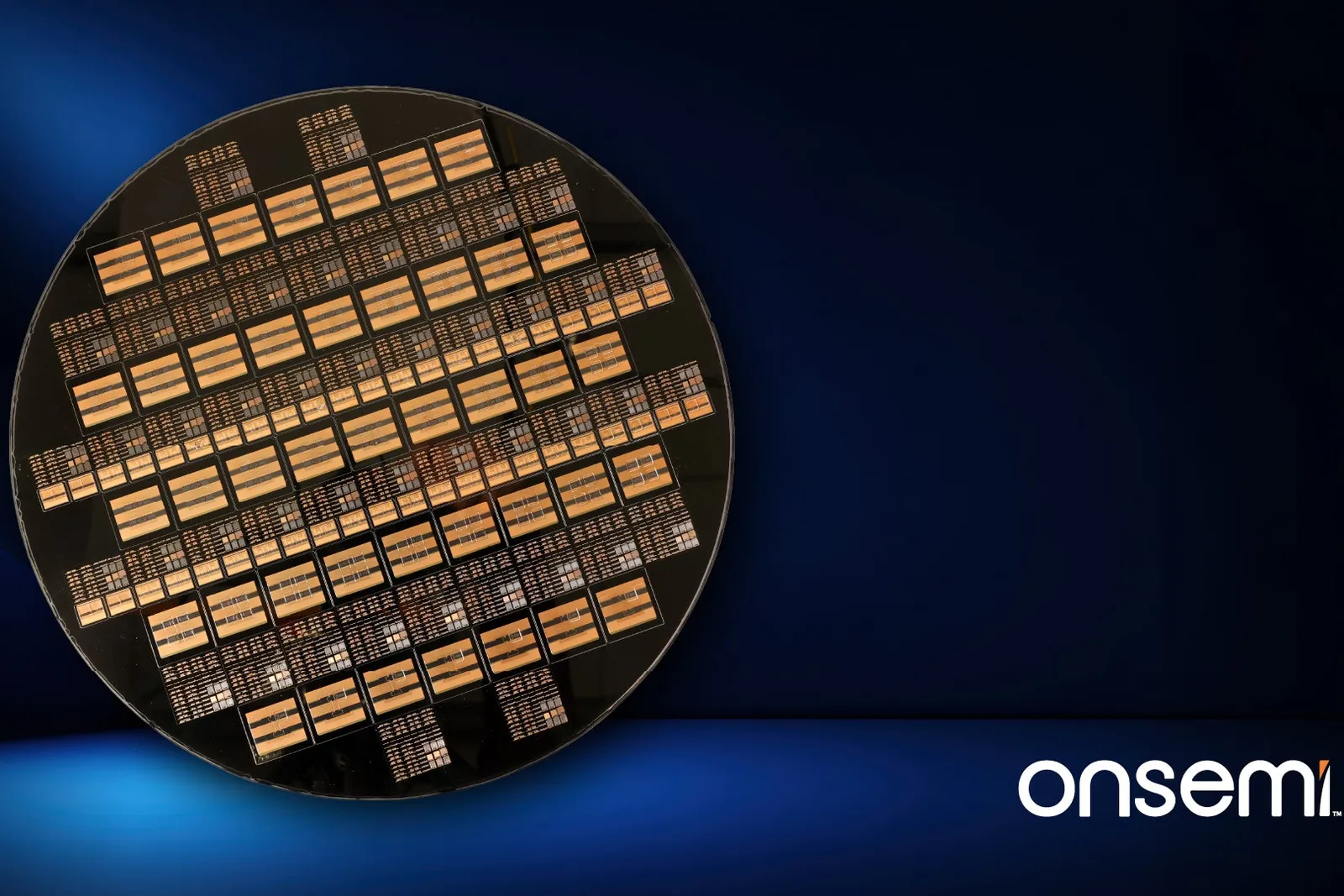
Onsemi has introduced a new architecture for power electronics with its Embedded Power Platform (EPP). According to the semiconductor manufacturer, this platform is designed to enable traction inverters for electric vehicles to achieve up to four times higher power density and 15 percent lower power losses. Subaru is one of the first development partners.
Wafer of Onsemi’s new Embedded Power Platform for highly integrated power electronics.
Image: Onsemi
One of the first partners from the automotive industry is Subaru. The Japanese manufacturer plans to evaluate EPP for future electrified vehicle architectures and will gain early access to engineering samples, simulation models, and technical expertise from Onsemi. This does not yet imply a decision to use it in a production vehicle.
The technical approach differs notably from conventional solutions in terms of packaging. With EPP, the silicon wafer itself serves as the basis for the package. Various semiconductor technologies such as silicon, silicon carbide (SiC), and gallium nitride (GaN), along with multiple components like FETs, drivers, and controllers, can be integrated together within it.
With this approach, Onsemi will no longer develop electrical, thermal, and mechanical properties separately before combining them. Instead, they can be designed, simulated, and optimized within a unified architecture. Among other benefits, the reduced parasitic inductance is intended to lower electrical losses, while allowing for higher switching frequencies.
According to Onsemi, EPP can be manufactured using the company’s existing 12-inch silicon wafer production lines. This allows key integration steps to take place directly within semiconductor manufacturing. For electric vehicles, Onsemi sees a major application area in traction inverters. Compared to conventional approaches, the manufacturer claims this technology offers up to four times higher power density along with up to 15 percent lower power losses. As a result, the inverters can be made smaller and lighter. However, the announcement does not specify how these values perform under actual operating conditions.
An interesting aspect is also scalability: A converter architecture based on EPP is designed to be applicable across various power classes. Vehicle manufacturers could use this to adopt a common base design for different models, rather than developing separate solutions for each power class. Onsemi promises reduced development and qualification efforts, as well as lower development and production costs.
For the EPP platform overall, Onsemi states that performance density can be three to five times higher depending on the application. In some cases, development cycles are said to be reduced to as little as four months. However, these figures refer to the platform as a whole and not specifically to any already validated automotive series application.
In addition to the automotive sector, Onsemi is also targeting industrial applications and power supply for AI data centers with this platform. The semiconductor manufacturer sees the advantage in being able to scale the same integration architecture across different applications and semiconductor technologies. The Embedded Power Platform is still in its early stages. First samples are expected to be sent to selected customers and development partners from the automotive and AI industries this year.