
We boarded the Tesla Semi, the electric truck aimed at transforming Europe.
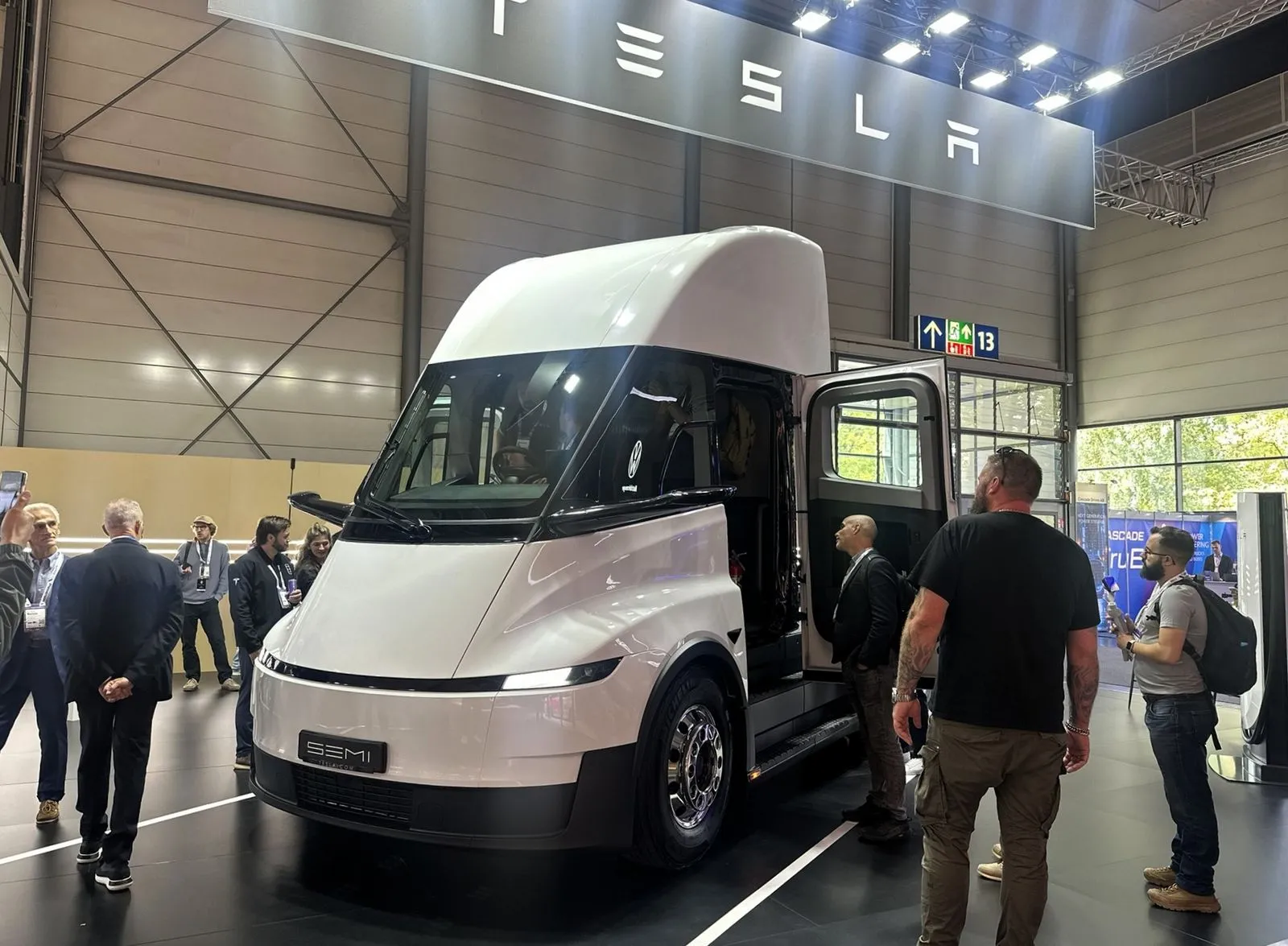
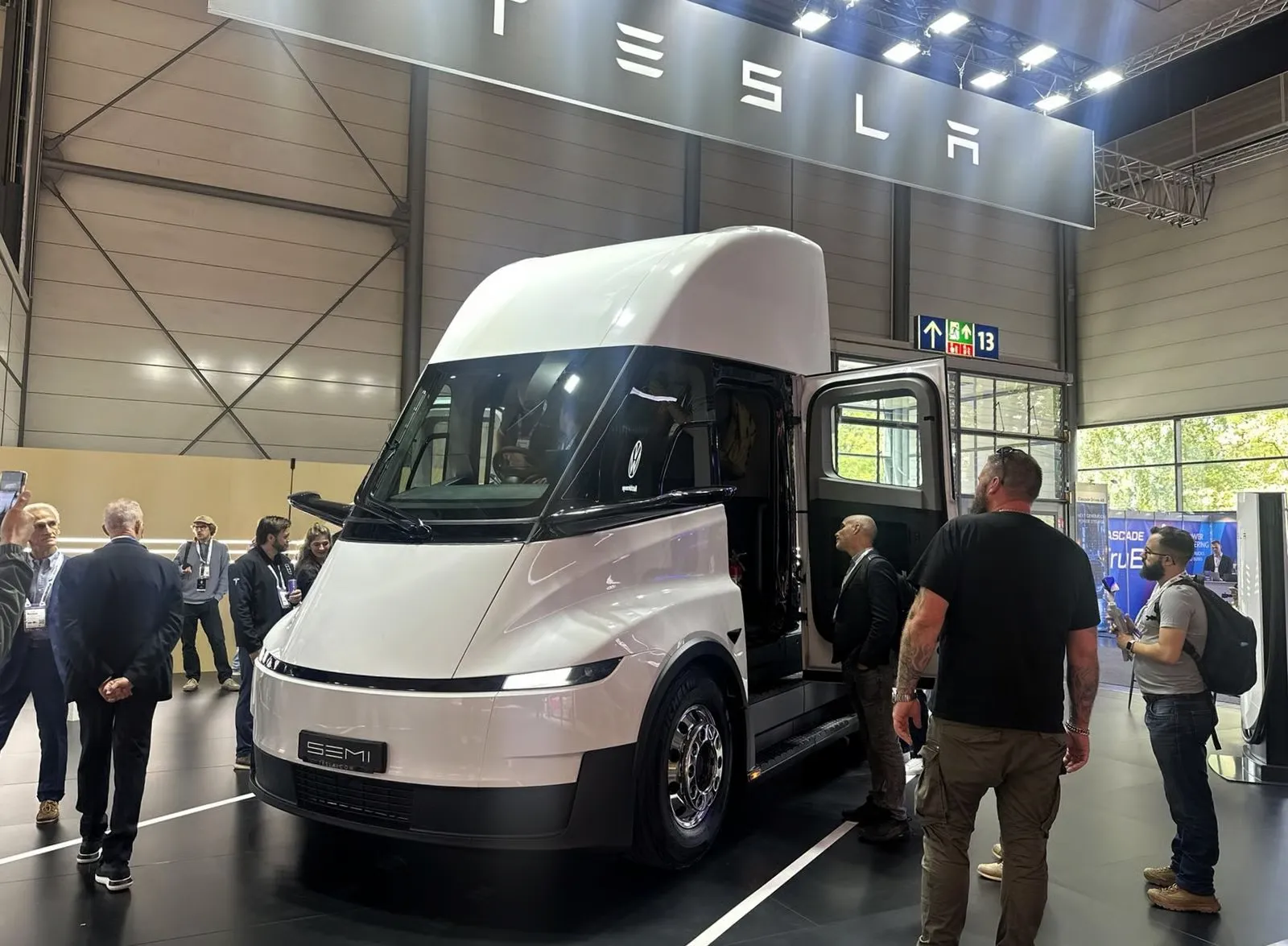
Nine years after its debut in California, the Tesla Semi finally arrives on the Old Continent. At the IAA Transportation in Hanover, we were among the first media outlets to board the European version of Tesla’s electric truck. Central cockpit, Model 3-style screens, 800 kW charging capacity… a tour of a truck that’s unlike any other.
It’s hard to find another vehicle with such a long development timeline. When Elon Musk unveiled the Semi on a California stage in November 2017, Tesla announced production starting in 2019. Subsequent delays followed: 2020, 2021, 2022, without any actual assembly line ever being established.
It took until spring 2026 for the situation to truly improve with the construction of a dedicated factory right next to Nevada’s Gigafactory. This facility is no ordinary plant: the 4680 cells that power the Semi come from the neighboring building, eliminating the logistical bottleneck that had hampered the project for years. The first truck rolled off the production line, and the official opening of the site is scheduled for September 24, 2026. With an announced annual production capacity of 50,000 units, this industrial expansion enables Tesla to enter new markets, including Europe.
The Tesla Semi for Europe: What’s different?
Two years ago, the manufacturer already showcased its electric truck in Hanover in its US version. This time, it’s the European version that is on display there. In short, the changes are primarily due to requirements related to European homologation: revised lighting, wheels and tires adapted to what’s available on the European market, and most importantly, a complete absence of mirrors—an arrangement allowed in Europe but impossible in the United States, where regulations still require mirrors. Since Europe is more permissive than our North American neighbors this time around, we can celebrate!
Technically, the battery is identical to the US version, as are the motor axles and transmission. The European Semi claims a range of 550 km with an advertised fuel consumption of 1 kWh/km. As is typical, Tesla does not disclose the battery capacity. Based on the announced consumption, the calculation is straightforward: it’s around 550 kWh, which is indirectly confirmed by the American approval for the Semi Standard Range, certified at 548 kWh.
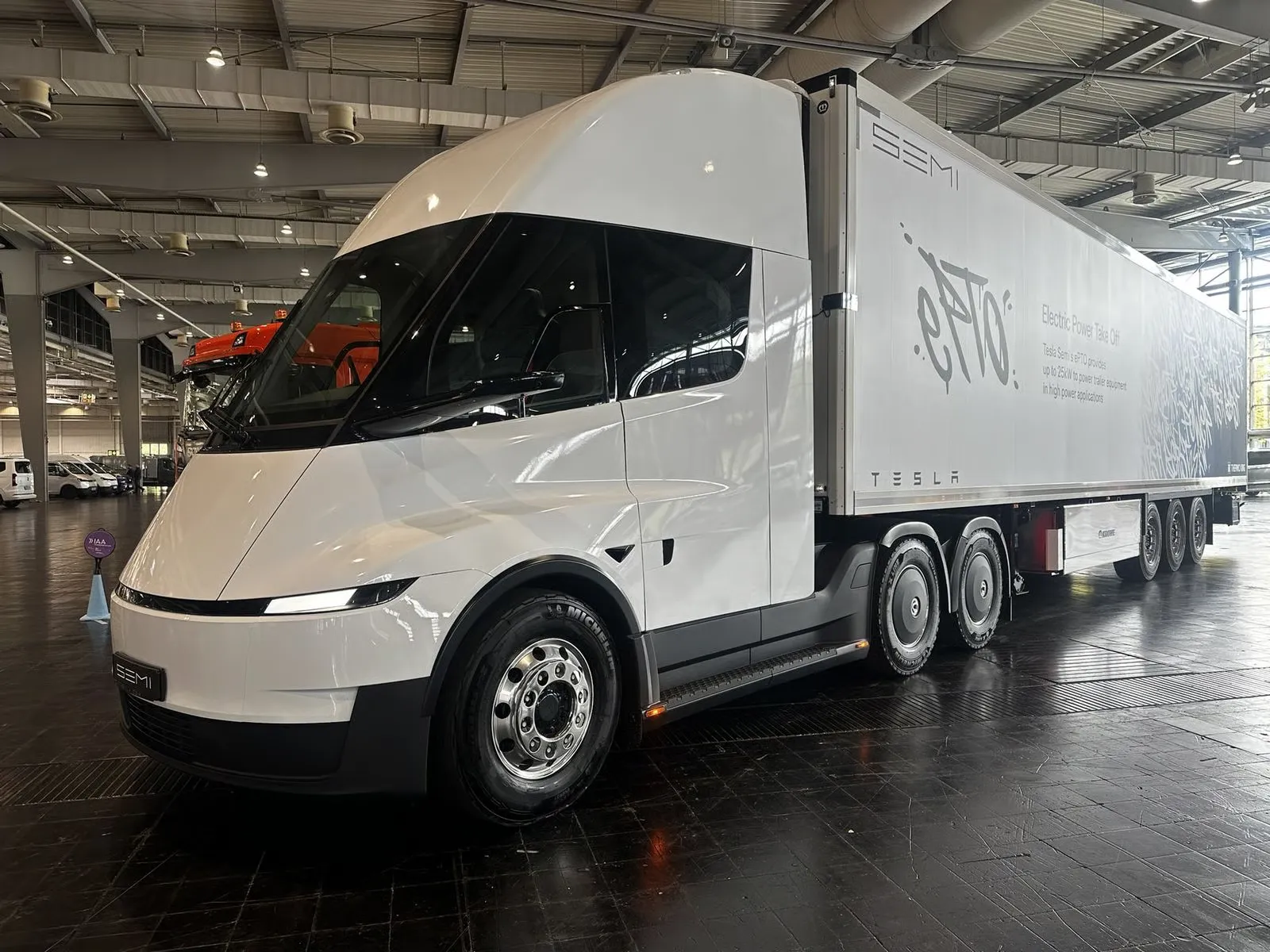
The traction system relies on three independent engines mounted on the rear axles, delivering a power output of up to 800 kW, or nearly 1,100 horsepower. The curb weight is reported to be under 9,100 kg, with a total running weight of 40 tons. On the several hundred meters of the Hanover test track, we were able to see a demonstration on a short straight section. Impressive!
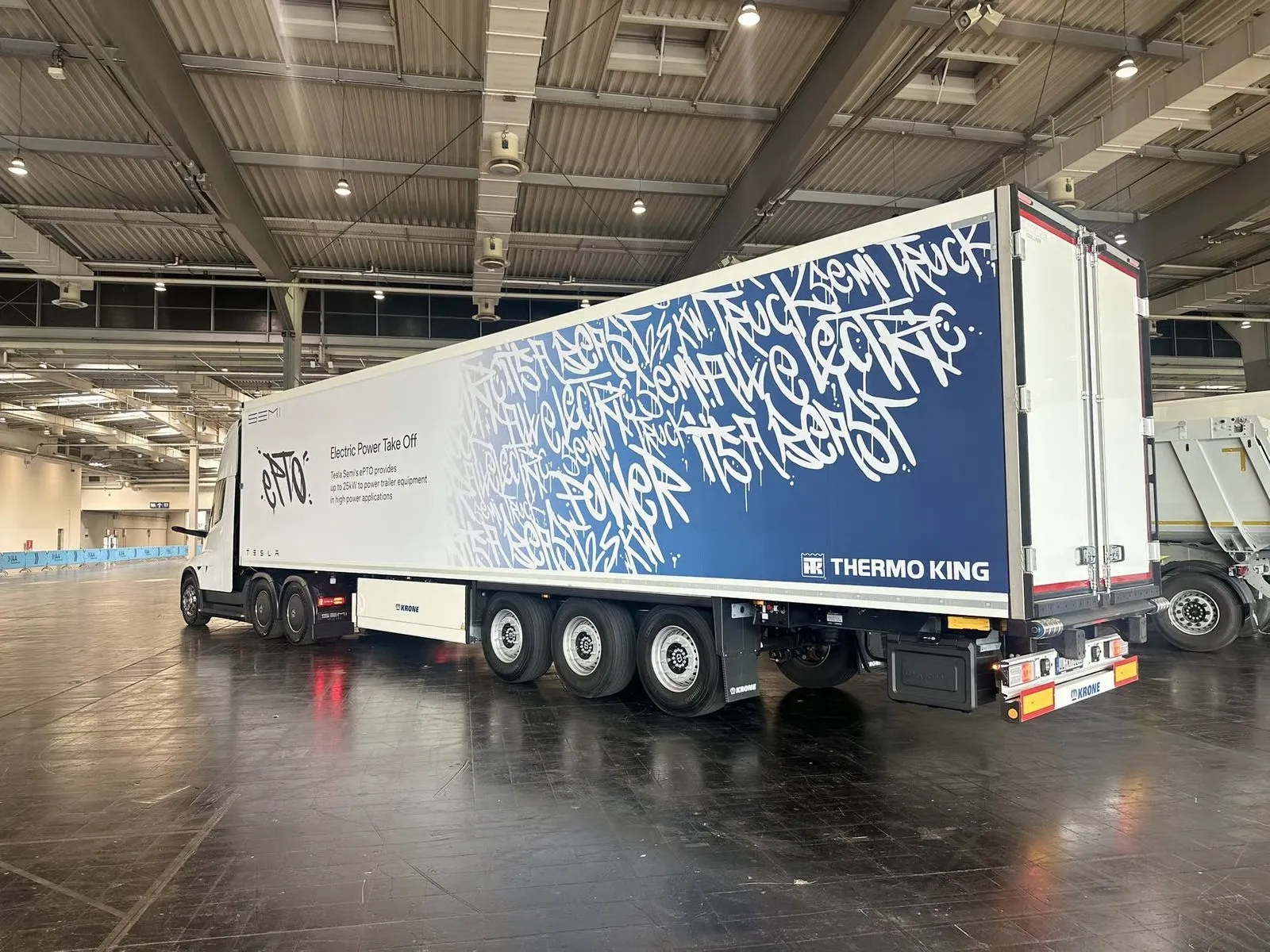
In practical terms, the Semi also comes equipped with an electric power takeoff — Tesla’s term for ePTO. The truck offers an external power output of up to 25 kW, directly powered by the traction battery. This is particularly useful for temperature-controlled transportation: the refrigeration unit in the trailer can be powered by the truck, eliminating the need for a diesel generator. At the Hannover exhibition, it was actually a refrigerated trailer equipped by Thermo King that served as the demonstration unit.
Efficiency first
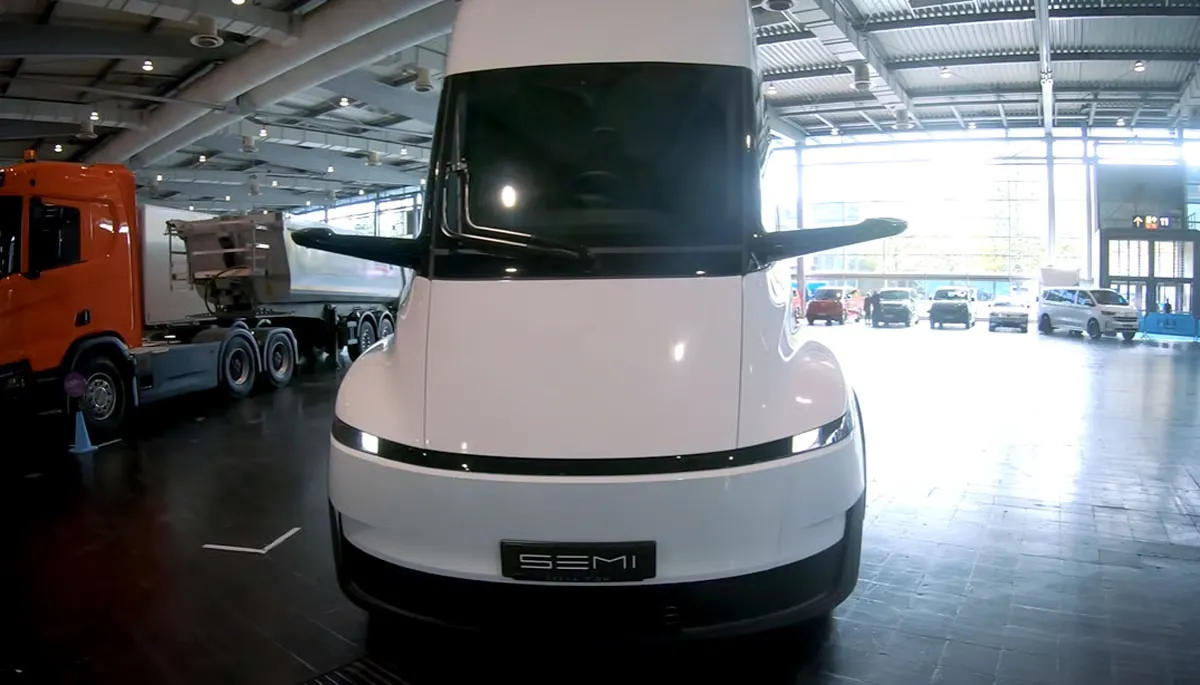
From the outside, the Semi remains a truck, with its ogive-shaped silhouette and lines that in some areas strongly resemble those of the Model Y. But the work done on aerodynamics is evident at a glance. The solid wheels contribute directly to its claimed fuel consumption of 1 kWh/km, while the very narrow front end reveals a focus on minimizing drag coefficients.
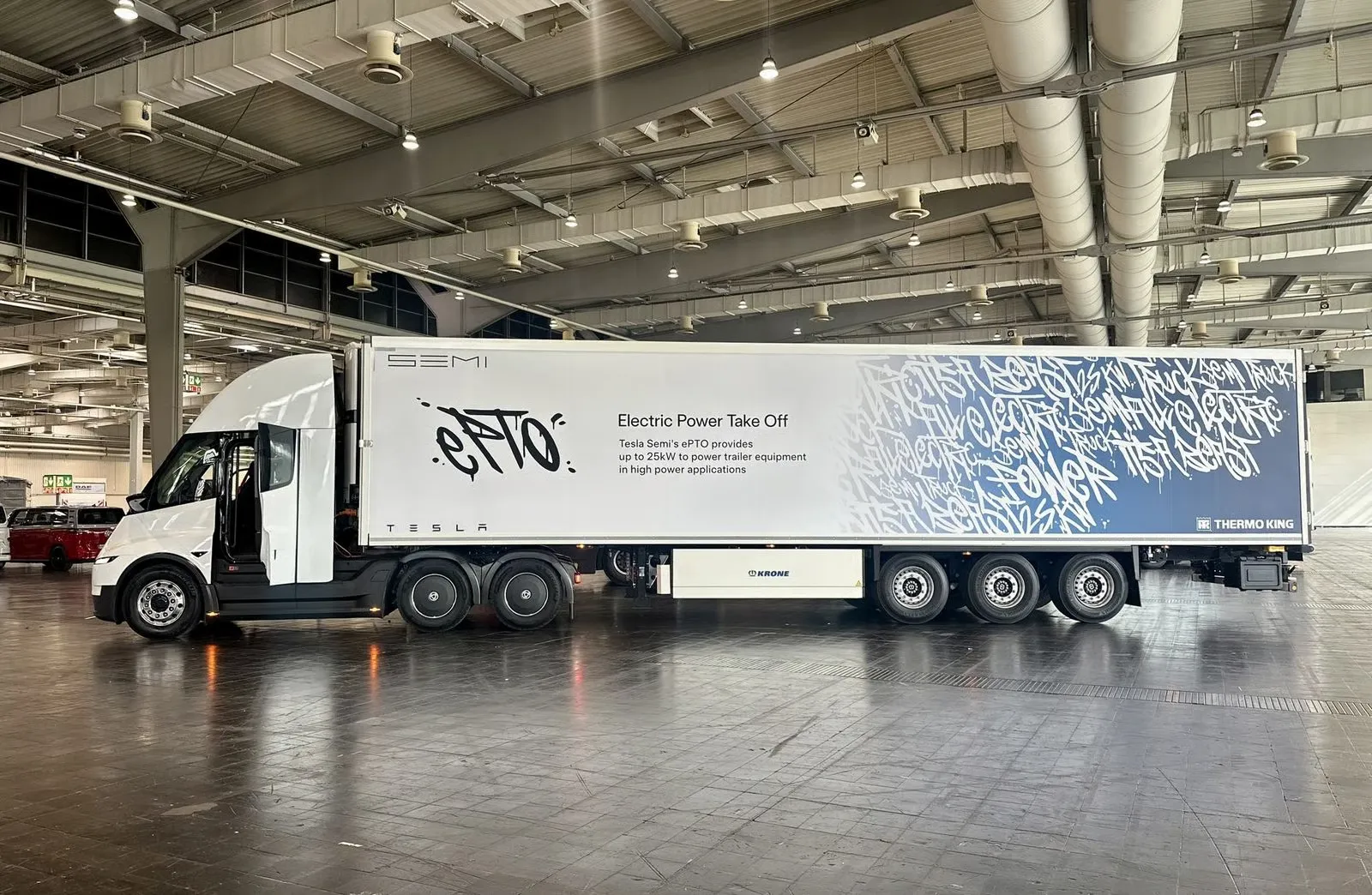
The Tesla Semi also features an abundance of cameras. One at the front, one at the back, and especially three per “rear camera” on either side of the vehicle—these small units replace traditional mirrors. Both the hardware and software are directly inherited from Tesla’s luxury vehicle lineup, allowing the company to build on a technically proven foundation.
A minor drawback, however: these rear cameras seem to be positioned too low to us. On Mercedes trucks, for example, the equivalent cameras are installed higher up on the cab. On European roads, which are often narrower than those in the United States, one might reasonably question their durability given how far they extend on either side of the truck.
Charging: 800 kW today, 1.2 MW in development
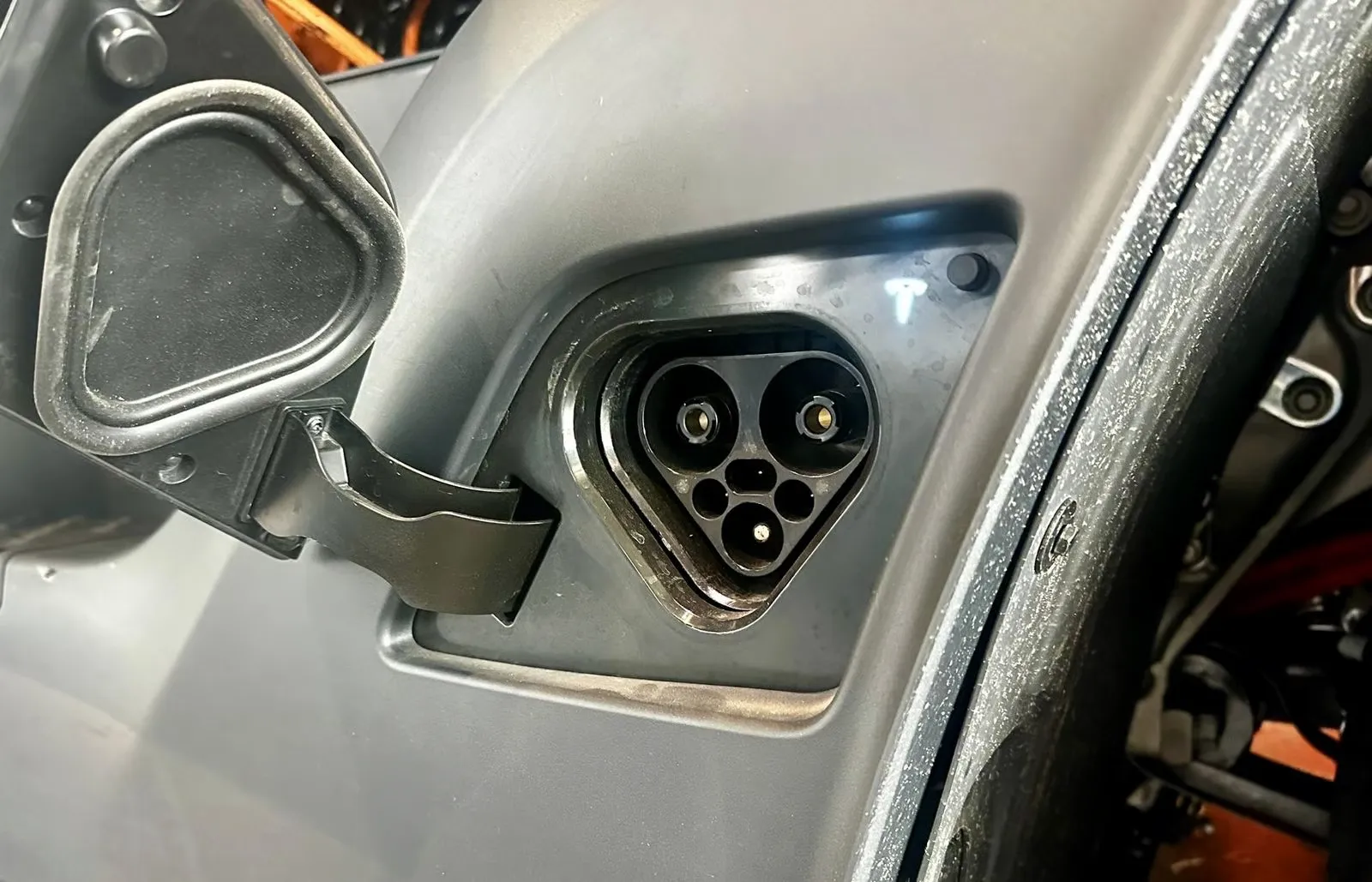
The charging port is hidden behind a hatch at human height. It features an MCS connector (Megawatt Charging System), the emerging standard for heavy trucks that is still unfamiliar to the general public accustomed to CCS. It can handle up to 800 kW, allowing Tesla claims that 60% of the battery’s charge can be restored in thirty minutes.
This is less than what some competitors claim, especially BYD with its new 1.5 MW heavy truck, but the manufacturer still maintains a comfortable margin. The stations it deploys are indeed calibrated to deliver 1.2 megawatts per charger.
“This gives us the option to increase the truck’s charging speed in the future, or to serve other manufacturers whose vehicles can handle higher power,” explains Dan Priestley, Director of the Tesla Semi program.
And since MCS chargers are still extremely rare in the European network, Tesla will also provide a CCS adapter to allow the Semi to connect to more conventional infrastructure in the meantime.
A network of megachargers still in development
Regarding charging, the manufacturer aims to replicate exactly the strategy that made its cars successful by building its own network. These will be Megachargers, as opposed to the superchargers used for cars. Deployment in Europe is set to begin next year. Over 100 stations are planned for the initial phase alone, located in France, Germany, the Netherlands, Denmark, parts of Sweden, and the United Kingdom.
For France, Dan Priestley mentions “probably between six and ten stations” initially. Good news for the ecosystem: this network won’t be reserved only for Tesla customers. “All our stations will meet the MCS standard, and anyone who wants to use MCS can do so,” confirms the program director. This openness is consistent with the direction taken by the Supercharger network in the passenger vehicle market.
Inside the Tesla Semi
A unique cockpit and ergonomics
The Tesla Semi’s entry consists of opposing doors that open at 90 degrees, providing particularly unobstructed access. The first thing that surprises you upon entering the cabin is the driver’s seat, which is positioned in the center. This is a fairly unique setup in its class, reminiscent of the Mia Electric (for those who still remember it).
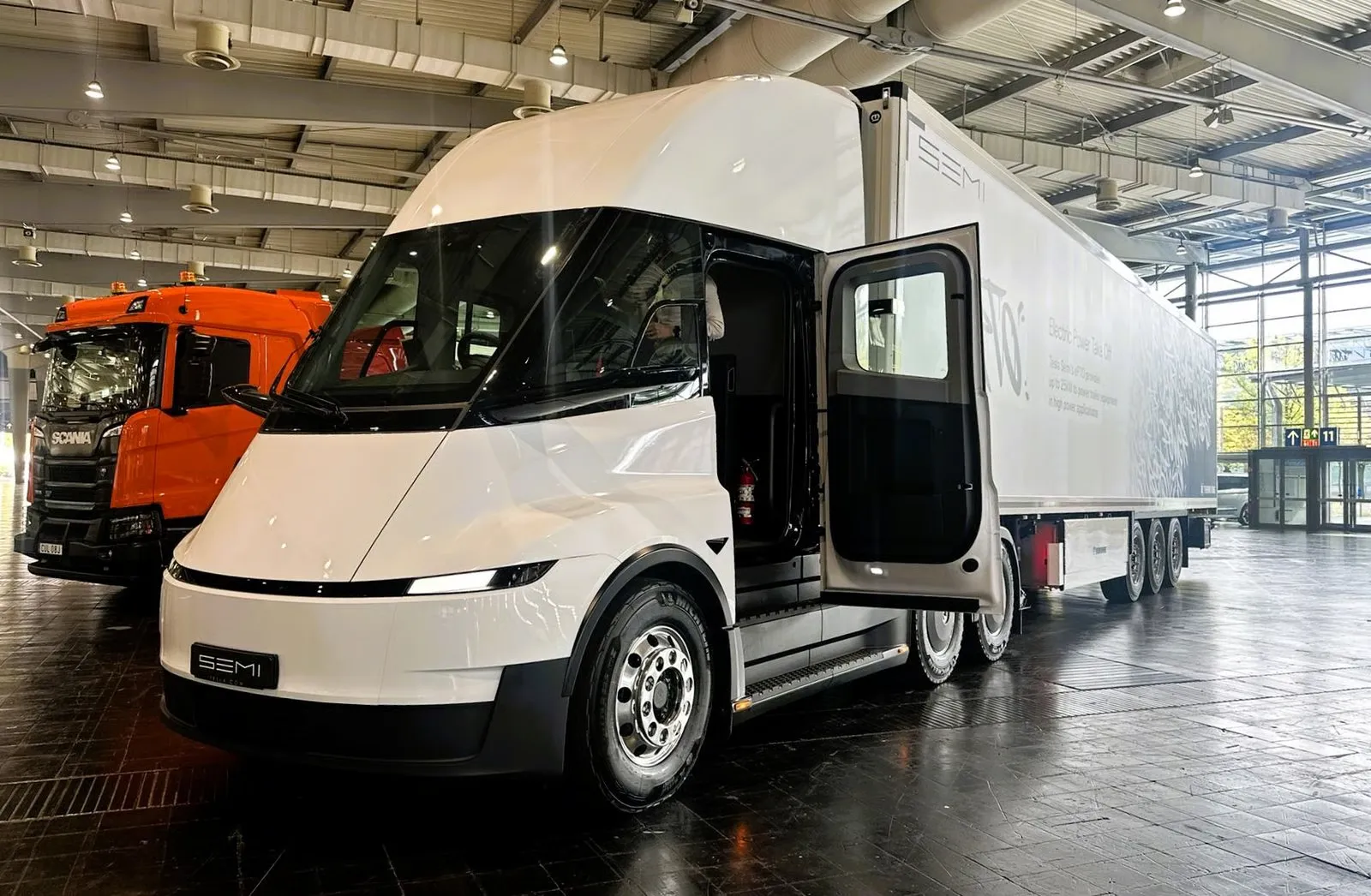
This choice is certainly not accidental. “Most trips are made with just one person aboard, so we wondered why include two seats,” explains Dan Priestley. There’s also the aerodynamic constraint, as the front of the truck is very narrow. The official adds that this layout also improves visibility. Most importantly, drivers’ reluctance fades quickly. “At first it’s confusing, but drivers adapt fast and eventually stop thinking about it,” says the Tesla official.
The passenger seat’s position, shifted backward at the back of the cabin, doesn’t really promote comfort when driving with two people. Regarding interior customization, Tesla states it can add a second seat on the other side to accommodate three passengers, but there has been no real demand for this. What about a bed onboard? Tesla is considering adding one for drivers who sleep in their trucks, but nothing has been finalized yet. In the European market, where long-distance trips often require overnight stays in the vehicle, this is an issue that needs to be resolved. It remains to be seen whether the cabin size will allow for proper implementation of such a feature. We have some doubts...
Two screens, a 100% Tesla experience
The other advantage of this central positioning is that it allows for a screen to be placed on each side of the driver. Once again, Tesla didn’t try to reinvent the wheel: these displays are directly taken from the Model 3 and Model Y.
In practice, each screen has its own function: the one on the left is primarily for monitoring the truck, while the one on the right is for the driver, with both also displaying rear cameras.
On the large screen, there is a dedicated module for the mandatory checks that every driver must perform before hitting the road. Tesla says it worked with drivers to create shortcuts that are truly practical. The climate control works exactly like on a Model Y. The windows, which are too far from the driver due to their central position, can be adjusted using dedicated buttons on the screen. On the right screen, users enter an interface immediately familiar to any Tesla owner: navigation, apps, settings, and more...
Slightly larger than those in the brand’s other vehicles, the screen maintains the same design philosophy with its dials and shortcut buttons. The equipment includes an inductive charger, two USB ports, as well as reclining seats with ventilation and heating.
Autonomous driving: data ahead of deployment
Whether in the US or Europe, the Tesla Semi does not offer autonomous driving. On this point, Tesla applies to the electric truck exactly the same approach it uses with its cars: first deploying vehicles driven by humans, collecting millions of kilometers of data before moving on to autonomous driving. There’s a reason for this: the Semi is an articulated vehicle, which generates entirely new types of training data. The United States will serve as the initial testing ground, with Europe following later.
In summary: the hardware is ready for it; it’s the software that needs to evolve. When Tesla is ready to “press the button,” a remote update will enable the deployment of this feature.
First deliveries in 2027
In terms of the schedule, the first Semi trucks will hit European roads in the first half of 2027 for testing and demonstration with customers, with deliveries planned for the second half. Priority will be given to major freight countries: France, Germany, the United Kingdom, Benelux, and Denmark, before considering Eastern Europe and the southern part of the continent.
True to its model, Tesla will not use any dealers. The same approach applies to after-sales service, which is entirely handled in-house, with dedicated service centers for the Semi and a mobile service team capable of providing direct support to transport companies.
The most anticipated piece of information is missing, however: the price. Tesla has not disclosed any European pricing. Across the Atlantic, the Semi is listed at $260,000 for the Standard Range version and $290,000 for the Long Range version. It’s not feasible to convert these figures into euros, as it remains a risky task due to taxes, regulatory approvals, and transatlantic logistics. More importantly, we will cover Tesla’s business strategy for the Semi in greater detail in an upcoming interview with Dan Priestley.
The big question remains: will Tesla manage to establish its dominance in Europe? The American manufacturer entered the European market late, facing established players that didn’t wait to launch their electric initiatives, sometimes offering ranges and charging speeds superior to those of the Semi. Volvo, Mercedes, Scania, MAN, and Renault Trucks also have distribution and maintenance networks that Tesla will need to build from scratch.
Nevertheless, Tesla has several advantages at its disposal: efficiency, highlighted as a key selling point with promises of unbeatable total cost of ownership; the promise of its own network of megachargers deployed across Europe; and the potential for autonomous driving features that could eventually help it catch up.
What do you think about the Tesla Semi? Do you see it becoming dominant over European manufacturers? Share your thoughts in the comments.