
We got into the Renault Niagara: the pickup truck that aims to conquer Latin America
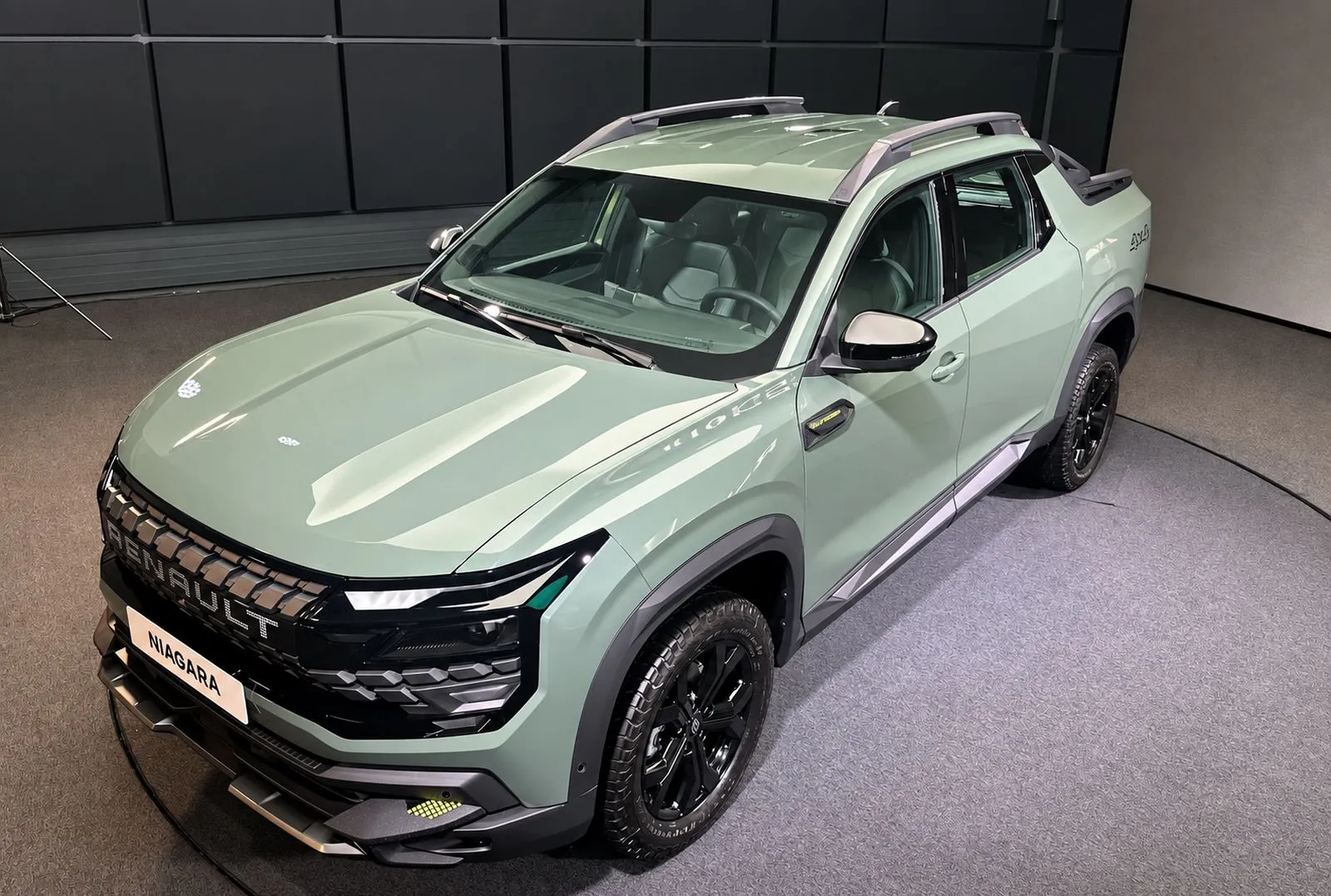
Renault has just unveiled its new pickup truck, the Renault Niagara. Designed for Latin America, this first model under the futuREady program is not planned for Europe and will launch in gasoline-powered versions, with a hybrid variant expected later. We got an early look at it.
There are some presentations that sound oddly familiar to our European ears. The Renault Niagara is one such example. It’s a vehicle designed in Brazil, developed between Brazil and Argentina, assembled in Córdoba, intended for Brazilian, Argentine, and Colombian customers... and one you’ll likely never see at a French dealership. There’s no electric version, no plug-in hybrid version, and not even a conventional hybrid at launch. On paper, this move is quite surprising for Automobile Propre.
But that’s exactly what makes it interesting. The Niagara is the first model from the futuREady plan, which aims for Renault to launch 14 new vehicles outside Europe by 2030, with the goal of achieving half of its sales internationally and raising the share of electric models to 50% of its total lineup. In other words, the brand with the diamond logo is choosing to start this offensive with a conventional pickup. And it’s a huge challenge!
"Launching a pickup in Latin America is a major challenge," admits Fabrice Cambolive, CEO of Renault. "This vehicle sits at the intersection of many different needs: it serves both as a personal car and a utility vehicle in its uses—for work during the week and for leisure and family time on weekends."
A pickup that won’t cross the Atlantic
Let’s be clear right away: at this stage, there is no plan to launch the Renault Niagara in Europe. There are two reasons for this. On one hand, French and European taxation on this type of vehicle has become significantly stricter, with penalties that make the market segment practically unviable commercially. On the other hand, demand for such vehicles is structurally low there. Renault actually removed its Alaskan from the European catalog as early as 2020.
What about a future hybrid version? The same answer applies. It would rely on the HR13 engine, which is not available in the European catalog either. Thus, the door is firmly shut, even for any potential electrification in the future.
In the end, choosing the diamond-shaped brand is pragmatic. In Latin America, pickup trucks account for about 80% of all commercial vehicle registrations. In Brazil alone, nearly 500,000 units were sold in just the year 2025! This segment is more significant than sedans in several countries in the region. It’s difficult for Renault to overlook such a large market volume.
The Renault Niagara in terms of style
A SUV built on a pickup truck chassis
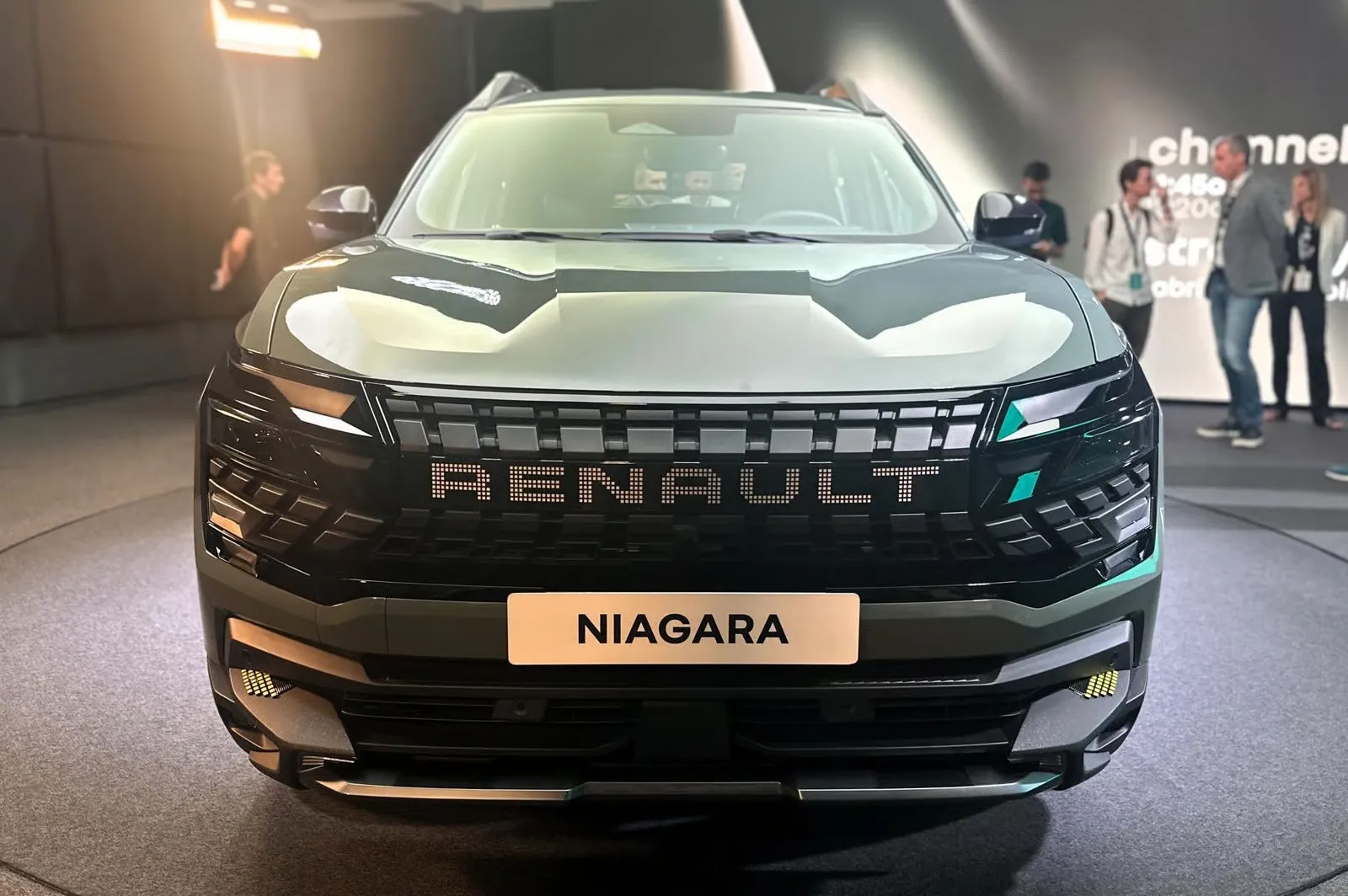
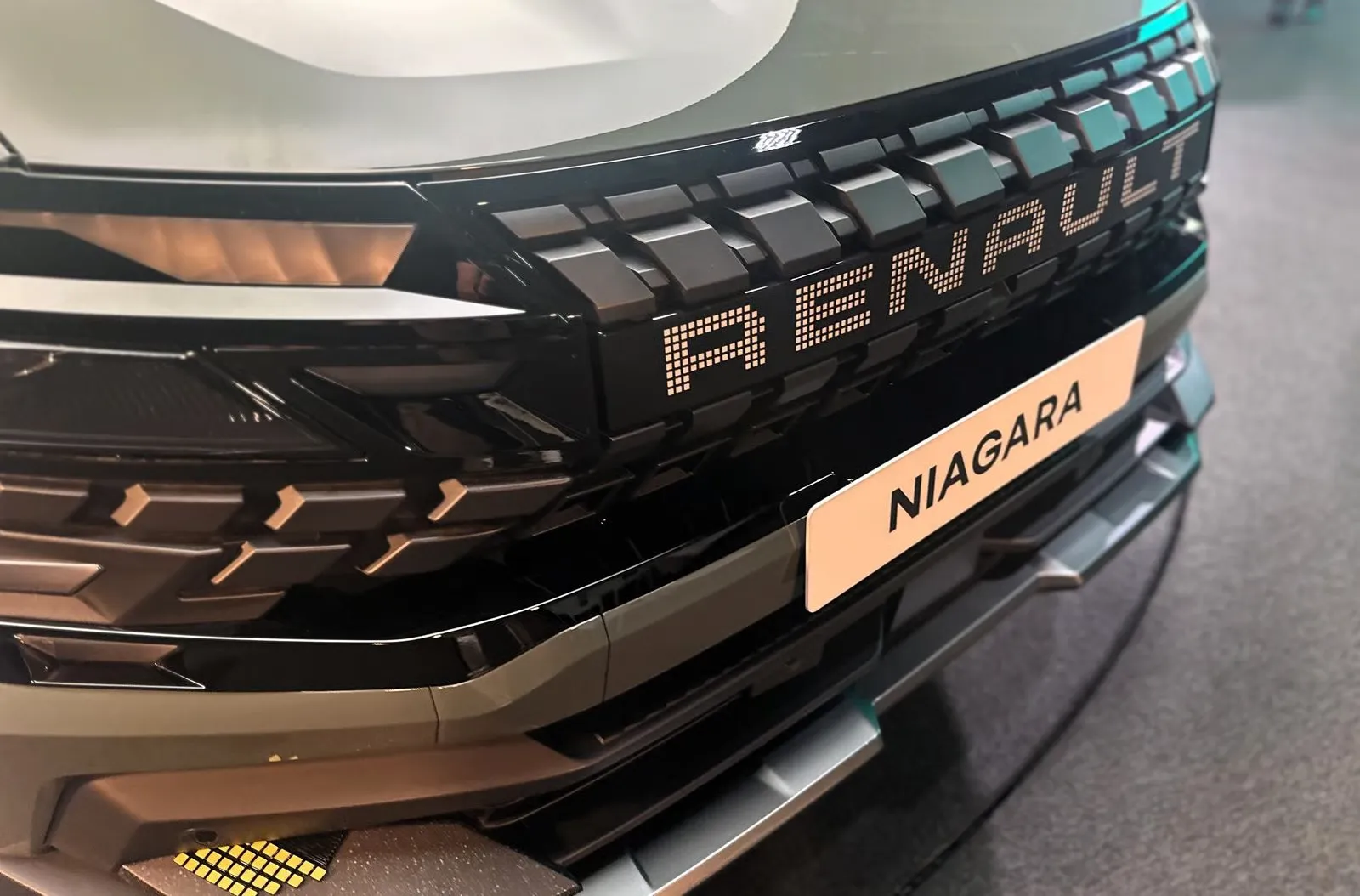
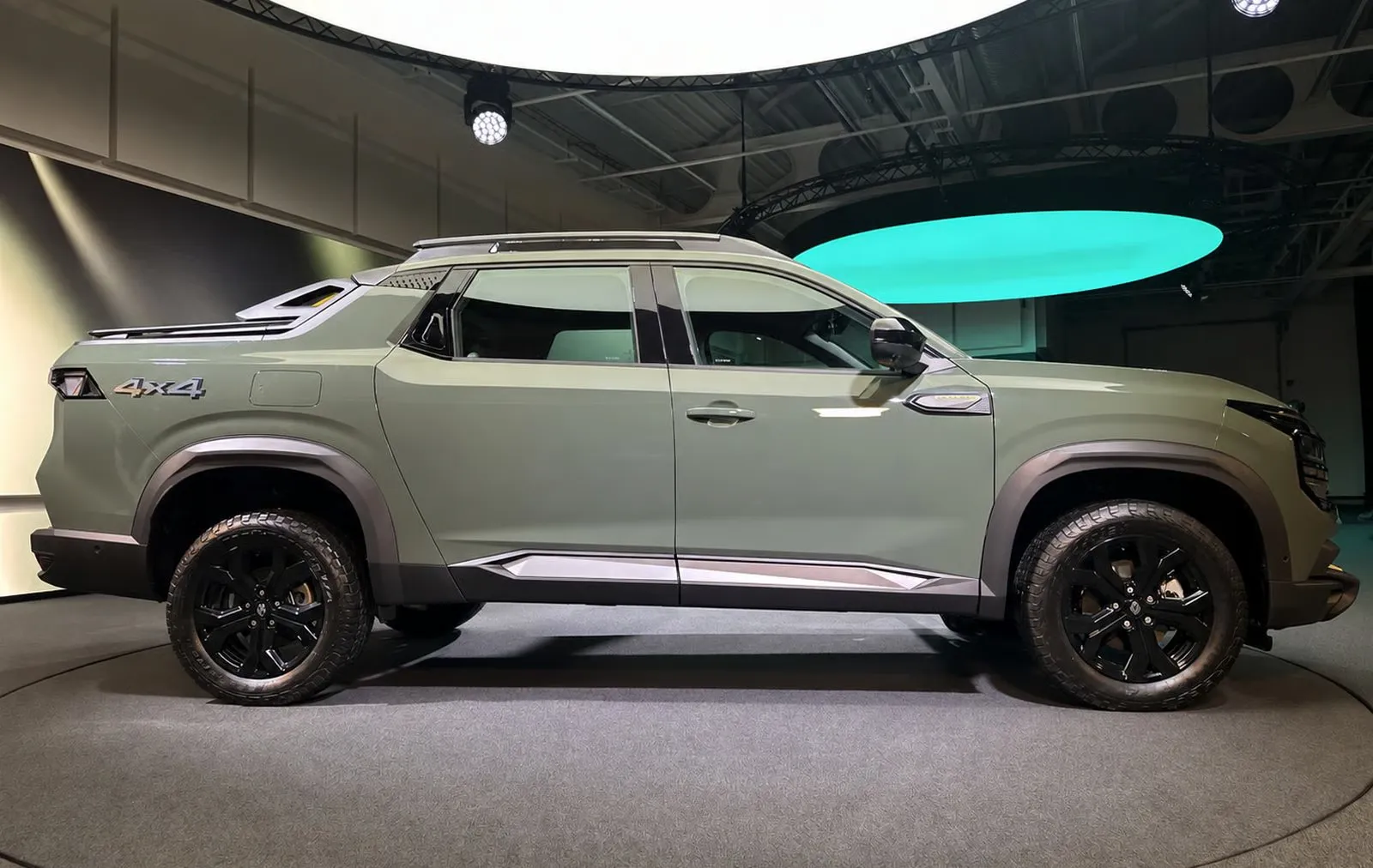
Visually, the Niagara draws inspiration from the concept car of the same name presented in 2023 and combines several design elements. The front end features the typical styling of large pickup trucks: a vertical grille, a high hood with prominent ribs that flow into the fenders, an underbody shield with LED fog lights, and protective skid plates.
As per the concept, the name “Renault” appears in bold letters at the center of the black grille, this time with a pixelated pattern finish. This was a deliberate choice, we were told, to adopt the aesthetic codes of this vehicle segment. Notably, this logo can be illuminated, but its availability will depend on regulations in various target markets. Another reference to the pickup world is the name “Niagara,” which is also stamped directly onto the trunk lid. Again, this practice is common in this vehicle segment.
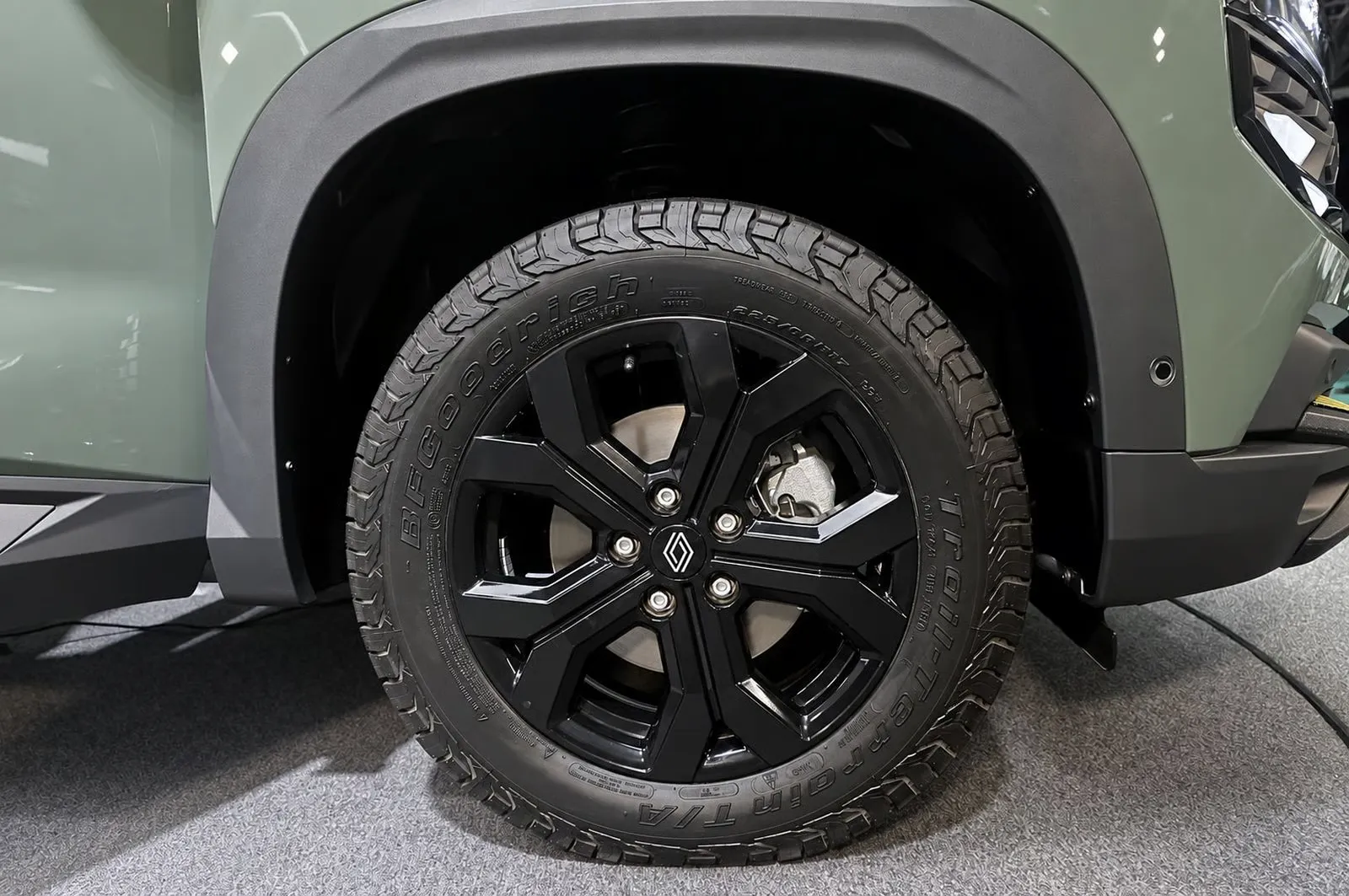
At 4.94 meters long (4.91 meters in 4×2 configuration) and 1.72 meters high, the Niagara boasts much more generous proportions compared to the Oroch, which is limited to 4.69 meters in length. From the side, its pronounced shoulders, widened wheel arches, and sleek lines contribute to its impressive appearance. However, the 17-inch wheels on the model shown appear a bit out of place given such large wheel arches. While practicality clearly took precedence over aesthetics, Renault confirms that 18-inch wheels will also be available. Phew!
Inside the Renault Niagara
A connected atmosphere with built-in Google services
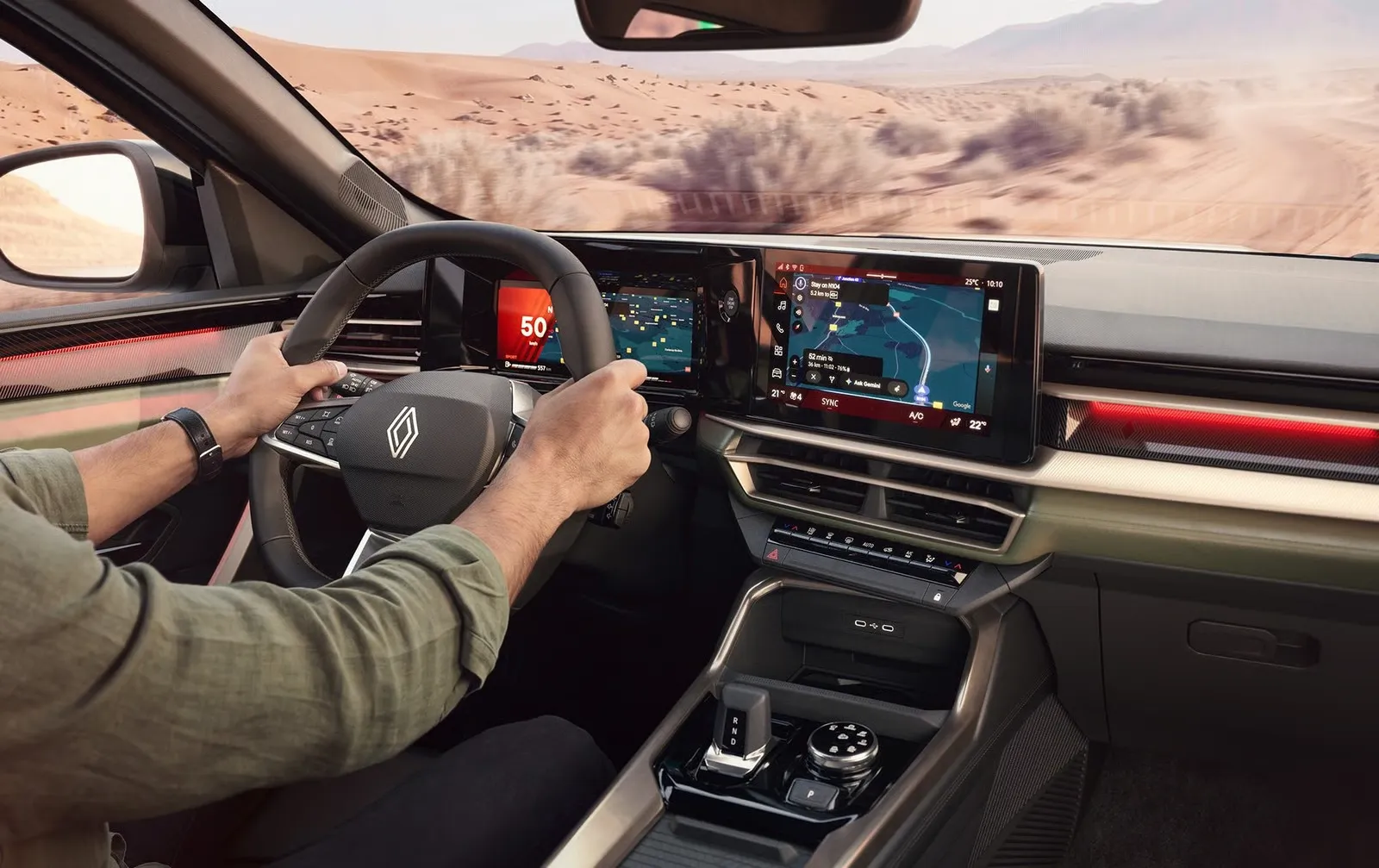
This is where Renault plays its strongest card. The horizontal dashboard features a 10.1-inch multimedia screen and a 10.2-inch digital instrument cluster, creating what Renault calls a “native digital” experience. The electronic gear selector frees up space in the center console, and an inductive charger is also included.
Most importantly, the Niagara becomes the first pickup to come equipped with Google-integrated OpenR Link. It includes Google Maps, a Play Store for installing custom apps, as well as a conversational assistant based on Google Gemini. In a market where competitors sometimes lag technologically, this is an advantage Renault plans to leverage.
In the rest of the cabin, options include a padded dashboard depending on the version, LED ambient lighting with up to 48 colors, electrically adjustable front seats, and fabric upholstery with stitched and embroidered details. These stitches indeed add a genuine premium touch to otherwise quite sporty seats.
Renault claims the best rear passenger space in its class, with 200 mm of knee room, and a rear seat bench whose backs can be reclined by 25 degrees. All five seats are said to offer comfortable seating. In reality, the central rear seat remains limited by the transmission tunnel and the protruding console, as is common in most vehicles.
In terms of storage, the Niagara handles it well: multiple compartments, a central armrest with a cup holder, and behind the seat, a 36-liter compartment accessible from the cabin by folding down the backrests. It’s convenient for hiding items out of sight.
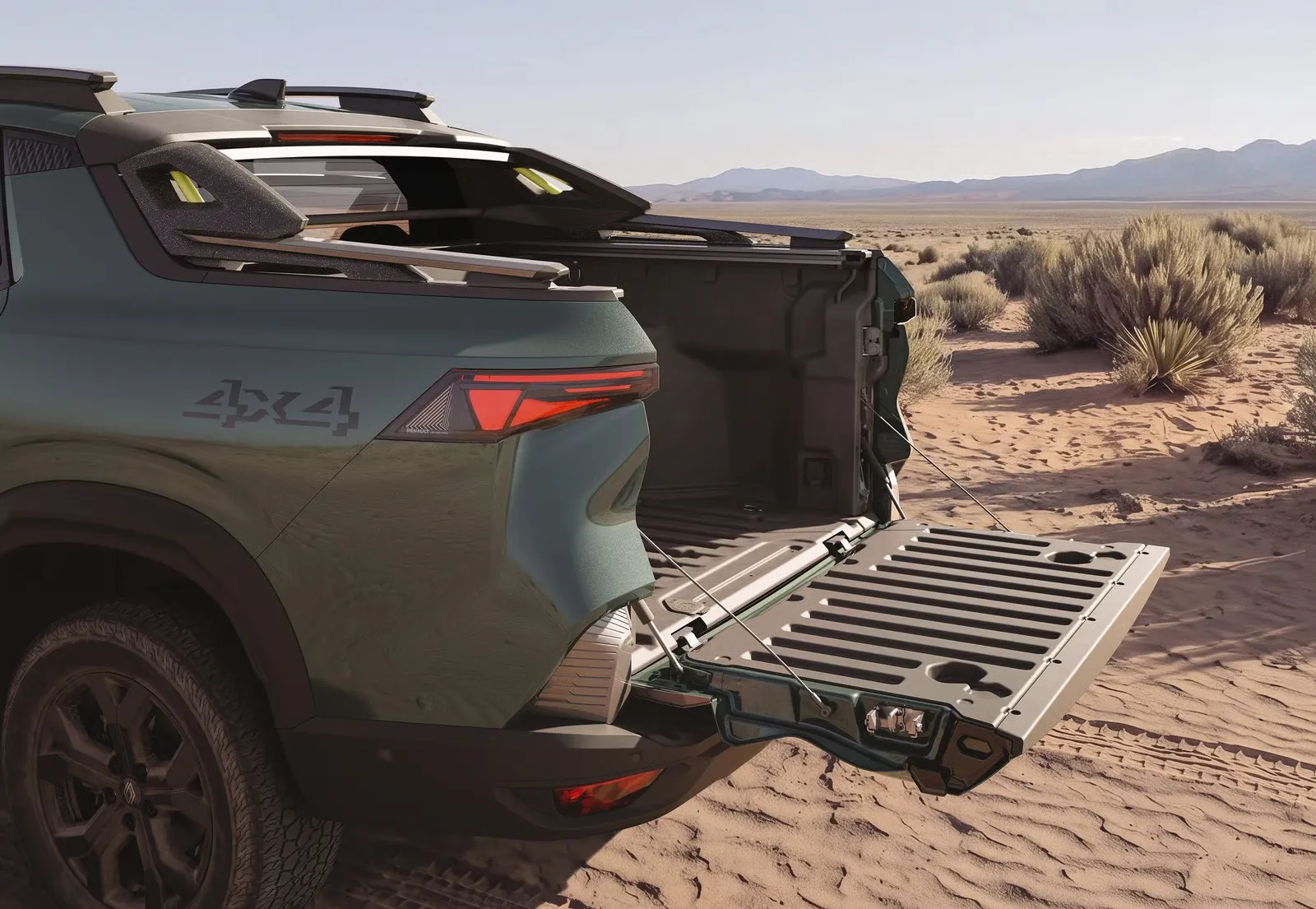
The trunk has a capacity of 938 liters and a payload of 654 kg. The sliding roll-up trunk lid protects the load from rain and dust while allowing quick access. The trunk floor is covered with a protective coating, and eight anchoring rings surround the platform. There’s also a 12 V socket that allows connecting small tools directly from the trunk. A cup holder is even built into the tailgate. Renault claims a towing capacity of 710 kg.
In terms of driving assistance features, the equipment is equally comprehensive: adaptive cruise control with Stop & Go, lane keeping and warning system, traffic sign recognition, attention monitoring, automatic emergency braking, blind spot detection, rear cross-traffic warning with automatic braking while reversing, and a 360° panoramic camera. Hands-free parking is also available.
The technical side of the Niagara
1.3 turbo, flex-fuel… hybrid version to come later
Under the hood, the Niagara features a single engine unit: a 1.3 turbocharged direct injection (GDi) engine that is compatible with both gasoline and flex-fuel depending on the market. It delivers 115 kW (156 hp) in 4×2 mode and 120 kW (160 hp) in 4×4 mode, with a maximum torque of 270 Nm. There are two transmission options: a six-speed manual gearbox or a dual-clutch EDC gearbox, also with six speeds, controlled via an electronic shift lever.
In Latin American countries, flex-fuel compatibility is no small matter. In Brazil, ethanol derived from sugarcane accounts for a large portion of the fuel consumed, offering a much more favorable carbon footprint compared to fossil gasoline. It is currently the only “clean” solution for the Renault Niagara. A hybrid version based on the Renault HR13 engine is also planned, but that won’t be available anytime soon. When asked about the features of this future Renault Niagara hybrid, the brand dismissed the question, stating that technical details would be disclosed “in due time.” In other words, Brazilian flex-fuel will serve as a transition, while the hybrid version must wait!
No market for electric versions
When asked about the lack of an electric or rechargeable hybrid version, Fabrice Cambolive did not avoid the question. “There is a trend toward electrification, but it’s progressing too slowly in this segment. It’s not the primary factor for differentiation.” In short, Renault believes there is no identified need for electric or rechargeable hybrid vehicles in this category and these markets.
The Renault Niagara vs. Competitors
Fiat Toro, Ram Rampage, and GM Montana in its sights
Renault is aware that the pickup market is highly competitive, and the brand will have to compete with established rivals. The main competitors mentioned include the Fiat Toro, GM Montana, Ram Rampage, and Ford Maverick. However, Renault believes it is entering the market with a new product against models that are sometimes outdated, and it relies particularly on connectivity features to win over customers.
Nevertheless, its positioning remains that of an outsider, to the point where it is literally the name of one of the trim levels. Still, Fabrice Cambolive insists, “We’re not starting from zero,” reminding that Renault is already established in Latin America and is a leader in the van segment with the Master.
The launch of the new Renault Niagara is expected before the end of the year. Three main markets are targeted: Brazil, Argentina, and Colombia, with gradual expansion to other countries in the region through imports. The initial production capacity of the Córdoba factory is around 65,000 units per year, nearly 70% of which are intended for export.
The prices have not yet been determined. Yet this is where it really matters: in a market segment where buyers remain loyal to their brands, Renault will need to establish itself in a sector where its credibility still needs to be proven...