
Omoda 4 EV: The new electric SUV will arrive in 2027 with a 67-kWh battery.
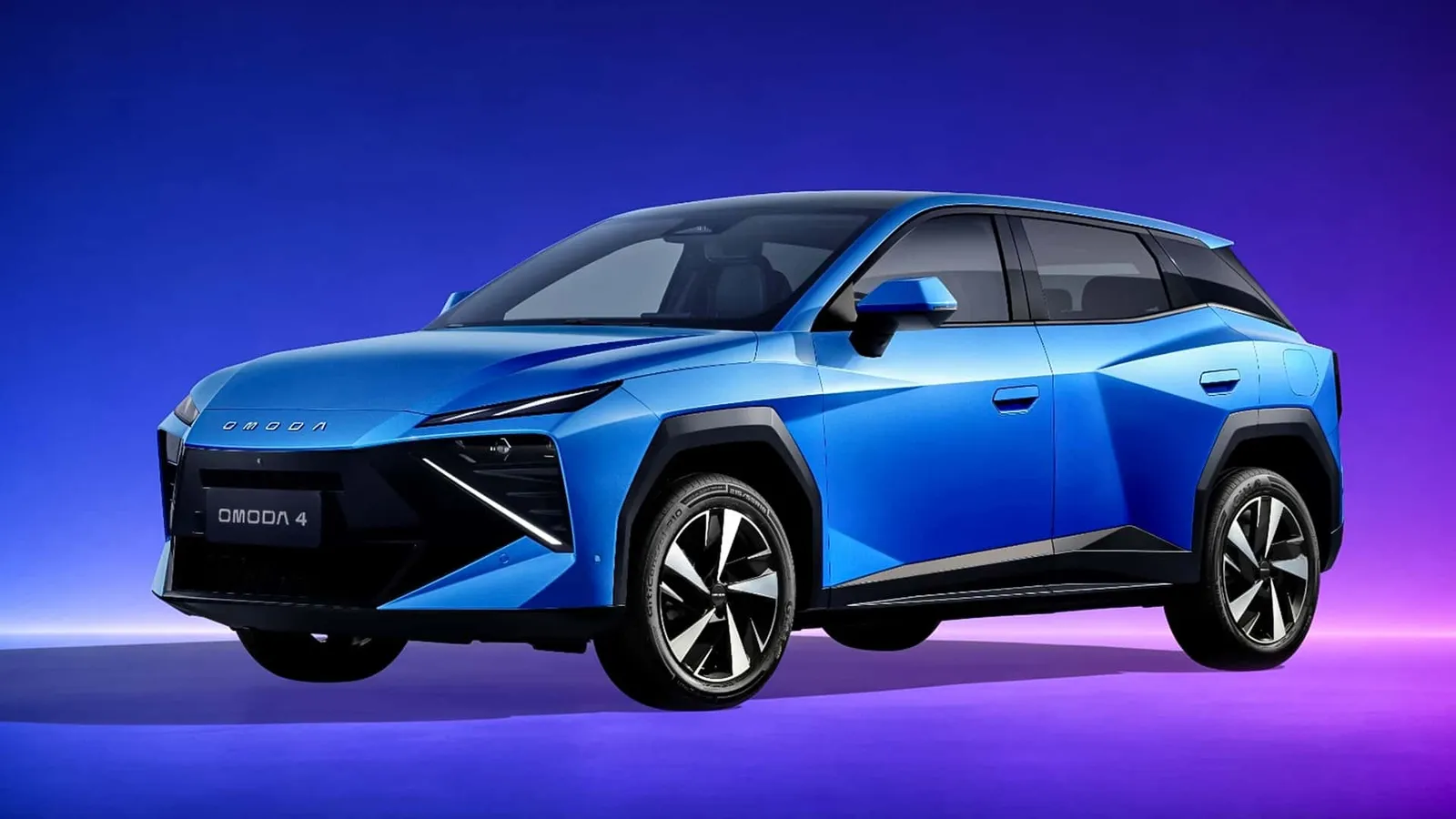
The Chery group is considered by far China’s largest automobile exporter. However, it remained cautious when entering Germany due to its assessment that the local market was particularly challenging. The Omoda and Jaecoo brands were launched in October 2025, with the first all-electric models, the Jaecoo 5 EV and the Omoda 5 EV, arriving even now. An Omoda 4 is also set to be added in early 2027, which will likewise be available as an electric vehicle.
Surprisingly, the Omoda 4 EV is not the smaller sibling of the Omoda 5 EV but is almost as large. It is also based on the same T1X platform. The manufacturer classifies this vehicle as a B-segment crossover, meaning it is a compact car. We would categorize it as a compact coupe-SUV. We introduce this model and compare it with the Omoda 5 EV, using the current version rather than the already unveiled facelift variant.
Exterior | Interior | Powertrain/Battery | Features
Gallery: Omoda 4 (2027)
Exterior
While the Omoda 5 and Jaecoo 5 were designed in China and only modified in Germany, the Omoda 4 is said to have been primarily developed at the European development center in Raunheim near Frankfurt. Its design is sporty, vaguely reminiscent of Lamborghini. Compared to the Omoda 5, the new model appears more angular, thanks to the diagonal light strip on the front, additional grooves on the sides, and the rectangular wheel arches:
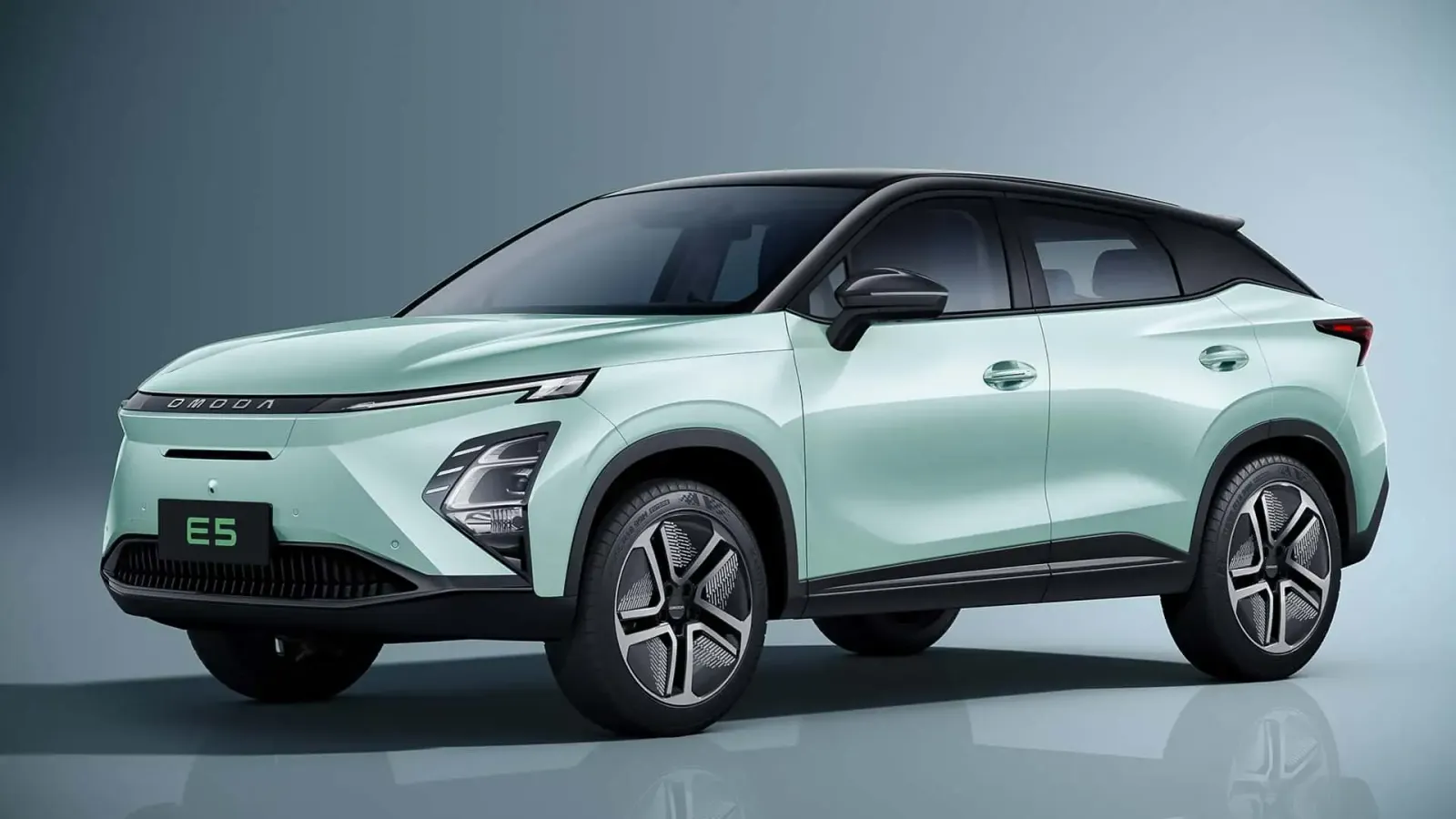
Omoda 5 (2025)
Images by: Omoda & Jaecoo
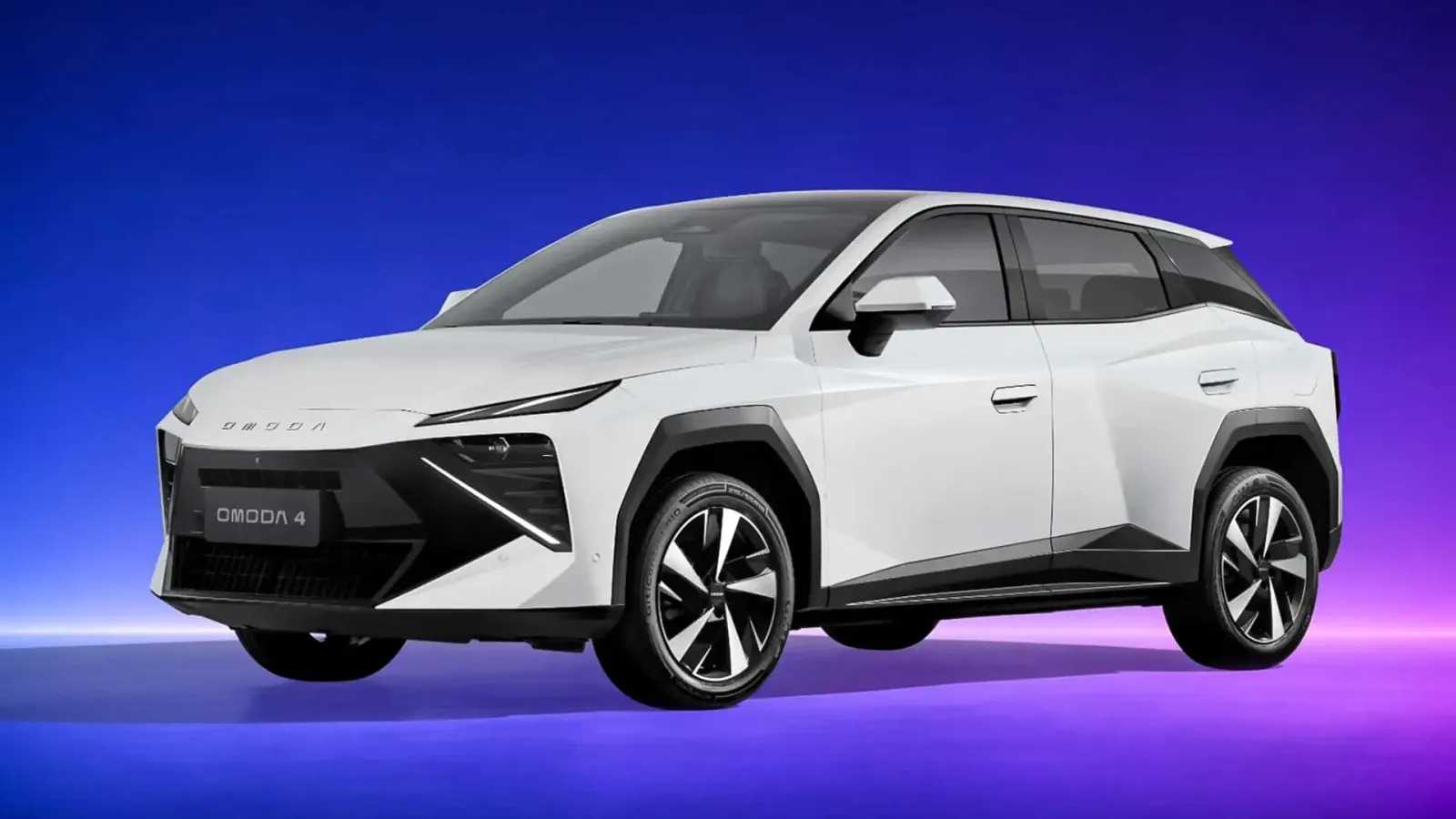
Omoda 4 (2027)
Images by: Omoda & Jaecoo
The Omoda 4 is the same length as the Omoda 5 but slightly lower. The height difference is particularly significant compared to the Jaecoo 5, which is also based on the T1X platform:
Length
Width
Height
Wheelbase
Omoda 4 EV
4,424 mm
1,863 mm
1,570 mm
2,700 mm
Omoda 5 EV
4,424 mm
1,830 mm
1,588 mm
2,630 mm
Jaecoo 5 EV
4,380 mm
1,860 mm
1,650 mm
2,620 mm
The figures for the wheelbase are still contradictory: the specifications list a value of 2.70 meters, while press materials mention 2.63 meters. Like its sibling models, the Omoda 4 is equipped with 18-inch wheels. The rear lights also appear more angular due to their distinctive bend compared to the Omoda 5:
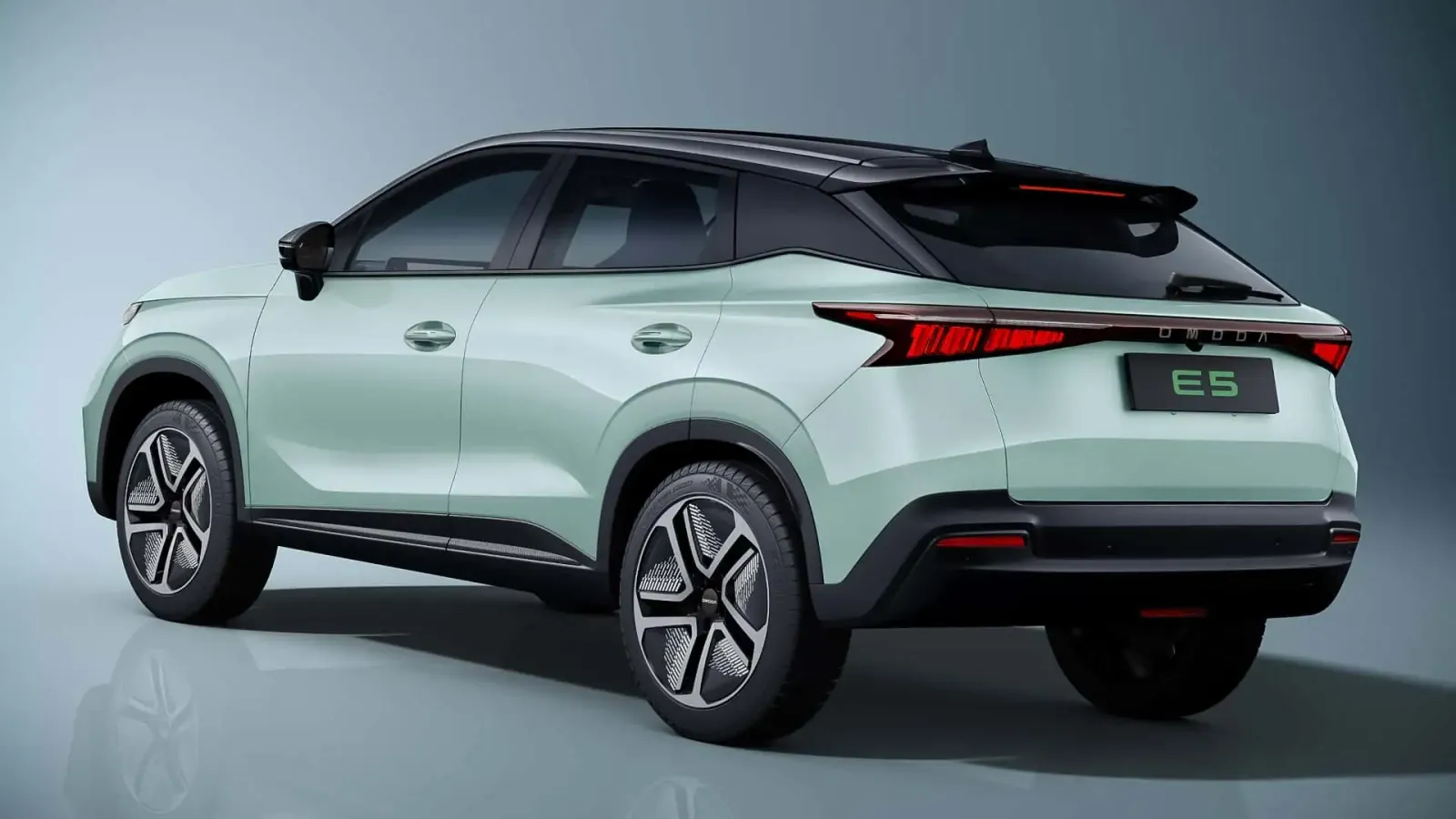
Omoda 5 (2025)
Image source: Omoda & Jaecoo
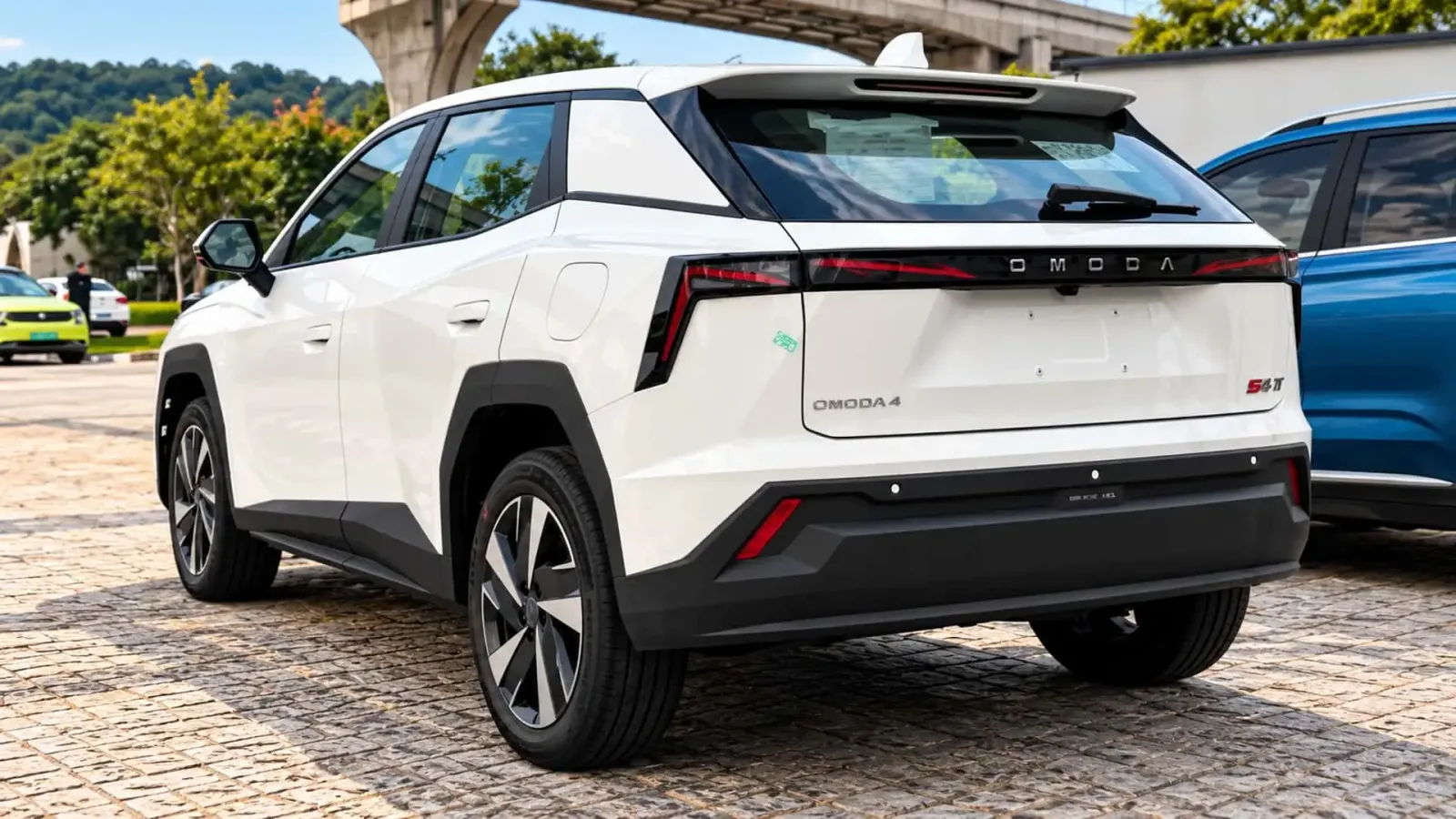
Omoda 4 (2027)
Image source: Motor1 Brasil
In addition, the lighting design at the rear takes on an original flash shape:
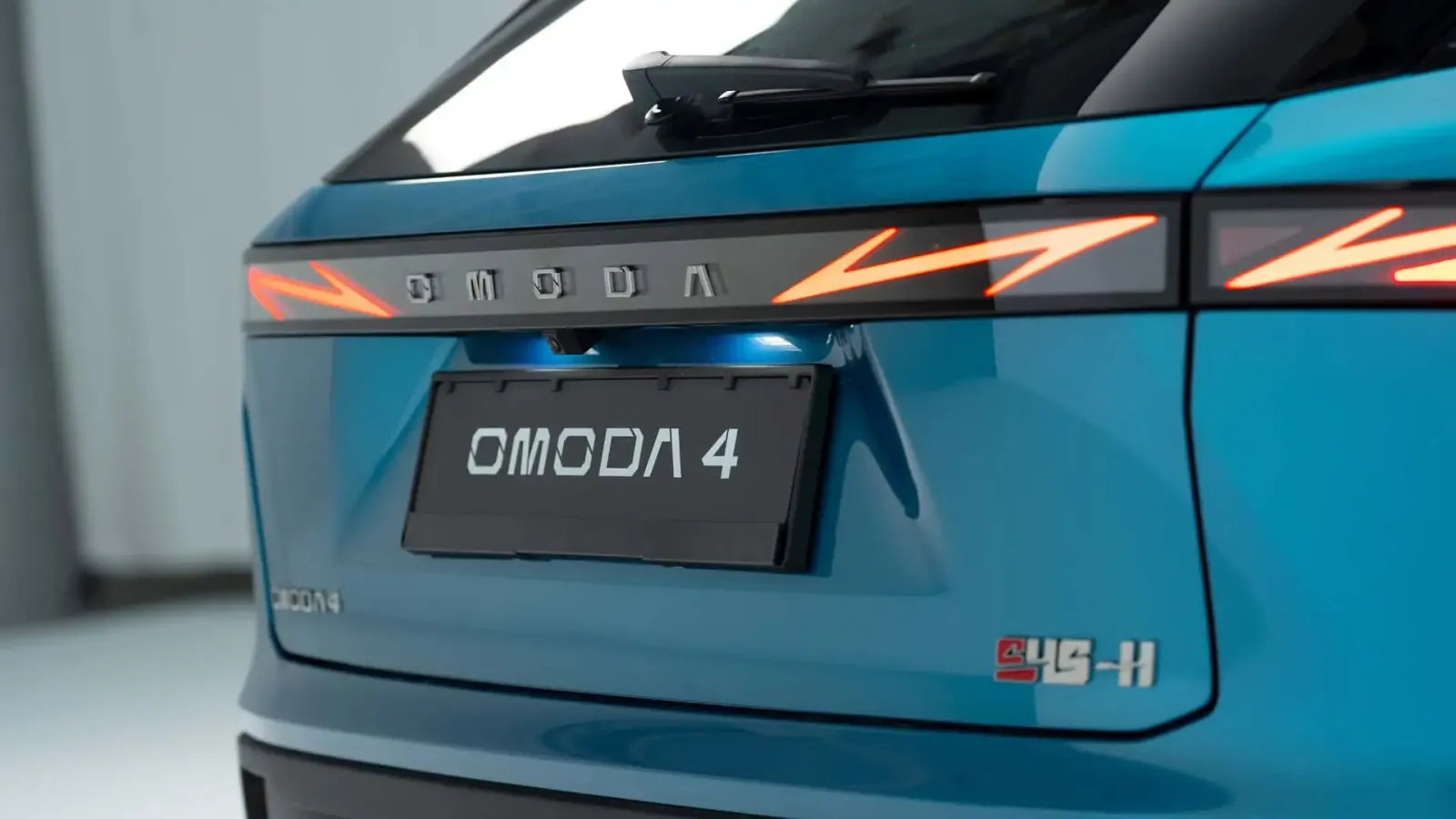
Image source: Omoda
Interior
Even inside, the Omoda 4 looks significantly different from the Omoda 5. Instead of two horizontal screens side by side, it features a small instrument display (8.9 inches) and a vertical touchscreen (13.2 inches). Additionally, the steering wheel is flatter not only at the bottom but also at the top. There are also carbon trim strips, and most notably, a prominent red start button in the center console: like in motorsport, it has a flip cover:
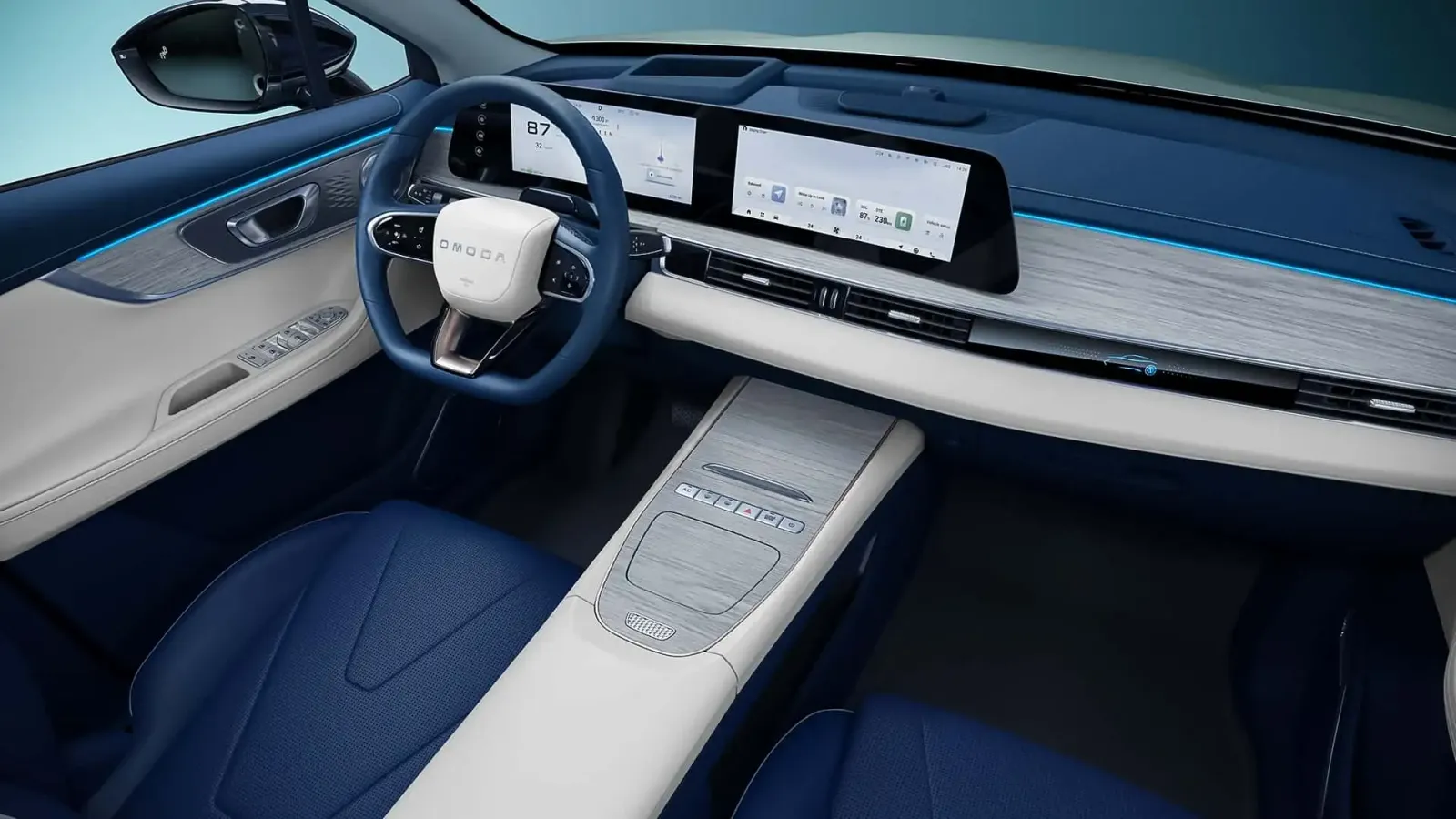
Omoda 5 (2025)
Image by: Omoda & Jaecoo
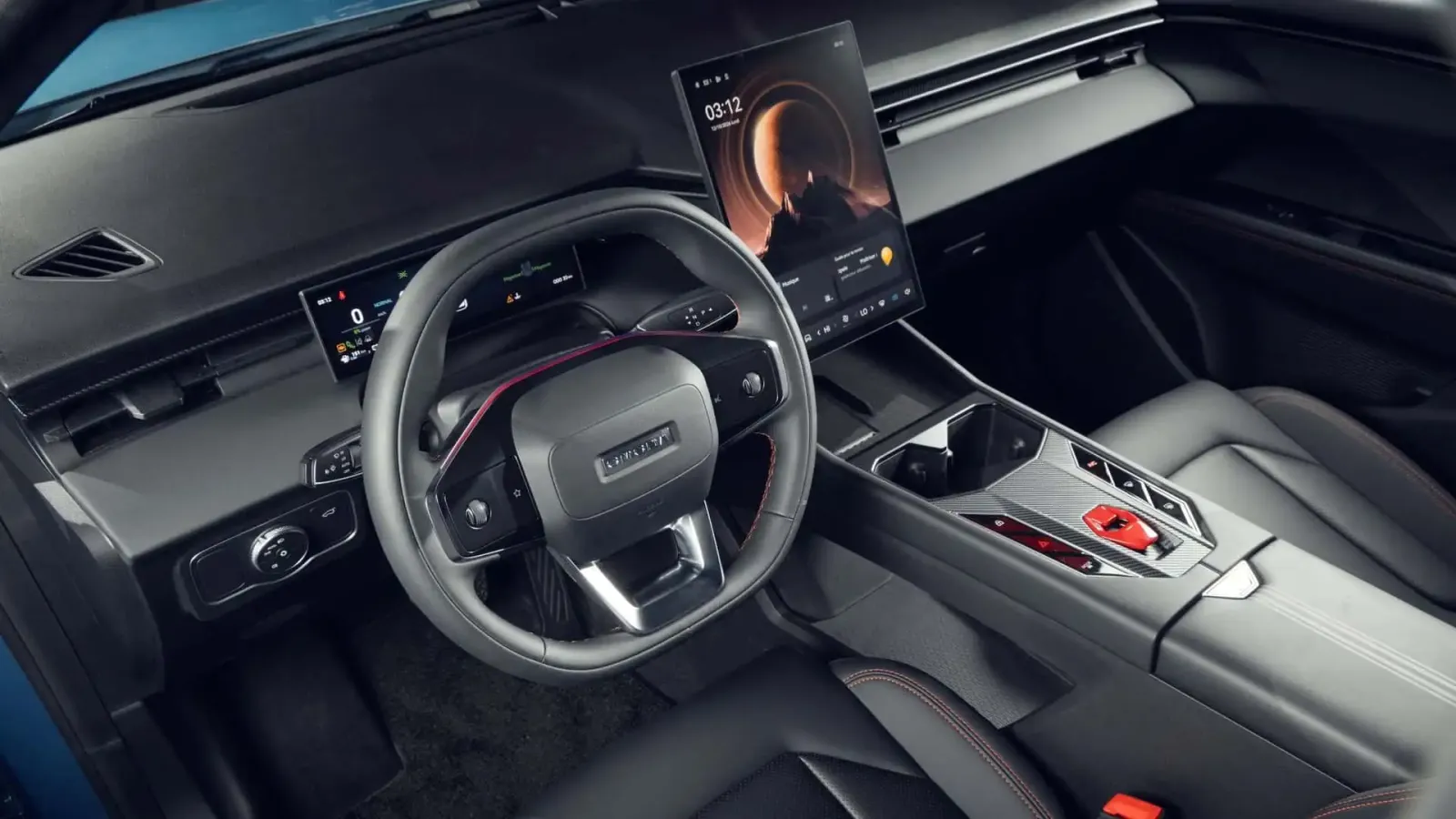
Omoda 4 (2027)
Image by: Omoda
The trunk volume is expected to be over 400 liters up to more than 1,100 liters. For comparison, the Omoda 5 EV has a trunk volume of 370 to 1,149 liters.
Powertrain and Battery
Despite its sporty appearance both outside and inside, the power output of 160 kW is only slightly higher than that of its sibling models with 155 kW, and the acceleration is even a bit worse:
Omoda 4 EV
Omoda 5 EV
Powertrain
FWD 160 kW, 275 Nm
FWD 155 kW, 288 Nm
0–100 km/h / Vmax
7.9 seconds / 172 km/h
7.2 seconds / 171 km/h
Battery
67 kWh gross LFP
Approx. 65 kWh net
61 kWh LFP
Approx. 59 kWh net
WLTP range
> 450 km
430 km
Max. DC charging power
120 kW
130 kW
DC charging time
22 minutes (30–80%)
34 minutes (10–80%)
DC charging speed
Approx. 1.5 kWh/min
Approx. 1.2 kWh/min
The biggest difference appears to lie in the battery: the Omoda 4 has a higher gross capacity by six kilowatt-hours. The charging specifications are also better, which can be seen when calculating the charging speed in kilowatt-hours per minute. The net capacities are not officially disclosed. Assuming they are 2 kWh lower than the gross values, the Omoda 4 charges at about 0.3 kWh/min faster (calculation for Omoda 4: 65 kWh × 0.5 / 22 minutes).
Features
The prices for the Omoda 4 are not yet known, but the manufacturer promises it will come equipped with a wide range of features. Depending on the trim level, it will include 18-inch aluminum wheels, LED lighting, seat and steering wheel heating, a two-zone automatic climate control system, an adaptive cruise control (ACC), a rearview camera, a keyless entry system, wireless Apple CarPlay and Android Auto, as well as a metallic paint finish. The Premium trim adds a 360-degree view system and more.
As is standard for the two partner brands Omoda and Jaecoo, there is a seven-year (150,000 km) warranty on the vehicle and an eight-year (160,000 km) warranty on the drive system and battery, along with a three-year (80,000 km) roadside assistance program. The vehicles are sold and serviced through a network of around 50 dealerships and repair shops in Germany.
More about Omoda and Jaecoo:
In summary
Omoda 4, Omoda 5, and Jaecoo 5: Essentially, they seem to be the same cars. Even though the press department tries to highlight the differences, it appears that only three different “hats” have been placed on the T1X platform—some longer and lower, some shorter and higher, some rounder, and some more angular. At least based on the information we have, we must say that one model would have been sufficient.