
Olaf Lies criticizes CO2 penalty fees and calls for lower energy prices
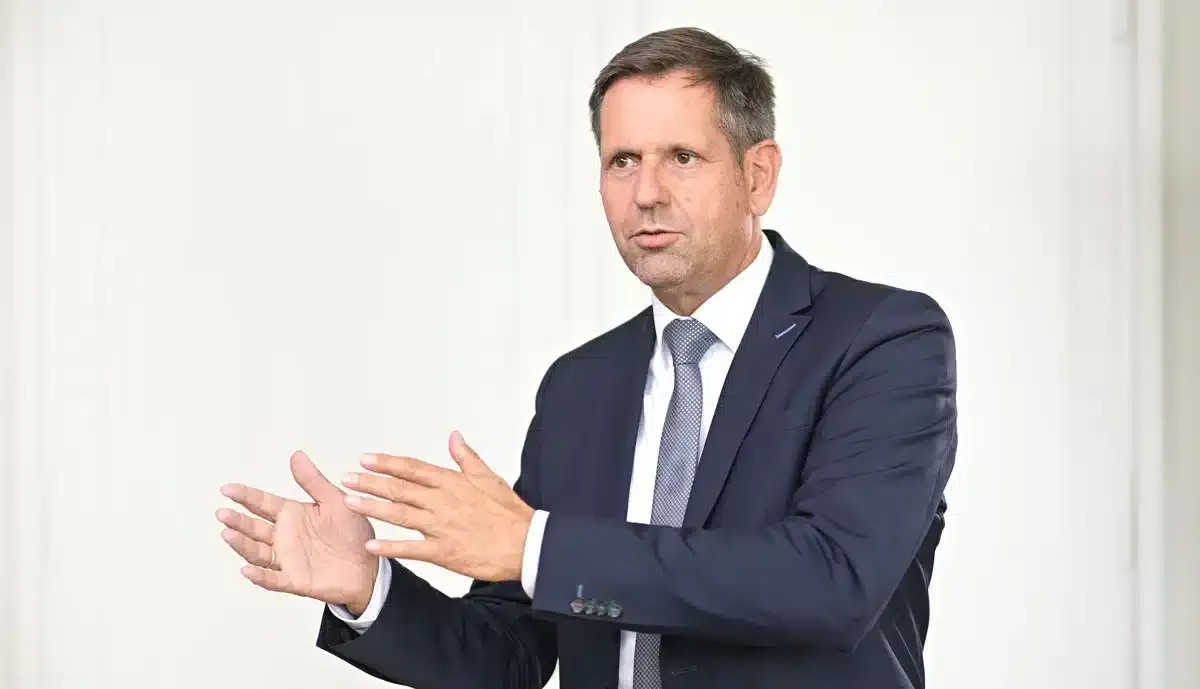
Image: Niedersächsische Staatskanzlei | Henning Scheffen
Following approval of the rescue plan for the Volkswagen Group, Niedersachsen’s Prime Minister Olaf Lies has called on the federal government in an interview with Auto Motor und Sport for significantly better conditions for businesses in Germany. The SPD politician highlighted energy prices, the supply chain law, import tariffs on hybrid vehicles from China, and a reduction in CO2 penalty fees.
"A large part of Germany’s industry is competing on the international stage. Energy prices are of fundamental importance here. We need to become competitive again," said Lies. He now considers the supply chain law to be excessive. While describing the underlying idea as good and an approach based on a "sound principle," he says it is the wrong time for it. Ensuring employment must have top priority.
The high CO2 penalty payments for Germany’s automotive industry can no longer be tolerated by the Prime Minister of Lower Saxony—and thus a member of the VW supervisory board. "This isn’t working; we’re damaging our own industry with this."
In discussing the transformation of the automotive industry, Lies points out that it is particularly difficult at the outset to make money from new electric cars compared to those combustion engines already on the market. Companies need to be enabled to finance this transition. According to him, climate goals should not be achieved by driving industry out of Germany.
Regarding hybrid vehicles from China, Lies calls for the same rules as those applied to fully battery-electric vehicles. He advocates ending exemptions for partially electric vehicles from the extra tariffs imposed on fully electric cars manufactured in the People’s Republic. Without equal rules for imported hybrid and fully battery-electric vehicles, there is no fair competition, he says.
Also interesting
About the author
Thomas Langenbucher is an expert in electromobility with professional experience in the automotive industry and finance sector. Since 2011, he has been covering electric vehicles, sustainable technologies, and mobility solutions for ecomento.de. Learn more.
Reader interactions