
Nvidia embraces European automakers
Nvidia is expanding its business with technologies for automated driving in Europe. For example, the ridesharing service Bolt is relying on the Alpamayo stack from the AI company for its planned robotaxis, and VWN is showcasing the ID. Buzz AD with Nvidia Hyperion. At the same time, Volkswagen, Porsche, and other partners are advancing a joint data and simulation platform.
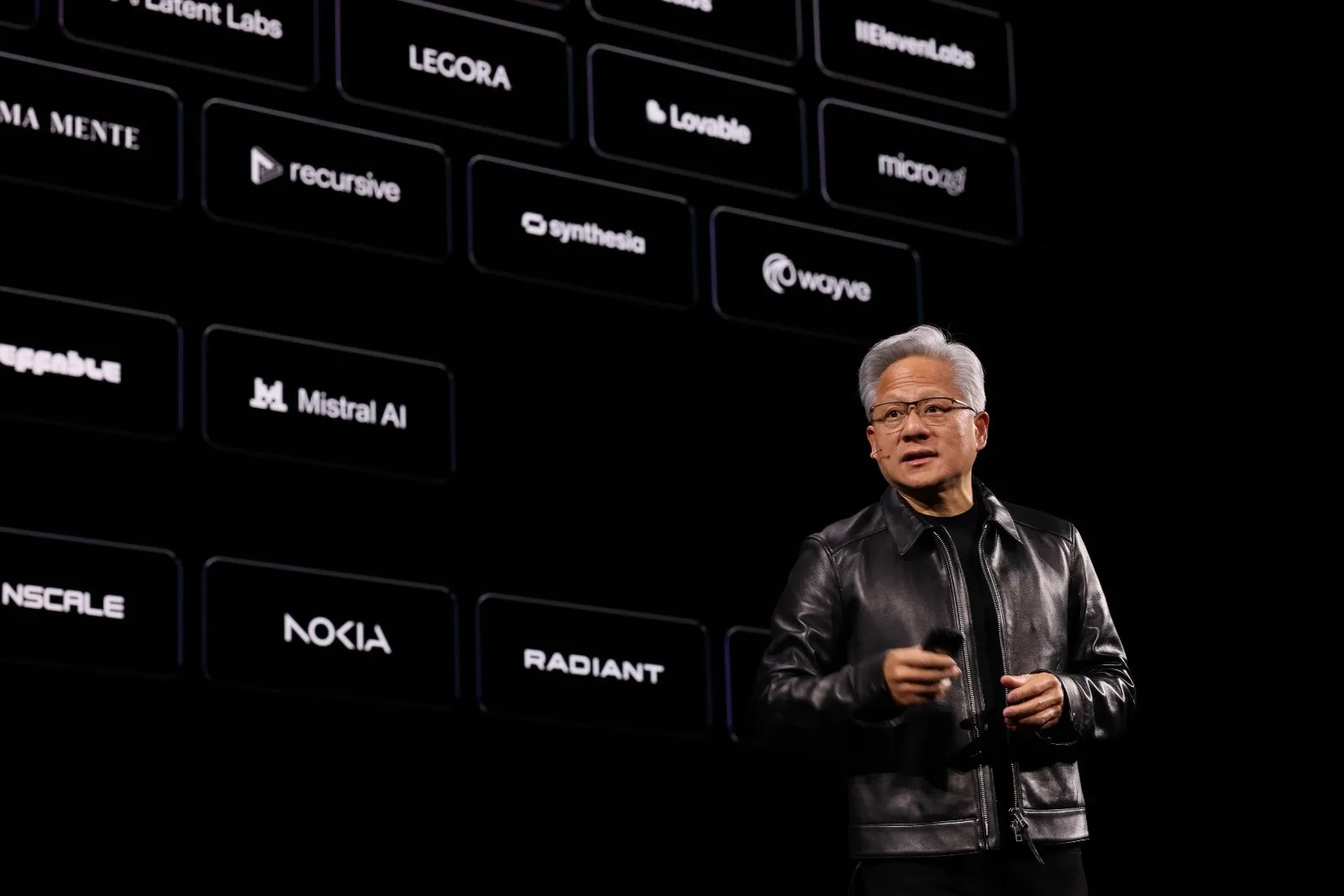
Nvidia CEO Jensen Huang at GTC Berlin
Image: Nvidia
The US tech giant Nvidia is further expanding its position in Europe’s automated driving sector. At its ‘GTC’ AI conference in Berlin, the world’s most valuable company presented several partnerships and new technologies spanning driver assistance systems, robotaxis and autonomous commercial vehicles. The companies involved include Mercedes-Benz, Volvo Cars, Volkswagen Commercial Vehicles, Lucid, Bolt and Einride. Nvidia is pursuing a modular approach: the Hyperion vehicle platform is designed to work with both its own driving software and systems from other providers. Additionally, Nvidia provides tools for training AI models and virtually testing automated driving functions.
Bolt opts for Nvidia software in robotaxis
The collaboration with mobility provider Bolt is particularly interesting. The company has chosen the Nvidia Alpamayo Stack as the foundation for its planned European robotaxi service. For this purpose, Lucid’s electric vehicles are to be equipped with Nvidia’s Hyperion platform. Bolt and Nvidia aim to adapt the driving software for European roads and, in the long term, integrate it into vehicles from other manufacturers as well. Bolt contributes its fleet management systems, operational experience and local market expertise.
Initial data collection drives for developing and validating the technology are planned for next year in the Spanish capital, Madrid, subject to regulatory approvals. Bolt also specifically names Germany and France as key target markets for the rollout. Under the partnership, at least 25,000 Level 4-capable Lucid vehicles are to be deployed on European markets. Bolt had already announced its partnership with Lucid in September. At that time, Nvidia Hyperion was envisaged as the technical platform, but a specific driving software stack had not yet been named. With the now-announced selection of Alpamayo, the role distribution becomes clearer. Bolt aims to operate a total of 100,000 autonomous vehicles on its platform by 2035.
“Robotaxis are the first mass-market application of robotics and physical AI, reinventing how people and goods move,” said Nvidia CEO Jensen Huang at the event in Berlin. “NVIDIA Hyperion, together with our Halos safety operating system, gives our partners a full-stack robotaxi platform designed to achieve full autonomy and the highest levels of safety, bringing us closer to a future where everything that moves is autonomous.”
Hyperion to enable various driving software solutions
The second major announcement concerns Volkswagen Commercial Vehicles. The company is showcasing the autonomous ID. Buzz AD based on Nvidia Hyperion. The platform combines computing hardware with a standardised sensor architecture and is designed to simplify the integration and validation of automated driving systems. Nvidia explicitly positions Hyperion as an open and modular foundation that can support not only its own Alpamayo Stack but also other driving software.
This is relevant in the context of the ID. Buzz AD’s existing technology: the autonomous vehicle currently uses technology from Mobileye. The presentation of the ID. Buzz AD with Hyperion does not, therefore, automatically mean that Volkswagen will replace Mobileye or has already decided on a new series architecture. Instead, Nvidia describes a platform on which different autonomous driving systems can be integrated. It remains unclear whether and in what specific configuration Hyperion will be used in the ID. Buzz AD in the future, and what role Mobileye will retain.
This announcement should also be distinguished from Volkswagen’s search for a technology partner for automated driving in series production passenger cars. As reported, VW is said to have chosen the British AI company Wayve after an internal comparison for automated driving. According to _der Spiegel_, Wayve is to supply the driving software, which Cariad will integrate into the existing vehicle architecture. This does not necessarily exclude Nvidia from the Group’s technology ecosystem: Nvidia is an investor in Wayve and supplies computing hardware for the start-up’s autonomous driving projects. However, a specific combination of Wayve software and Nvidia hardware at Volkswagen has not yet been confirmed.
Volvo and Mercedes expand their collaboration
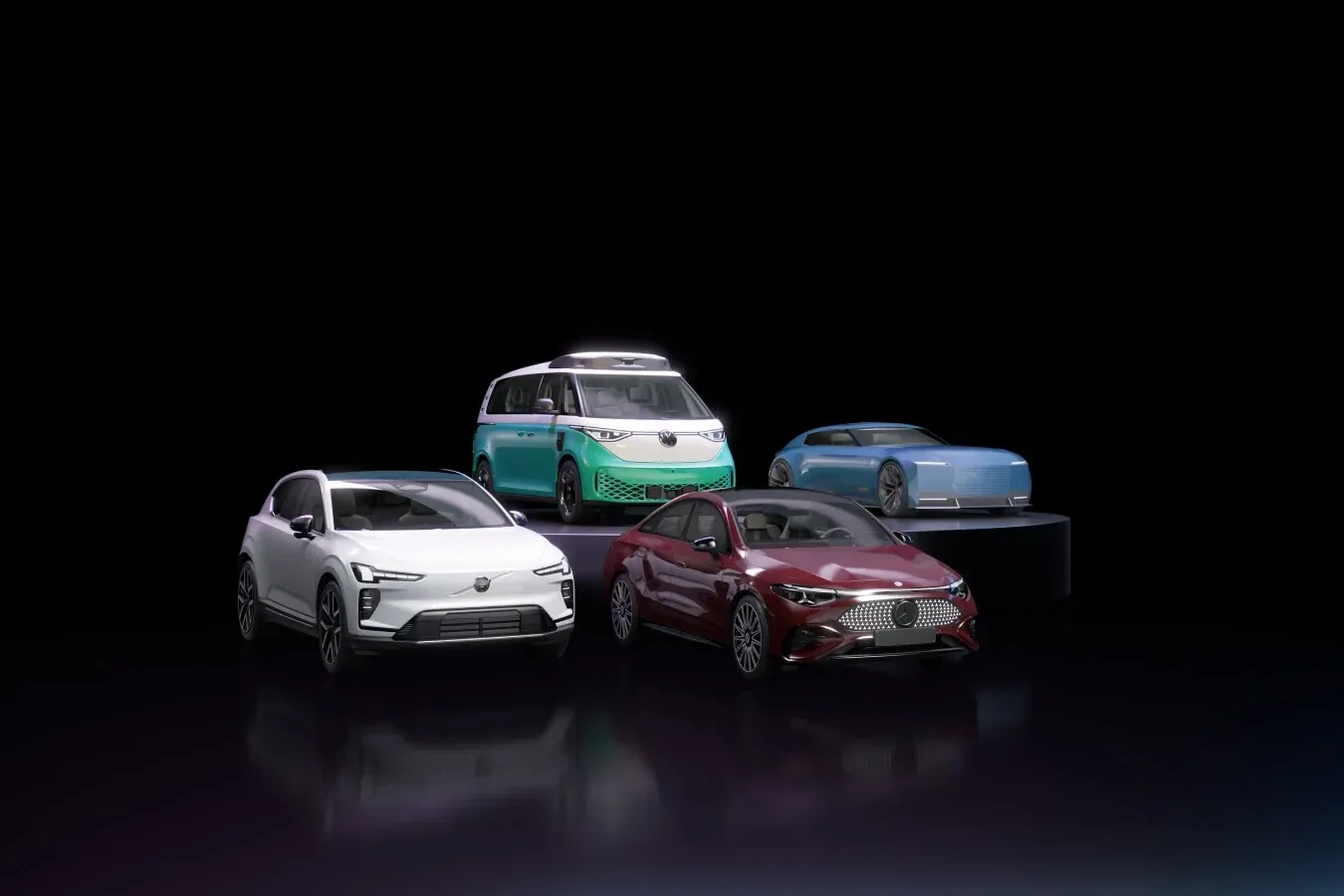
Volvo Cars also plans to use Hyperion and the Alpamayo Stack in the future. The Swedish manufacturer combines Nvidia’s technologies with its own safety systems and vehicle development to further advance automated driving in complex traffic situations. Mercedes-Benz, for its part, is expanding its cooperation with Nvidia on Hyperion and Alpamayo to further develop its capabilities for Level 3 and 4 automated driving. Additionally, the jointly developed driver assistance system MB.Drive Assist Pro is expected to receive approval in Germany for automated point-to-point driving in urban traffic in the near future. However, this is ‘only’ a driver assistance system, not a driverless Level 4 robotaxi.
Beyond passenger cars and robotaxis, Einride is also adopting Hyperion for the next generation of its autonomous driving system for electric trucks. The Swedish company intends to use the platform, along with Nvidia Halos, Alpamayo and Cosmos, to develop and validate its Einride Driver. According to Einride, it will remain responsible for the development and operation of the driving system. This highlights another pattern in Nvidia’s strategy: the company is increasingly providing a common technical foundation, while partners develop their own vehicles, applications and operational models.
Volkswagen focuses on data and simulation
Another announcement concerns the development work behind the driving functions. Volkswagen Group brands Porsche and Cariad are building a so-called ‘AV Data Flywheel’ together with Nvidia, Microsoft Azure and data platform provider Voxel51. Porsche is leading the first implementation and integration of the systems involved. The goal is to systematically use data from real vehicle fleets to train, further develop and validate automated driving systems.
Voxel51 handles data preparation and search. Nvidia contributes, among other things, Cosmos Data Factory for processing and augmenting training data, as well as Omniverse NuRec for reconstructing real-world drives in virtual scenes. Microsoft Azure provides the cloud and computing infrastructure. The partners aim to specifically filter out rare and safety-critical traffic situations from large datasets, replicate them in simulations and reproducibly test software versions. According to Nvidia, this approach could reduce the need for repeated physical test drives by up to 90 per cent and shorten development cycles by up to 85 per cent. These are announced potentials, not yet proven results in series operations.