
New Dacia Spring: Europe’s answer to Chinese electric cars arrives with 250 km of range
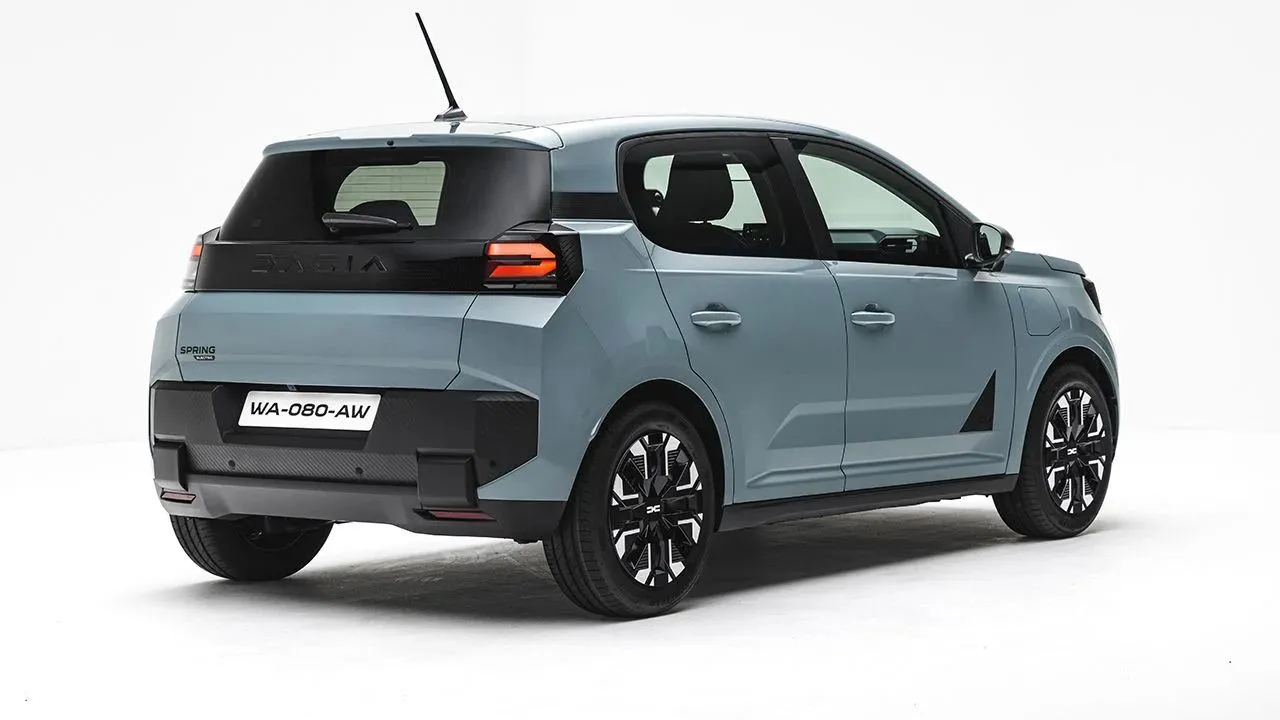
Dacia has unveiled the second generation of the Spring. This urban electric vehicle makes a significant leap forward by moving away from its predecessor’s CMF-A EV platform to adopt Renault Twingo’s more modern RGEV Small platform, sharing its structure and numerous components as well. Both will be manufactured together at the plant in Novo Mesto (Slovenia).
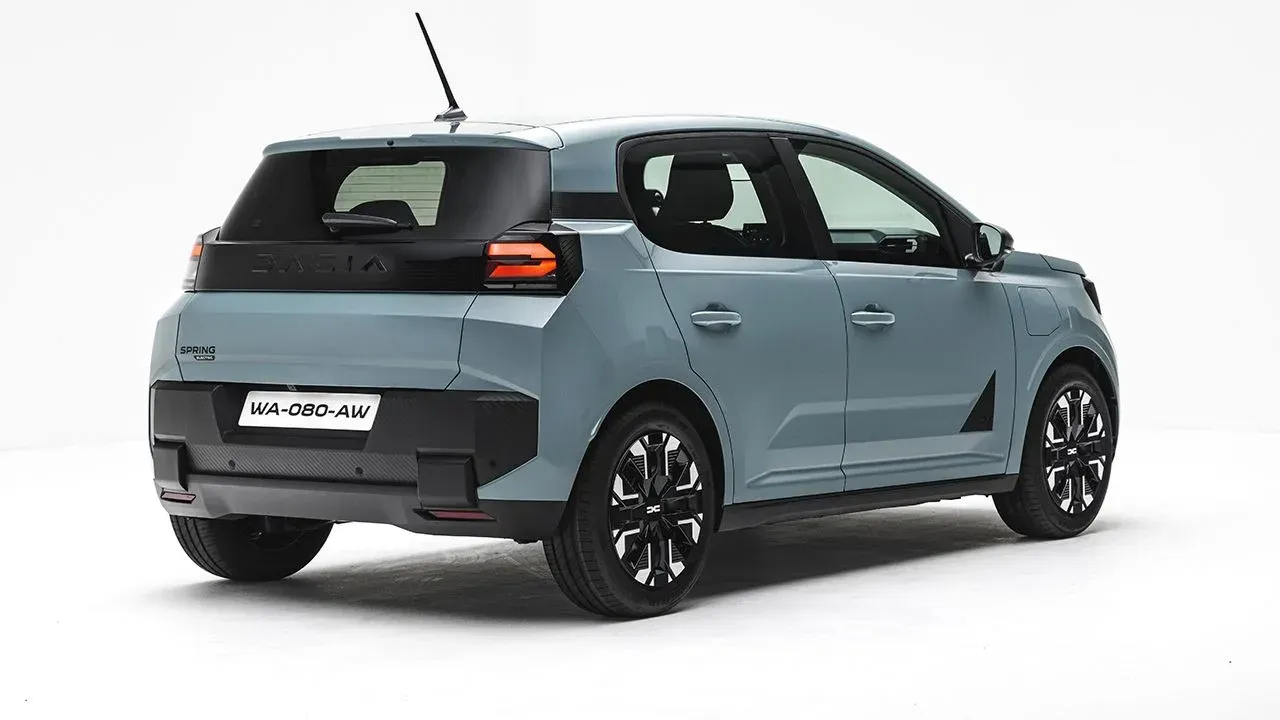
Although it still falls within the A segment, the new Dacia Spring is much larger than its predecessor: it measures 3.85 meters in length, 1.74 meters in width, and 1.52 meters in height. It is 15 cm longer and 18 cm wider than before. Additionally, it features a trunk capacity befitting a B segment vehicle, at 337 liters, plus an additional 18 liters from the frunk area.
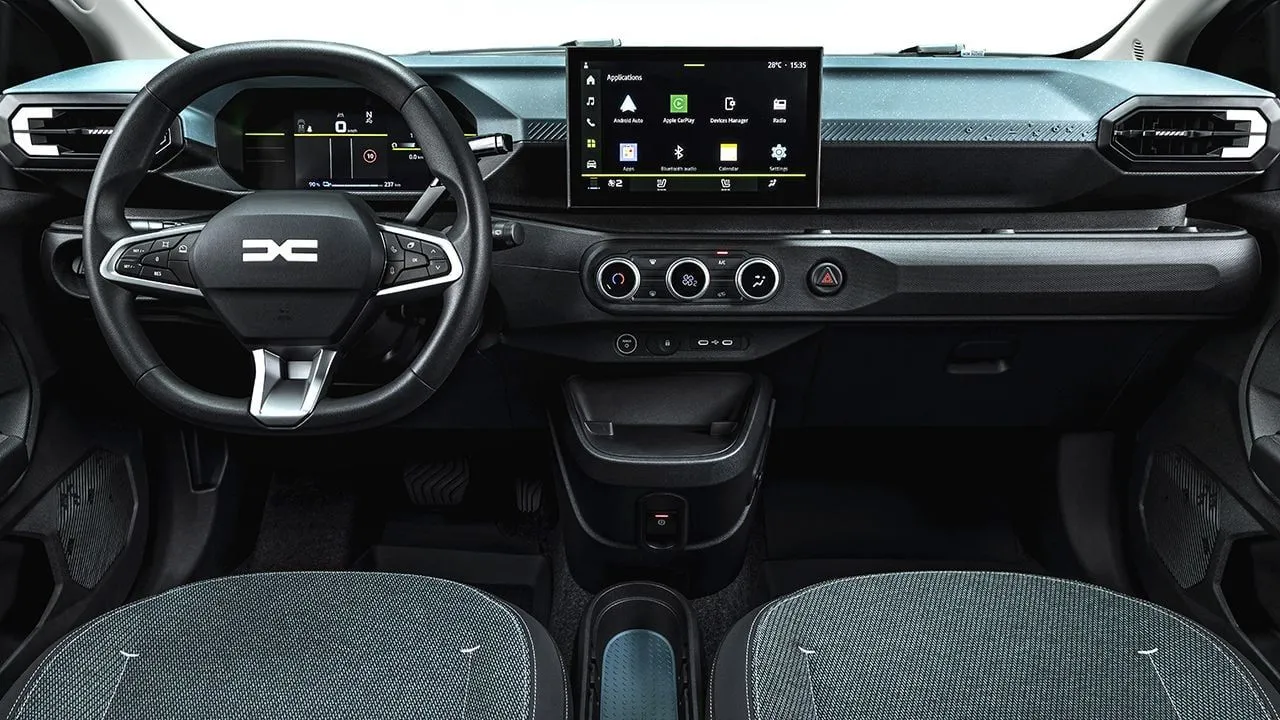
The lower section of the dashboard is identical to that of the Twingo, including the center console and climate control module. However, the upper area is completely different, featuring hexagonal vents and a blue-painted panel that matches the interior upholstery. The digital instrument cluster is 7 inches in size and comes standard on all trims, while the touchscreen is 10.1 inches large.
The battery is a 27.5 kWh LFP battery.
With the Expression trim, multimedia system information is displayed on a screen controlled by the steering wheel controls. In this case, a smartphone holder is included in the center of the dashboard. The Journey trim replaces that holder with a touchscreen and includes a browser along with connectivity via Android Auto and Apple CarPlay.
The engine produces 82 hp (60 kW), allowing it to accelerate from 0 to 100 km/h in 12.1 seconds, with a top speed of 130 km/h. The battery is of the LFP (lithium-iron-phosphate) type and has a capacity of 27.5 kWh; thus, it uses exactly the same powertrain as found in its French counterpart. Its certified range is 250 km WLTP.
The Spring can be charged at 6.6 kW on AC power out of the box (15-80% in 2 hours and 55 minutes); additionally, an optional fast charging package will be available, including three-phase charging at 11 kW (15-80% in 1 hour and 55 minutes) and DC charging at 50 kW. In the latter case, Dacia’s smallest vehicle will take approximately 28 minutes to go from 15% to 80% charge. It also offers V2L (Vehicle-to-Load) reverse charging.
Dacia has confirmed that the entire range will cost less than 20,000 euros before subsidies. There are two trim levels: Expression and Journey. The Expression version comes standard with 15-inch tires with rims, electric front windows (the rear windows are manual), electrically adjustable mirrors, air conditioning, light sensors, rear parking sensors, an electric handbrake, rear seats that fold in half, and a driver’s seat with height adjustment. The Journey version adds 16-inch tires with rims, a hands-free card, a rearview camera, and a 10.1-inch touchscreen with navigation and connected services.