
Nuclear yes, nuclear no? Prandi’s version
Nuclear energy: yes or no? Vaielettrico has taken a clear stance of opposition, citing the arguments of prominent scholars such as Nobel laureate Giorgio Parisi and Nicola Armaroli (video at the end of the article). However, there are also differing views within our group, as explained in this speech by Andrea Prandi, one of the co-founders.
Nuclear energy: yes or no? “I was against it, then…”
I never thought I would regret voting against nuclear energy twice. Yet that’s exactly what happened. Not quite regretful, but somewhat disappointed. I’m telling you this in hopes that maybe I’ll regret having regretted it. The planet is suffering, and people seem unwilling to make any sacrifices. Even 12 years as head of communications for EDF failed to change my mind. In fact, after getting a close look at the finances of this French energy giant, I became even more convinced that nuclear energy is an economically unviable option. A nuclear power plant requires enormous investments, long timelines, and financial resources available only to a few companies. Even maintaining an existing fleet of nuclear plants is very costly. The International Energy Agency itself identifies capital costs, technical complexity, delays, and overruns as the main obstacles to developing new reactors.
advanced economies.The complexity (and costs) of the French approach
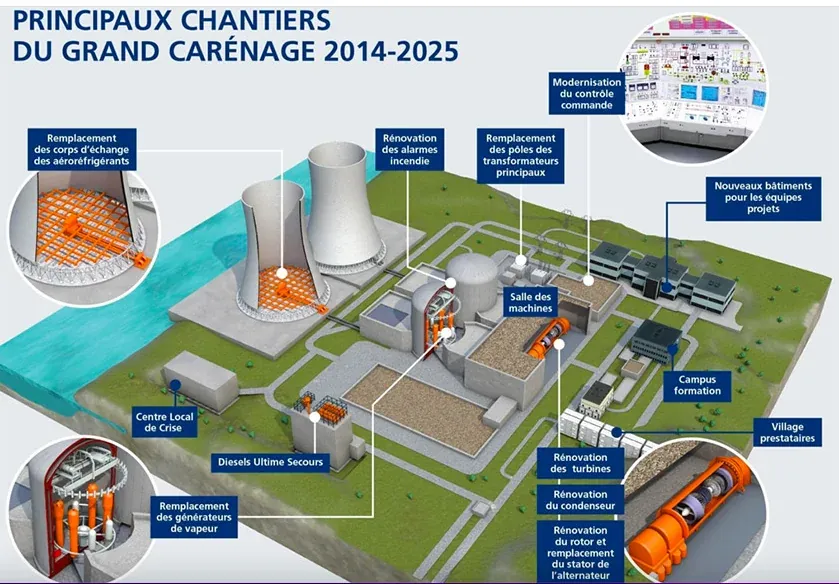
France is a good example of this. In 2023, the state regained 100% ownership of EDF by taking the company off the stock market, while its existing facilities continued to require substantial investments. The second phase of the “Grand Carénage” program, aimed at upgrading plants and extending their operational life, costs over 36 billion euros between 2022 and 2028. In short, French citizens paid less for energy but later had to buy EDF back since it could not sustain itself. Then there is Flamanville. Nearly twenty years ago, when I worked at EDF, we accompanied a group of journalists to northern France together with Enel. The new EPR reactor at Flamanville was then presented as the future of European nuclear power. Construction began in 2007 with operations scheduled to start in 2012. The first connection to the grid came on December 21, 2024, while the
Full capacity was achieved in December 2025. France’s Court of Auditors estimated the total cost of the project, including financial burdens, at 23.7 billion euros in 2023. These timelines and costs alone illustrate the complexity of new nuclear power.“We must electrify our daily lives.”
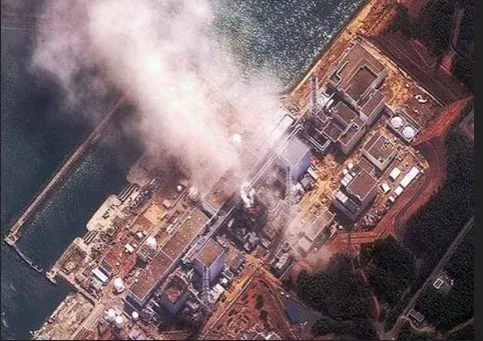
Fukushima came in between. After the 2011 accident, France introduced additional safety regulations. But the problems at Flamanville stem from deeper issues: design flaws, industrial difficulties, manufacturing defects, poor project management, and a loss of expertise in the sector. My experience with nuclear energy has given me plenty of reasons to be cautious. So why did I change my mind? Certainly not because of promises of lower electricity costs. Nuclear energy won’t solve Italy’s high electricity bill problem, and other actions are needed in that regard. We must accelerate grid development, unblock approvals for renewable energy, increase energy storage, and electrify consumption. The European Commission identifies Italy’s dependence on gas as one of the structural reasons for high electricity prices. Meanwhile, Terna predicts over 23 billion
Euro investments in the grid by 2034. And we too must do our part by producing as much energy as possible where it is consumed and electrifying our daily lives, from transportation to homes.Nuclear yes, nuclear no: “We are eager to cut emissions and…”
The reason I changed my mind is another one. We are in a hurry. We need to cut emissions much more rapidly. Renewables must grow alongside grids and storage, but in a system that needs to move away from fossil fuels, nuclear energy can also play a role. It is a controllable and low-emission source capable of supporting renewable energy production that is set to become dominant. The International Energy Agency also considers it one of the technologies useful for building low-emission electricity systems. For years, I focused mainly on the costs, timelines, and industrial challenges of nuclear energy. They still concern me, but today another factor weighs more heavily: the time we have to move away from fossil fuels. That’s why I think nuclear energy should return to the discussion about Italy’s future energy landscape. And that’s why, yes, I regret it.
That’s not one of those two. Andrea PrandiPrevious Article
Tesla Semi specifications arriving in Europe