
NRW is refilling the funding pool for charging infrastructure
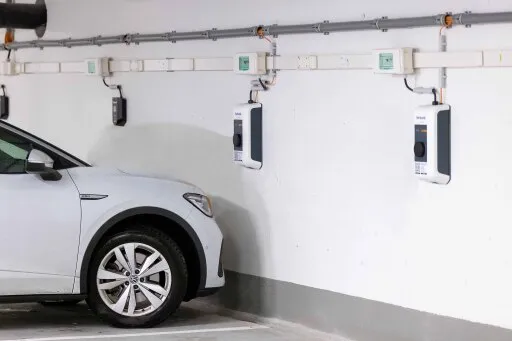
Nordrhein-Westfalen has resumed its funding for charging stations in multi-family buildings and logistics warehouses. The state will allocate an additional 25 million euros through the “progres.nrw” program for these areas in 2026 and 2027. Applications can now be submitted again.
The North Rhine-Westphalia state government aims to specifically support areas that do not receive funding from the federal government through this additional funding. Applications can now be submitted again to the Arnsberg Regional Government, thanks to a budget increase of 25 million euros. Applications in these two areas had been suspended temporarily. Economy and Climate Protection Minister Mona Neubaur commented, “We are creating new charging infrastructure where further development needs additional impetus—so that tenants can switch more easily and freight companies can convert their fleets to electric trucks. This is the right investment at the right time.”
The additional funds will support the installation of charging stations in multi-family buildings (with two or more residential units, buildings with up to five parking spaces), with grants available for applications submitted by landlords, tenants, or small homeowners’ associations. Grants for fast charging stations at logistics warehouses are also available again. “The state will allocate another seven million euros solely for this purpose in 2026,” the officials said. However, the maximum grant amount for warehouse fast chargers will decrease from 40,000 euros to 30,000 euros.
In particular, applicants based in North Rhine-Westphalia can secure the following grants:
For charging stations in multi-family buildings, a maximum of 1,500 euros per charging station can be applied for.
Rapid charging infrastructure for commercial vehicles: The maximum subsidy amount is now 30,000 euros per charging station (with a subsidy rate of 30 percent).
Construction of publicly accessible charging infrastructure: The highest possible subsidy is 1,500 euros per charging station.
Subsidies for developing plans to build charging infrastructure and purchasing vehicles
Outpatient social services and municipalities can apply for 3,000 euros per electric microcar or small car, along with subsidies for charging stations. Municipalities can also receive up to 8,000 euros when purchasing light commercial vehicles weighing up to 3.5 tons.
All grants can be found on the Arnsberg Regional Government’s website at progres.nrw, where applications can now be submitted again. It was not until mid-February that the state government reinstated the program after a roughly two-month suspension. The pause was intended to allow for revisions to the underlying guidelines.
On progres.nrw, North Rhine-Westphalia consolidates its funding initiatives related to energy policy in the state. In addition to electric mobility, certain areas of climate protection technology are also subsidized. According to the state, by 2025 it had allocated approximately 20 million euros solely to electric mobility projects, supporting the establishment of around 7,000 charging points.
The new funding guideline aims to make the approval process for grants more streamlined in the future: To enable faster approval of applications, funding programs will gradually adopt an automated review system. This is part of a pilot project within the state government’s latest relief package, as stated in February.