
The new Hyundai Kona photographed without camouflage. It is unclear whether it will lose its electric version like the Kia Niro
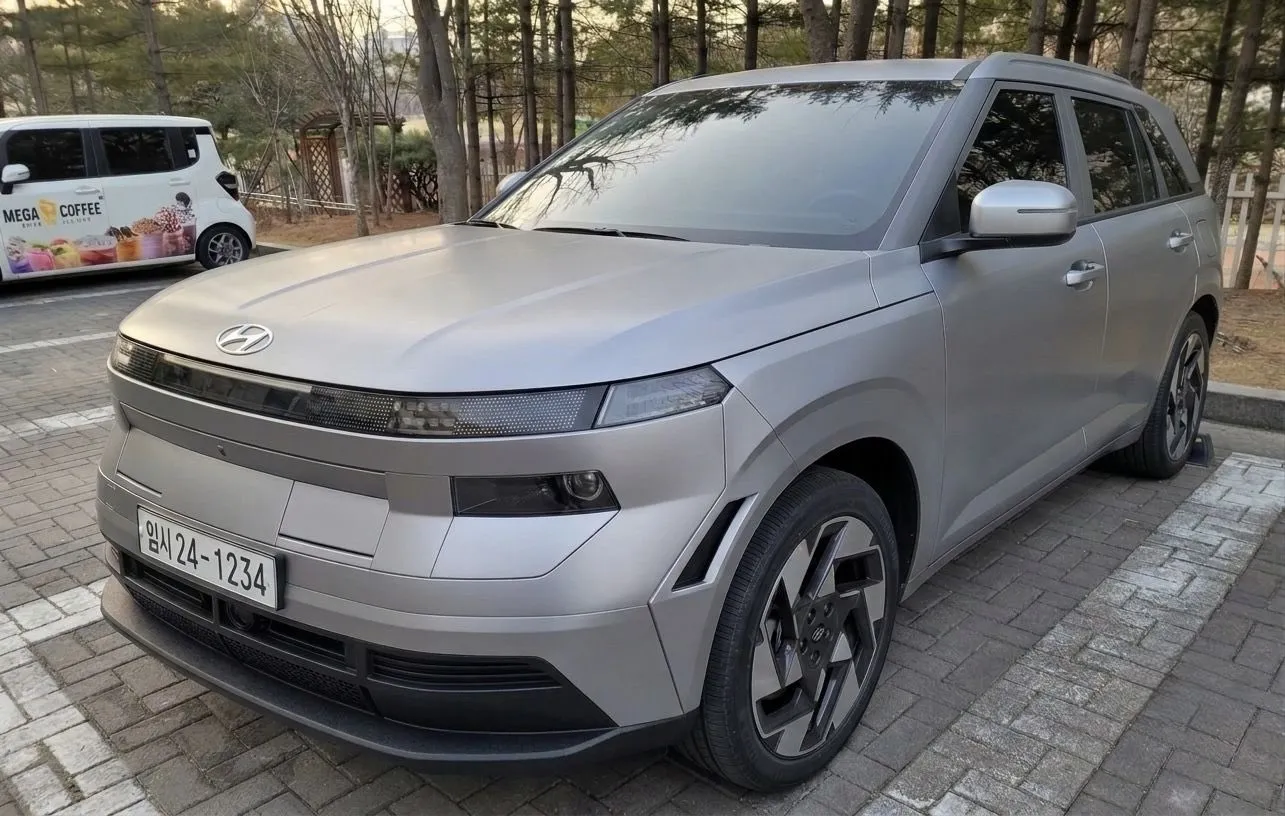
Photos of the unmasked Hyundai Kona (2027) have appeared online. The vehicle looks completely different from previous versions, with its pixelated daytime running lights (?) arranged in two rows, and the headlights hidden beneath them. Judging from the flap on the left rear fender, it appears to be a gasoline-powered version, but space for a charging port has also been designated at the front. The car is expected to go on sale in 2027.
Hyundai Kona Electric = Hyundai Ioniq 4?
The Kia Niro lost its electric drive option because it was replaced in the lineup by three models: Kia EV3 (crossover), Kia EV4 (hatchback), and Kia EV5 (SUV); the car is now only available in gasoline (hybrid) versions. The situation with its sister brand Hyundai isn’t quite so clear-cut. The manufacturer has the Ioniq line, with the Ioniq 5 (D-SUV segment) available for a long time and the Ioniq 3 (C segment) set to go on sale soon, so the Kona Electric might remain as is, but it could also get a completely new name: Hyundai Ioniq 4.
Not much is known about the car yet. We can see it looks different, but it’s hard to assess its true size from the photo (source). The Kia Ray in the background is 3.6 meters long, but it has been cropped, so we don’t know to what extent it fills the parking space. It’s unlikely to be a modern 5-meter-long vehicle; we would expect around 4.5-4.6 meters instead, meaning the car visible in the photo is likely about 4.3-4.4 meters long. This perfectly matches the length of the current generation model (4.35 or 4.385 meters depending on the trim level).
In the new Hyundai Kona Electric — whether it remains a Kona or evolves into an Ioniq 4 — the 400 V architecture will almost certainly be retained, with batteries having capacities similar to those in the Kia EV3 (58.3 or 81.4 kWh; editorial speculation). The biggest change, aside from the updated design, might be the Hyundai Pleos operating system based on Android Automotive. Its key features include a central screen divided into several sections and a small dashboard display located under the windshield (see image at position #3). This layout creates a large opening in the cockpit, which can be used for air ventilation in larger vehicles.
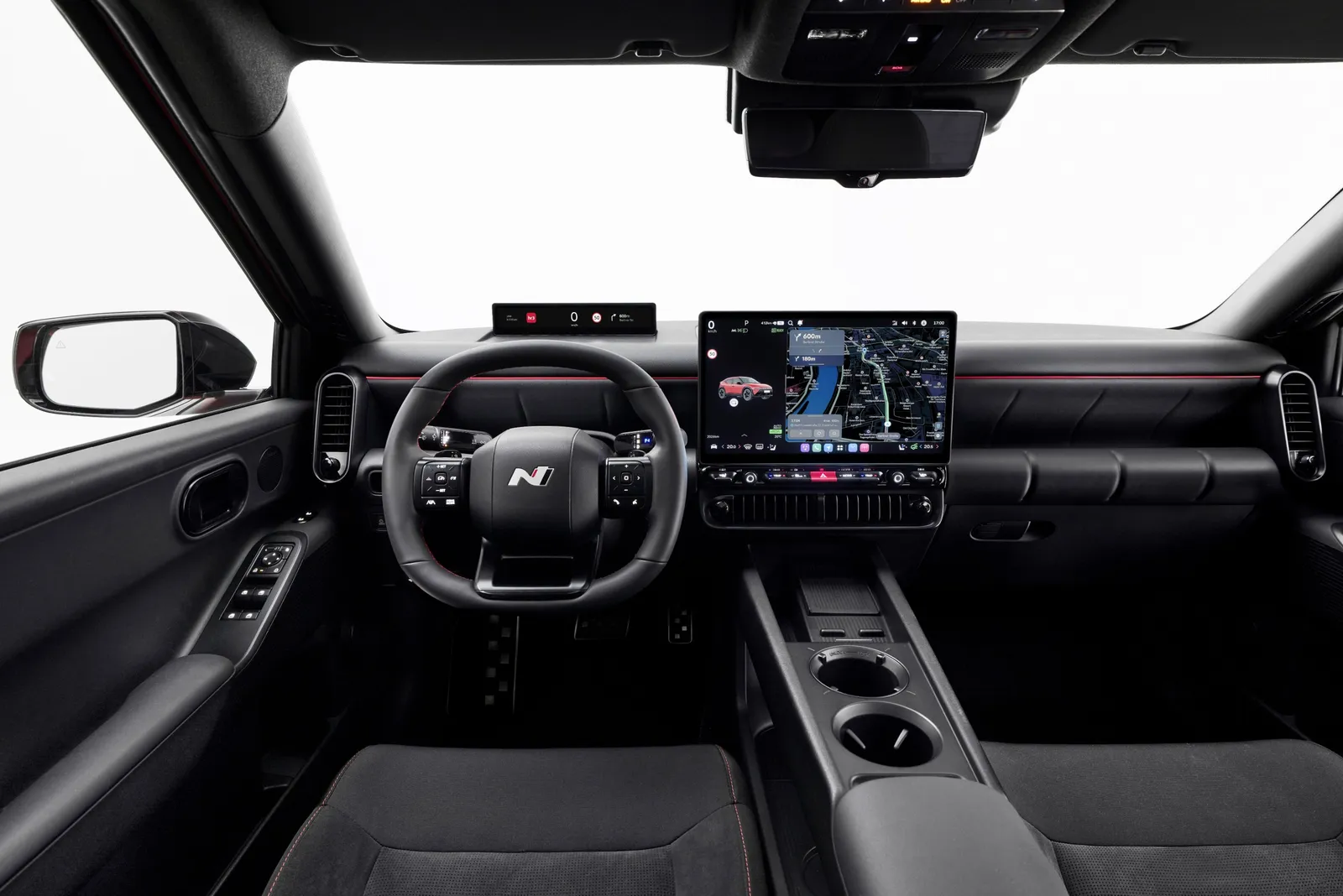
Hyundai Ioniq 3’s interior as the first market launch for the Pleos system (c) Hyundai
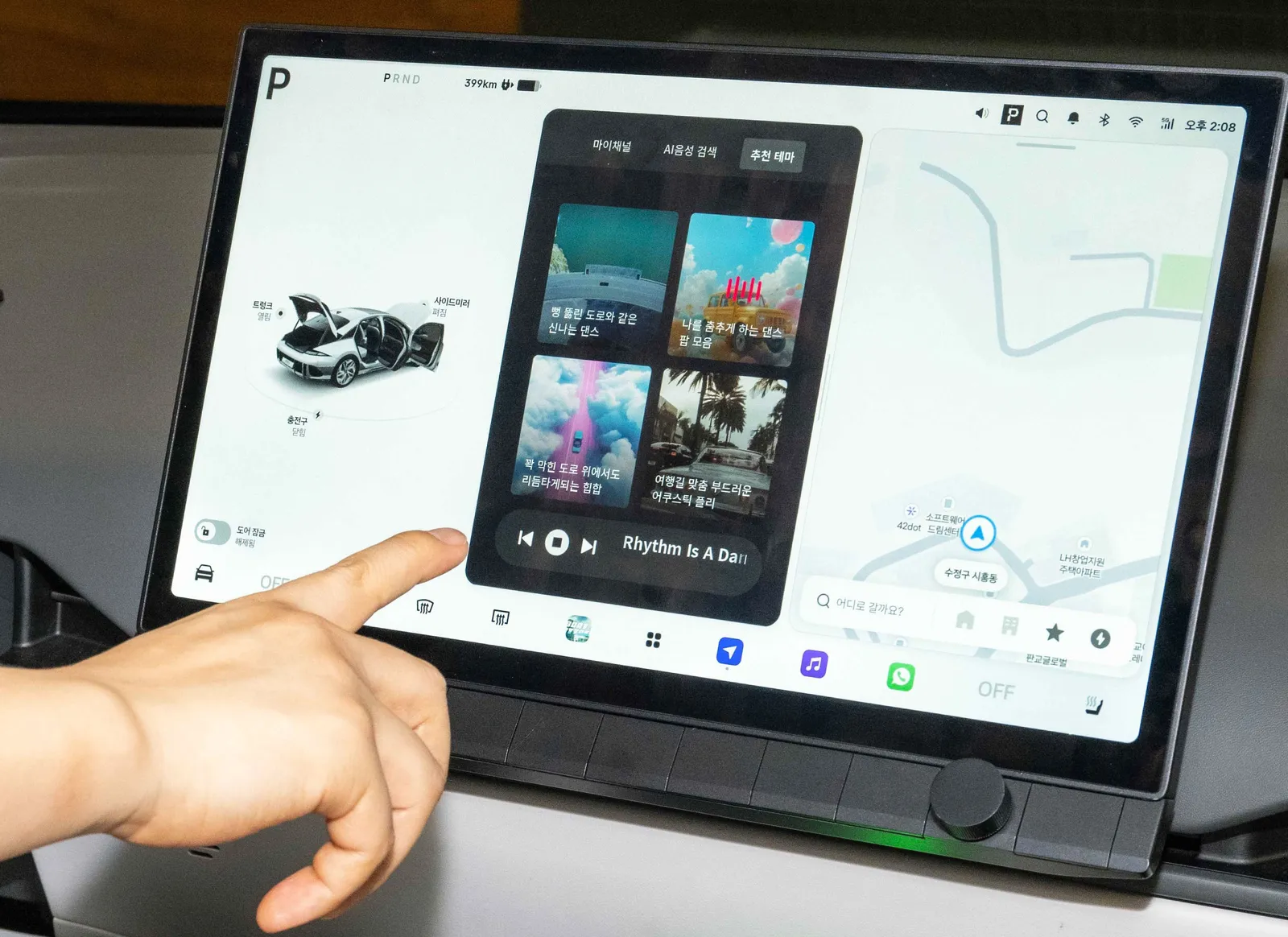
Pleos Connect, the multimedia interface and control center in the Pleos system (c) Hyundai
⚡️Hyundai Kona 2027 will come with PleOS System!
The new generation PleOS system is definitely coming.
The size also seems to have increased, similar to the i20. #NoAds, just a leak. pic.twitter.com/fSC6rON5nZ
— Elvis Will Vexillary (@EWVexillary) June 15, 2026
Adopting a different software architecture will allow Hyundai to catch up with its competitors. Software developed in-house began falling behind that of American and Chinese manufacturers, reducing the appeal of their modern-engineered vehicles.
Article Rating
Reader Ratings
[Total: 4 votes Average: 4.8]
Don’t miss new content — CLICK and FOLLOW Elektrowoz.pl on Google News. You might also be interested in the following ads: