
New Volvo XC60 Long Range PHEV, first impressions after a static test drive. Conclusion? It knows its place in the lineup.
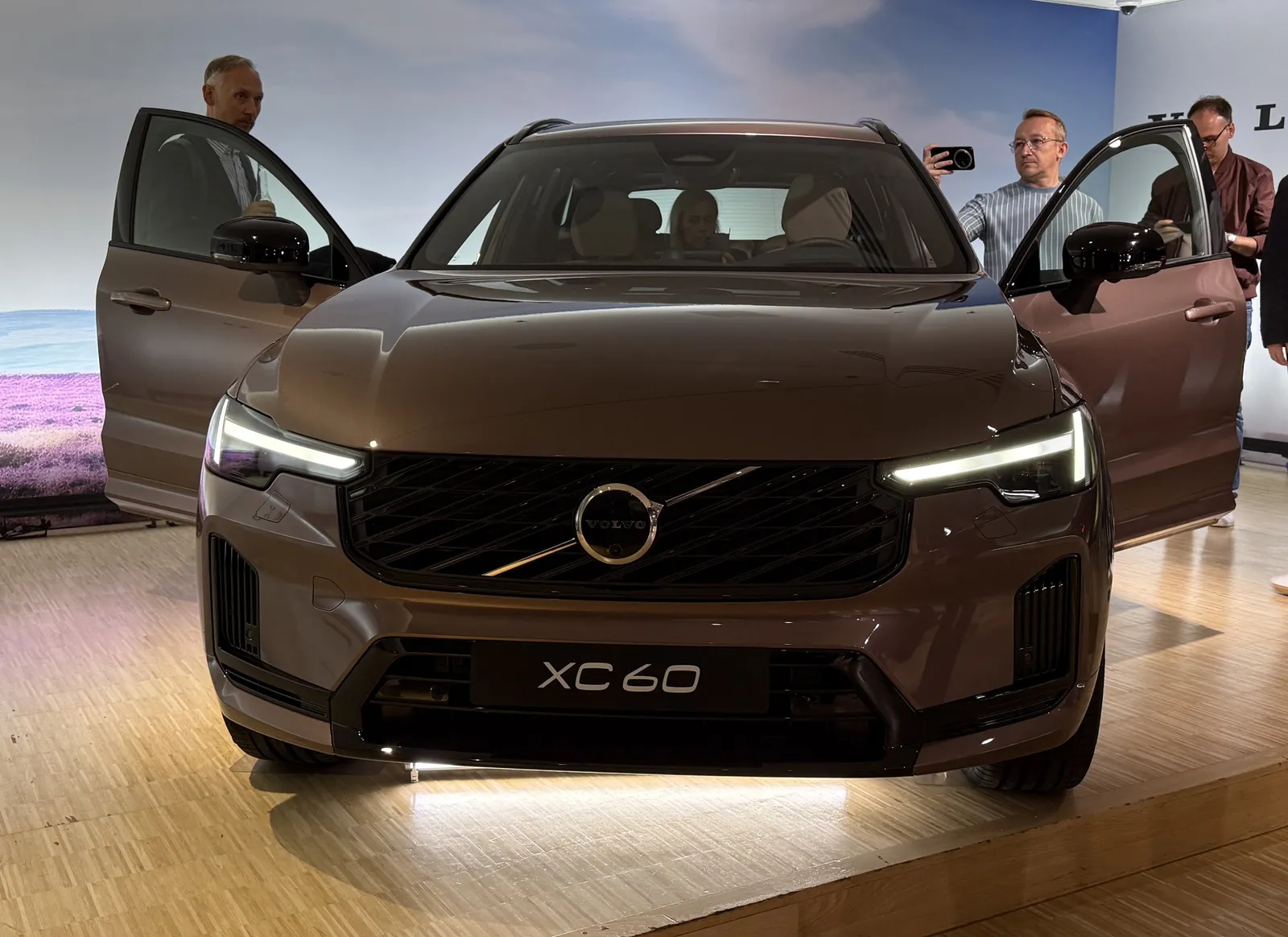
Thanks to the kindness of Volvo’s Polish branch, we had the chance today to see the new Volvo XC60 Long Range plug-in hybrid (2027.5), which is a vehicle that can be charged via an outlet, as well as the Volvo XC40 B4 mHEV (2027), a gasoline-powered model. It’s amazing how closely Geely oversees Volvo to ensure it doesn’t take the lead and overshadow the Chinese brands created from scratch, which are supposed to be the crown jewels (read: Zeekra).
Volvo XC60 T8 Long Range PHEV up close
We covered the new Volvo XC90 Long Range PHEV and XC60 Long Range PHEV at their launch, so we won’t repeat that overview here. The two most significant changes in both models are a battery with a capacity of 41.2 (37.9) kWh and a 11.2-inch central display. In the T6 version, such a large battery capacity allows for around 200 WLTP units in pure electric mode [manufacturer’s preliminary data – editor’s note]. One of our readers, Mr. Tomek, who recently received a Volvo XC90 T8 PHEV, says he’s never been so frustrated because the change in battery capacity is enormous. However, it should be noted that he would have to wait another 9–12 months for the facelifted version.
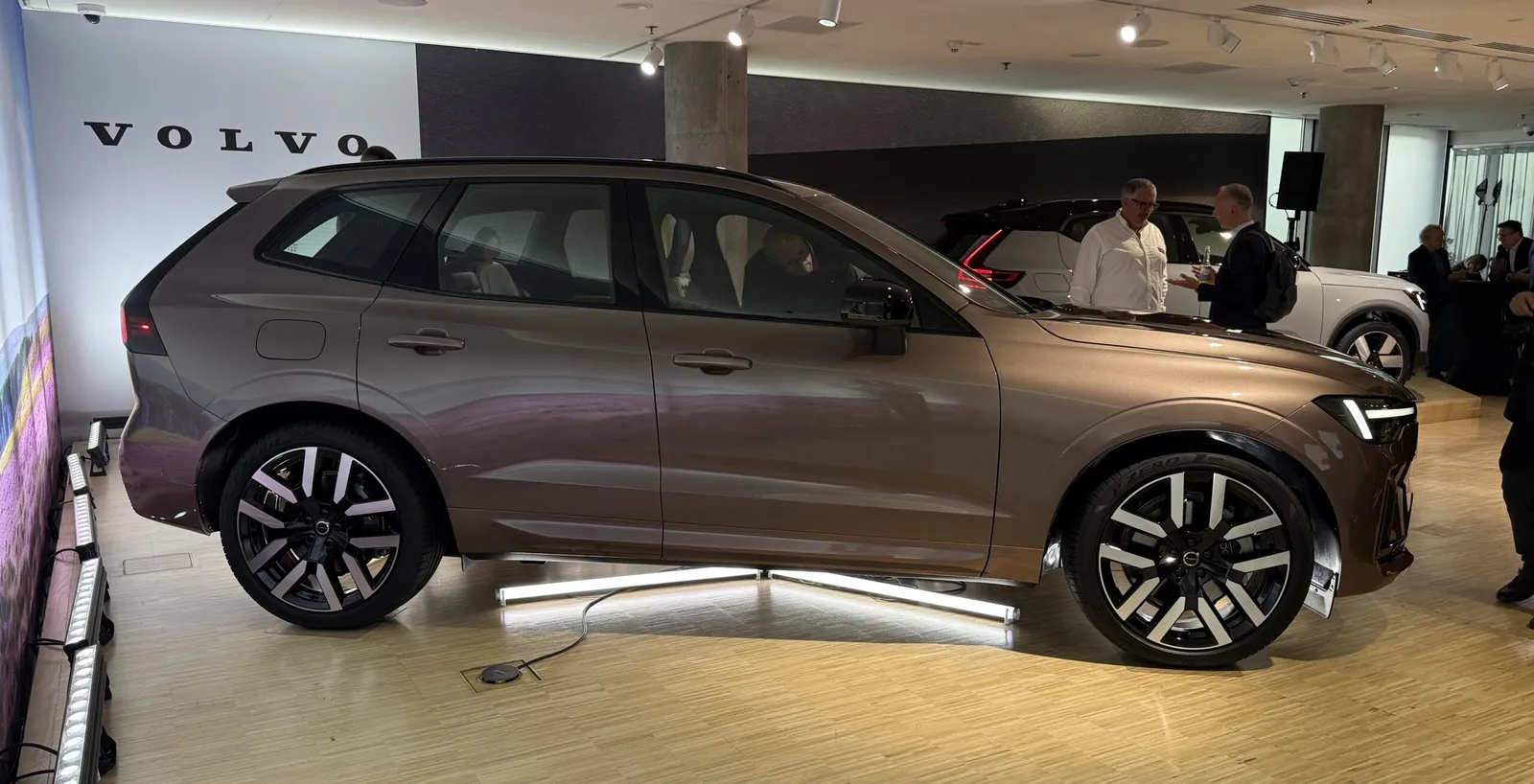
The Volvo XC60 T8 Long Range PHEV from the side. Either we have problems with our eyes or we spend too much time looking at electric cars, because the proportions of this vehicle seem wrong to us: the front end is too long, as if it’s been flattened to the left, while the cabin is positioned far too far back.
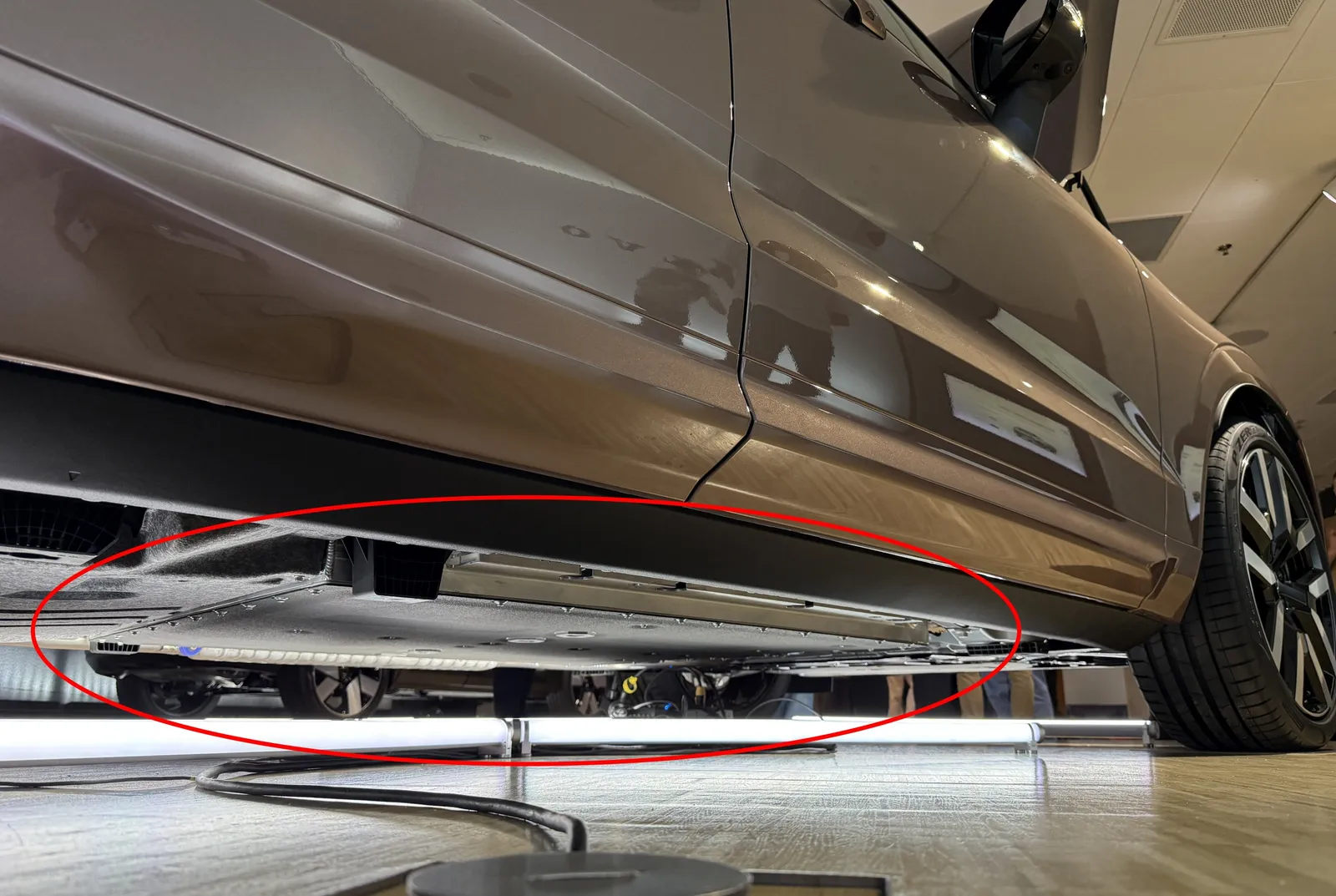
When we take a look under the chassis, we’ll notice that the battery in the Volvo XC60 T8 PHEV is indeed large (image below). The wheelbase of the XC60 Twin Engine is 2.865 meters, and the battery occupies about 1/2 to 2/3 of that length. This isn’t yet a battery typical of pure electric cars, but with high-density cells, it would be possible to fit around 50 kWh of energy there. If not for the cover right under the rear seat and trunk, the battery compartment could be extended by another few dozen centimeters backward—resulting in a true electric car. It’s still based on the old SPA2 platform designed for gasoline-powered models.
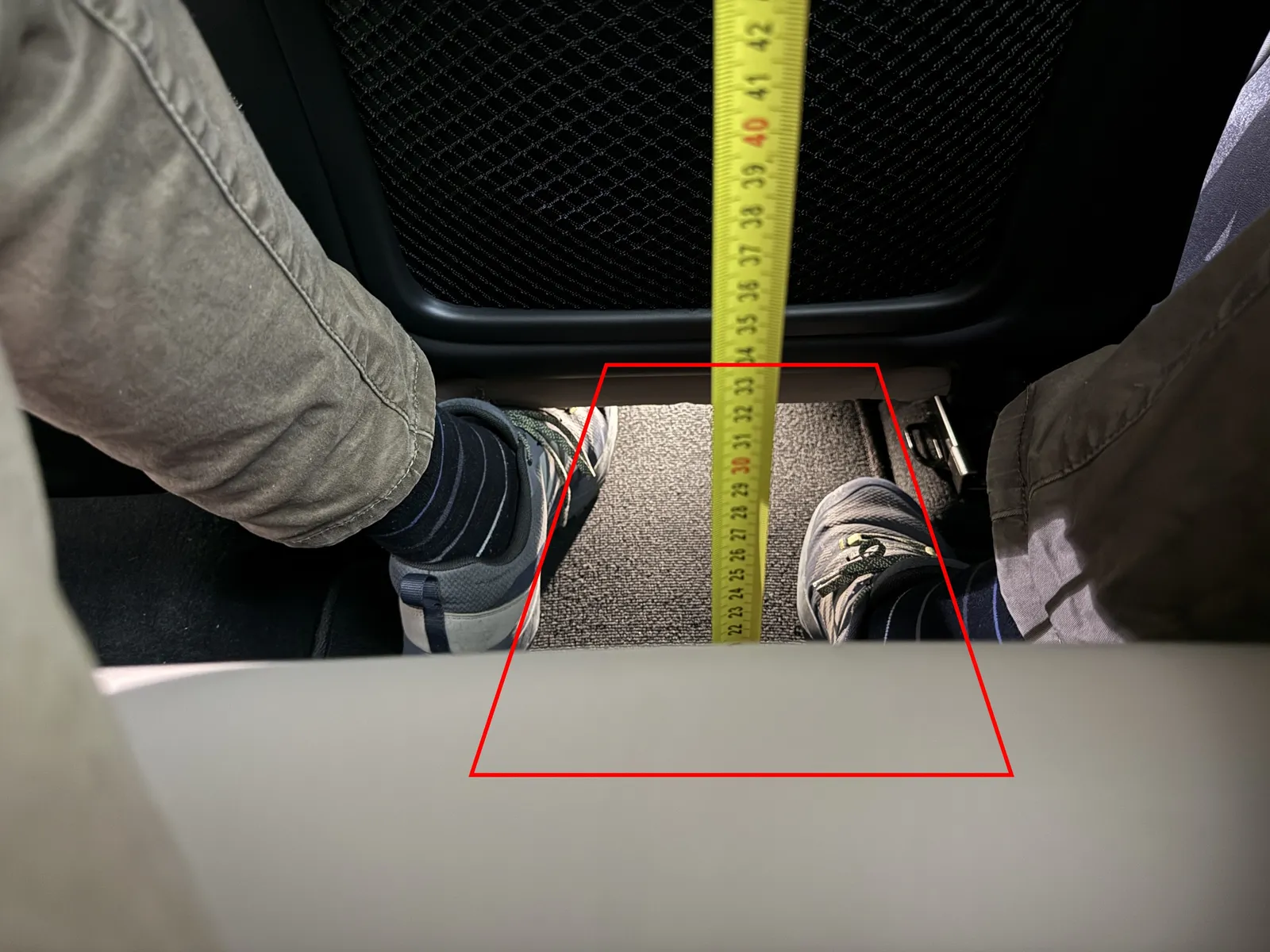
The large battery under the chassis means that sitting in the back is actually similar to being in an electric vehicle, as the sofa seat ends about 34 centimeters above the floor. This is exactly the same as in the new gasoline-powered Volvo XC40 parked next to it. Indeed, there are electric vehicles with even lower seats, but recently manufacturers have tried to ensure they’re not less than 30 centimeters high, as that would be simply uncomfortable for passengers in the back. Volvo has also taken care to remind us that we’re driving a gasoline car—there’s a high central tunnel in the middle, which is likely empty or contains high-voltage wires:

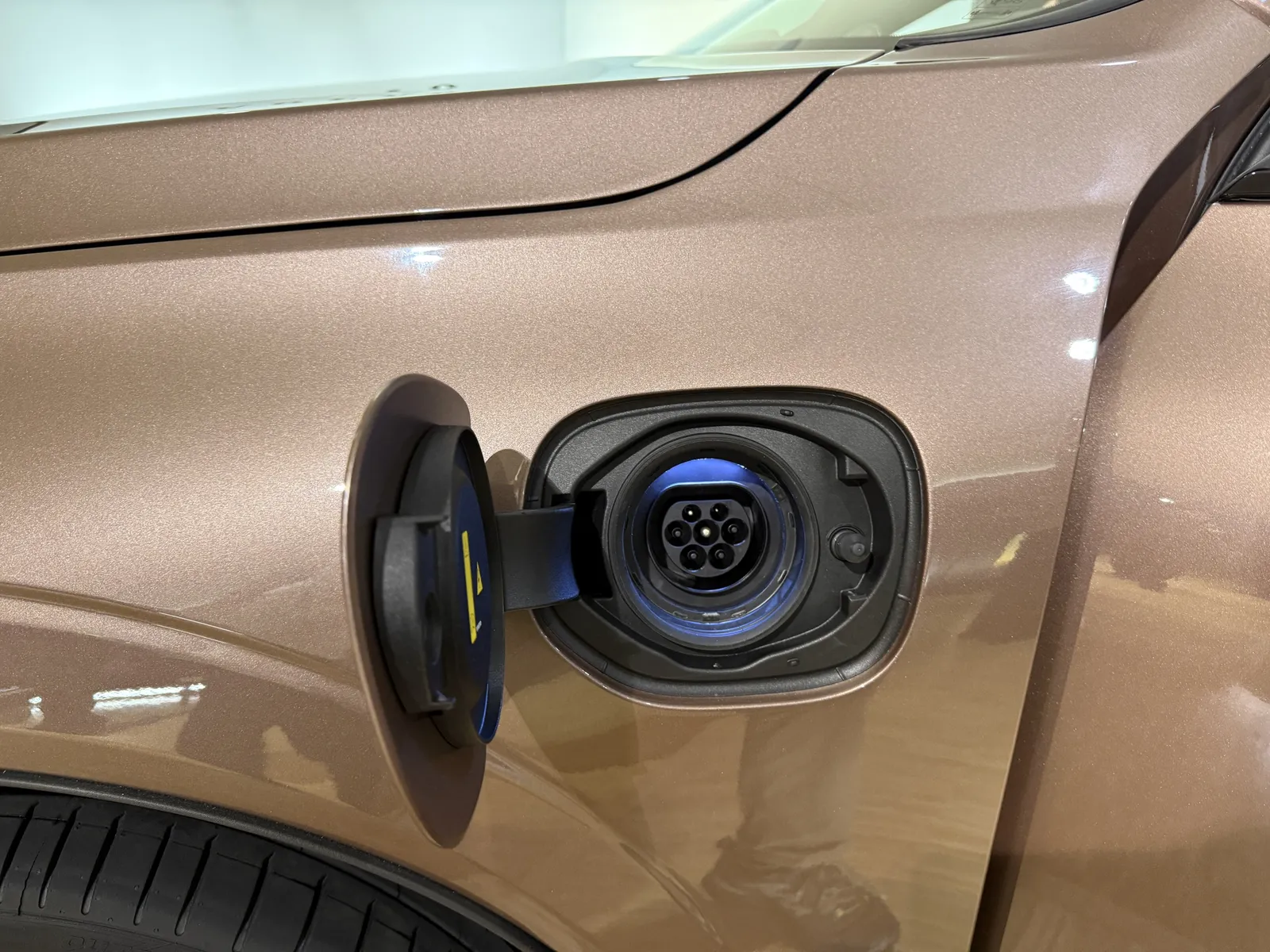
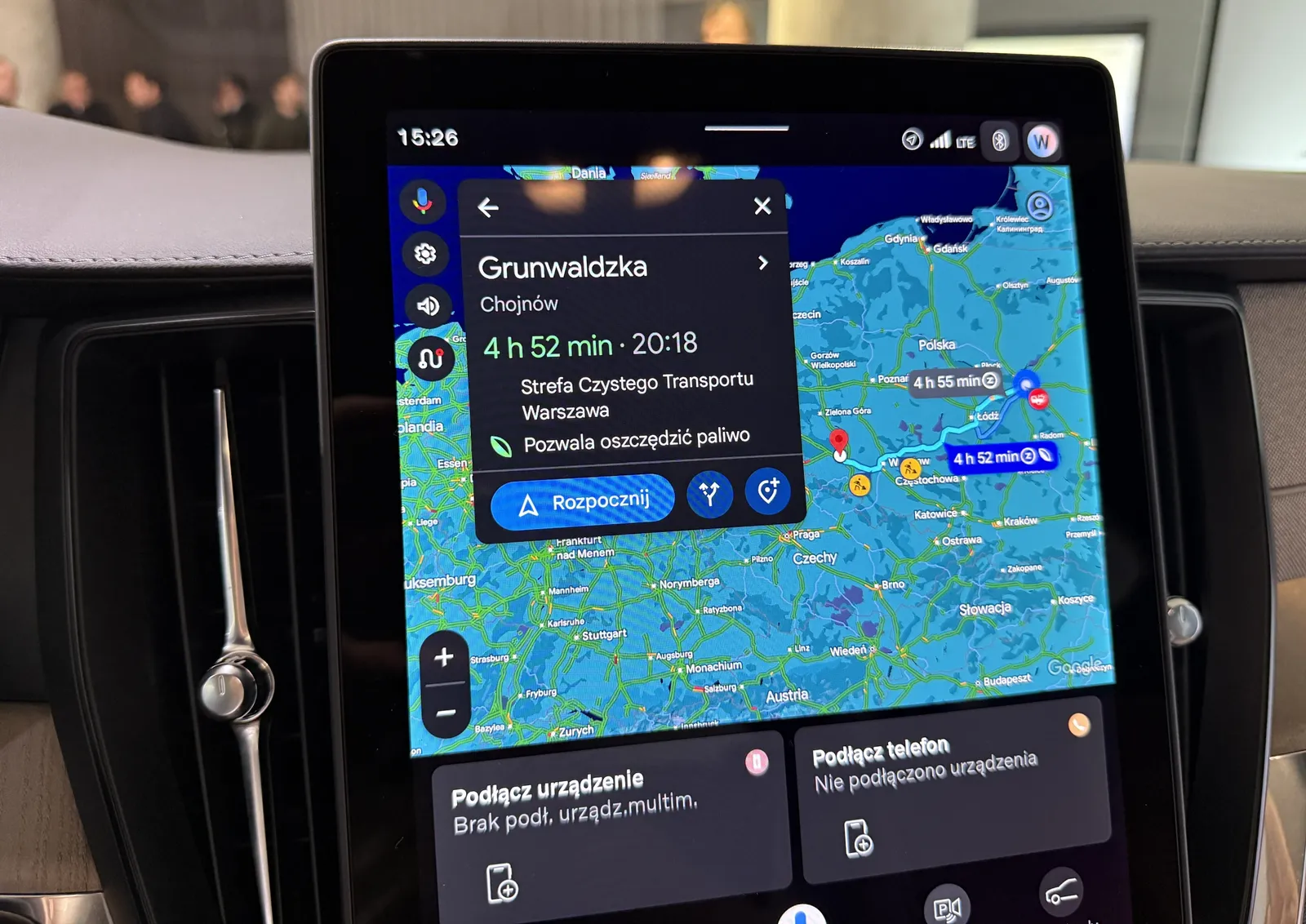
Our sad assumptions were confirmed: despite having a large battery, the Volvo XC60 PHEV is equipped only with a Type 2 charging port. But we had a moment of optimism—we switched the car to electric mode (Pure) and asked it to plan a route to Chojnowo (450+ km), including stops for charging. It wasn’t until later that we realized each such stop would take about four hours. No wonder the car refused to go through the hassle. The travel time, considering the time of day and it being a gasoline vehicle, is basically standard. Forget about driving in electric mode—just give up:
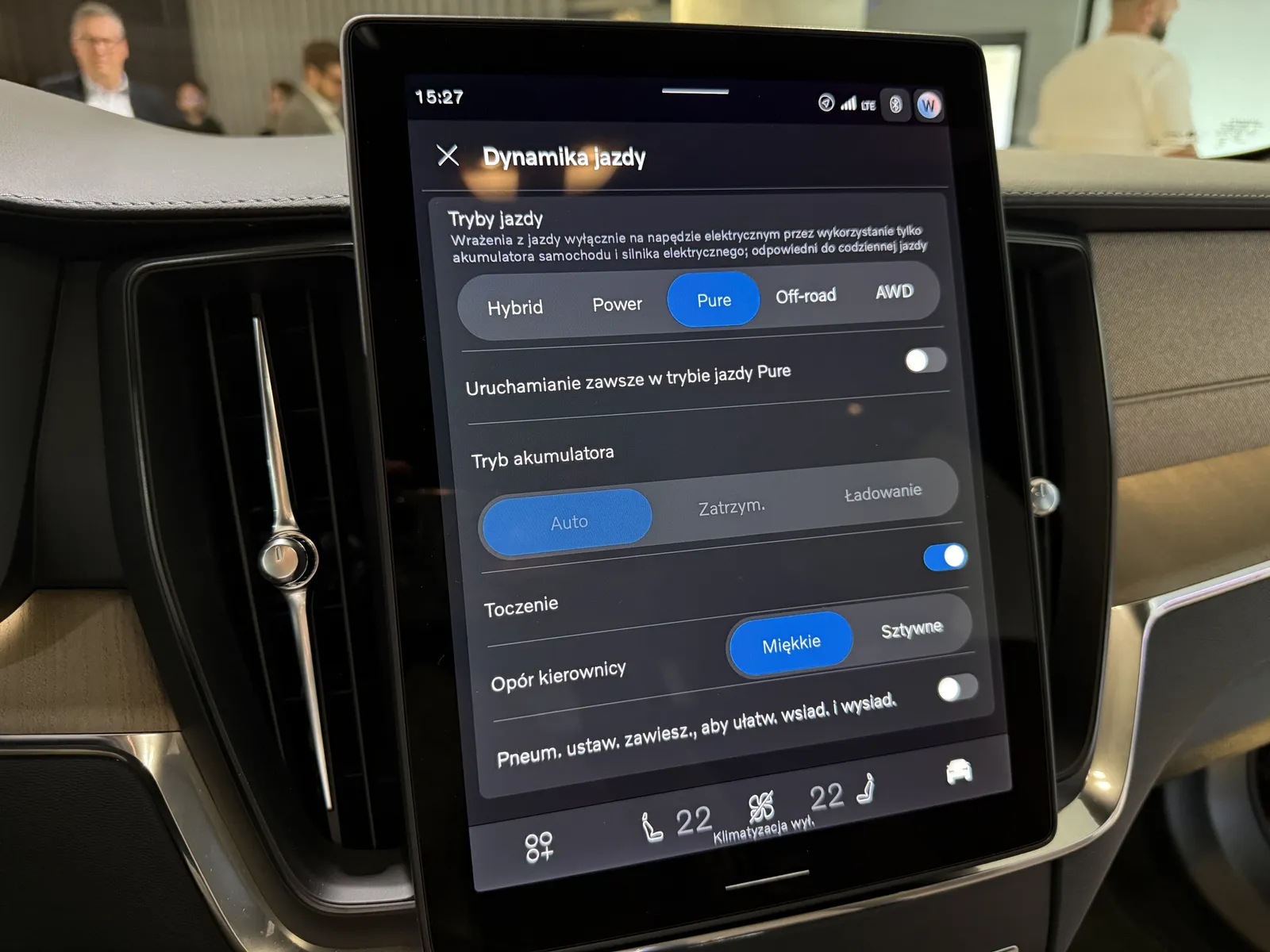
We like the option to set pure electric mode as default and have it applied every time the car is started. The vehicle’s claimed electric range with a 97 percent charged battery is 155 kilometers. This aligns quite well with our calculations based on WLTP results. It also clearly tells potential buyers that if they want the range of a gasoline car in an electric vehicle, they need a battery with a capacity of 150-170 kWh.
And if someone has access to an outlet, they can drive in electric mode for 95 percent of the time:
The Volvo XC60 T8 PHEV that we got to sit in was heavily equipped. It featured things like a pneumatic suspension (+9,999 zł) and an Orewuar “crystal gear shift lever.” However, it did not have a projection display on the windshield. It was only the editorial team’s phone that noticed the driver attention monitoring system located in the rearview mirror (photo below). The price for such a variant starts at around 338,900 złoty (configurator HERE), but adding wheels and a few accessories quickly pushes this amount above 350,000 złoty. Incidentally, we were surprised by how bulky the combustion engine components (black) are compared to the electric ones (silver, photo No. 2):
Editor’s note from Elektrowozu: if someone is VERY afraid of electric cars, then the Volvo XC60 T8 Long Range PHEV might be their last internal combustion engine vehicle before they realize there’s no need to rely on fossil fuels
Article rating
Readers’ rating
[Total: 0 votes Average: 0]
Don’t miss new content — CLICK and FOLLOW Elektrowoz.pl on Google News. You might also be interested in the following ads: