
New battery technologies from Europe. Here’s what we’re developing
Chineses dominate battery production, but European companies are developing technologies that could secure their own place in the market. Some of these are already generating profits. At the InnoEnergy conference in Munich, we examined the progress of these projects and who is funding them.
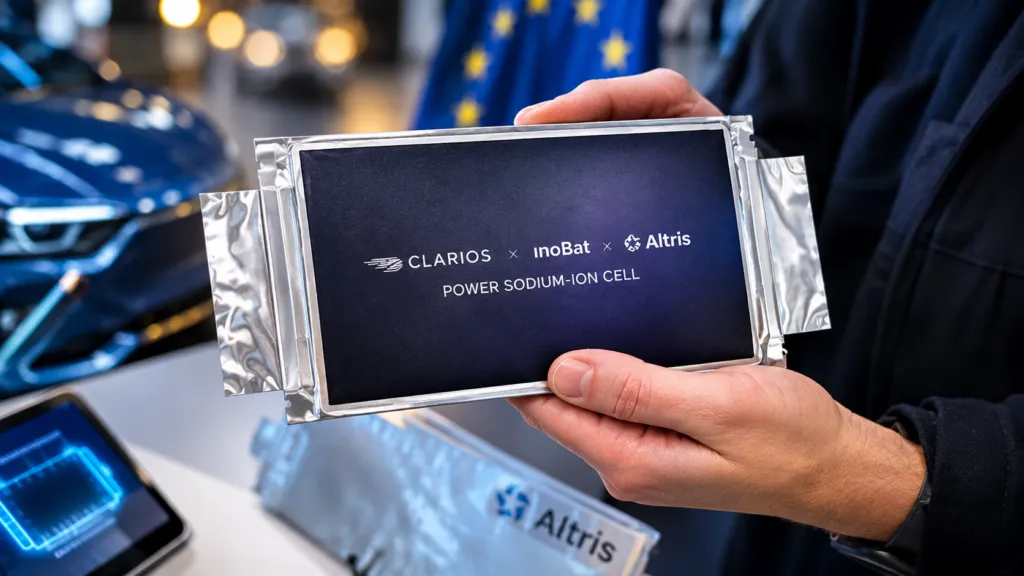
Table of Contents
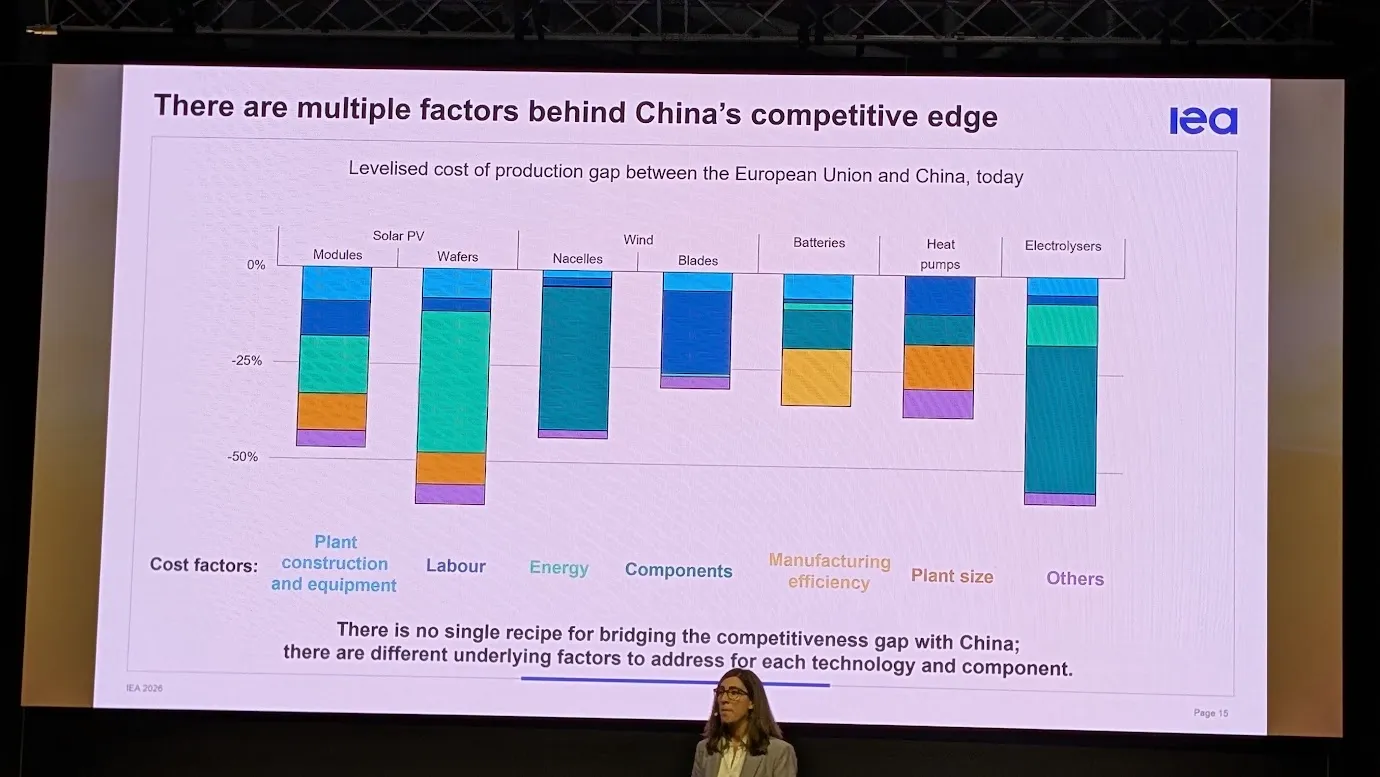
China produces the majority of lithium-ion batteries in the world and also dominates the supply of materials used in their production. Moreover, thanks to its massive scale of operations, integrated supply chains, and highly efficient factories, it is able to manufacture cells at significantly lower costs than its European competitors.
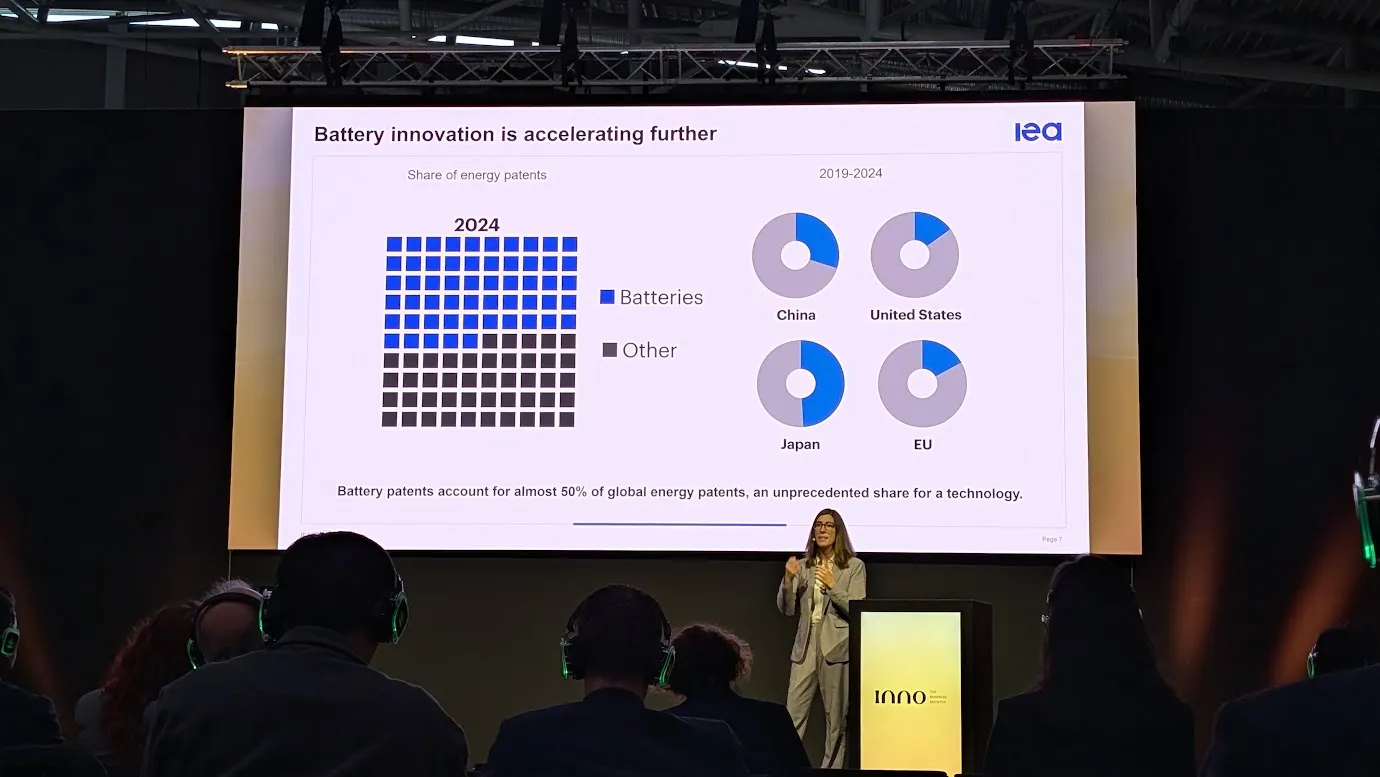
According to the International Energy Agency (IEA), production costs for batteries outside China are currently 30–60% higher. At the same time, the agency estimates that if China were to halt exports of key battery materials and components, it could result in a loss of $17 billion per month in electric vehicle production outside China, with more than half of that affecting the European Union.
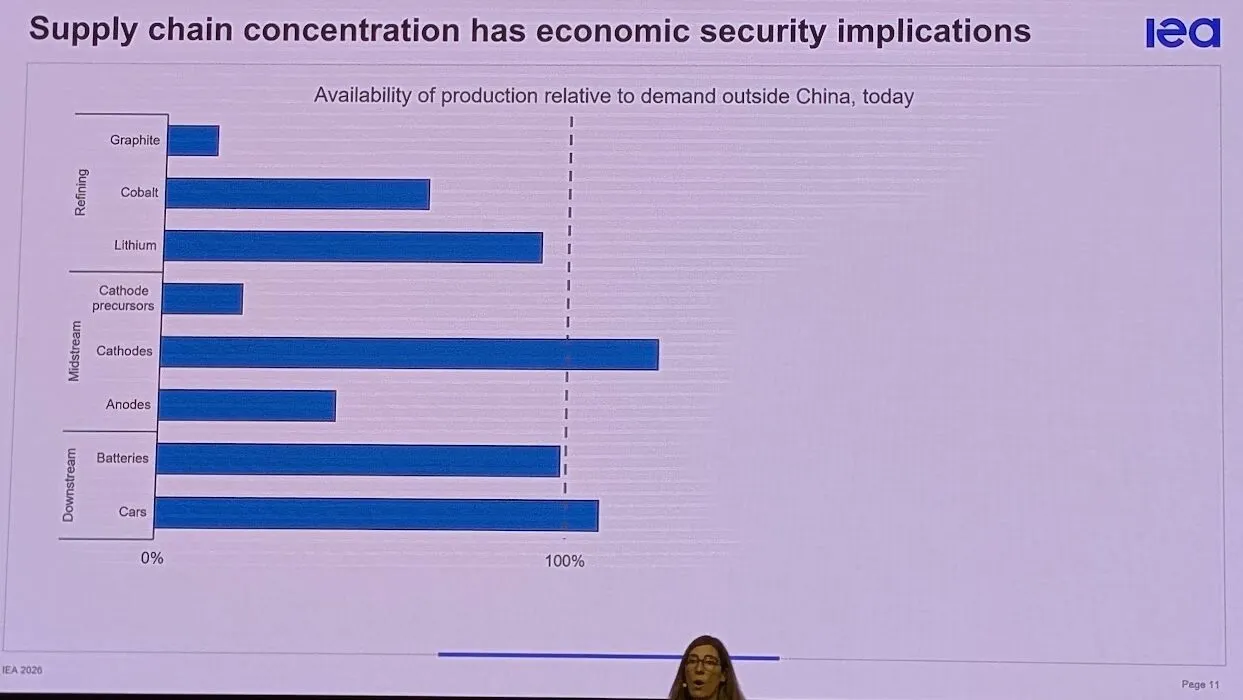
“When we look at battery production capacity outside of China, the situation may seem quite good, as the capacity of such factories can meet almost all the demand from consumers outside China. However, when we break down a battery into its individual components, it becomes clear that our dependence on China is much greater. A large majority of the components needed to produce these cells must come from China,” explained Araceli Fernandez, head of IEA’s Technology Innovation Unit, at the The Business Booster conference organized by InnoEnergy in Munich.
European manufacturers are thus facing a problem — even if they develop better technology to reduce reliance on Chinese suppliers, they still need to find a way to produce and sell it at a profit. Meanwhile, the prices of mass-produced LFP and NMC cells are falling, and Chinese companies show no intention of giving up market share.
Polsat Plus wants to exit the energy sector, Gaz at 100 euros. Listen to the energy review from November 2
Not everyone, however, tries to compete with CATL and BYD on their terms. New battery technologies showcased by European startups at the InnoEnergy conference in Munich have a chance to find their place in areas where weight, power, durability, safety, or energy storage time are more important than price.
Altris. Sodium batteries will make it into cars, but under the hood
Swedish company Altris aims to produce sodium-ion batteries that use much more readily available elements than the popular NMC cells. The company’s Fennac cathode material is based on sodium and iron, without relying on lithium, nickel, or cobalt, which are largely refined in China.
This doesn’t mean the Swedes intend to compete immediately with Chinese LFP batteries in electric vehicles. Their first target market is low-voltage batteries, where lead-acid technology is still most commonly used in the automotive industry.
Why? Because in 12 V or 24 V batteries that power vehicle electronics, energy density isn’t the key factor—durability, the ability to deliver high currents, and reliability, even at low temperatures, are more important.
“We have already tested 10,000 charge and discharge cycles at 6 C currents. The cells retain about 80% of their initial capacity, and the degradation pattern suggests we could reach 15,000–20,000 cycles,” says Christer Bergquist, CEO of Altris, in an interview with WysokieNapiecie.pl.
“That would mean a lifespan many times longer than that of traditional lead-acid batteries, which in cars typically need to be replaced every few years. Our batteries are likely to outlast the car itself,” insists Bergquist.
The Swedes also claim that the cells can operate at temperatures as low as -40°C and exhibit slow calendar aging. “We can ship batteries that are completely discharged and store them for many months, even years, without significant deterioration in their condition, whether fully discharged or charged. This could be very useful in military applications as well,” insists Bergquist.
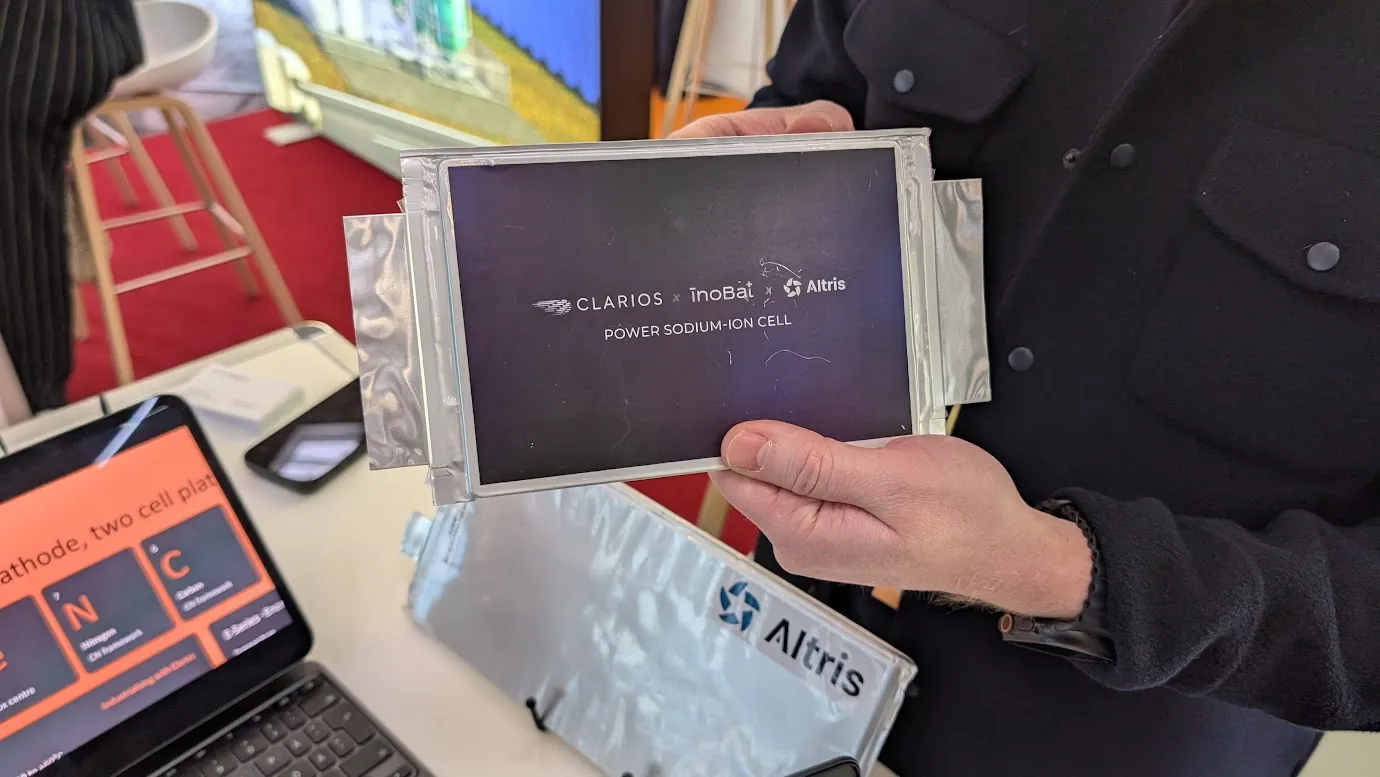
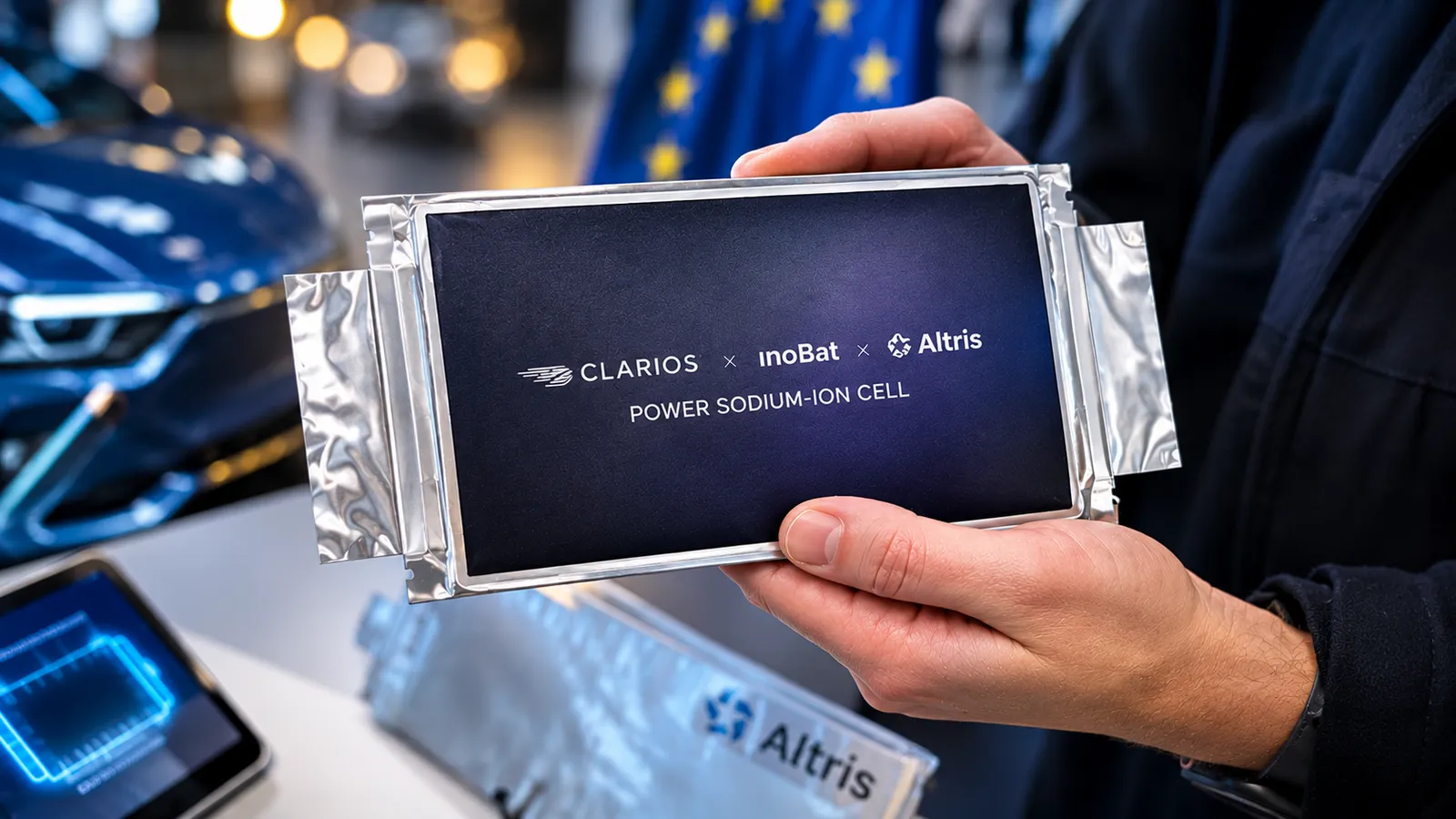
Altris is already working with battery manufacturer Clarios and InoBat. Initially, the partners aim to introduce sodium-ion cells into 12 V batteries, and later also into 24 V and 48 V batteries used in lightweight electric vehicles and hybrid cars.
The company does not plan to build its own gigafactory for now. The cathode material is set to be produced in collaboration with the Czech chemical group Draslovka, in existing facilities. The first plant is expected to produce around 400 tons of material per year, which Altris says is sufficient to manufacture about 200 MWh of cells.
These cells will then be produced by the industrial partners. The Swedes expect that the first vehicles equipped with their batteries will hit the market by 2029. Currently, the company is seeking around 25 million euros for further development and scaling up production.
Basquevolt. Metal lithium batteries first for drones
The Spanish company Basquevolt has been working on solid-state battery technology for eight years. This technology aims to enable the use of metal lithium anodes instead of graphite, potentially allowing more energy to be stored in a cell of the same weight.
However, the problem with such anodes has been known for years. Dendrites, which are metallic structures that can form on the surface of lithium during operation, may, in extreme cases, penetrate the electrolyte and cause a short circuit. The Spaniards have developed a protective layer to cover the lithium electrode, preventing the formation of lithium dendrites.
– For about eight years, we have focused primarily on developing the electrolyte. We have made significant progress during this time, but we are still working on improving the durability of the cells and enabling their mass production – said Iñigo Fernández Zubia, Basquevolt’s strategy director.
In May 2026, the company unveiled a cell with a capacity of 27 Ah and an energy density of 402 Wh/kg. This is far higher than that of most lithium-ion batteries currently produced in large quantities. The company describes these cells as prototypes between series A and B, meaning they are still before completing the validation process required by car manufacturers.
The Spaniards have been collaborating for three years now with companies such as Renault, as well as two other automotive groups in Europe and one in Korea. They also have their own pilot plant with an annual capacity of around 20 MWh.
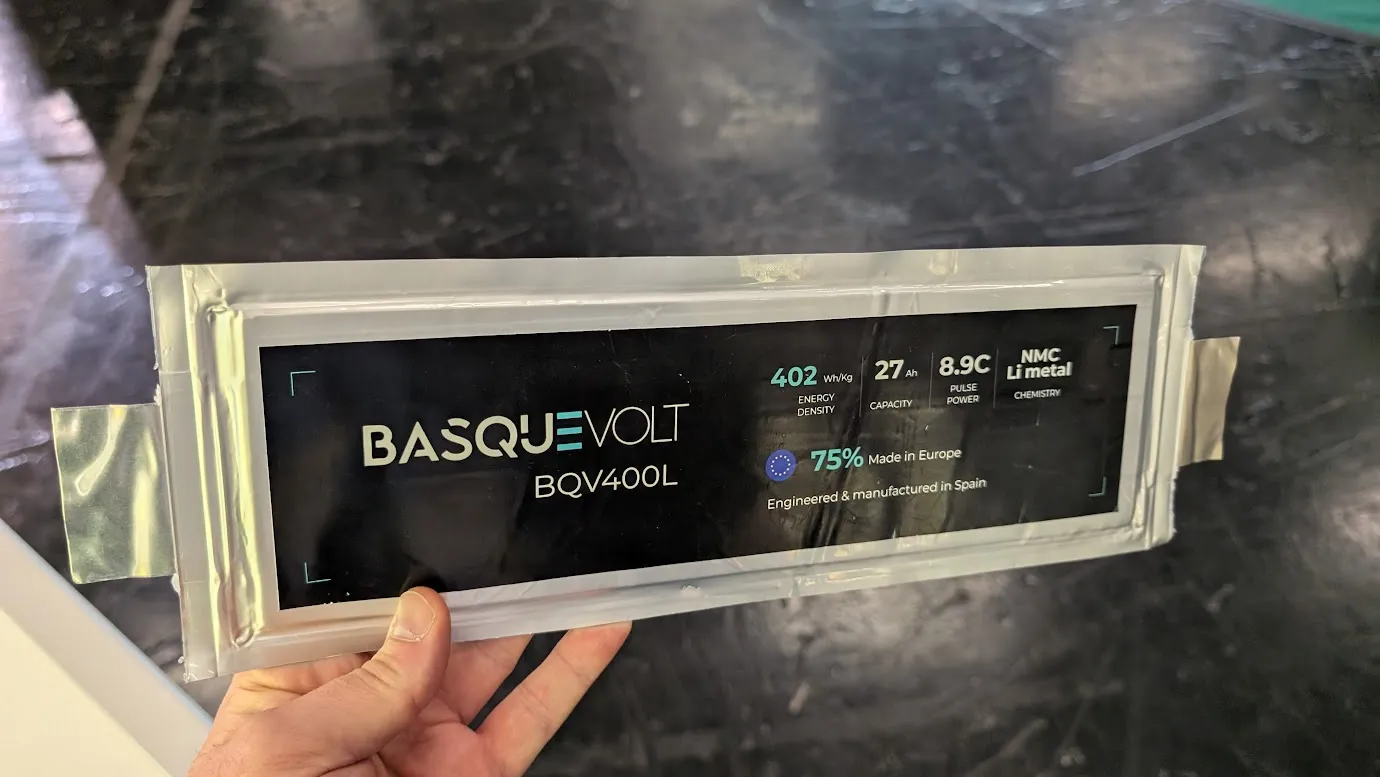
However, the first users may not be car manufacturers but rather drone manufacturers. We hear similar opinions from many startups we spoke with in Munich. Russia’s war against Ukraine and, indirectly, NATO, has multiplied the demand for new battery technologies.
“Drones are an excellent starting point. We can develop the technology, scale up production, and gain experience in real-world applications. The automotive industry will come later,” explains Zubia.
The company is already testing cells in drones used in real missions. It claims the ability to charge from 20% to 80% in about 15 minutes, though at low temperatures the cells still require heating.
During The Business Booster, Basquevolt also announced a partnership with Battera Technologies to develop complete batteries for aviation, aiming for over 500 Wh/kg capacity.
The Spaniards assume that up to 90% of the equipment in existing battery factories could be used for producing their cells, after appropriate adjustments to the processes. If this can indeed be achieved, the costs of industrializing the new technology would be much lower than building a gigafactory from scratch.
At the beginning of 2027, the company plans to raise another 20–25 million euros, primarily to increase production for the drone market. Among Basquevolt’s investors are already Iberdrola, InnoEnergy, and smaller private equity funds from Spain.
GDI. Silicon instead of graphite
Increasing the energy density in lithium-ion cells can also be achieved without changing the electrolyte to steel. It is sufficient to replace graphite in the anode with silicon, which theoretically can hold significantly more lithium ions.
The problem is that during charging, silicon expands greatly in volume, and it contracts again during discharging. These repeated changes lead to electrode degradation.
Company GDI has developed a technology for very thin layers of silicon deposited on a special metal substrate. This helps limit deformation of the entire cell, although silicon still expands in volume.
– Silicon must expand in volume during charging. This cannot be eliminated, but the anode can be designed to limit the impact of this phenomenon on the entire cell. We also use a collector made of a copper alloy with enhanced durability, produced for us by a company in Germany, – explains Robert Anstey, co-founder and president of GDI.
According to Anstey, such a solution allows the size change of the entire cell to be kept below 10%. GDI claims it is also possible to achieve an energy density of around 350 Wh/kg and 1100 Wh/l, with the anode technology enabling very high discharge currents, even up to 20 C.
Like our other interviewees, however, the company does not start with electric vehicles. It already has a multi-million dollar contract to supply anodes to the U.S. military and is developing projects for consumer electronics and medical devices.
– In the automotive industry, the adoption of new technologies takes much longer. We don’t expect this to be a significant market for us before 2032 – says Anstey.
GDI is expanding production capacity in collaboration with companies such as AGC, utilizing industrial coating technologies. By the end of the decade, it aims to achieve annual production capacity in the GWh range.
At this scale, the company hopes to reduce production costs for anodes to a level about 20% higher than that of Chinese competitors. For drone manufacturers or producers of specialized military equipment, such a cost advantage might be acceptable if it results in greater range, lower weight, higher power, or a European supplier.
GDI raised approximately 10 million euros at the beginning of 2026 and is preparing another round with a similar amount.
The Batteries from Rzeszów: high-capacity and high-power cells
The Polish company The Batteries is developing lithium cells that aim to achieve an energy density of over 400 Wh/kg, while also allowing for discharge at very high currents. The first customers are expected to be drone and military equipment manufacturers, and in the future, data centers as well.
Initially, The Batteries worked on thin-film cell technology with a solid electrolyte, produced using vacuum deposition methods. By the end of 2024, it built a pilot plant with a capacity of around 1 MWh, which confirmed the technical feasibility of the process. However, it later changed its development direction.
– We made a technological pivot and switched to using thin-layer anodes combined with a composite cathode. We dedicated the second half of 2025 and the entire year of 2026 to this change – explains Jacek Królik of WysokieNapiecie.pl and president of The Batteries. The new solution is intended to be cheaper to produce.
Currently, the company combines a thin-layer lithium anode with a thicker, modified NMC cathode that contains nickel, manganese, and cobalt. This combination provides both high energy density and high power, which are features that current popular batteries in cars or consumer electronics lack.
– Our goal for the first generation of batteries is to achieve 440 Wh/kg. At the same time, we want to deliver very high discharge currents, in the range of 7–15 C – explains Aleksei Staravoitau, co-founder of The Batteries, founded in 2017.
A discharge current of 10 C means that the cell could theoretically release all the stored energy in six minutes. This is a particularly important parameter for drones that need high power temporarily while also having to remain as light as possible.
The company does not intend to compete on price with Chinese manufacturers of popular cells, however.
“With production costs and energy prices in Europe, we will be significantly more expensive than China. That’s why we are looking for applications where performance parameters and quality are the top priorities,” admits Staravoitau.
The Batteries already has a development agreement with a client that includes a partial order. Beyond drones and military communication devices, the company sees a new market in data centers that support artificial intelligence.
GPU processors can change their power demands very rapidly, which requires appropriate power supply systems. Batteries can help accommodate such sudden load fluctuations, and the limited space in server racks favors solutions with high energy and power density.
“In such applications, we can limit the energy density to around 320–340 Wh/kg, achieving several thousand charge cycles in return. Batteries can also operate within a limited charge range, such as from 50 to 80%. In drones, we can’t afford such compromises because every gram counts,” explains Staravoitau.
Production is currently on a laboratory scale. The company plans to begin small-scale deliveries in the second half of 2027 and complete the construction of a partially automated line with an annual capacity of around 1 MWh of cells by the end of the year.
“This will allow customers to develop their own products using our batteries, conduct practical tests, and proceed with certification, which requires larger quantities of cells,” explains Królik.
Subsequent phases involve increasing production to around 5 MWh, followed by the construction of a factory with an annual capacity of around 100 MWh. However, this requires significantly more capital.
– We’re constantly working on raising capital. The latest round, including the funding needed to build the current production line, amounts to about 15 million euros. If the pilot line confirms our assumptions, we’ll need several more dozen million euros – says Królik.
Among The Batteries’ investors are Aper Ventures, JRH, Meta Ventures, and EIT InnoEnergy, among others. However, according to Królik, it’s particularly difficult in Poland to find funding that allows moving from a prototype to large-scale industrial production.
– In Europe, it’s hard to secure 50 to 300 million euros for the industrialization of technologies. In Poland, this gap starts much lower.
There is also a lack of component suppliers, manufacturing equipment, and the entire industrial ecosystem that Asian manufacturers have at their disposal.
– In Poland, we are proud to supply equipment and components for the automotive industry. But very often, the intellectual property belongs to someone else. We want to sell our own technology, our own IP. The problem is that we don’t have an ecosystem like that in Bavaria, where device suppliers, manufacturers, and end-users work together closely – explains Królik.
The Batteries is therefore developing not only cells but also its own machines and software for operating them. This increases technological independence, but it also means the need to invest in skills that, in a developed industry, could be purchased from specialized suppliers.
– The standard approach is to mitigate risks: we first complete one phase and then move on to the next. Such development can take ten years. Meanwhile, Europe wants to shorten this process to three to five years. That means we need to do many things simultaneously – he concludes.
For military devices, which are set to be one of the company’s first markets, supply security is also important. The European defense industry may be willing to pay more for batteries whose availability is not dependent on the decisions of Chinese manufacturers and authorities.
Silbat. A thermophotovoltaic (TPV) battery that lasts for several days
Spanish Silbat proposes a completely different solution. Instead of developing another generation of electrochemical cells, it aims to store energy in the form of heat by utilizing the phase transition of silicon, namely its melting and solidification. During charging, silicon is heated to over 1400°C until it changes state from solid to liquid. During discharging, it releases the stored energy in the form of thermal radiation, which thermophotovoltaic (TPV) cells convert into electricity. They function similarly to regular photovoltaics, but instead of using sunlight, they utilize radiation emitted by heated materials.
Silicon, which we use in the production of solar panels and integrated circuits, can also store enormous amounts of thermal energy. Phase change plays a crucial role here. When melting, silicon absorbs about 0.5 kWh of energy per kilogram without increasing the temperature, and it releases this energy during solidification. This means that a ton of silicon can store around 500 kWh of phase change heat alone, not including the energy stored during heating. Additionally, Silbat needs much cheaper metallurgical silicon.
“We need silicon with a purity of only 97-98 percent, which costs about 2 dollars per kilogram. It’s a very readily available material, so we can store large amounts of energy without using expensive metals,” explains Alejandro Benito Rodríguez from Silbat.
Alternatively, heat from batteries can be supplied directly to industrial facilities, improving the overall energy efficiency of the system.
“Our goal is to store energy for dozens, and eventually even hundreds, of hours. In such applications, low investment costs are the most important factor. Efficiency doesn’t need to be as high as that of lithium-ion batteries,” explains Rodríguez from WysokieNapiecie.pl.
According to the company, silicon alone required for energy storage costs around $4/kWh, with the target cost for the entire solution at around $20/kWh.
This is very low compared to lithium-ion batteries (LFP cells cost around $50/kWh in China today). However, we pay for the low cost of these batteries with significantly lower efficiency, though great progress has also been made in this area by scientists. In laboratory tests, the efficiency of TPV cells has already exceeded 40%, and in some experiments it reached even 44% (see, for example, research results from the US).
Yet the high temperatures required to release energy in thermophotovoltaic cell spectra also mean substantial losses in the separators of such batteries. Silbat claims that thanks to high-temperature insulation, these losses amount to about 3–5% per day.
Therefore, this technology may prove particularly useful in applications where long-duration energy storage is needed, and where some of the waste heat can be utilized as well.
The company is currently developing warehouses that allow for 15–20 hours of unloading time. The pilot installation is expected to use around two tons of silicon, while the target commercial version will use about 10 tons, all fitting within a standard marine container.
The budget for the pilot project being carried out with industrial partners is around 10 million euros. The company is also preparing another funding round, aiming to raise approximately 4 million euros.
Potential first customers could include steel mills, chemical plants, glass and paper manufacturers, as well as heat power plants. “In the next step, we want to move from testing in our own facility to demonstrating the technology at an industrial partner’s site,” says Rodríguez.
European Gigafactories: From Northvolt’s Bankruptcy to Verkor’s Growth
The technologies described are at various stages of development, but most of them are still waiting to begin large-scale production. Therefore, it is worth looking at InnoEnergy’s investments as well, which have already reached the factory stage.
One such example is the French company Verkor, which has received support from this European fund since its inception. The company was founded in 2020, and five years later it opened a lithium-ion battery factory in Dunkirk.
The facility is intended to produce 16 GWh of batteries per year, enough to supply batteries with a capacity of 60 kWh for over 260,000 electric vehicles. In August 2026, Verkor announced the launch of its second production line and the delivery of the first batteries manufactured entirely at the factory.
The cells are intended for use in vehicles such as Renault and Alpine models. However, the French company still faces the challenge of achieving full production capacity and optimal process efficiency.
The difficulty of this task was illustrated by the history of Sweden’s Northvolt, which was also supported by InnoEnergy.
Northvolt raised billions of dollars from investors and public institutions, built factories and research centers, but failed to reach the scale and production efficiency needed to compete with Asian manufacturers. It declared bankruptcy in March 2025.
According to information we heard at the Innoenergy conference in Munich, Northvolt was unable to exceed 50% of the efficiency of the cell production machines it imported from China, with production losses accounting for at least one quarter of the cells manufactured.
Northvolt went bankrupt, but that doesn’t mean the factories built at a cost of billions need to be dismantled. In February 2026, the American company Lyten completed the acquisition of Swedish assets, including the cell factory in Skellefteå and the research center in Västerås.
The new owner began restarting production. The factory in Skellefteå is intended to have an annual production capacity of 16 GWh, but it’s still unclear whether Lyten will be able to achieve the efficiency levels that the Swedes failed to reach.
The Americans also acquired an energy storage systems factory in Gdańsk, equipped to produce batteries with a total capacity of 6 GWh per year, expandable to 12 GWh. Northvolt’s second plant in Gdańsk, which manufactures industrial batteries, went to Scania instead. Lyten is also trying to take over Northvolt’s unfinished project in Heide, Germany, and in Sweden it signed an agreement to buy a battery recycling plant.
Not all projects were saved, however. Northvolt abandoned its planned Gigafactory Six in Canada. Nevertheless, much of the equipment, infrastructure, and industrial expertise built by Northvolt remained in Europe, although many of the original investors, including Innoenergy, suffered losses.
Skeleton supercapacitors will smooth data center power consumption
However, there are more success stories of European companies in the field of energy storage. A good example is the Estonian company Skeleton Technologies, which develops supercapacitors and energy storage systems with very high capacity.
Unlike lithium-ion batteries, supercapacitors store much less energy, but they can absorb and release it much faster. They rely on physical phenomena rather than the chemical reactions typical of batteries. The first capacitor was constructed in 1745 in Kamien Pomorski, and we have been using them widely in electronics for over a hundred years, but it was the rapid growth of AI data centers that truly spurred demand for their advanced, high-capacity versions.
GPU processor clusters used for artificial intelligence can change their power consumption within milliseconds. When thousands of such processors are in use, fluctuations in demand can reach several megawatts. Supercapacitors then act as a buffer, absorbing sudden load changes and limiting their impact on the rest of the electrical infrastructure.
Skeleton has already announced deliveries to the largest American data center operators, though it does not reveal their names. It has also already generated profits for its investors.
As Mikołaj Budzanowski, president of InnoEnergy for Central Europe, told WysokieNapiecie.pl, the fund has already sold some of its shares in Skeleton, realizing a substantial profit from the investment.
Meanwhile, Siemens, which previously held around 6% of shares in Skeleton, increased its capital stake to over 16%. Germany also announced that the new agreement grants it exclusive global rights to sell and market Skeleton’s products in the data center market. The value of the latest funding round exceeded $100 million, raising Skeleton’s valuation to over $1 billion.
Romanian Prime Batteries Makes Profits from Cell Production
Another example of success is the Romanian company Prime Batteries Technology, a manufacturer of lithium-ion cells (NMC and LFP) as well as complete energy storage systems, in which InnoEnergy invested in 2022.
The Romanian company already has a production capacity of around 2.3 GWh per year and plans to increase it to 8.3 GWh. It is also developing its own supply chain for battery materials. Together with the Korean company Top Material, it launched a project focused on producing active materials used in lithium-ion cells.
Unlike many European startups, Prime Batteries no longer needs to convince investors solely with projections. In 2025, the company achieved revenues of around 134 million euros, 142% higher than the previous year, along with a net profit of around 25 million euros. This results in a net margin of nearly 19%. Moreover, the Romanian manufacturer has been showing positive financial results for several years now.
The company produces batteries and energy storage systems for industrial and energy sector clients. It collaborates with Romanian firm Monsson, to whom it has already supplied batteries for an energy storage system with a capacity of 24 MWh. In November 2025, the two companies signed a memorandum regarding the supply of storage systems with a total capacity of 1 GWh for projects in Romania and other European countries. Unlike Northvolta, the Romanian company is developing production more slowly but profitably.
New battery technologies represent an opportunity for Europe
At a conference in Munich, representatives of various companies discussed with investors securing funding ranging from several million to several dozen million euros for technology development and capacity expansion. These amounts are still within the reach of some European venture capital funds and industrial investors.
It is much harder to find funds for the next stage — building large factories. According to representatives of The Batteries, in Poland the financing problem for industrialization starts already with investments in the tens of millions of euros range. Meanwhile, building a large battery factory may require many times larger investments.
In Munich, one thing was missing: investors. We heard this from both startups and a representative of one of Poland’s large companies who came there to see what is happening today in the field of European technology. “In previous years, since I went there as an investor, I received only a few meeting proposals from startups. This year, my inbox was flooded with them. It’s clear that there were significantly fewer companies interested in investing,” he said in a conversation with us.
If Europeans, including us Poles, do not show a greater willingness to take investment risks and do not facilitate the rapid development and adoption of new technologies, we will fall behind American companies in terms of capital invested in business growth, and behind Chinese companies in terms of production scale and the size of a unified domestic market where startups can thrive.
Polish companies and funds that complain that Europe missed out on the development of the battery industry now have the opportunity not only to observe its subsequent stages but also to profit from some of them.
See also: Corab Energy Storage opened an energy storage factory. Polish software and cybersecurity