
The new Dacia Spring is no longer from China but from Slovenia. It uses a Renault platform, an LFP battery with ~29 (27.5) kWh capacity, and offers 250 WLTP miles of range.
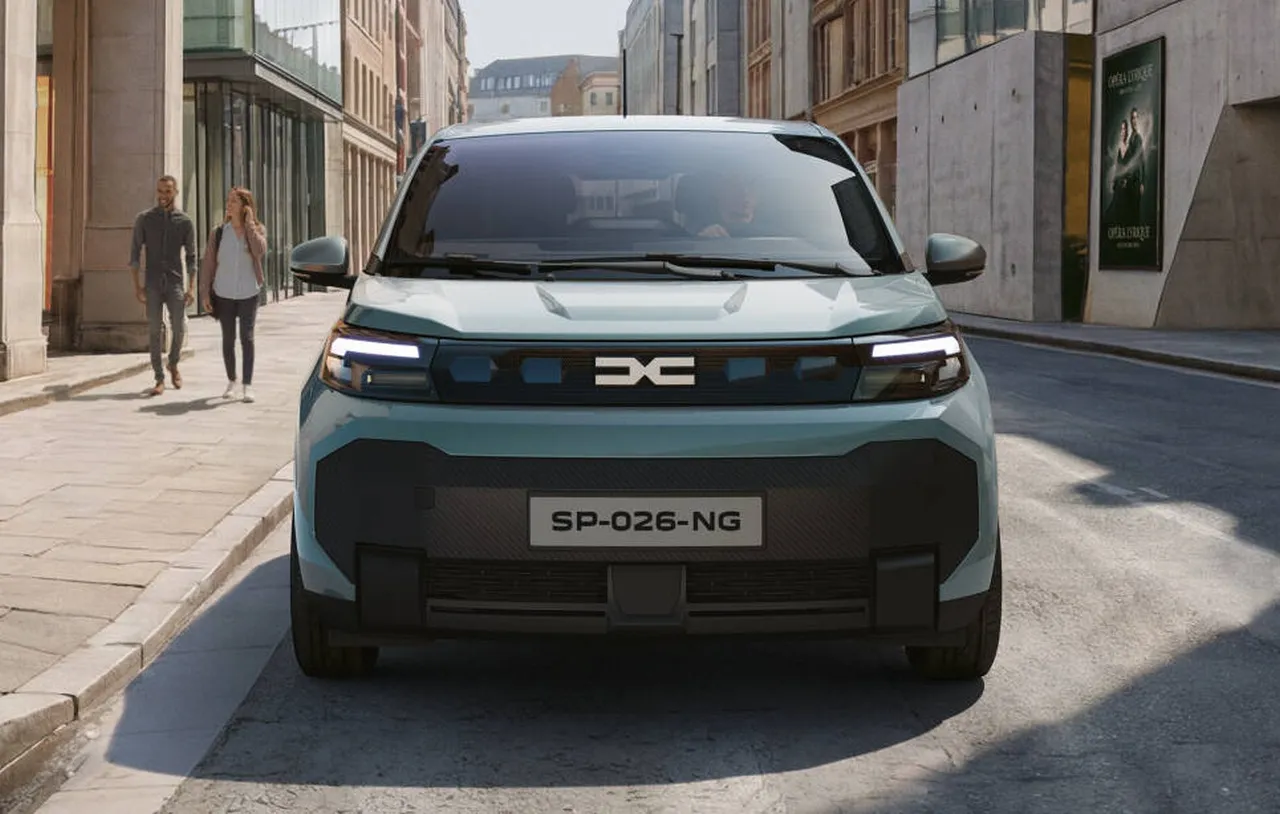
Renault Group officially unveiled the new Dacia Spring (3.85 meters long, 1.74 meters wide). The vehicle will be produced at the factory in Slovenia (Novo Mesto) and is built on the RGEV Small platform, previously known as AmpR Small. Thanks to this platform, the new Dacia Spring will be closely related not only to the Renault 5 E-Tech Electric but also to the new Nissan Micra and Ford’s future small electric vehicles sold in Europe. It also serves as a precursor to the Dacia Evader model, which is likely to be a Spring with a more aggressive design.
The Dacia Spring (2027) brings no surprises. But being European matters.
Table of contents
The Dacia Spring (2027) brings no surprises. But being European matters.
Estimated range on the road
Equipment options
The car’s battery will use lithium-iron-phosphate (LFP) cells and have a capacity of around 29 (27.5) kWh, which is expected to deliver up to 250 WLTP miles of range—equivalent to 214 kilometers in urban or urban-suburban driving conditions. The new platform, according to Renault Group, features completely different proportions from the previous one; the car is 18 centimeters wider, so there’s a chance the Dacia Spring won’t cause as much stress during faster driving over uneven surfaces—though in the current generation it did cause quite a bit of turbulence.

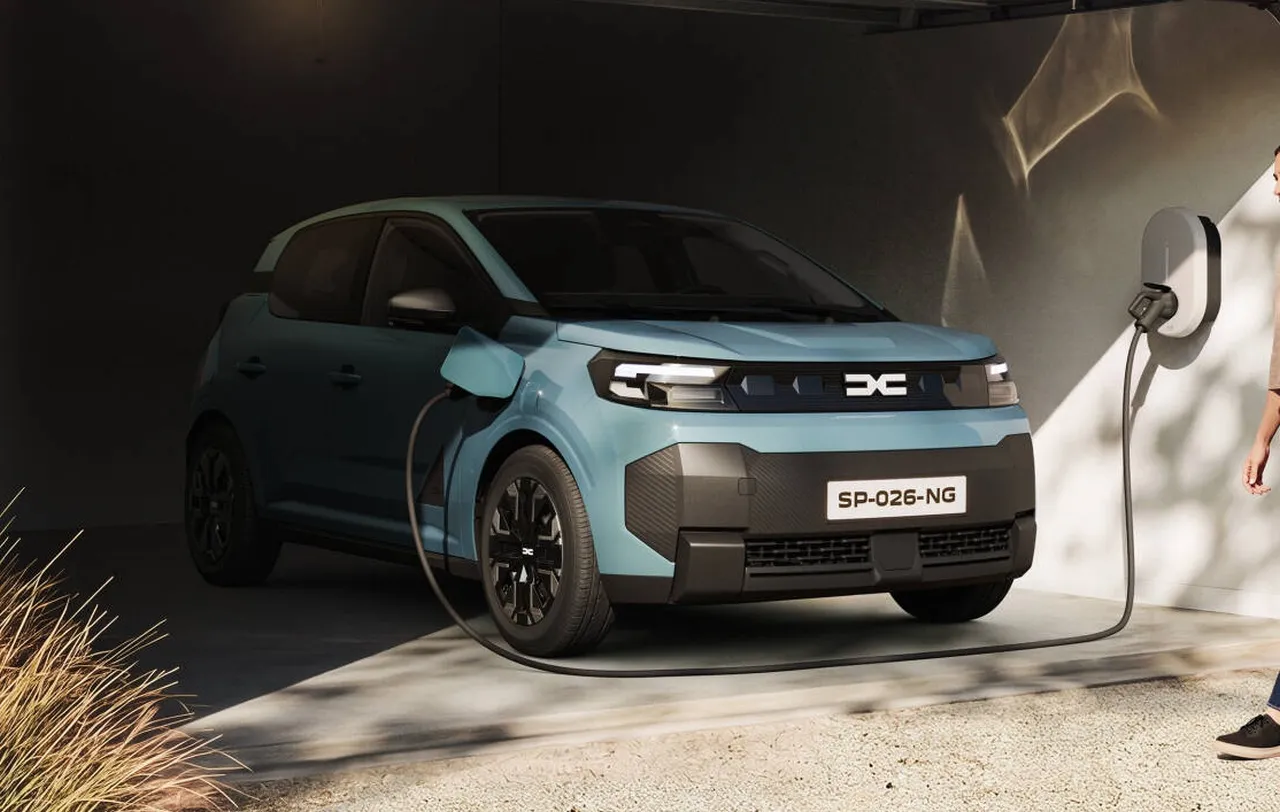
The Dacia Spring parked at an intersection with a connected e-scooter blocking the sidewalk and a dangling cable. Perfect The V2L function is available as part of the optional Charging package. All illustrations (c) Dacia / Renault Group
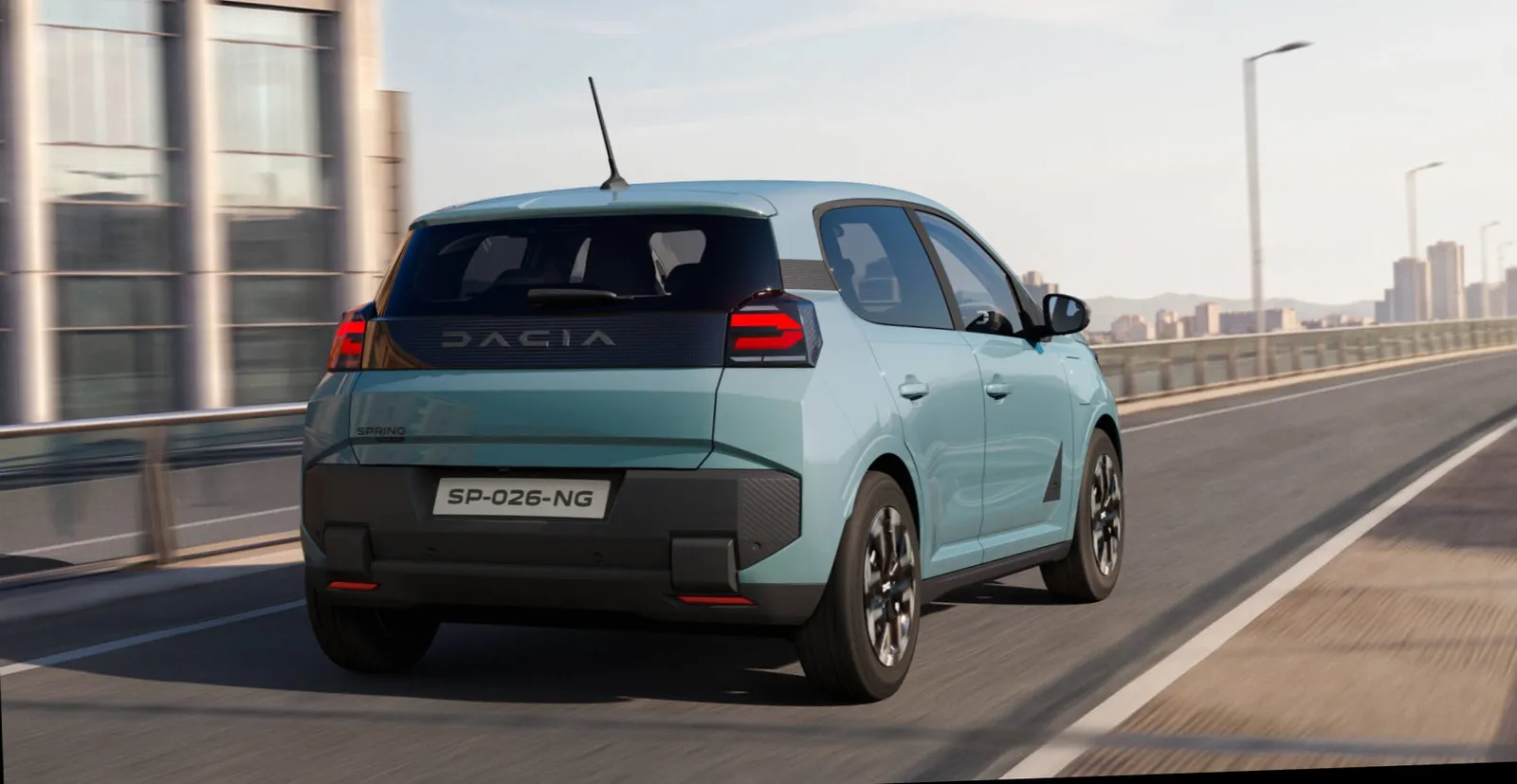
The back of the Dacia Spring. Even a Renault Twingo wouldn’t be ashamed of such a design.
Potential buyers who want a versatile car for 70-80 thousand zlotys (the current price of the Dacia Spring) will be told by the manufacturer that first-generation owners average 34 kilometers per day at a speed of 34 km/h. They also charge their cars mainly at home (75 percent of the time). In short, the new Dacia Spring, just like the previous generation, is primarily designed for cheap and efficient commuting in cities (bus lanes, free parking) and their outskirts, but less so for long trips.
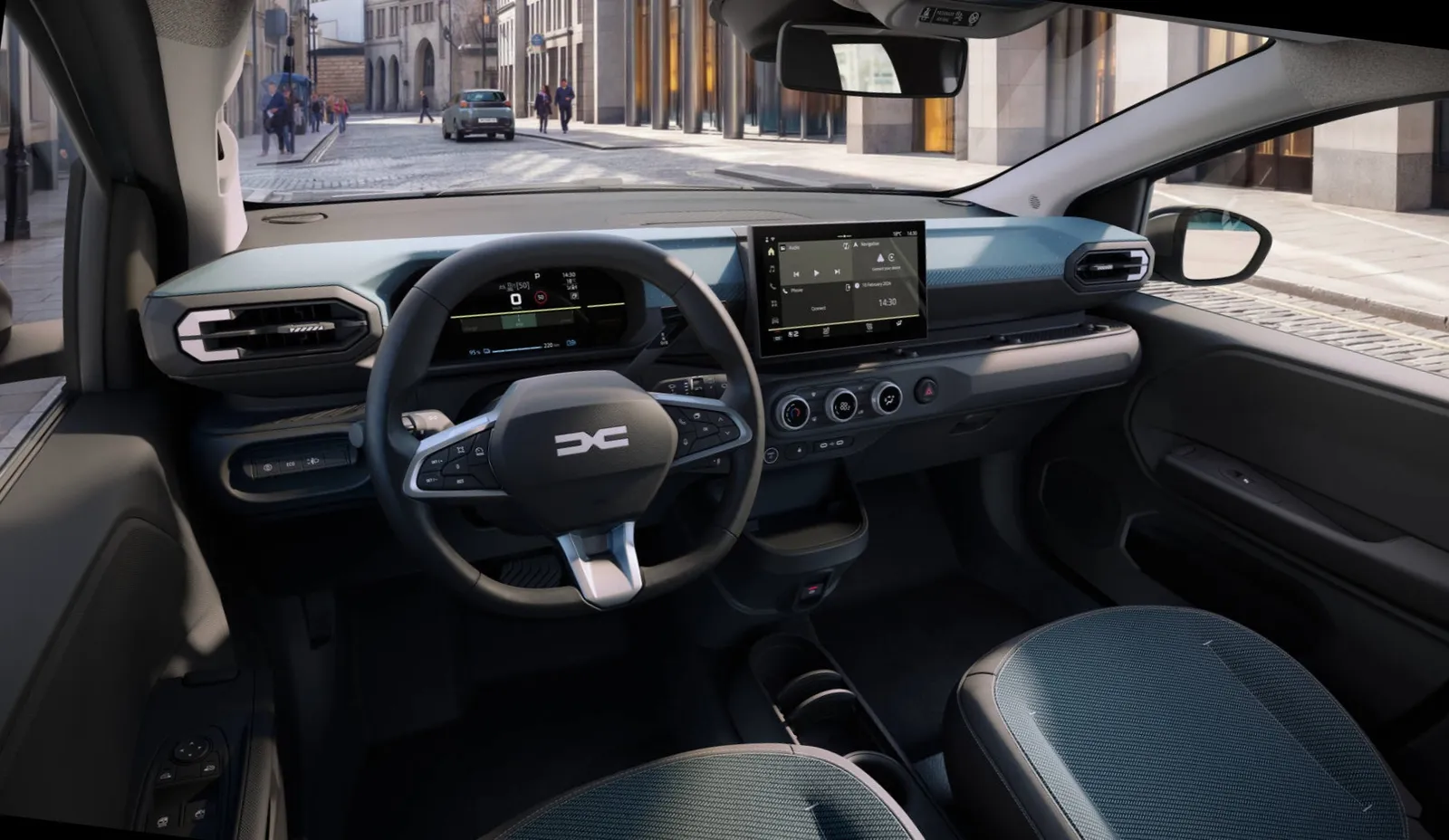
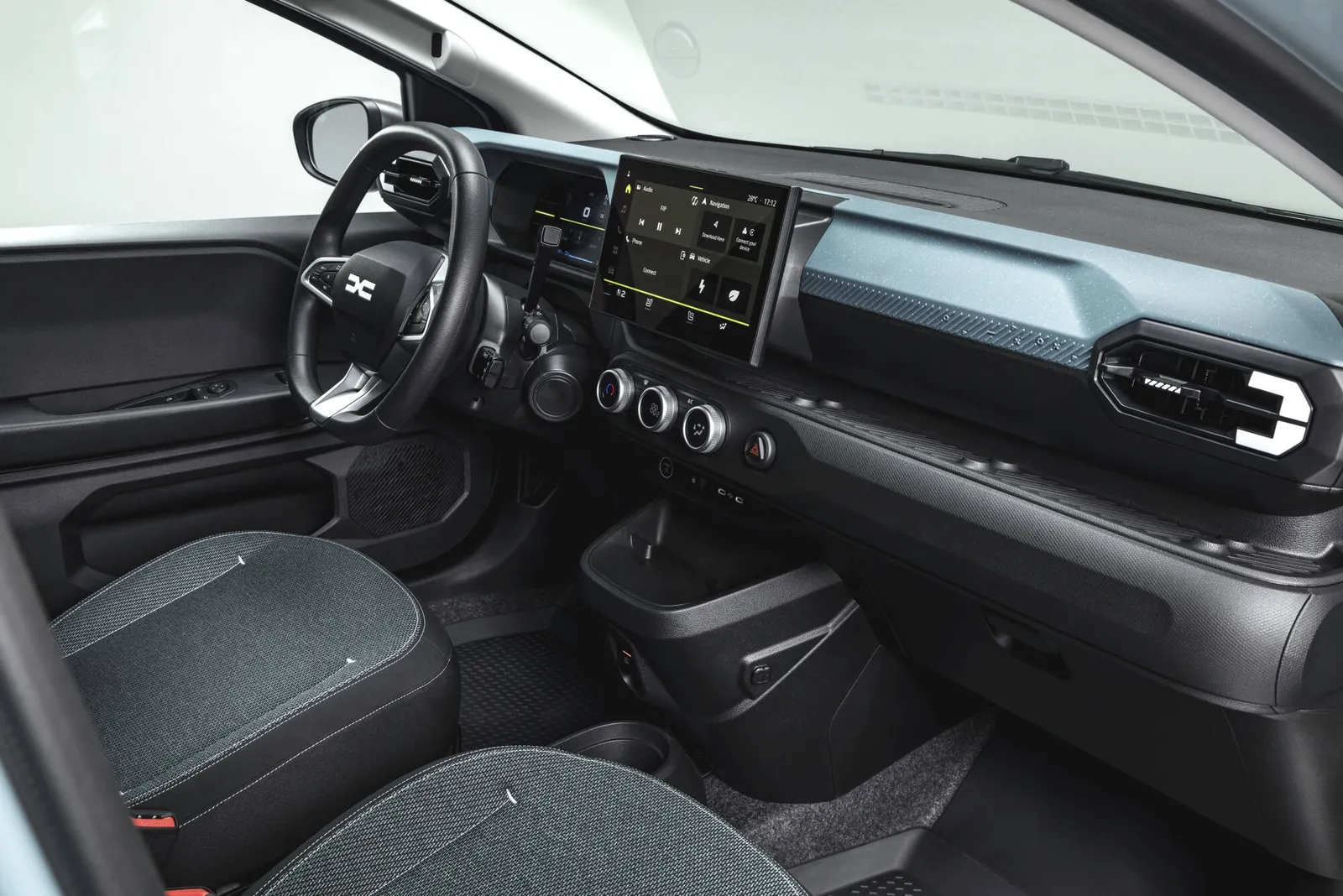
Dacia Spring with optional central navigation screen
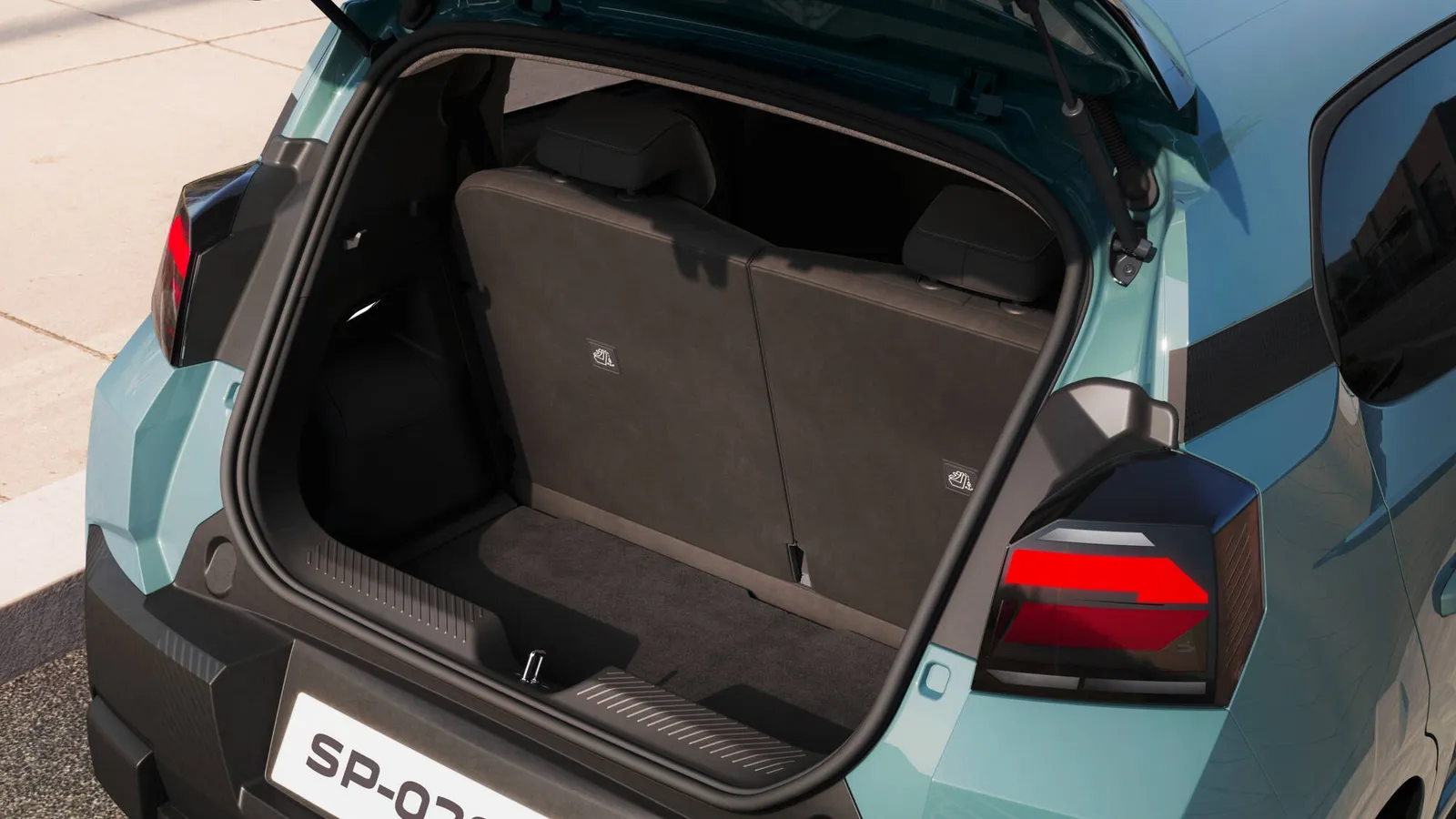
The trunk capacity of the Dacia Spring is 337 liters. Some B-segment models, or even those in the B and C segment overlap area, have less! The floor can be removed to gain additional space. There’s also an optional 18-liter “frunk” under the front bumper
Rough range on road trips
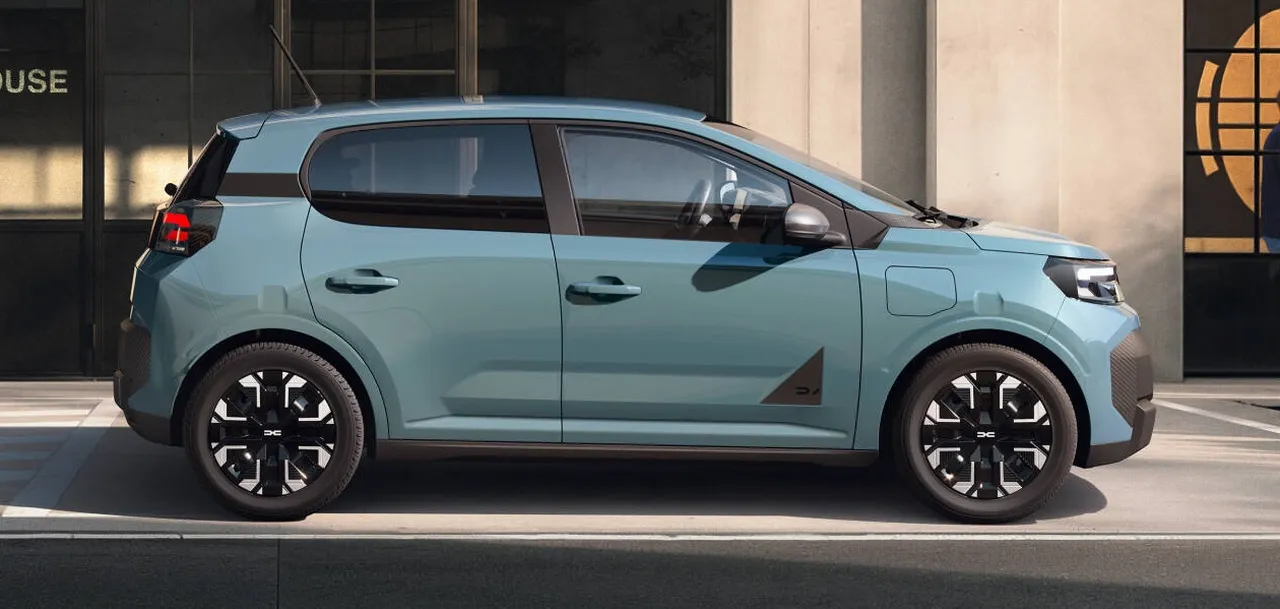
The Dacia Spring has a pleasant, compact profile. Unlike Chinese A-segment electric cars, we don’t get the impression here that the wheels are too small compared to the rest of the vehicle. Yes, 16-inch rims are used, and there are also 15-inch ones, but the wheels aren’t tried to appear larger visually through thick black frames.
Equipment options
The standard onboard AC-DC charger is single-phase with a power output of 6.6 kW (compare to the Renault Twingo E-Tech). It can be replaced with a three-phase version offering 11 kW of power. The seat adjusts in two directions: front-back and up-down. The steering wheel also has adjustable height and depth. The package includes a dashboard display and the Dacia Media Control mobile app for displaying multimedia system functions on a phone screen. The 10.1-inch central display is optional and is only available in the higher (and final) Journey version as a Media Nav Live option.
In the base Expression version, we also find features such as 15-inch aluminum (!) wheels, a central lock with remote control, electric windows at the front, manual air conditioning, rear parking sensors, a USB-C port, and fabric upholstery. In the more advanced Expression edition, the wheels are upgraded to 16 inches, a key fob is replaced by a card, a rear camera is added, and the navigation system enables access to additional Renault Connect services.
For now, only one engine is mentioned, with 60 kW/80 HP of power and 175 Nm of torque driving the front wheels, allowing for a 0-100 km/h acceleration time of 12.1 seconds.
Article Rating
Reader Ratings
[Total: 2 votes Average: 5]
Don’t miss new content—CLICK and FOLLOW Elektrowoz.pl on Google News. You might also be interested in the following ads: