
The new hybrid T-Roc is impressive but has a major issue in Portugal
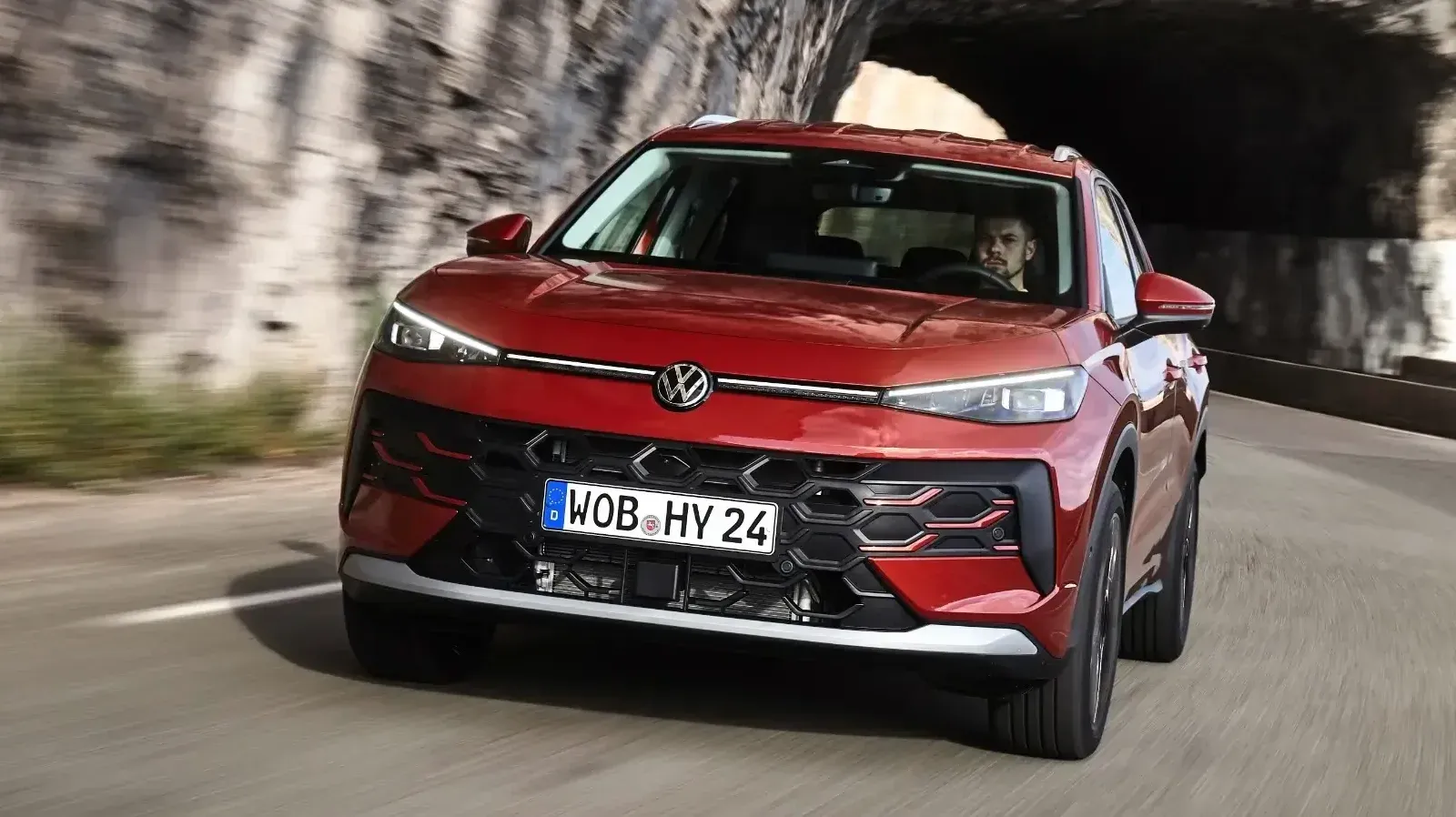
The Volkswagen T-Roc is now available as a hybrid, promising better performance and lower fuel consumption, but Portuguese taxes increase its price.
Volkswagen T-Roc Hybrid
First impressions
7.5/10
Market launch date: November 2026
The Volkswagen T-Roc Hybrid’s price is raised due to Portuguese taxes. It’s a shame because it has strengths despite some drawbacks.
Pros
Faster acceleration
Lower fuel consumption
Smooth engine performance
Cons
Price
Smaller trunk
No paddles on the steering wheel for adjusting regenerative braking
The T-Roc is one of Volkswagen’s most commercially successful models today, which is great news for the German brand facing its worst financial crisis in history.
Since the launch of the first generation in 2017, over two million units of this compact SUV produced at the Palmela factory in Portugal have been sold. To further solidify this success, Volkswagen has equipped the T-Roc with an unprecedented powertrain.
We’re talking about a non-plug-in hybrid engine, meaning it doesn’t need to be plugged in to charge. This technology has been used by brands like Toyota and Honda for decades, but it’s only now making its debut in Volkswagen vehicles.
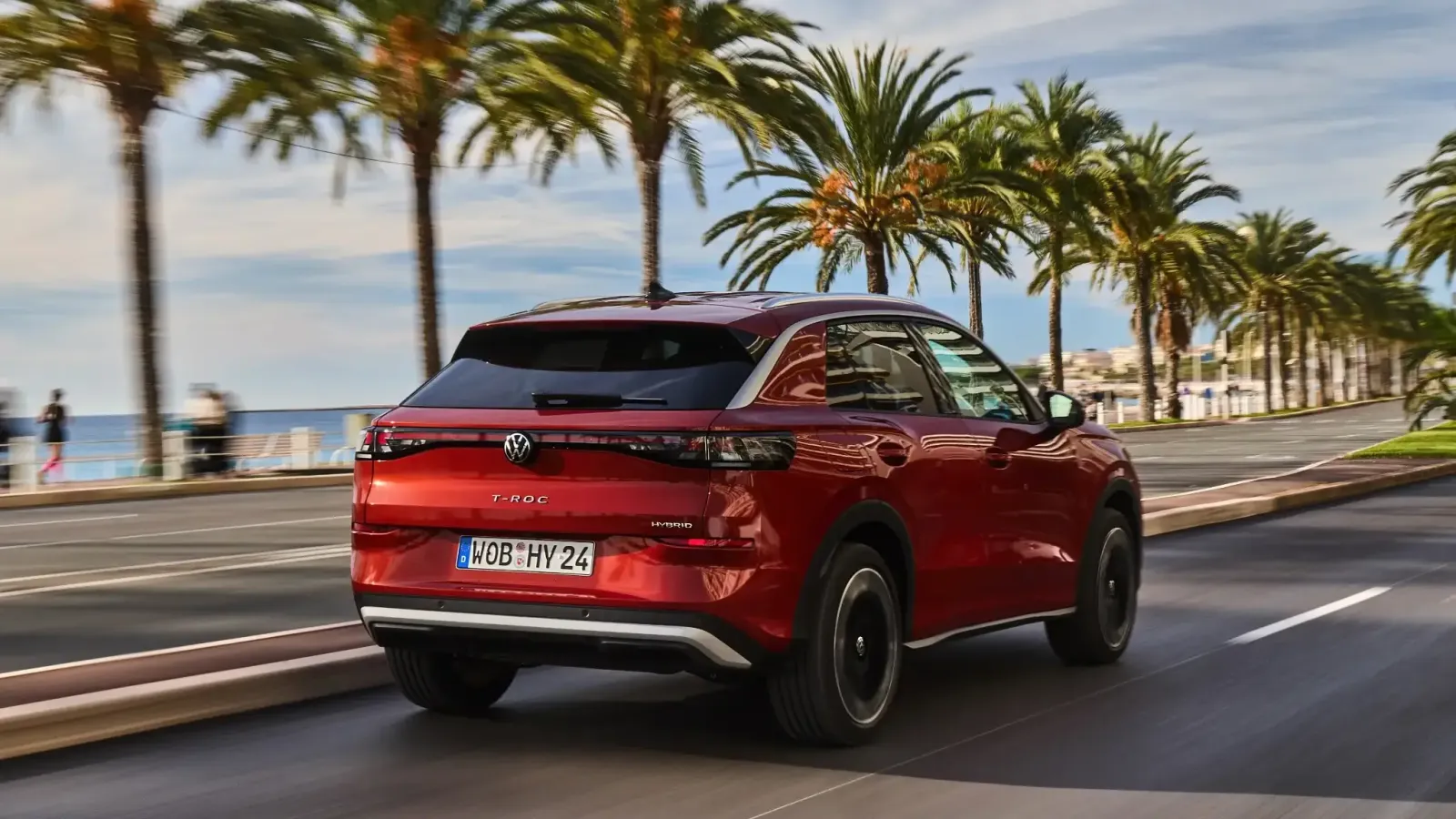
The new engine promises lower fuel consumption and even allows the vehicle to travel very short distances in pure electric mode, with the 1.5-liter four-cylinder gasoline engine turned off. It’s time to put this new engine to the test.
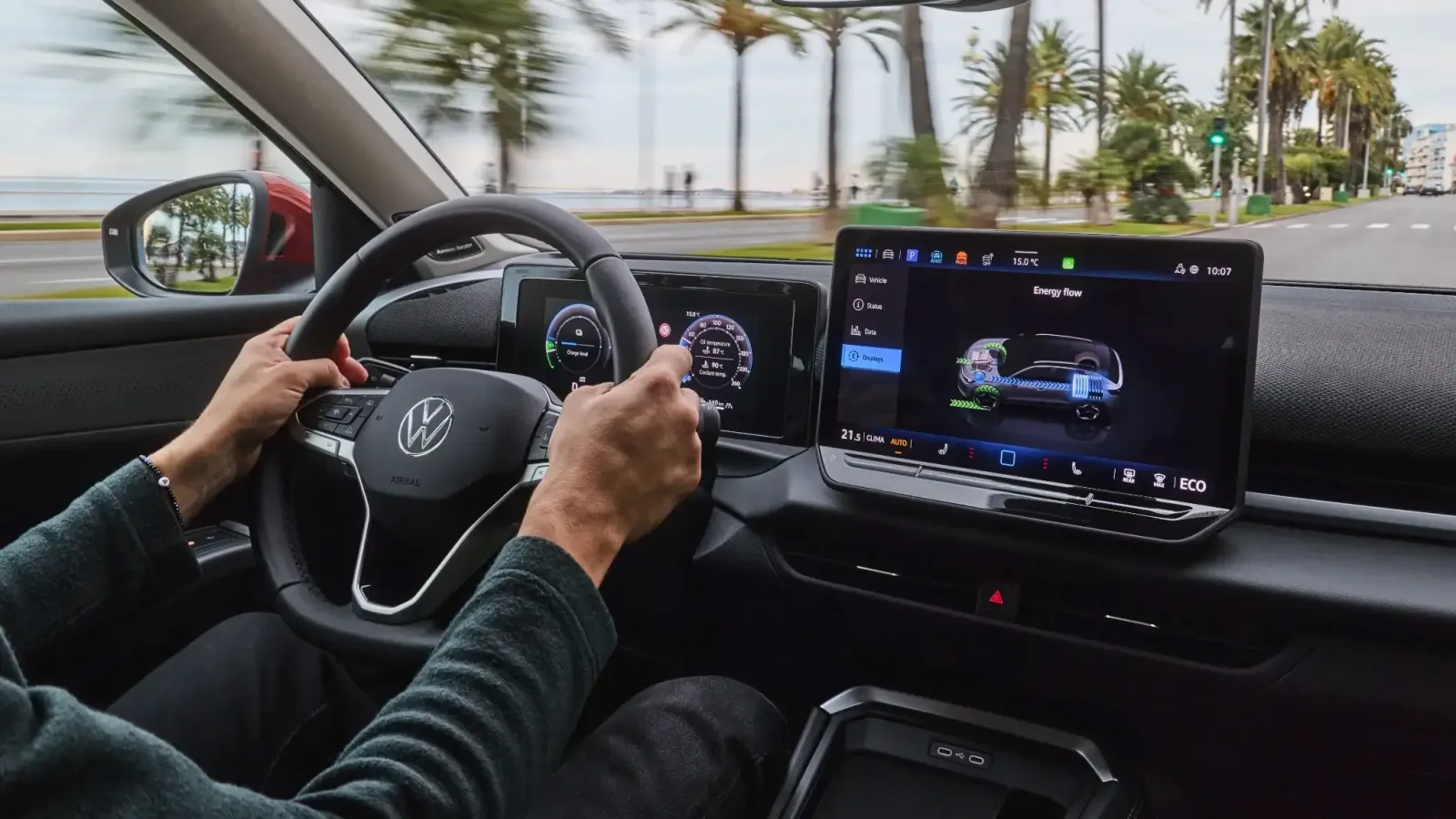
Three engines, one goal: saving fuel
During our first test drive, we drove the most powerful version, the hybrid model with 170 horsepower. There’s also another version with 136 horsepower. Both are equipped with a 1.5-liter gasoline engine, two electric motors (one acts as a generator and the other drives the vehicle), and a battery with a total capacity of 1.6 kWh, more than double the capacity of the mild hybrid system in the eTSI.
Depending on driving conditions, the hybrid system can operate in several different ways:
Electric mode: Used mainly at low speeds, it allows driving without relying on a combustion engine;
Series operation: The gasoline engine operates separately from the wheels, serving only to generate electricity. Its low noise level stands out here, unlike some competitors;
Parallel operation: Starting at 60 km/h, the gasoline engine becomes the main driver of the vehicle, while the electric motor assists when needed, such as during stronger accelerations.
In addition, there are three driving modes available: Eco, Comfort, and Sport. In Eco mode, the power is reduced to 70% of the total.
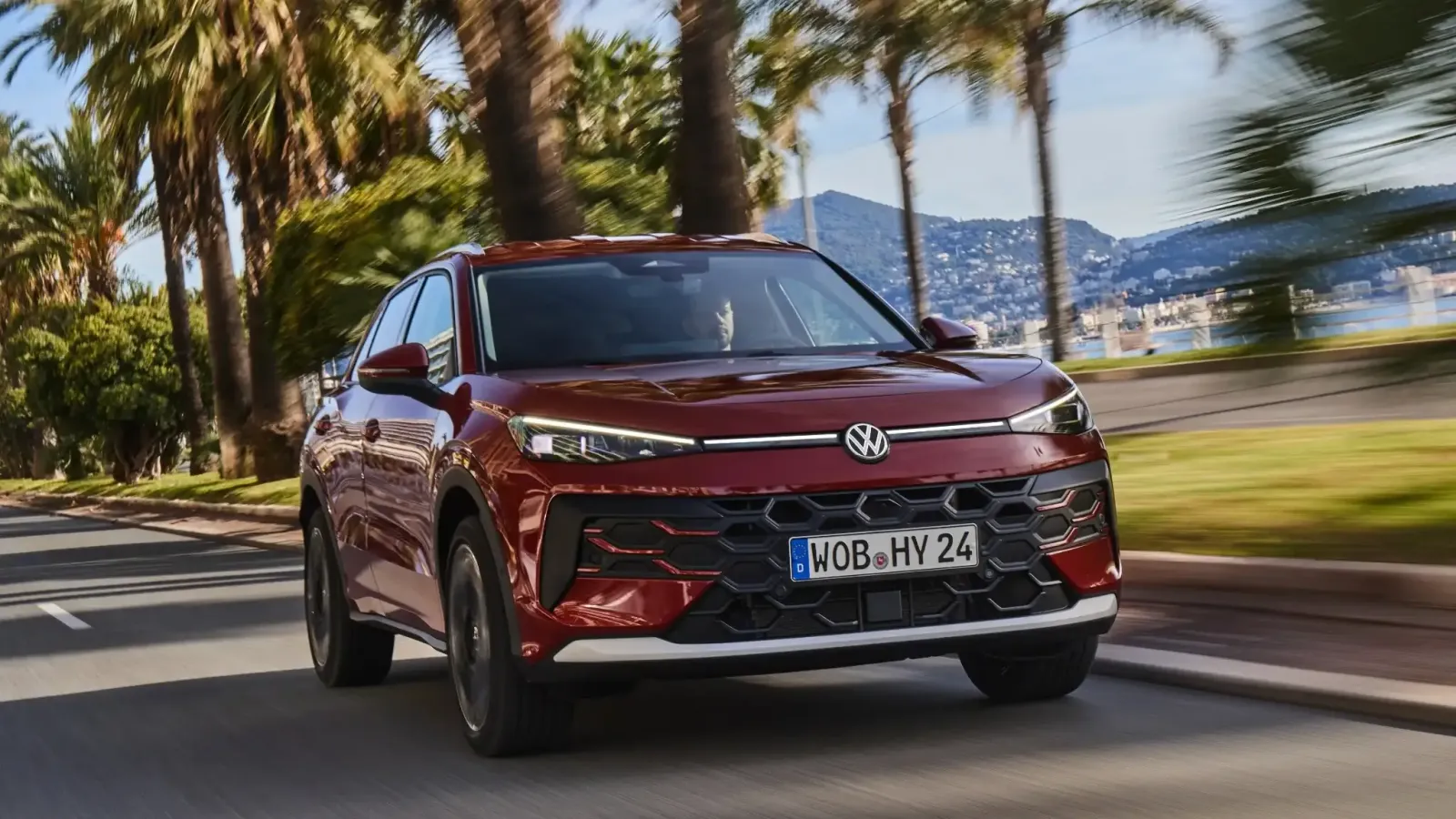
Smoother than ever
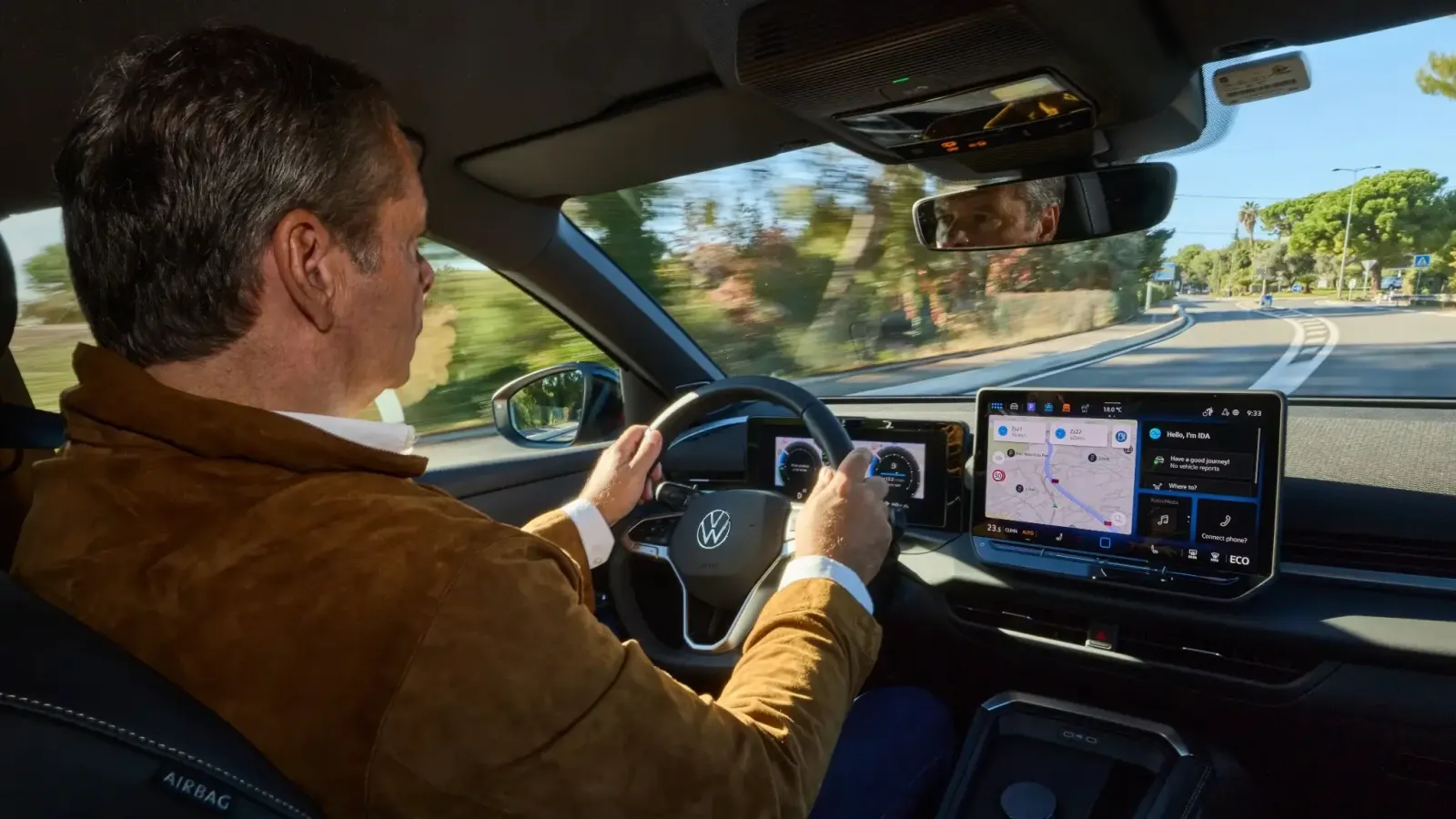
The main difference in driving the T-Roc Hybrid comes from the emphasis placed on electric propulsion. Whether for short distances or to provide strong acceleration support, the electric motor with a maximum power of 125 kW (170 hp) consistently improves the smoothness and responsiveness during speed recovery.
This is especially true since there is no longer a traditional gearbox; instead, power is transmitted to the wheels through a single-speed automatic transmission, with its selector located to the right of the steering column.
This allowed for the abandonment of the pawls used to shift up or down gears, but it would have been a good idea to keep them to vary the intensity of the regenerative braking. Instead, we can only adjust it by selecting position “B” on the gear selector or when switching to Sport mode, which increases its intensity.
The T-Roc Hybrid weighs 115 kg more than the eTSI, and despite being more powerful, its top speed is 180 km/h, far below the 212 km/h of the 150 hp eTSI. This electronic limitation exists to prevent the battery from depleting too quickly. On the positive side, its 0 to 100 km/h acceleration improves from 8.9 seconds to 8.5 seconds.
DO NOT MISS:
Toyota Yaris Cross 2027 changed little—and that’s good
At the wheel, the steering is very direct (2.2 turns of the wheel between stops) and reasonably precise, but quite light in the Eco and Comfort driving modes, with a more substantial feel in the Sport mode.
On roads with consecutive curves, it’s not worth considering driving in any mode other than Sport, as the road surface is hardly felt, although it might be more pleasant for parking maneuvers due to the lighter steering feel.
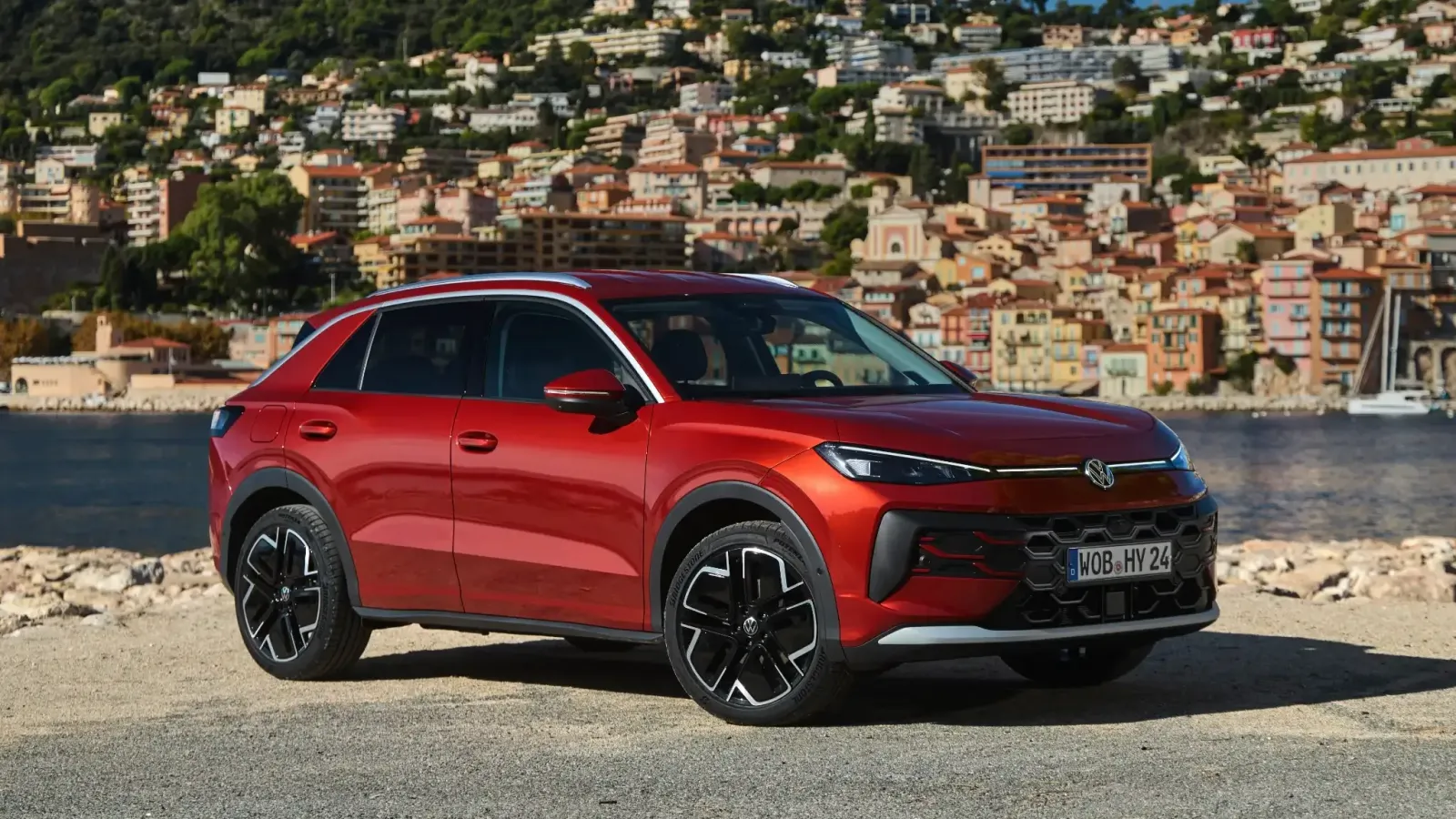
The brakes, on the other hand, impress with the linear and immediate feel of the pedal. Similarly, the suspension deserves praise for its good balance between stability and comfort when we speed up slightly on winding roads, thanks in part to the more sophisticated independent rear suspension.
But there is an exception: when driving over larger bumps, a strong impact is often felt on the suspension in the passive version, something that is softened in the version with variable electronic damping (DCC), an option available on the R-Line version I drove.
Those who don’t want to make the additional investment for this more powerful T-Roc and still bear the extra cost of the variable damping system can always mitigate these stronger suspension impacts by using slightly smaller wheels.
Actual fuel consumption close to the advertised value
When I tested the new T-Roc in the 116 hp eTSI (mild hybrid) version, I completed the 127 km route with an average fuel consumption of 7.2 l/100 km, which is higher than the 5.5 l/100 km claimed by the German brand. Despite this discrepancy, it is a natural result given the faster driving speeds typically involved in such tests.
Now, with this T-Roc equipped with a more powerful and actively involved electric motor, on a mixed route through city streets, national roads, and highways in southern France, I finished the 154 km journey with an average fuel consumption of 5.8 l/100 km.
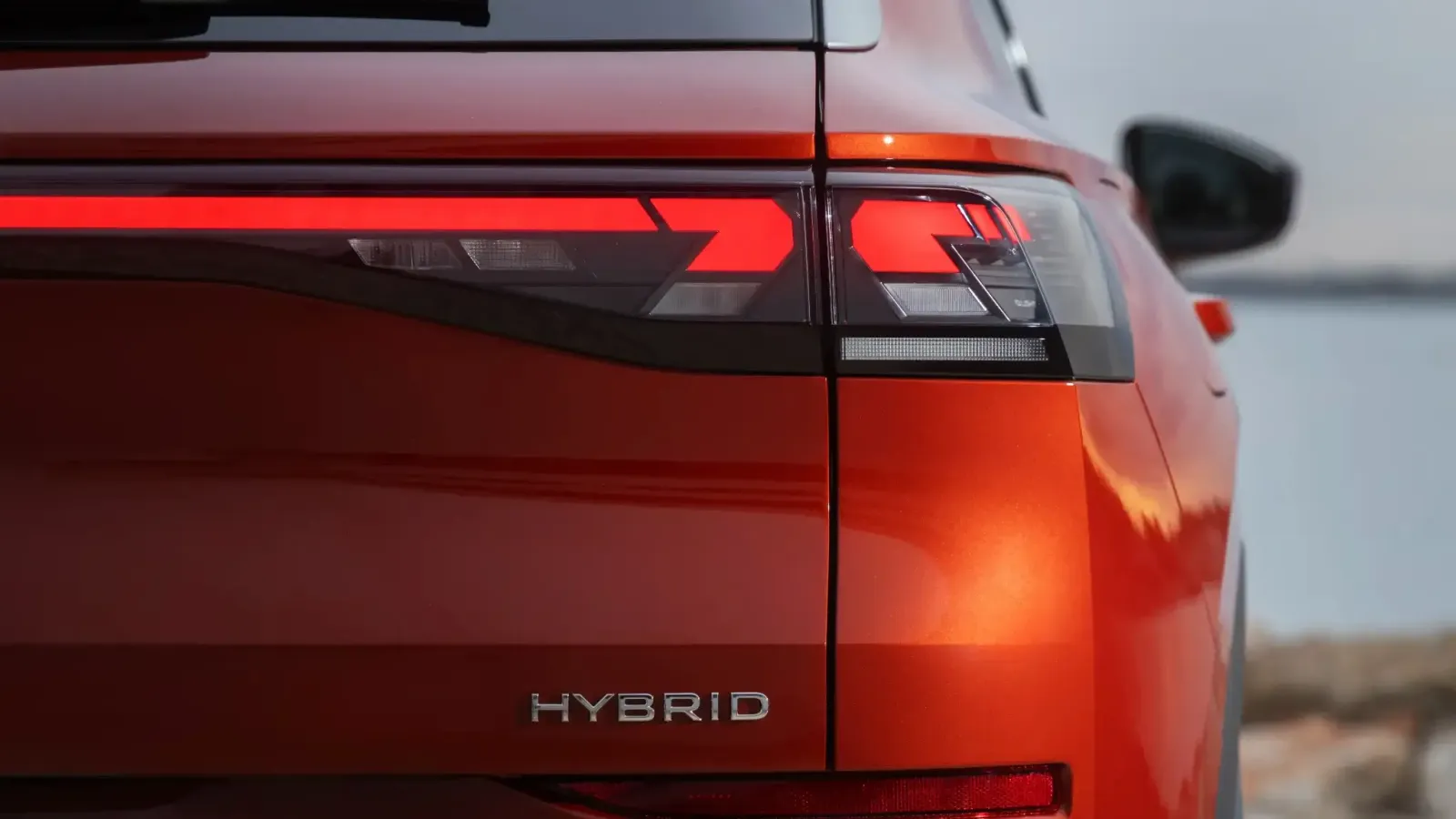
Practically one and a half liters less, even though it’s 0.8 liters above the official figure. Still, this is an average that should be considered low for an SUV weighing 1.6 tons.
Discover your next car:
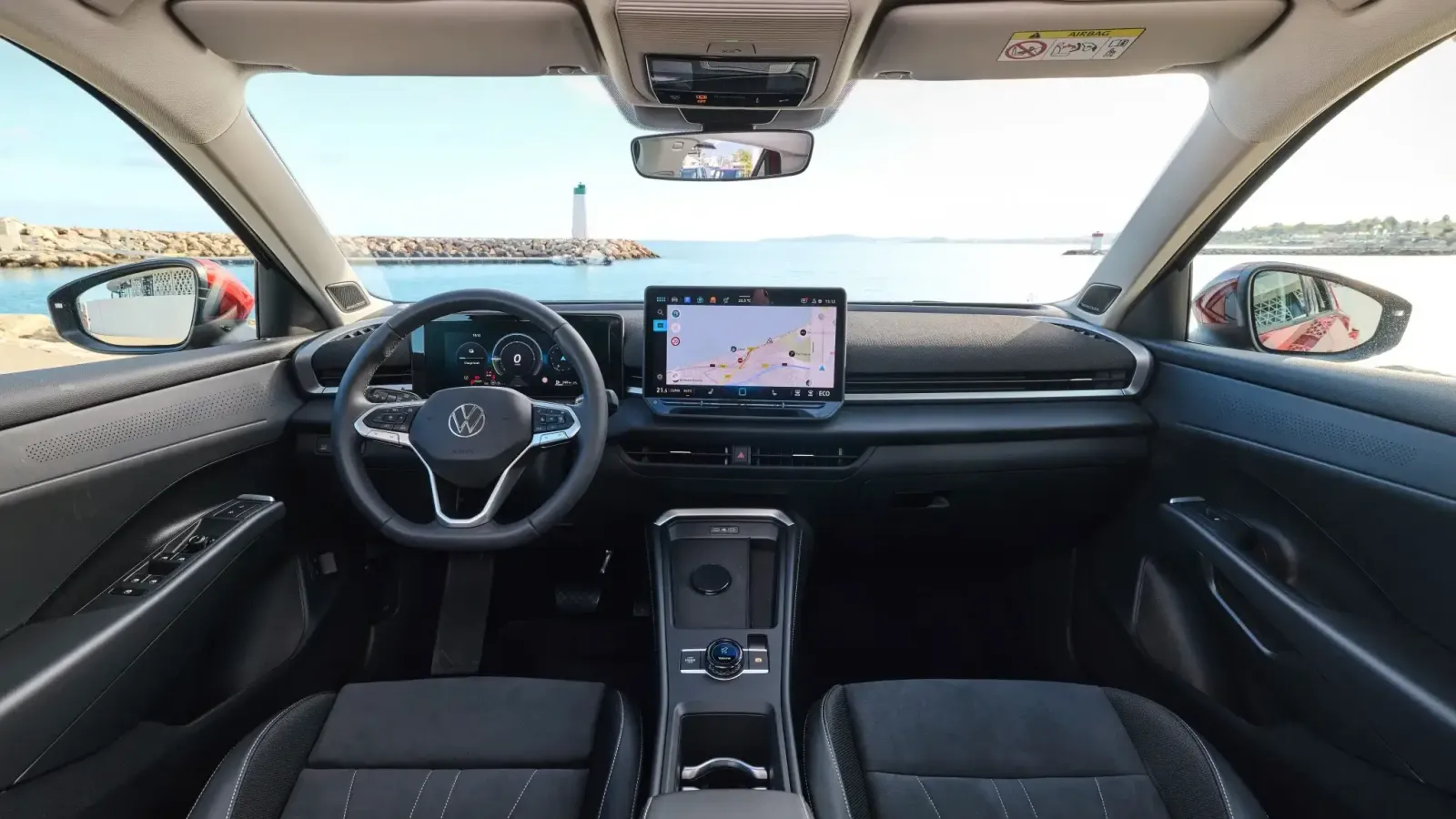
Inside the cabin, little or nothing has changed. As I’ve mentioned before, unlike its predecessor, the dashboard structure has become stiffer, though it’s softened by a thin layer of touch-friendly material (fabric or synthetic leather).
In contrast, it’s pleasant to find some uncommon touches in this segment, such as the carpeted floor in the doors of the front and rear seats or the thin rubber covering the central compartment. It’s a shame that the budget for these “extras” didn’t extend to the glove box, whose interior remains completely bare.
The additional electrification didn’t take space away from the rear seat passengers, who have ample room even for someone 1.80 meters tall. But the same can’t be said for the trunk space.
2 images
There’s no denying it: electrification, as usual, came at a cost. In this hybrid version, the T-Roc loses its underfloor trunk space due to the installation of hybrid system components, meaning its capacity drops from 475 liters to 340 liters.
Still on the T-Roc, the standout features are its latest generation of infotainment system, which can have screens of 10.3″ or 12.9″ with advanced and fast graphics.
And almost everything else was taken care of by taxes
The new Volkswagen T-Roc Hybrid has strong advantages in Portugal, but it faces a difficult obstacle to overcome: the price.
It costs about 3,000 euros more than equivalent eTSI versions, with prices starting at 39,121 euros for the 136 hp Life version. The 170 hp T-Roc Hybrid R-Line I drove is even more expensive: the price starts at 47,515 euros.
Unlike plug-in hybrids, Portuguese tax regulations offer no benefits to hybrids that do not need to be plugged in, even though they also reduce emissions compared to their purely combustion or mild hybrid counterparts.
After calculating the costs, it takes over 100,000 kilometers to recoup the initial investment compared to the eTSI, which is likely to remain the most sought-after version in Portugal.
Verdict
Volkswagen T-Roc Hybrid
First impressions
7.5/10
The new T-Roc Hybrid excels in smoother driving, faster acceleration, and the ability to operate in electric mode. However, it falls short in top speed, higher weight that may affect its agility, and a trunk capacity that has decreased by 135 liters. But its real weakness is the price.
Market launch date: November 2026
Pros
Faster acceleration
Lower fuel consumption
Smooth power delivery
Disadvantages
Price
Smaller trunk
No paddles on the steering wheel for adjusting regenerative braking
Technical Specifications
Volkswagen T-Roc Hybrid 170 hp
Powertrain
Total output
170 hp / 310 Nm
Gasoline engine
Architecture
4-cylinder in-line, front-mounted
Valve arrangement
2 overhead camshafts / 16 valves
Fueling system
Direct injection / turbocharger
Cylinder capacity
1498 cm³
Power
150 hp
Torque
250 Nm between 1750-4000 rpm
Electric motor
Power
125 kW / 170 hp
Torque
310 Nm
Battery
Chemistry
Lithium ions
Capacity
1.6 kWh
Transmission
Drive type
Front-wheel drive
Transmission type
Automatic, 1 speed
Chassis
Front suspension
Independent, McPherson
Rear suspension
Independent, Multilink
Brakes (front/rear)
Ventilated discs / Discs
Steering / Turning radius
Electric assist / 11.1 m
Steering wheel rotations
2.2
Dimensions and capacities
Length / Width / Height
4372 mm / 1828 mm / 1573 mm
Wheelbase
2629 mm
Trunk capacity
340-1212 liters
Fuel tank capacity
40 liters
Weight in running order
1589 kg
Tires
225/45 R19
Performance and fuel consumption
Top speed
180 km/h
Acceleration (0-100 km/h)
8.5s
Combined fuel consumption
5.0 l/100 km
CO₂ emissions
115 g/km