
New Nissan Pixo: Here’s the Japanese version of the electric Renault Twingo, with one fewer flaw
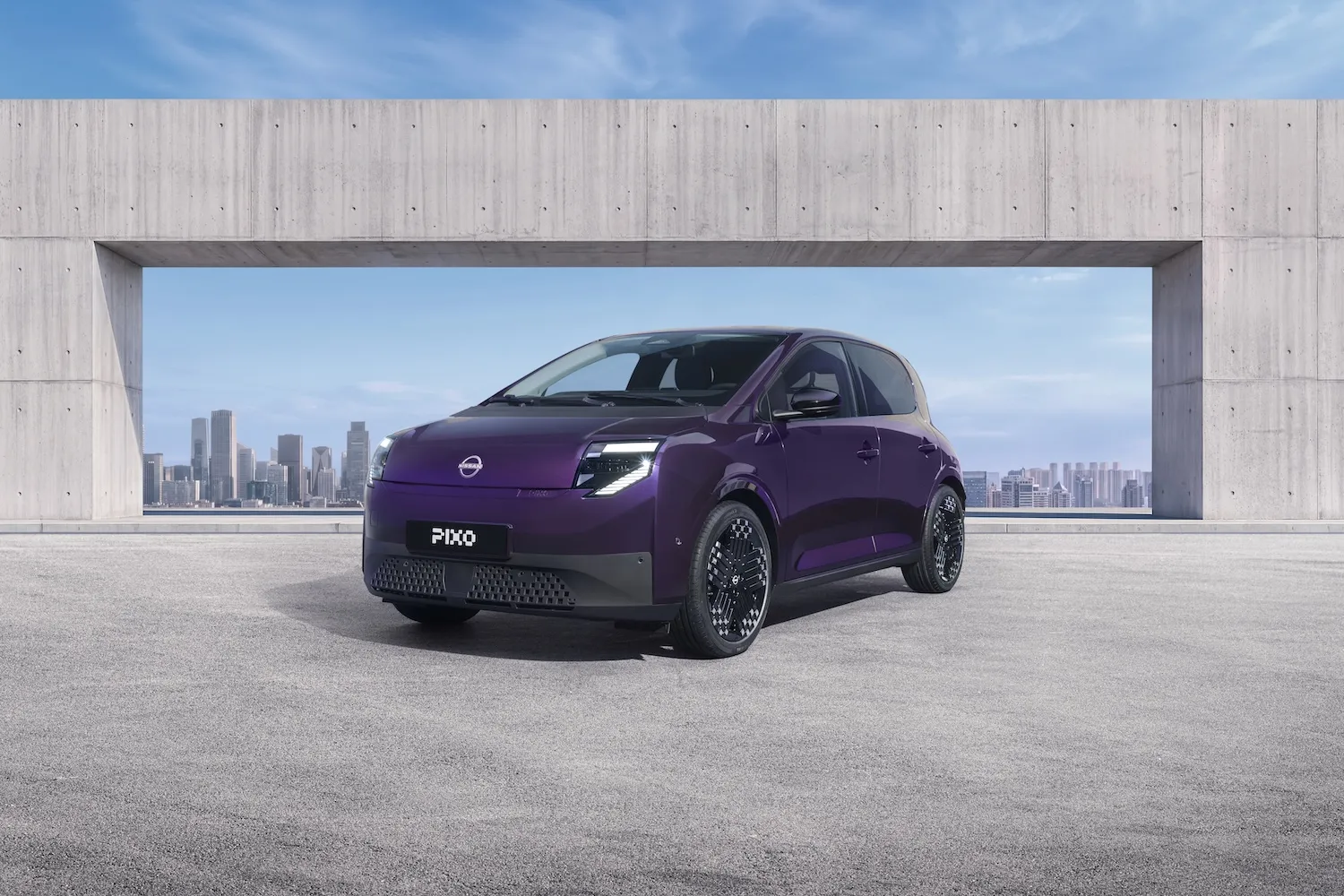
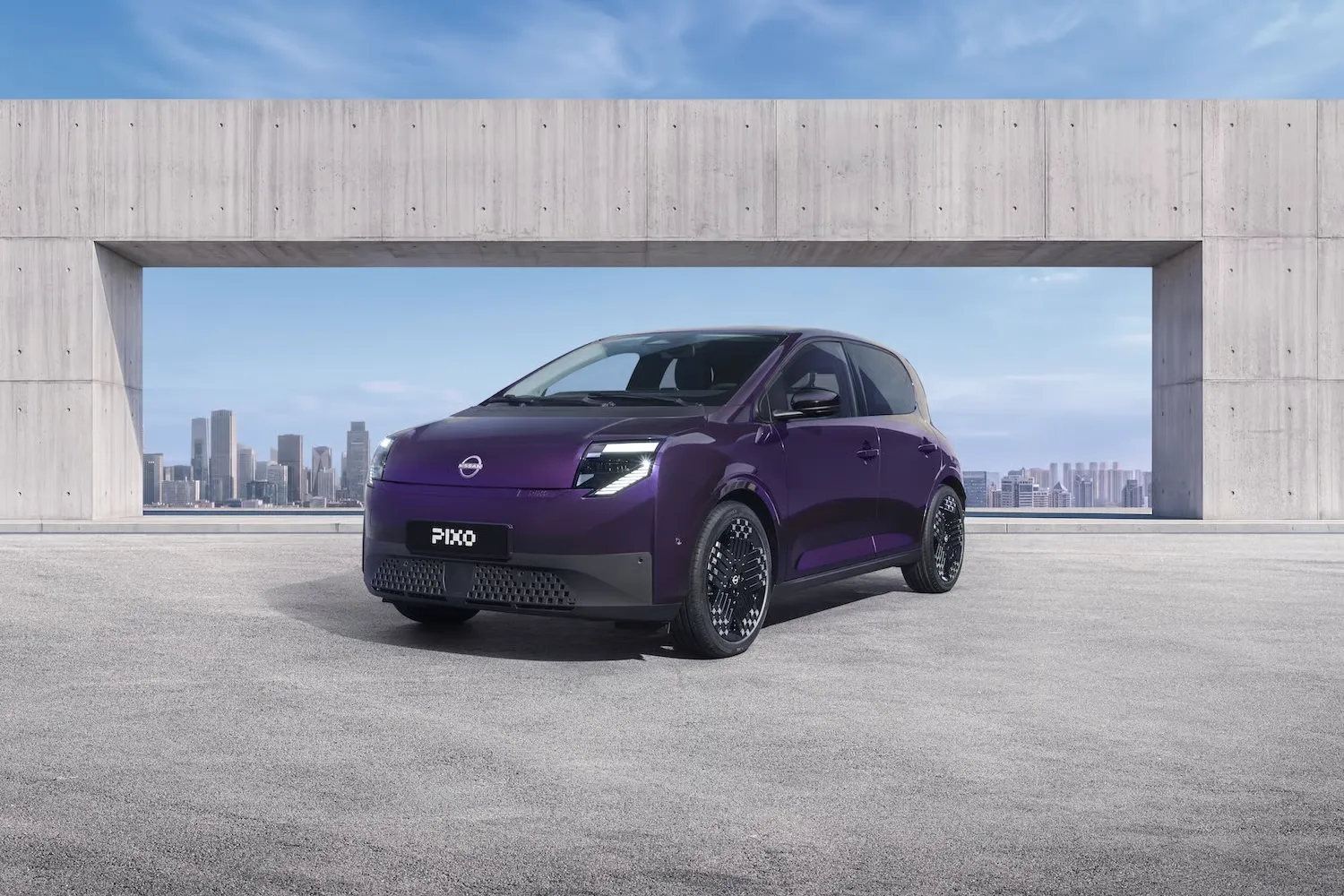
Nissan is back in the small city car market with a 100% electric model. Does it remind you of something? That’s normal—this Pixo is essentially a Twingo with minor updates.
Do you remember the Pixo? It was an inexpensive small city car launched by Nissan in 2009. At the time, it was related to the Suzuki Alto. Its lifespan was short, as production ended by the end of 2013, with the brand deciding to focus on larger models for sales purposes.
But the Pixo is back, this time with an electric powertrain. Nissan was persuaded by Renault, which was looking for partners to share the Twingo’s platform and improve the return on its investment. After being rejected by Volkswagen, Renault turned to Dacia and Nissan.
Also read
Dacia Spring 2: price, range... everything you need to know about the new generation and our first impressions inside
Sleek style
While Dacia made significant changes to the Twingo’s exterior design to create a new Spring with a more squared-off appearance, Nissan made only minor adjustments. It’s almost like a game of finding seven differences, as the changes are concentrated on the front and rear, with the entire central section remaining unchanged.
The Pixo is somewhat like a Twingo, but more subdued and smoother. At the front, the more conventional headlights do not protrude from the body. With a specific hood design, the Pixo has a less pronounced nose. According to the manufacturer, it features “a front bumper that resembles a whimsical robot face.” It’s not easy to see that! The air intakes have a design inspired by the pixel world, which is also reflected in the wheels. It’s perhaps a shame there aren’t more lighting accents related to this theme.
At the back, the headlights, bumper, and trunk base have been changed, but the plastic piece surrounding the rear window remains, now featuring the Pixo logo. The color palette includes specific shades such as “Wonder Purple” and “Bleu Azur.” Its length is 3.79 meters, the same as that of the Twingo.
The Twingo’s Modularity
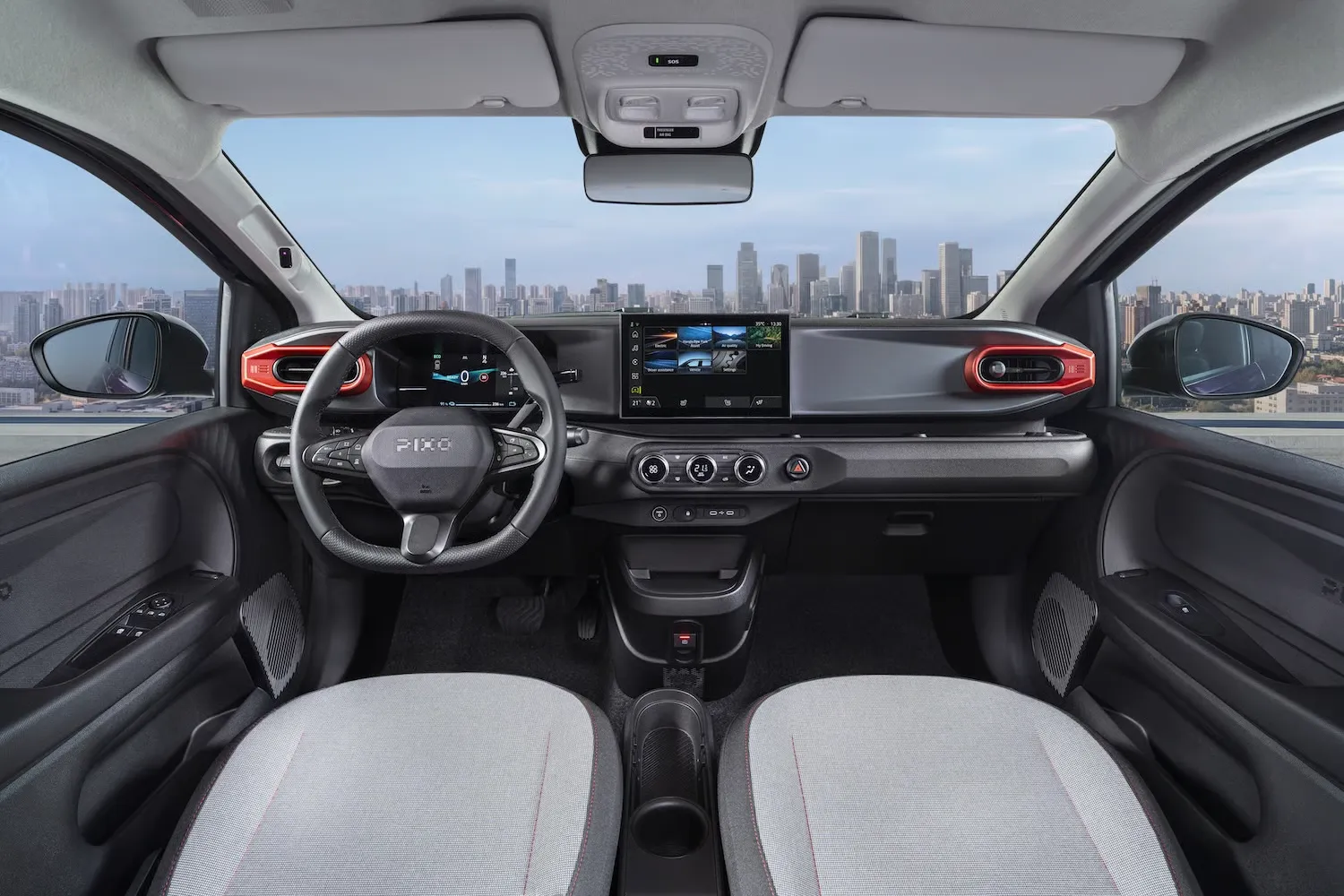
Inside, Nissan has modified the upper part of the dashboard. The new trim seems to exacerbate a flaw of the Twingo: it is high, which hinders forward visibility. There are red decorations on each side surrounding the air vents. The Pixo logo is also visible on the steering wheel. A keen observer will notice that the body panels in the front doors have been covered by Nissan, removing a touch of color.
As for the rest, nothing has changed. The dashboard features a 7-inch screen, with a 10-inch touchscreen in the center that can integrate Google’s connected services and its AI assistant, Gemini. Facial recognition will identify drivers and apply their personalized settings.
The Pixo also adopts the modularity of the Twingo, with two separate sliding seats in the back. The trunk has a capacity of 356 liters, plus an additional 50 liters of storage under the floor.
Rapid charging in series
Naturally, there are no changes to the technical specifications. It comes equipped with a 60 kW power unit, equivalent to 82 horsepower, and a 27.5 kWh LFP battery. The Pixo is rated for a combined WLTP range of 259 kilometers.
Indeed, there is a notable difference compared to the Twingo: Nissan includes 50 kW DC fast charging as standard. This allows the battery to go from 15% to 80% charge in just 28 minutes. At Renault, it’s an optional feature costing 500 euros, paired with 11 kW AC two-way charging. Nissan also offers this as standard.
We can expect a slight price difference as well. The price of the Pixo hasn’t been announced yet, but it’s likely to be based on that of the Twingo, with a difference of around 500 euros due to the standard fast charging feature, which will help avoid unexpected costs when buying or selling. This could result in a base price of 19,990 euros, before considering any purchase incentives.
Nissan states that the prices will be officially announced in December, with deliveries starting in early 2027.