
New Tesla Roadster: Can It Really Be Called a Flying Car?
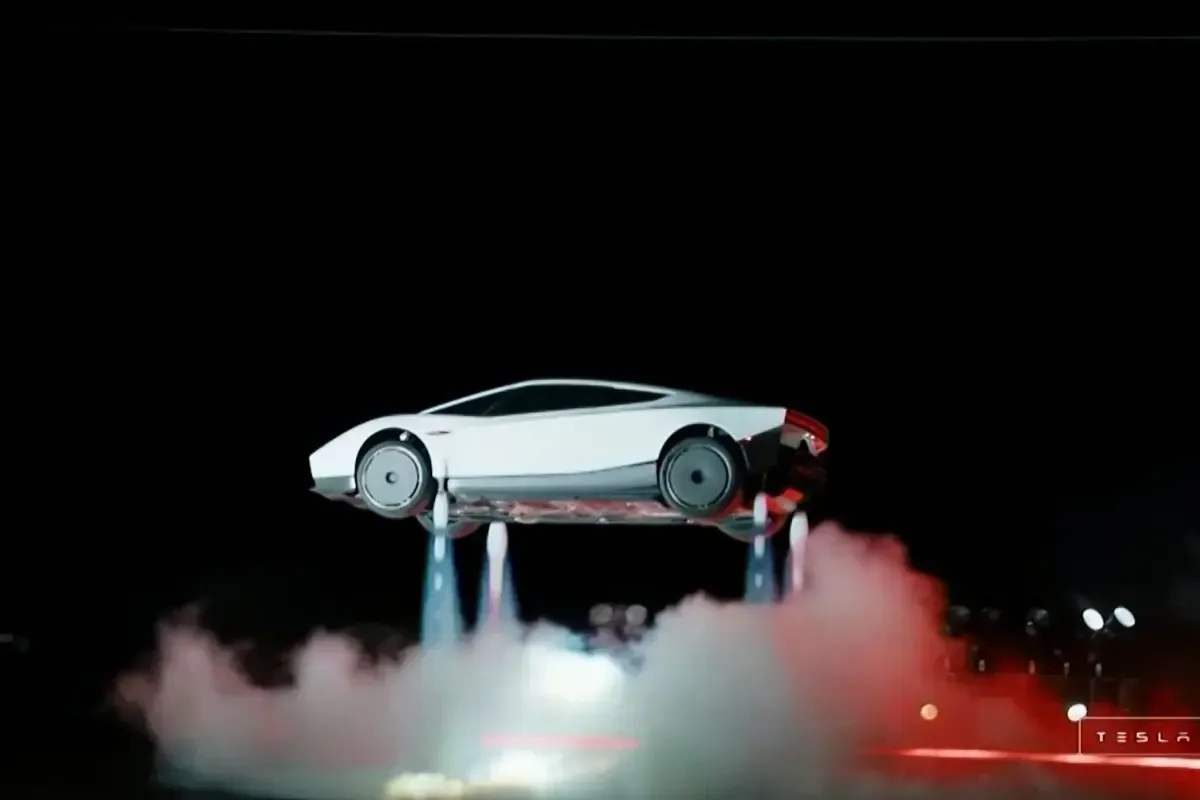
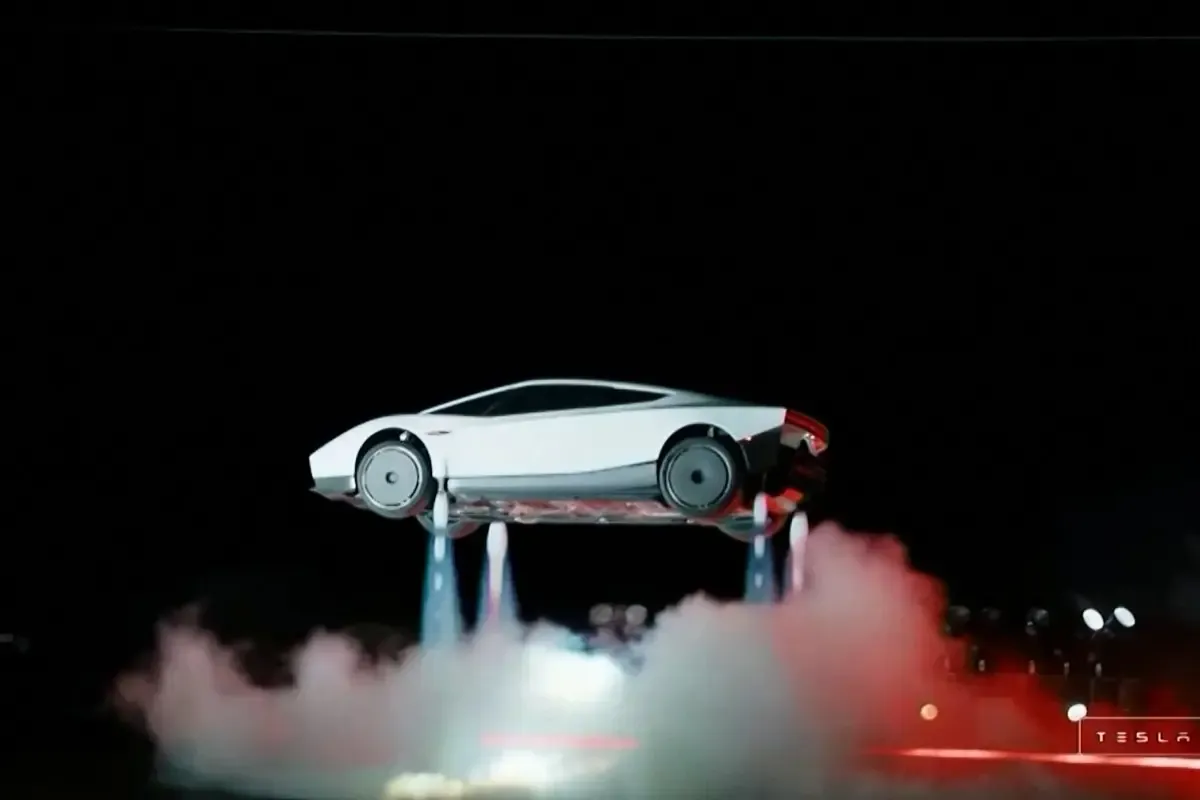
Nine years after its first introduction, the Tesla Roadster has finally made a grand return. And Elon Musk didn’t skimp on efforts: his new electric vehicle is capable of lifting off the ground thanks to thrusters developed in collaboration with SpaceX. But can it truly be called a flying car? The U.S. aviation regulator doesn’t seem to share the billionaire’s enthusiasm. And Tesla isn’t alone in this field...
A Tesla Roadster that defies the laws of physics
We were already familiar with Tesla’s lightning-fast accelerations. Now, Elon Musk aims to take it even further by getting his cars to lift off. On October 15, 2026, the company unveiled a new version of its Roadster, nine years after the first prototype was introduced. It was an event long awaited due to the numerous delays since 2017. This time, Tesla promised something spectacular. And on that point, it’s hard to disagree with them.
Also read
Tesla finally reveals its new Roadster: an electric car that defies the laws of physics
For this presentation, Tesla chose a symbolic location: SpaceX’s test facility in McGregor, Texas. It was there that the company conducted several demonstrations with its new Roadster, equipped with compressed gas thrusters developed in partnership with Elon Musk’s space company. The first sequence resembled a science fiction movie. The vehicle moved up a curved ramp, rolled upside down thanks to a suction system, then spun in midair before landing back on its wheels. In another demonstration, it lifted off the ground while passing over several Tesla vehicles. The entire display was carried out without a human pilot, as the prototype was controlled remotely.
An impressive demonstration, but…
The secret behind these feats lies in ten thrusters capable of generating thrust in different directions. Unlike a conventional rocket, the system uses compressed gas rather than combustion. This allows the Roadster to lift off, stabilize briefly in the air, and perform extremely rapid movements. Tesla has also developed a suction device under the car, combined with active aerodynamics. The goal is to create significant lift even at very low speeds, thereby improving traction, acceleration, and cornering performance.
Completely insane performance
Beyond its aerial capabilities, the new Roadster pushes the limits of sports electric cars. Tesla claims a 0 to 100 km/h acceleration time of 0.59 seconds for the most powerful version. The top speed is said to be 370 km/h. These are impressive figures, though they still need to be confirmed under independent testing conditions. The manufacturer offers three variants: Performance, Thrust (a version with rear thrusters to enhance acceleration), and Rocket (a one-seater model with thrusters distributed around the chassis for aerial maneuvers).
This final version is obviously the one that has all the attention focused on it. However, it will only be available by invitation, and Tesla already states that it is not approved for use on public roads. For the other two versions, reservations require payments of 50,000 and 250,000 euros respectively. The final prices are not yet known. Another important point: production is not expected until 2028. And given the Roadster’s history, it’s best to remain cautious about this timeline.
The Roadster is not an aircraft according to the FAA
A few hours after the presentation, the Federal Aviation Administration (FAA), the U.S. agency responsible for civil aviation, was questioned about the status of the vehicle. To the question, “Is the Tesla Roadster an aircraft?”, its answer was very clear: no. This position does not mean that the technology presented by Tesla is bad or uninteresting. It simply indicates that, in its current configuration, the vehicle does not fall into the category of devices that the FAA considers aircraft.
The National Highway Traffic Safety Administration (NHTSA), the agency responsible for road safety in the United States, has also responded. The organization reminds Tesla that it must comply with federal standards applicable to automobiles and local traffic regulations. It assures that it will continue to monitor the situation. Safety is indeed a central issue. How can we ensure control over a vehicle that suddenly lifts off the ground? What happens if a thruster fails? And how can we protect other road users? Tesla has not yet provided convincing answers.
Elon Musk himself admitted that his Roadster is not necessarily designed to offer optimal safety levels in flight. This statement undermines the prospects of daily use of thrusters.
So, can we talk about flying cars?
But then, can we still talk about a “flying car”? Ultimately, it all depends on what we mean by that term. The Roadster can indeed lift off the ground and perform aerial maneuvers. But is that enough to call it flying?
So far, Tesla has mainly demonstrated its prototype’s ability to make spectacular jumps. The company hasn’t provided specific data on the maximum time the vehicle can remain in the air, its operational altitude, or the distance it can travel without touching the ground. Yet a true flying car must be able to maintain controlled aerial movement over a significant distance, not just overcome an obstacle. That’s the difference between a technological demonstration and a new mode of transportation.
The Return of Alef Aeronautics
And indeed, another American company intends to remind Tesla that it didn’t invent the concept. It’s Alef Aeronautics, a startup founded in 2015 that is developing an electric vehicle capable of driving on roads and taking off vertically. A few days after the Roadster was unveiled, Alef released a video showing its prototype flying over several vehicles, including an old Tesla Roadster.
Also read
Video: Flying electric cars really exist!
An ironical response to Elon Musk. The company even claims that Tesla has just become the second automaker to introduce a flying car. The difference is quite striking. While the Roadster uses thrusters for sudden movements, the Alef Model A ascends gradually, like a drone. The vehicle was designed from the start to operate both on roads and in the air.
Alef claims a road range of around 320 km and an air range of 177 km. Most importantly, the startup obtained a special FAA airworthiness certificate as early as 2023, allowing for certain limited aerial operations. This does not constitute a full commercial certification, but it represents a regulatory milestone that Tesla has yet to achieve. Still, the Model A is also a prototype, whose performance and commercialization prospects still need to be confirmed.
So, what is this Roadster used for?
In the end, the new Tesla Roadster is perhaps more of a car capable of “gliding” than a true flying vehicle. This doesn’t diminish its technical prowess, but it raises a more fundamental question: what would such a vehicle actually be used for? At a time when Tesla is focusing much of its efforts on autonomous driving, AI, and robotics, the Roadster mainly appears as a technological showcase—a way to inspire dreams rather than a practical solution for transportation of the future.