
“We will go wherever the market takes us”: Tesla Semi’s boss reveals his plans for Europe
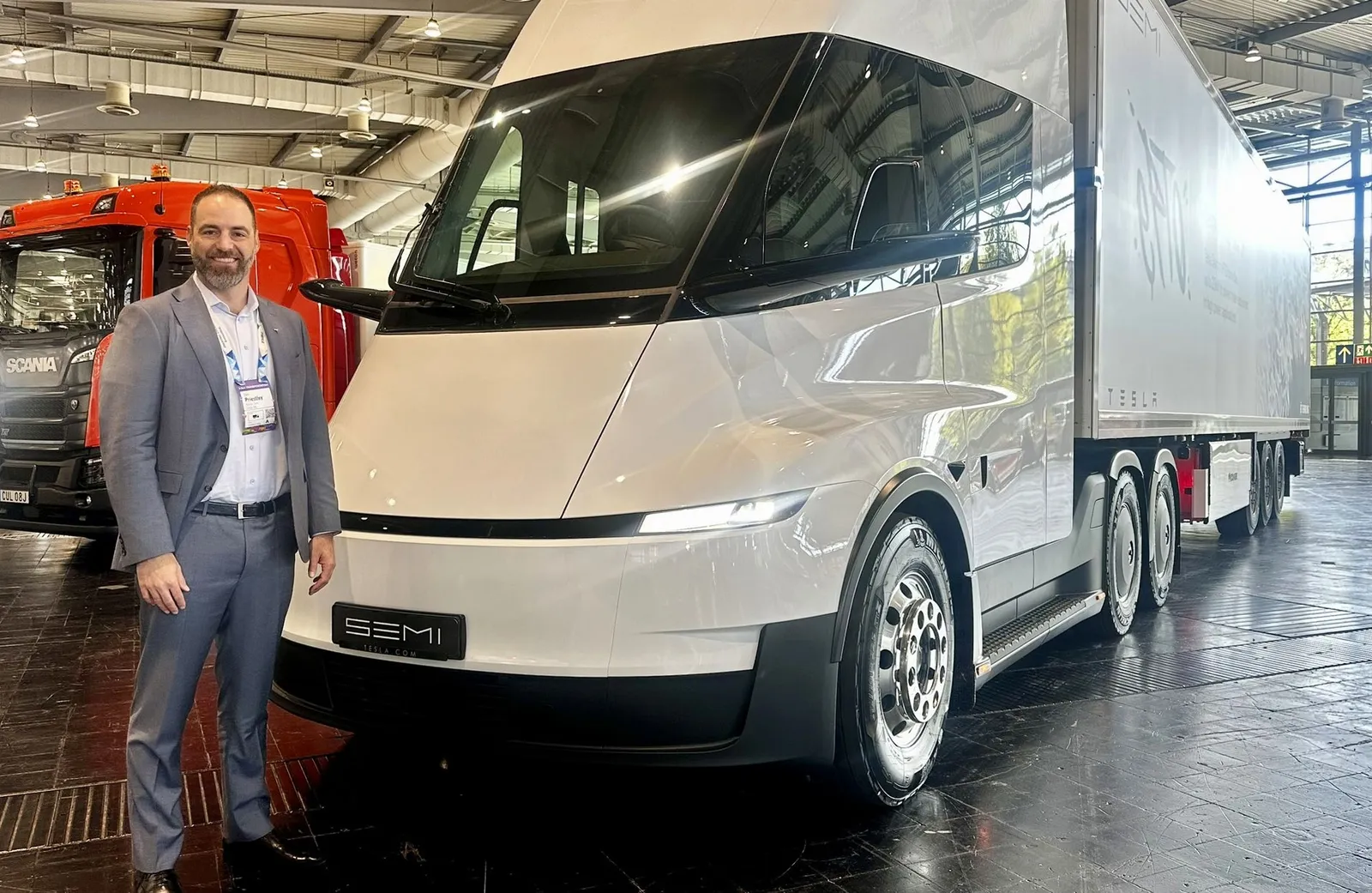
Volumes, production location, fast charging network, direct sales, autonomous driving: at the IAA Transportation in Hanover, Automobile Propre had the opportunity to speak with Dan Priestley, head of Tesla’s Semi program. It was a chance to learn more about how the American automaker plans to establish itself permanently in the European electric truck market.
At Tesla, it’s quite rare to encounter a spokesperson who can deviate from the language prepared by the company. Dan Priestley is one of such individuals. Having joined Tesla in 2011 with a degree in mechanical engineering from Stanford, he started at the front-wheel-drive testing laboratory before moving on to the truck program in its early stages and gradually taking charge of it. He has thus been driving the Semi project for years, witnessing it evolve from a promise to a commercially produced truck. He now oversees the company’s heavy-duty operations and traveled to the IAA Transportation show in Hanover to meet with the press ahead of the launch of the European version of the Tesla Semi, with first deliveries expected in 2027. Automobile Propre was among the few media outlets
I really want to meet him…Quotes collected in English and translated by us.
What are the differences between the American model and the European model?
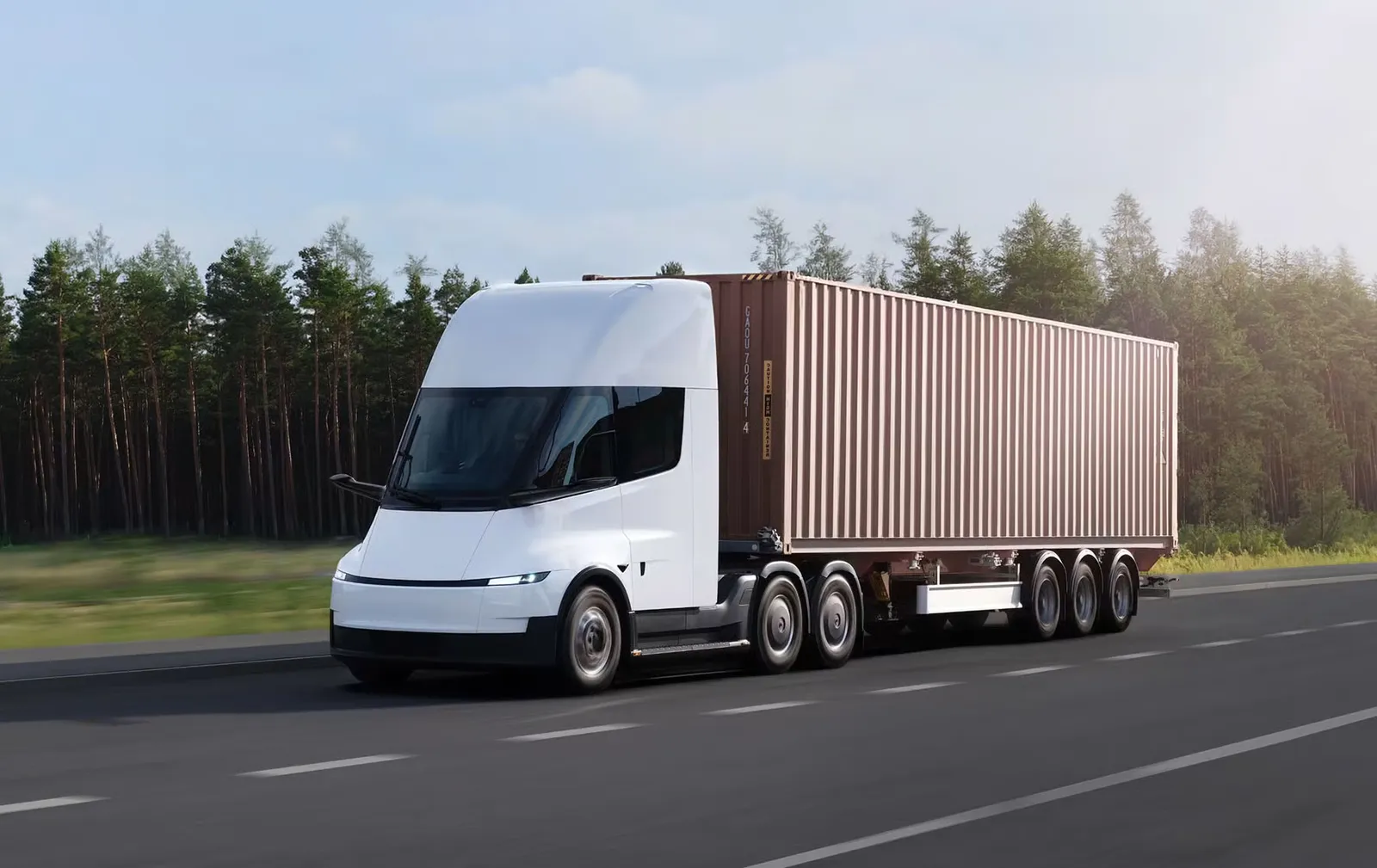
Dan Priestley: The two versions are very similar. The battery is the same. The engine axles and transmission are the same as well. It’s really just local modifications to make the truck compliant for European roads. The lighting is slightly different, and one thing you’ll notice is that there are no “mirror” rearview mirrors. These are allowed in Europe, but not in the United States where their use is required despite the existence of rear cameras.
There are many small adjustments like this. The wheels and tires are slightly different, but the basic technology is the same in both markets. In the end, there are very few technical changes.
Tesla has chosen to place the driver in the center of the cab. Why?
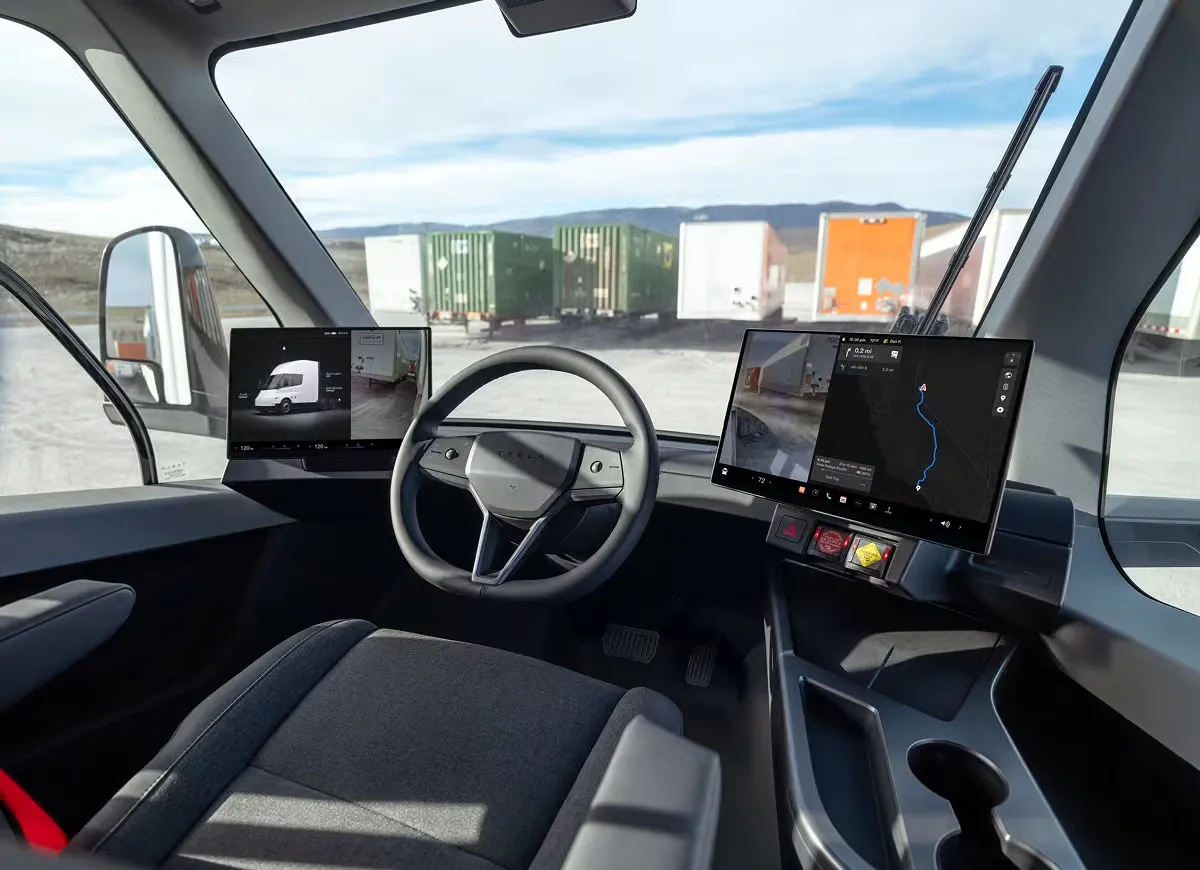
DP: We wondered why include two seats when most trips are made by just one person. The truck is also very narrow at the front for aerodynamics reasons. So it made sense to try placing the driver in the center. We find that drivers have many questions at first about the central seat, but after driving the truck for a while, everything is fine. They don’t think about it anymore.
In Europe, Tesla is entering a market for electric trucks that is already crowded. What is the main advantage of the Semi over established brands?
DP: The European market offers far more electric vehicle options than the North American market, and I think that’s a good thing. Where we can differentiate ourselves is in operating costs thanks to a more efficient model (Tesla claims 1 kWh/km consumption for the Semi). Additionally, there’s the reliability of many components that have already been tested in real-world conditions. We use components that are already available worldwide in our vehicles. Therefore, we have a high level of confidence in these parts and manufacture them on a large scale.
Our truck is also much lighter. At 9.1 tonnes or less, we offer significantly more payload capacity while maintaining similar range and costs compared to our competitors. So you’re getting a truck with market-level purchase price, lower operating costs, greater reliability, and more loading capacity. Plus, you enjoy the service and charging experience that Tesla provides.
Some manufacturers like Volvo offer electric trucks with a range of 700 kilometers. Do you plan to go even further?
DP: We will first bring this version to market, and then we will assess whether it is necessary to offer greater range. Because increased range comes at a cost—it’s more expensive and also results in more weight. We always strive to do what is best for the customer or the market. If we need to offer a product with greater range, we will do so. But what we observe today is that the range currently offered is already sufficient to cover most tasks. Moreover, lower operating costs and higher payload capacity are things that many people truly seek. We will continue to evaluate the situation. If we need to introduce higher range, we will do it.
NOTE: On its U.S. website, Tesla also mentions a “Long Range” version with a range of 800 miles, or nearly 1,300 km, which is not listed on the company’s French site. Following Dan Priestley’s interview, we contacted the company’s press teams regarding this, but they do not have any additional information at this stage.
Regarding charging, Tesla plans to develop a network similar to the one it has created for cars. How do you plan to proceed?
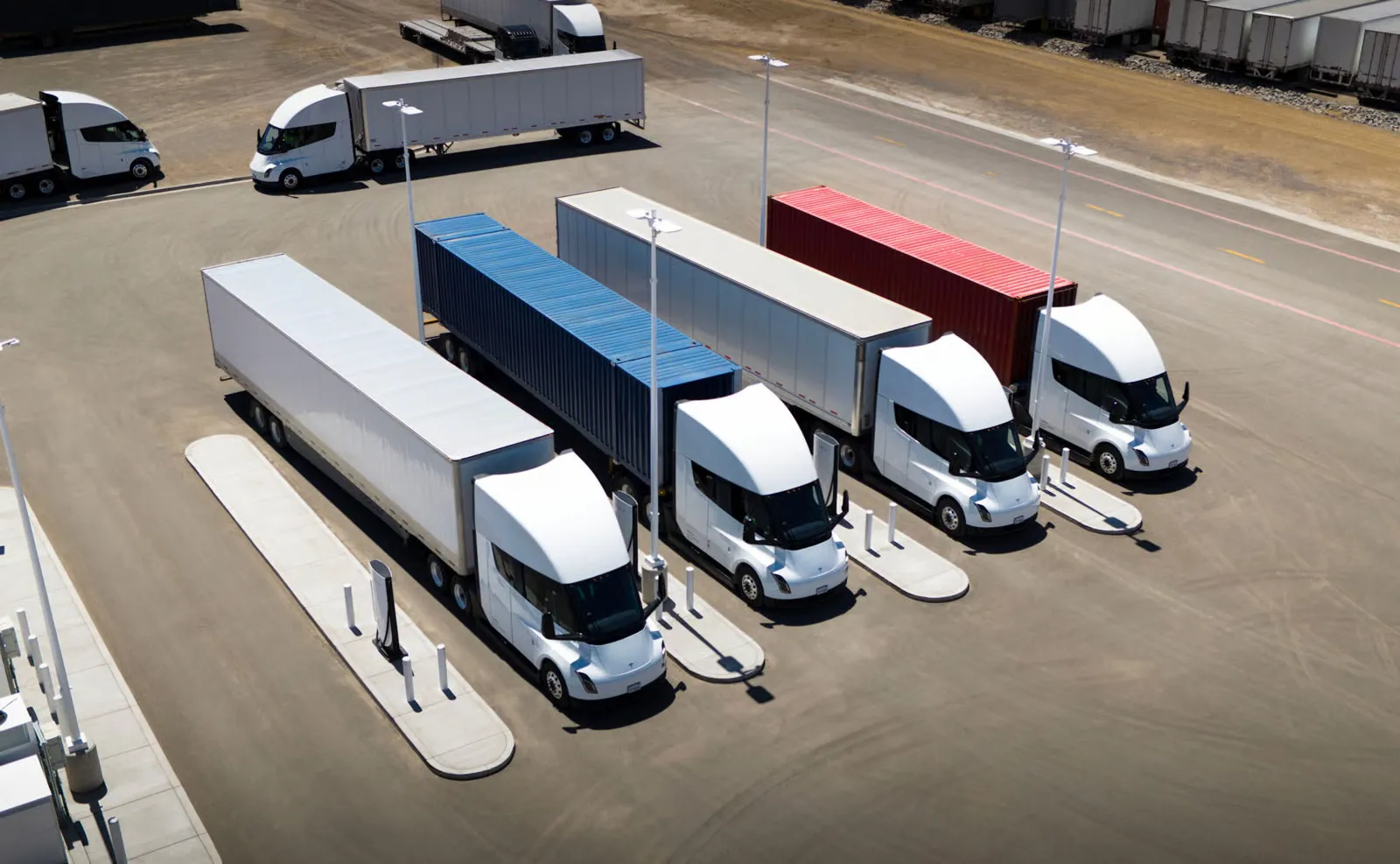
DP: We’re going to do something very similar. We’ll build a network of Megachargers for the Semi. We’ll deploy it next year, and our initial network will include over 100 charging stations across Europe. This covers France, Germany, the Netherlands, Denmark, as well as Sweden or the UK. We’re really trying to ensure adequate charging coverage in this central part of Europe.
In France, we’ll likely have between six and ten stations initially. All of them will have multiple charging points.
Will this network be reserved for the Tesla Semi or open to other manufacturers?
DP: It will also be open to other manufacturers. All our stations will meet the MCS standard, the new charging standard for heavy vehicles. This way, we expect the network to be able to accommodate other vehicles that use MCS.
The Semi currently supports up to 800 kW in MCS mode. Do you plan to go beyond that?
DP: The stations we will build will actually be capable of delivering 1.2 megawatts per charging point. This gives us the ability to potentially increase the truck’s charging speed or serve other manufacturers whose vehicles can handle higher power levels.
Today, with a model that offers 550 kilometers of range and 800 kW charging capacity, capable of restoring 60% of that range in 30 minutes, we already provide a very solid solution on the market that meets the needs of most applications. But as time goes by, we will adjust it according to requirements, whether by changing the range or charging speeds. We will continue to evolve our products to ensure we offer what the market needs.
Besides public charging, will you also assist your logistics clients in installing their own charging stations?
DP: Yes. If a client wants to install charging infrastructure at their site, they can use either a Megacharger or a slower charger that we call a Basecharger. Both are currently available for purchase.
In summary, some customers may use us to coordinate the installation of their charging systems, but they will always have the option to purchase their own equipment.
Is autonomous driving available on the Tesla Semi?
DP: What we are focusing on in the United States right now are driver assistance systems. Automatic emergency braking, forward collision warning, safety-related features, and so on... We adopt the same approach as with cars: putting vehicles into the real world and using those vehicles to collect data that will help us train the models needed for autonomous driving.
For the Semi, we rely on the same infrastructure and model training methods as for our trucks, but due to the unique positioning of the cameras and the fact that it is a large articulated vehicle—that doesn’t move as a single unit like a car—we have unique training data.
We plan to deploy autonomous driving in the United States and eventually in Europe, because we believe it is less costly and also much safer for everyone on the road. But we must first put human-driven vehicles on the road to train and collect sufficient data before deployment.
Regarding deliveries, what are your ambitions for the Semi in Europe by 2027?
DP: We’re not ready to share specific numbers at this stage, but we can see that demand is strong. The factory we’re building in Nevada, North America, is capable of producing up to 1,000 units per week, or 50,000 per year, which is sufficient to meet our initial demand in both North America and Europe. I think there will be a large volume of trucks in Europe, but it’s still difficult to predict.
Are you considering producing the Semi in Europe?
DP: We have a habit of relocating production when we see a reason to do so. We’ve already done this with the Model Y in Europe, and I think we’ll adopt a similar approach for the Semi.
We are therefore exploring these relocation options. For the first wave, our factory in Nevada provides sufficient capacity to serve the European market, but we see enough opportunities and growth in this market that it is likely worthwhile to establish a presence there at some point. It will depend on the volume...
What are your main markets in Europe?
DP: France, Germany, and the major freight transport markets—France, Germany, the United Kingdom, and further north to the Netherlands, Denmark, and the Benelux region where there is heavy port traffic. Additionally, Poland, Eastern Europe, as well as Spain and Italy. We plan to go wherever the market takes us, but we will start in this heavy freight sector: France, Germany, the United Kingdom, and all the northern areas with significant port traffic.
What is the exact timeline for Europe?
DP: You will begin to see vehicles on the roads for testing and demonstrations with clients during the first half of 2027. We aim to start deliveries in the second half of the same year.
How do you plan to sell the Semi? What about after-sales support?
DP: We will sell to everyone, whether it’s large fleets, small fleets, or individual operators. In all cases, they will work directly with Tesla. The trucks won’t be in our showrooms. You can discover them online and get in touch with us.
For after-sales support, we are building our own service and maintenance network to ensure every truck has the support it needs. This is similar to what we’ve done with cars, but we’re creating dedicated sites for the Semi. There will also be a mobile service option.
The Semi is currently in tractor configuration. Is a trailer version feasible for regional distribution?
DP: It’s in the tractor-trailer that the initial volume is located. But the truck, the rigid-frame vehicle, is also something we see. Technically, it’s definitely possible.
We see many electric light commercial vehicles in Hanover. Do you have any plans for this segment?
DP: Tesla aims to electrify all segments, but that’s not part of our plans at the moment.