
Norway’s EV share rises to 97.6% in July
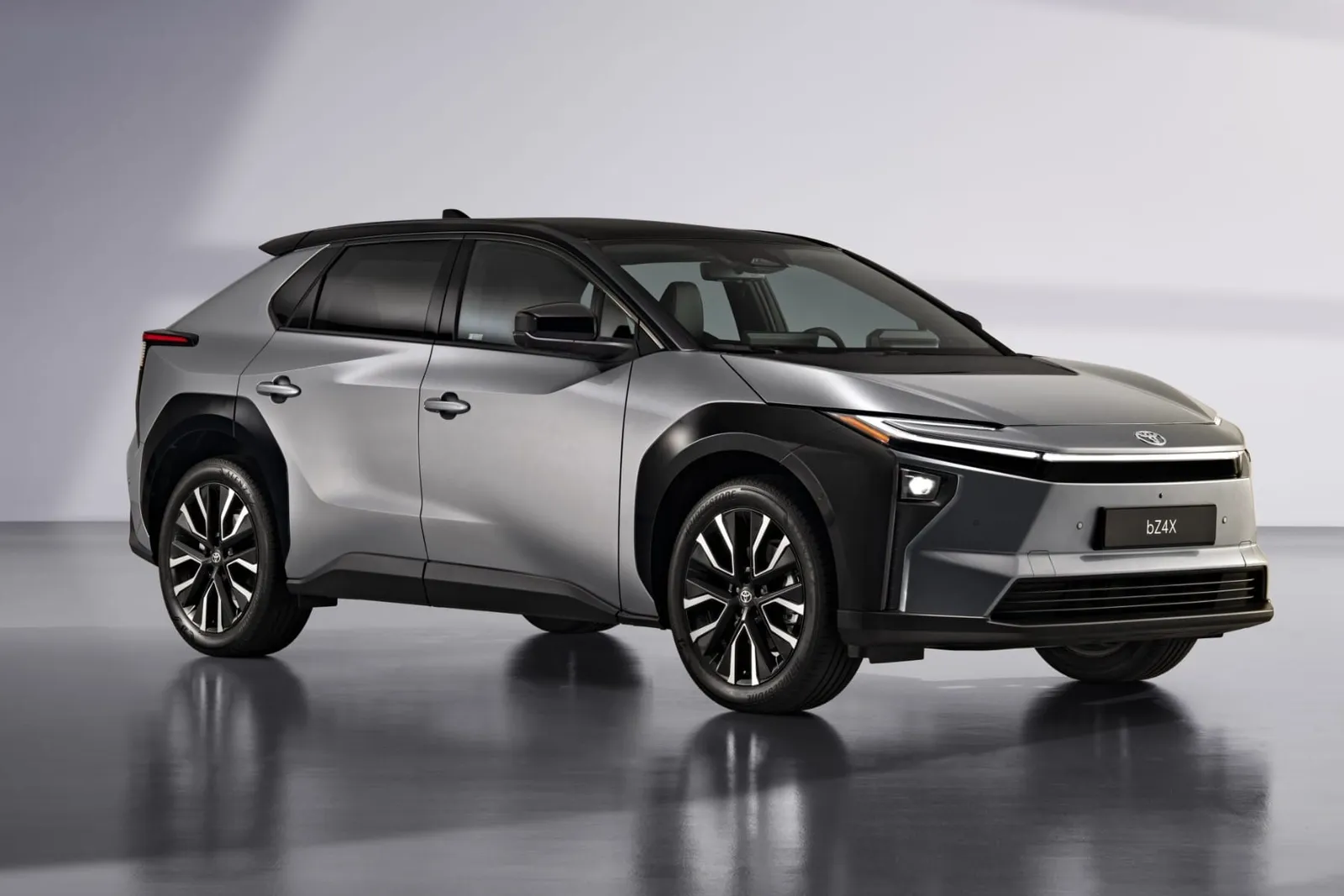
Norway's battery-electric car share increased to 97.6% in July despite overall passenger car registrations remaining almost unchanged year-on-year. Toyota led the monthly brand rankings, while Xpeng climbed to third place on the back of strong model demand.
Norway registered 9,609 new passenger cars in July, up 0.5 per cent compared to the same month last year. Battery-electric vehicles accounted for 9,379 registrations, lifting the monthly EV share to 97.6 per cent, according to the Norwegian Road Traffic Information Council (OFV).
The result follows June’s record EV share of 96.9 per cent and confirms that the Norwegian new car market remains almost entirely electric. Østfold recorded the country’s highest EV share, with 672 of 675 newly registered passenger cars powered by batteries.
Since the beginning of the year, 83,012 new passenger cars have been registered in Norway, down 2.4 per cent year-on-year. Despite the overall market contraction, battery-electric registrations increased by 1.3 per cent to 81,040 units.
Toyota was the best-selling brand in July with 1,260 registrations. That includes 532 Toyota bZ4X, which was the bestselling model in Norway in July, and 437 units of the Toyota Urban Cruiser, which came in third in the ranking. Second place went to the Volkswagen ID.4 with 485 units.
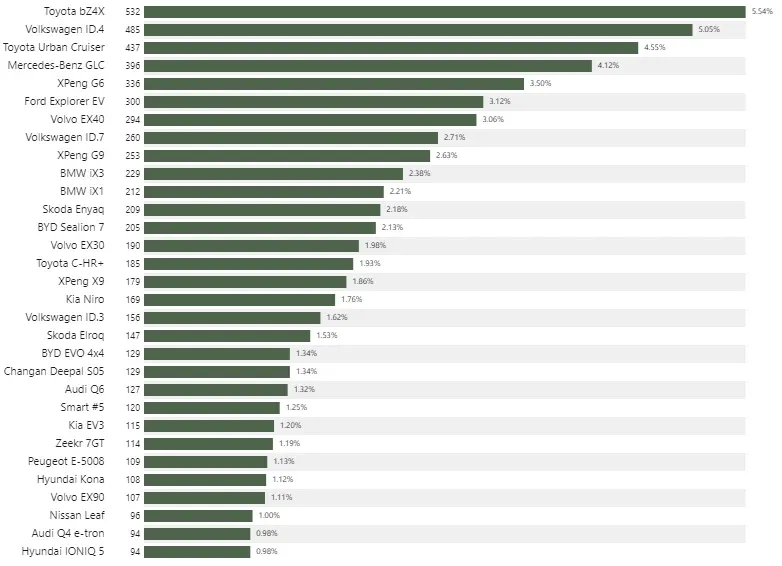
Volkswagen also took the second spot in terms of the best-selling brands. Chinese carmaker Xpeng came in third with 843 vehicles sold, which is an increase of 161 per cent compared to the same period last year.
“The July figures show how quickly the competitive landscape can change, even when the overall registration volume barely moves,” said Geir Inge Stokke, CEO of OFV. “Toyota has gone from tenth to first place in one year, and Xpeng from thirteenth to third place. Tesla is still the largest so far this year.”
Despite registering only 24 new vehicles in July, Tesla retained a comfortable lead in the year-to-date brand rankings with 14,413 registrations, an increase of 3.9 per cent compared to the same period last year. Toyota ranked second with 9,972 units, followed by Volkswagen with 8,149.
As the OFV points out, electric vehicles also continued to gain ground in the used car market. Ownership transfers of battery-electric passenger cars to private buyers increased by eight per cent in July, while diesel and petrol cars declined by 5.7 per cent and 6.7 per cent, respectively. Year-to-date, transfers of electric cars have surged by 43.2 per cent to 103,892, narrowly overtaking diesel in the overall ownership statistics.
The electrification trend also continued in the commercial vehicle market. Electric vans accounted for 61.4 per cent of new van registrations in July, while the share of battery-electric trucks reached 23 per cent in the year-to-date figures after registrations increased by almost 70 per cent compared to the first seven months of 2025. Despite the growth, electric vehicles still represent only 10.6 per cent of Norway’s van fleet and 4.8 per cent of its truck fleet.
“The challenge now is to translate the growth in new registrations into a broader renewal of the vehicle fleet. This requires predictable taxes and support schemes, sufficient charging infrastructure and network capacity that allows companies to plan long-term,” concluded Stokke. “Without stable framework conditions, we risk that necessary investments will be postponed.”