
CEI Standards: Ban on New Home Wallboxes Starting January 1?

Starting from January 1, 2027, new installations of wallboxes for home charging might be halted: this is brought to our attention by a reader who consulted several charger manufacturers that are lagging in adapting to new regulations. To contact us: info@vaielettrico.it.
New obligations and new regulations: but who certifies them?
"If the situation doesn’t change, starting from January 1, 2027, any NEW home charging station will need to be certified as compliant with the CEI PAS 57-127 standard.
After extensive research and contacting various charger manufacturer brands, the situation is as follows: with less than 2 months left before the regulation takes effect, no manufacturer is ready, and there are still no certification bodies available.
In practical terms, this means that no installations will be carried out starting from January 1st. Shall we discuss this? — Ing. Stefano Coppo
CESI is ready, but two months is too short
Response – The problem does exist, but it appears to us that the details of the issue are slightly different. The certification body exists, and it is CESI. This was publicly stated by Giampiero Montagna (Kena Labs, CESI group) on October 14th during the Vaielettrico Awards ceremony.
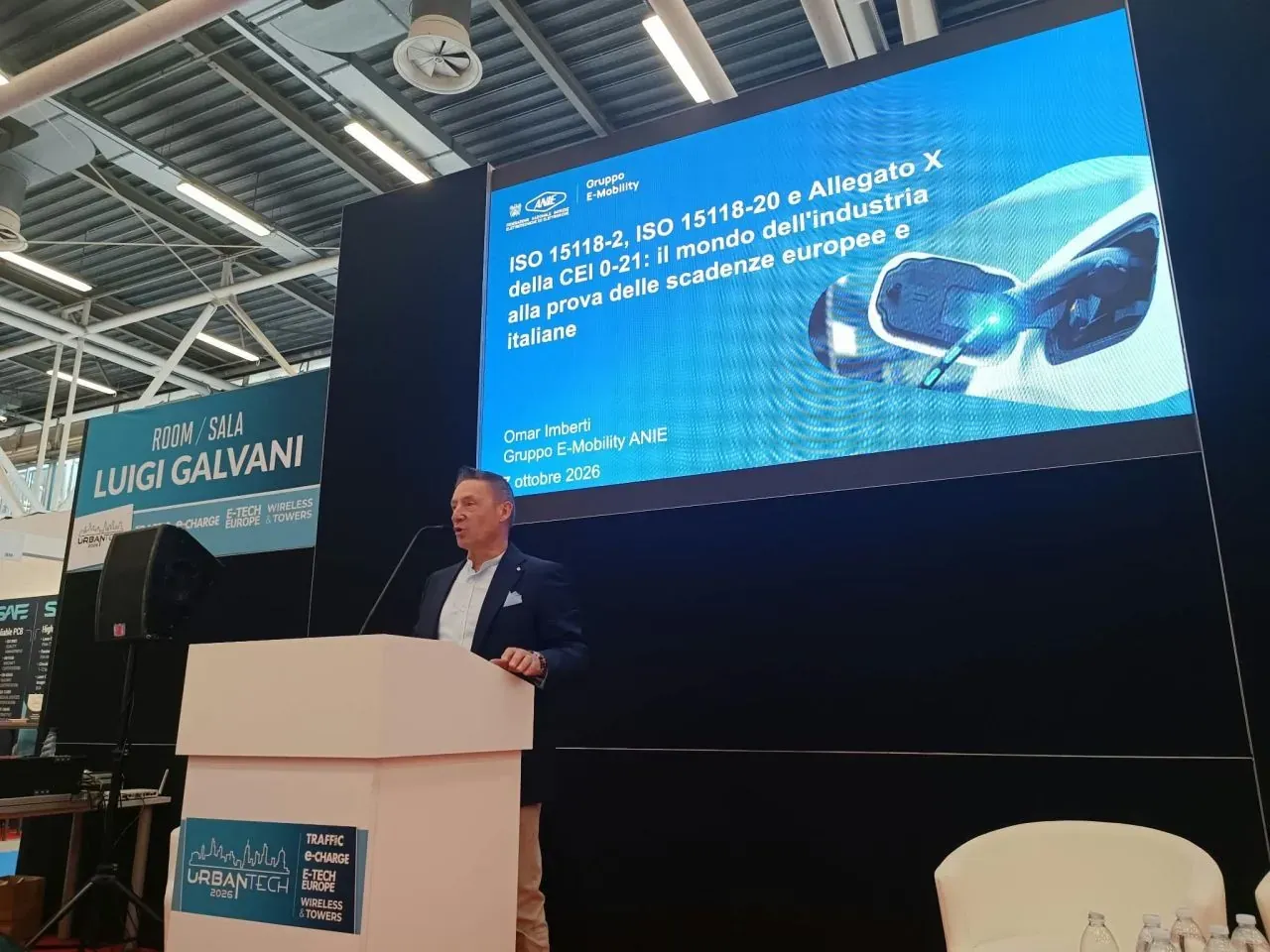
Omar Imberti, Coordinator of ANIE Federazione’s E-Mobility Group—the association that represents Italy’s electrical and electronic industry companies within Confindustria—confirms to us that an accredited certification body now exists officially, effective for a week. The issue is the timeline, as just two months to certify all devices on the market may be insufficient. Therefore, ANIE is considering requesting a temporary period of several months from MASE to allow all hardware manufacturers to certify their products.
What is the CIR device and what is it used for?
On the side of wallbox manufacturers, Imberti is more optimistic: according to a survey among ANIE members conducted at the end of August, 90% of companies believe they will be able to integrate the CIR (Charging Infrastructure Controller) by the deadline when it becomes mandatory, namely starting from January 1st next year.
This is the device that enables three important functions:
communicating with the meter for power management of charging sessions;
securing the network to prevent blackouts in case of low frequencies;
enabling the activation of charging flexibility services (V1G) to support the grid.
The CIR device may not be integrated into the wallbox either; in that case, it can be installed between the meter and the charger, including existing chargers if they support communication with the meter. Currently, two companies in Italy are selling it.
Of course, all of this will affect the cost of purchasing and installing a home charger, as noted by a leading installer. However, the installation cost might be lower since there’s no need to run cables or add an energy meter. Regarding the total cost, the incentive available only if it complies with CIR standards also needs to be considered.
New developments from Arera for home charging
Further clarification may come from Arera, which has launched a consultation with stakeholders. Comments can be sent to the Authority for Energy, Networks, and the Environment by November 9. Arera’s executive Emanuele Regalini announced this in a LinkedIn post, explaining that the consultation on charging electric vehicles in private areas concerns “new measures to promote the spread of electric charging in homes, apartments, garages, and corporate parking lots.”
He added that this is a “significant step for the development of electric mobility and greater integration between charging infrastructure and the power system, especially since it is in these settings that an average of 75-80% of the energy used by electric vehicles is charged.”
Among the main topics under consultation:
The reopening in 2027 of the 6 kW “F3” experiment, but with new requirements;
A possible transformation of the experiment into a permanent measure starting in 2028;
The introduction of the new PERT contract type for boxes and garages not connected to the residence;
New approaches to promote smart charging and flexible management of electricity demand;
New tariff structures based on the maximum power output during “off-peak” hours.
READ ALSO: The future of charging: Arera envisions it this way and watch the VIDEO
Previous Article
Combating false information circulating about electric cars