
Beyond solid-state, Mercedes is developing manganese batteries
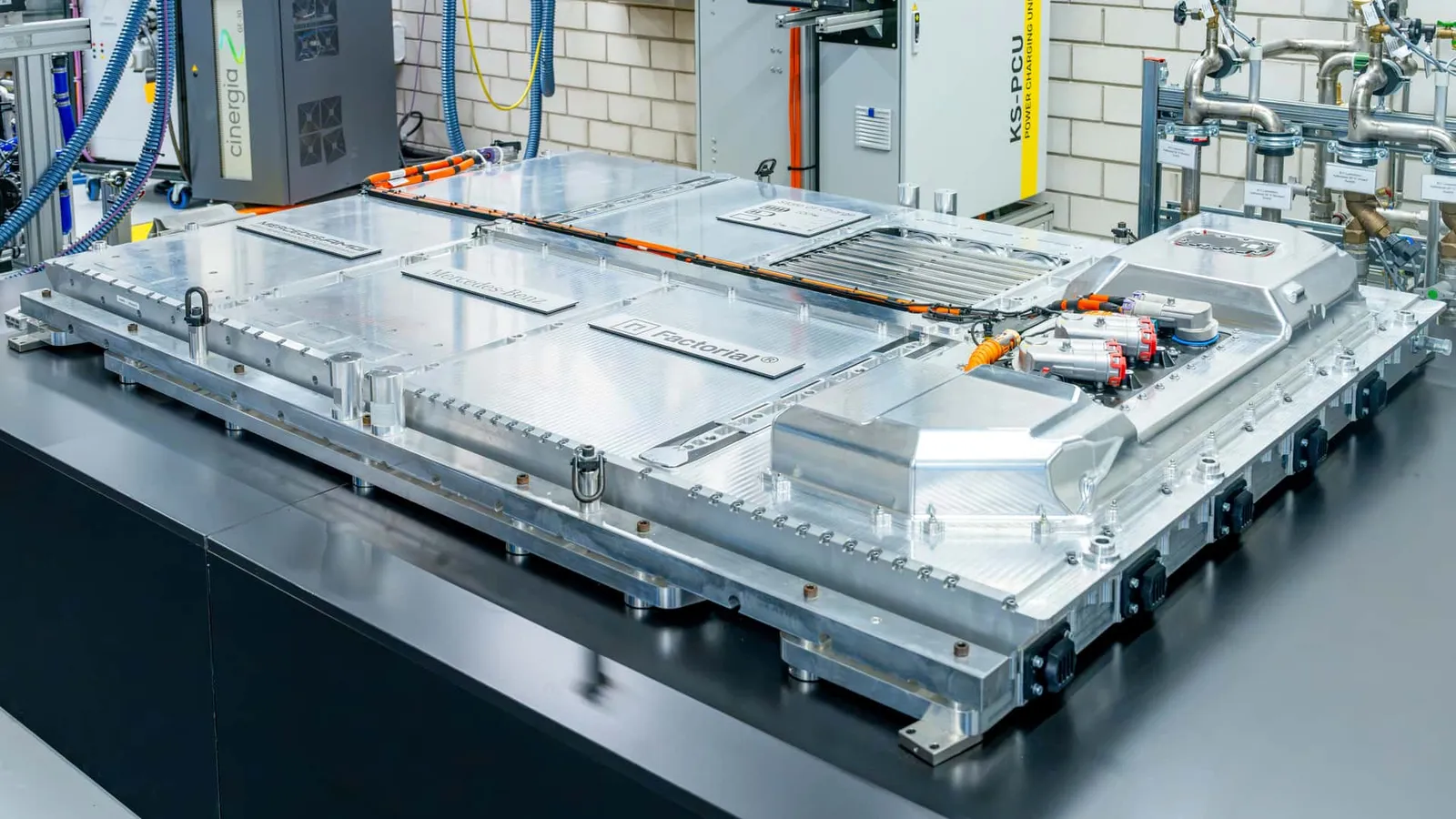
Mercedes is preparing small revolutions in electric propulsion by looking beyond current lithium-ion batteries and working on a new generation of cells that promise to improve range while reducing costs and the consumption of critical raw materials.
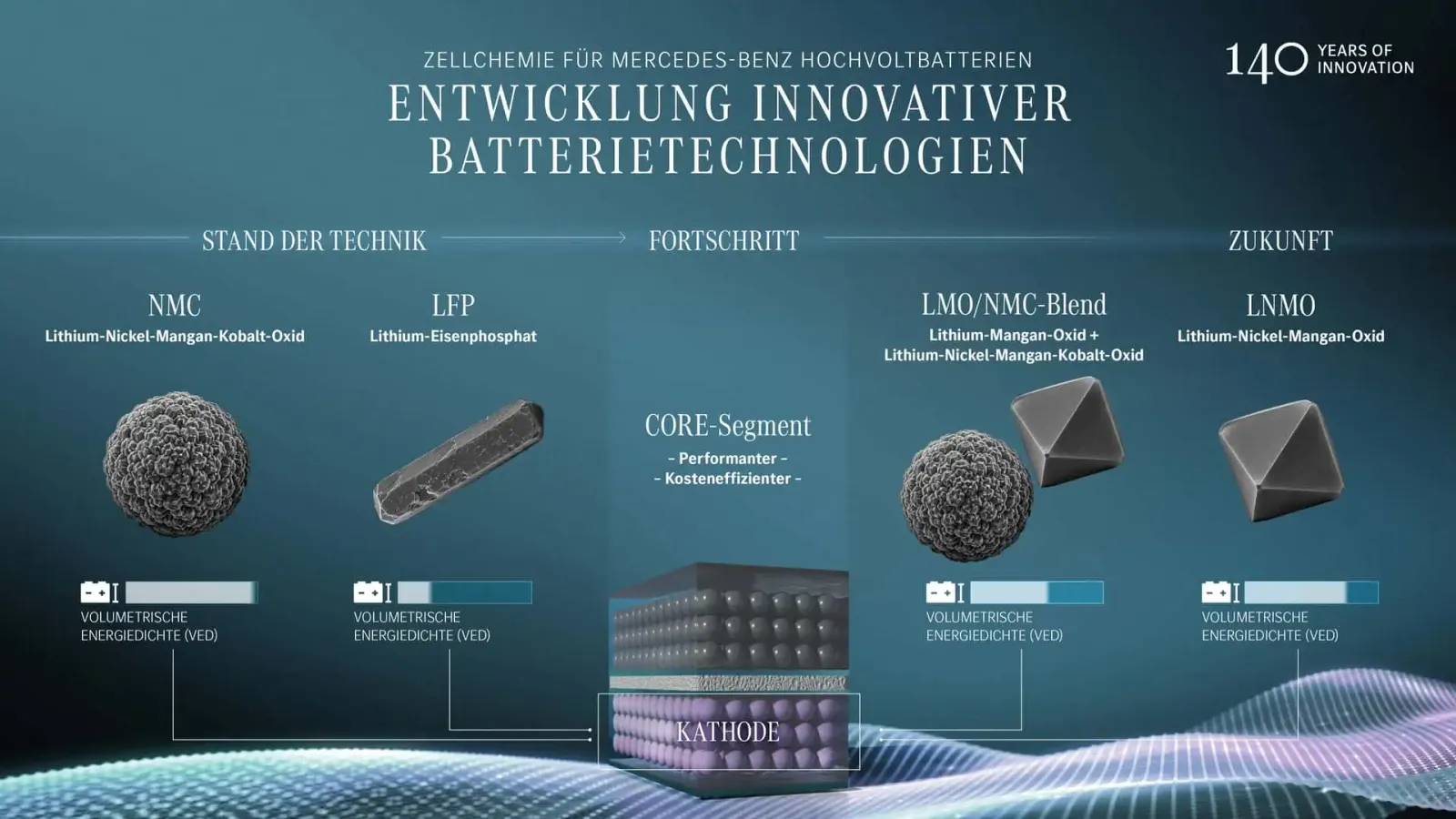
While waiting for new solid-state batteries, whose development is progressing rapidly, the most interesting advancement involves a chemistry still in development called LNMO (lithium, nickel, and manganese oxide), which could offer up to 30% more range compared to LFP (lithium-iron-phosphate) batteries, while keeping the weight and size of the battery pack unchanged.
More manganese, less cobalt
The goal behind this development is primarily to reduce reliance on nickel and cobalt, two elements used in traditional NMC (nickel-manganese-cobalt) cells. Mercedes is working on cathodes made from a combination of LMO (lithium manganate) and NMC materials, increasing the proportion of manganese while reducing that of the other two metals. This approach represents an intermediate step toward further chemistries with even higher manganese content.
Components of Mercedes’s new manganese batteries
Photo by: Mercedes-Benz
The most interesting prospect, however, lies with LNMOs, which would eliminate cobalt entirely and require significantly less nickel compared to current NMC batteries. According to Mercedes, this chemistry could function at voltages up to 5 volts, creating the conditions for achieving high energy density at competitive costs. The potential advantage is an extra 30% range compared to LFP batteries, all else being equal in terms of weight and space occupied.
Naturally, this is a technological goal rather than a performance already demonstrated in a production model. Mercedes has not yet specified a date or model for introducing LNMO cells commercially.
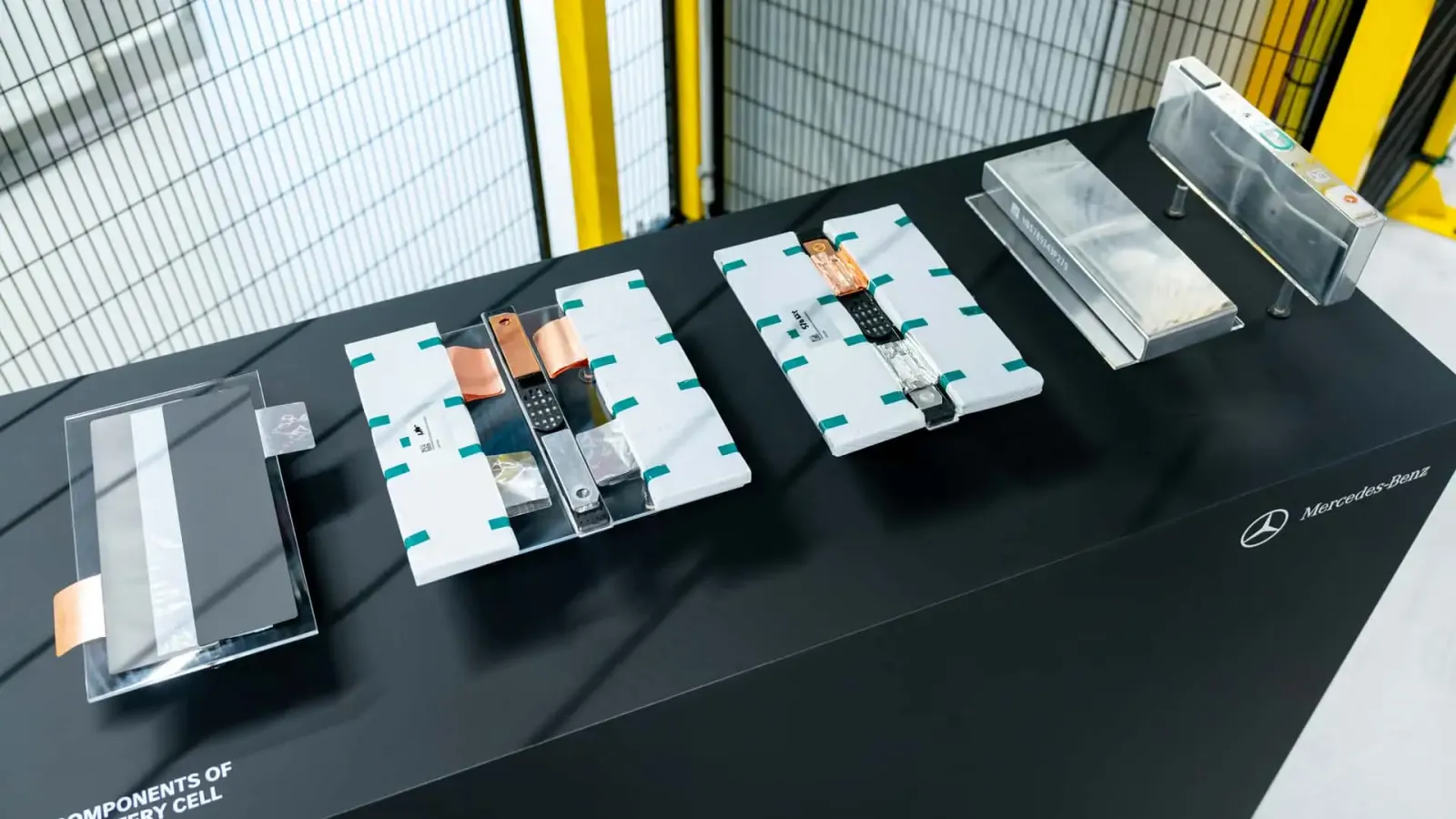
The new manganese cells have a reduced size and also improve the compactness of packaging.
Photo by: Mercedes-Benz
Towards smaller and lighter batteries
An increase in energy density would not only allow drivers to travel more kilometers on a single charge. With the same range, it would also enable the creation of more compact and lightweight battery packs, freeing up space in the cabin and reducing the vehicle’s overall weight. For this reason, Mercedes views the development of cell chemistry as a strategic priority. The company defines the required characteristics for batteries directly and oversees their integration into vehicles, aiming to tailor different technologies to the needs of individual models.
Solid-state technology moves forward
As mentioned, Mercedes continues to experiment with solid-state batteries in partnership with Factorial Energy and ProLogium. Together with Factorial, a solid-state battery with a lithium metal anode has already been developed and installed in an experimental EQS vehicle, which traveled 1,205 kilometers from Stuttgart to Malmö without needing a charge, demonstrating the technology’s potential for long-distance use.
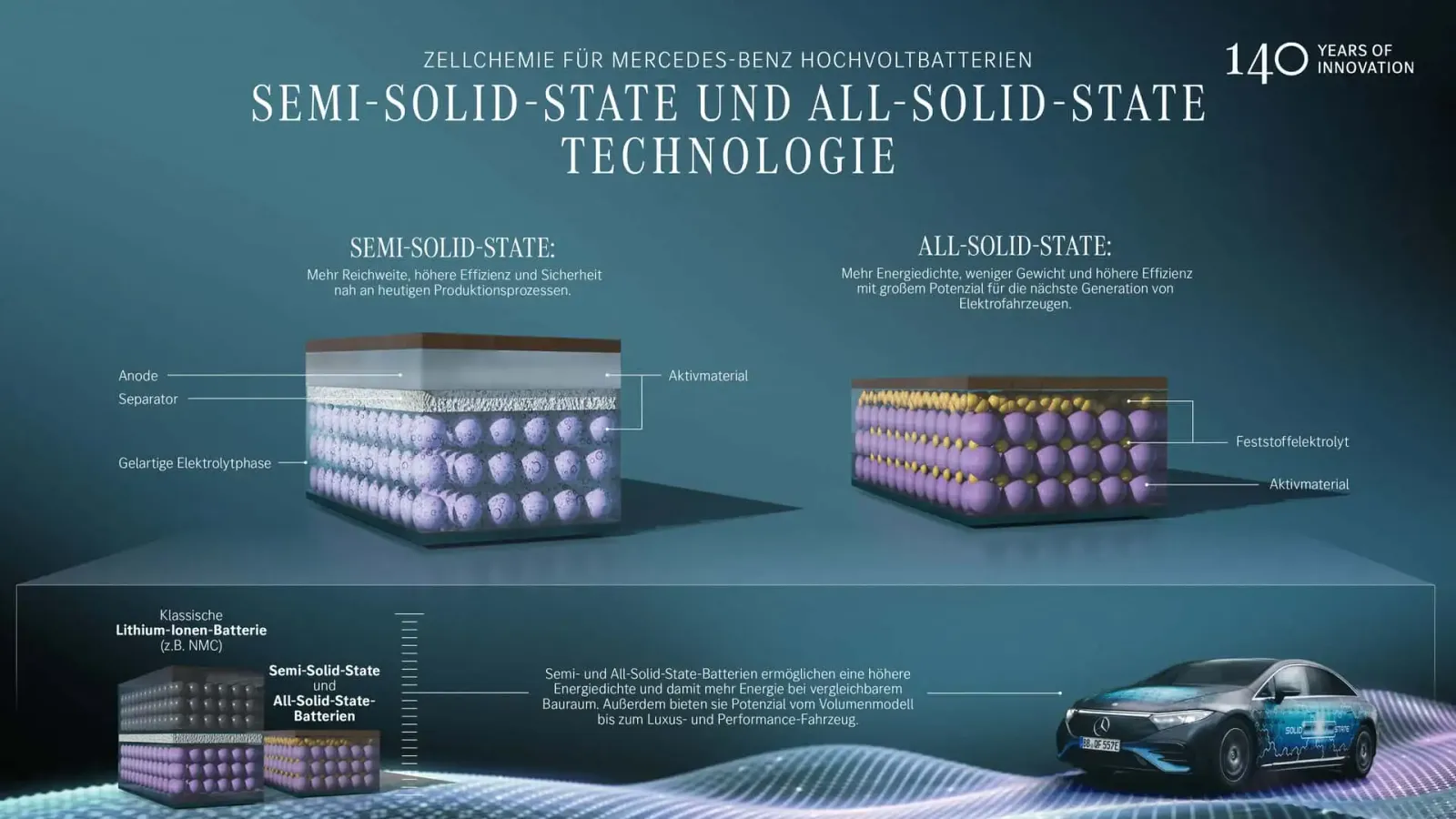
The new solid-state and semi-solid batteries are set to arrive in a few years.
Photo by: Mercedes-Benz
With ProLogium, Mercedes is evaluating fourth-generation cells, focusing on performance, safety, and thermal behavior for potential industrial applications. Tests are also underway on cells developed internally and by other partners, with input from Formula 1 power unit specialists.
Mercedes, what developments in the electric sector?
Fotogallery: Mercedes’ new manganese batteries