
There are not enough batteries for electric cars: Stellantis forced to shut down some production lines in Europe
04/10/2026 13:30
Updated to
04/10/2026 13:30
The transition to battery-powered vehicles depends not only on driver acceptance or the deployment of charging infrastructure but also on an increasingly complex supply chain. In this context, any disruption in the supply of key components affects factory production rates. This reality was recently highlighted by one of the world’s largest automotive conglomerates, which was forced to temporarily halt some of its operations in Europe.
Stellantis, one of the most significant groups worldwide, is forced to temporarily suspend production at some of its plants. The high demand for electric cars due to rising fossil fuels prices and other factors has exceeded expectations, leaving insufficient components to maintain the current production pace.
Component shortages and their impact on European factories
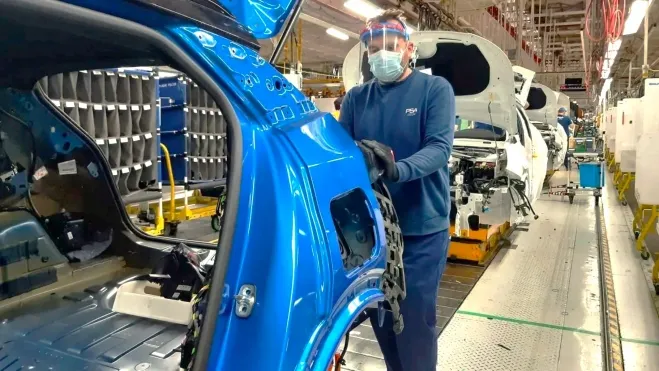
The facilities chosen for this technical stop are necessary to address the shortage of cells and batteries required to produce next-generation zero-emission models. Specifically, the historic Sochaux factory, a strategic site where Peugeot 3008 SUVs are assembled, will suspend operations for a week in October. A similar measure will affect the Rennes plant, responsible for manufacturing the Citroën C5 Aircross, whose production lines will also halt for roughly the same period.
This situation highlights the critical dependence the automotive industry has on the supply of high-capacity batteries. The design of these components, aimed at providing long driving ranges in demanding usage scenarios, requires advanced manufacturing processes and a steady supply of raw materials, which at times face logistical or production bottlenecks. Limited availability of battery cells not only slows down assembly lines but also forces manufacturers to restructure their operational schedules to balance available inventory with actual market demand.

The Macroeconomic Context and Fluctuations in Vehicle Demand
The planned shutdowns of factories in France are not solely due to a shortage of batteries; they are part of a complex macroeconomic and geopolitical landscape that is altering consumption patterns and the stability of energy markets. Rising costs of fossil fuels, driven by international tensions that have pushed prices to historically high levels in several countries, have led to a sudden surge in interest in electric mobility. This shift puts strain on an already tight supply chain.
Meanwhile, Stellantis faces varying business realities depending on the type of propulsion system and region. While demand for certain technologies is rising faster than expected, other models in its overall portfolio are seeing lower registration rates than anticipated. An example of this can be seen at the Mulhouse plant, where declining demand for the Peugeot 308 has led to a temporary suspension of production. Similarly, local factors such as energy costs and the development of the hybrid market in Southern Europe show that the transition to clean mobility progresses at different speeds depending on the segment and country.
The Industry’s Challenge in the Face of a New Paradigm
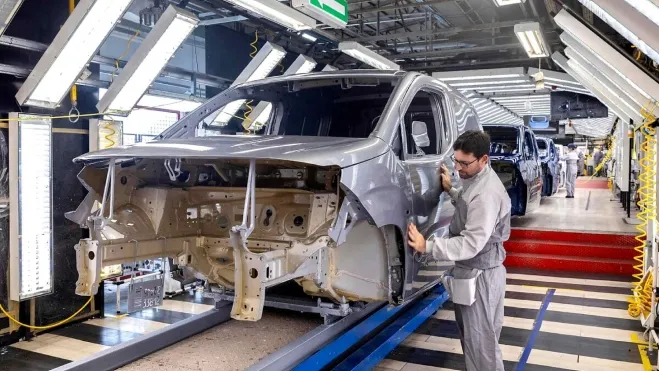
Stellantis Group’s decision clearly illustrates the challenges faced by the automotive industry as it moves toward full electrification. This transition requires perfect synchronization between the extraction of essential minerals, cell production, battery pack assembly, and final marketing. Any disruption leads to operational halts and the need to manage available inventory both in factories and at dealership networks.
The ultimate stability of the sector will depend largely on the establishment of new battery factories in European soil and the maturity of a supply chain capable of handling sudden changes in global demand. Meanwhile, manufacturers continue to adjust their strategies to overcome challenges that shape production dynamics.
