
Nissan unveils electric PIXO city car with 161-mile range
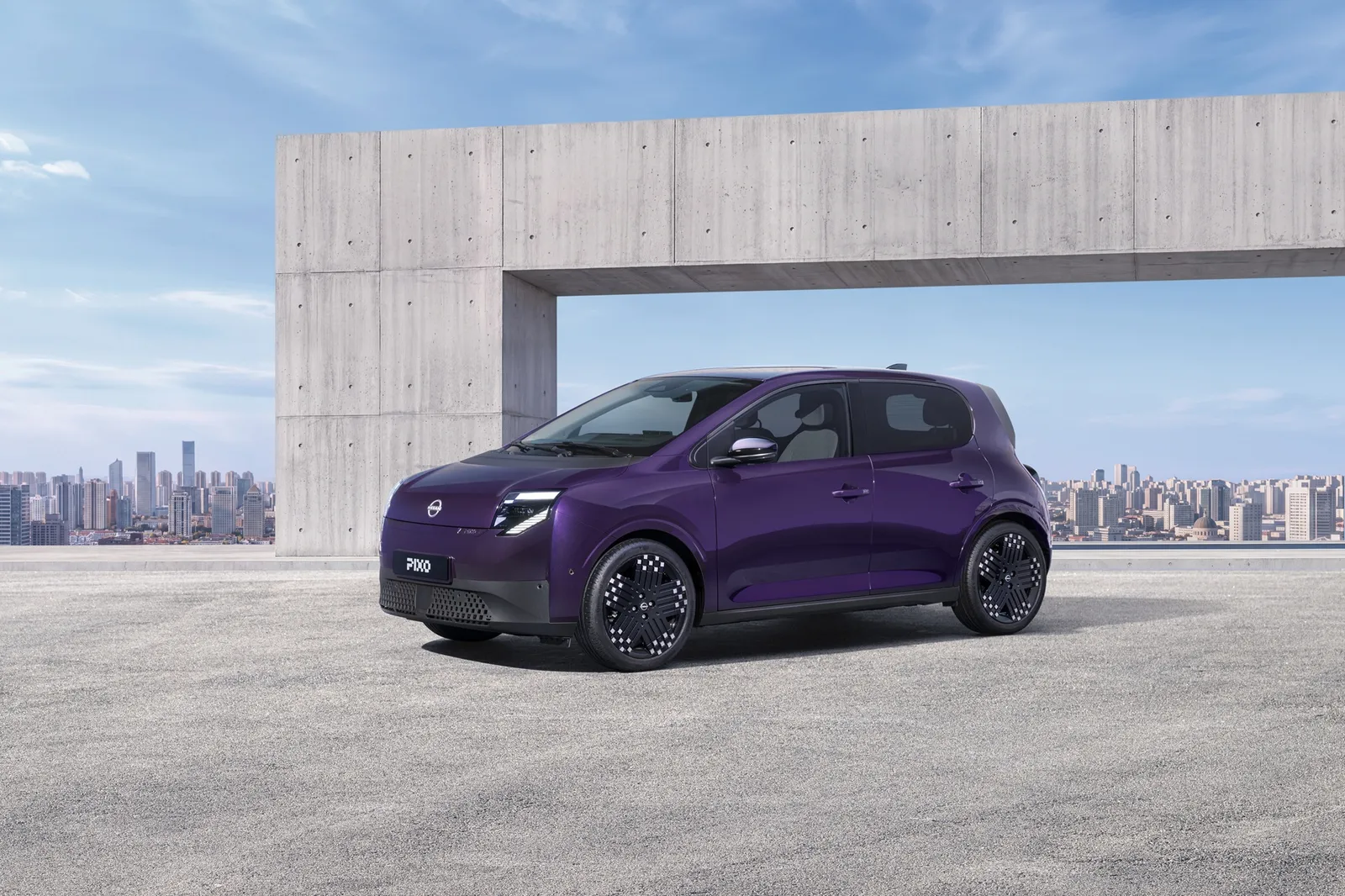
Nissan has unveiled the PIXO, a small electric city car offering up to 161 miles of range, a 27.5kWh battery and rapid charging as standard, with customer deliveries scheduled to begin in early 2027.
Designed for European towns and cities, the four-seater combines a body less than 3.8 metres long with independently sliding rear seats and a claimed 356-litre boot. Nissan will announce pricing, market specifications and pre-order information from December, leaving buyers waiting a little longer to discover how affordable its new urban EV will be.
The PIXO joins the recently launched electric MICRA and LEAF in Nissan’s European line-up. It will be manufactured by Renault at its Novo Mesto factory in Slovenia, with Nissan responsible for the design.
Its specification includes a 60kW electric drivetrain, 50kW DC charging and 11kW AC charging. Google built-in, the Gemini voice assistant and driver recognition technology also feature, alongside assistance systems including adaptive cruise control and hands-free parking.
For prospective buyers, the key figures are the compact dimensions, modest battery capacity and charging time. Nissan says the PIXO can replenish its battery from 15% to 80% in approximately 28 minutes using a 50kW DC charger. Rapid charging is fitted across the range, rather than reserved for more expensive versions.
The company has yet to publish UK prices or a detailed breakdown of trim levels. Nor does the announcement specify whether the quoted battery capacity is gross or usable, or identify the testing standard behind the 161-mile range figure. Those details will matter when comparing the PIXO with other small electric cars.
The battery uses lithium iron phosphate chemistry, making the PIXO the first Nissan model in Europe to feature an LFP pack. Nissan positions the car primarily around everyday journeys, including school runs, shopping and weekend outings, rather than making long-distance driving its principal selling point.
The inclusion of 11kW AC charging gives drivers another way to replenish the battery at suitable home, workplace or public charge points. Nissan has not supplied an AC charging time in the announcement, so the 28-minute figure applies specifically to the stated DC charging window.
Clíodhna Lyons, vice president for product, brand and marketing strategy at Nissan AMIEO, said: “PIXO has been designed specifically for Europe and specifically for our cities, delivering everything customers need from an EV, without unnecessary complexity.”
Practicality is a substantial part of that pitch. The PIXO measures 3,796mm long and 1,790mm wide, with a 9.9-metre turning circle intended to help drivers manoeuvre through narrow streets and confined parking areas. Nissan says the cabin can accommodate four adults.
The independently sliding rear seats allow occupants to adjust the balance between passenger room and luggage capacity. That should give owners some flexibility when carrying larger purchases, although Nissan has not detailed the range of seat adjustment or the luggage volume with the rear seats folded.
Its headline boot capacity of 356 litres includes 50 litres allocated to cable storage, with the rear seats raised. That distinction is useful for anyone judging how much shopping or luggage will fit: the published total incorporates the cable compartment. Nissan describes the capacity as best in class, although its announcement does not identify the comparison group.
The four-seat layout is another important consideration for households looking at the PIXO as their main car. It offers space for two rear passengers, with the sliding seats providing scope to vary their legroom. Anyone needing to carry five people will have to look elsewhere, regardless of how much luggage space the small Nissan can make available on board.
A further 18 litres of storage is provided within the cabin. Together with the adjustable rear seats, the extra compartments are intended to make a small vehicle easier to live with when it is carrying both people and their everyday belongings.
Drivers get a seven-inch instrument display and a separate 10-inch infotainment touchscreen. Google built-in provides navigation and real-time route planning, while the MyNissan app and connected services allow owners to manage charging and other vehicle functions.
Gemini will be available from launch in 16 languages and dialects, supporting navigation, entertainment and communication through natural voice interaction. Nissan says conversation history enables the assistant to learn driver preferences over time and offer a more personalised experience.
The car also features a system Nissan calls Face ID, which recognises drivers and automatically accesses their personalised settings. The announcement does not explain how this recognition works, what information is retained or whether different connectivity features will require subscriptions. Those are among the details still to come with the market specifications.
The driver assistance equipment includes adaptive cruise control with stop-and-go operation, lane departure warning and hands-free parking, which Nissan lists as standard. The cruise control can respond to the flow of traffic, while the parking feature is intended to make manoeuvring into spaces easier.
One-pedal driving is included, too. Nissan says the system allows the driver to start, accelerate, decelerate and stop using the accelerator pedal, a feature likely to be particularly useful in the urban traffic for which the PIXO has been developed.
Although maximum power is confirmed at 60kW, Nissan has not announced acceleration, top speed or torque figures. The emphasis at this stage is on responsiveness at low speeds and ease of use around town, supported by the compact body and turning circle.
Visually, the PIXO adopts cube-inspired proportions, clean surfaces and pixel-inspired lighting. Its front bumper has what Nissan describes as a “robot face” expression, giving the car a distinctive appearance alongside the more practical elements of its design.
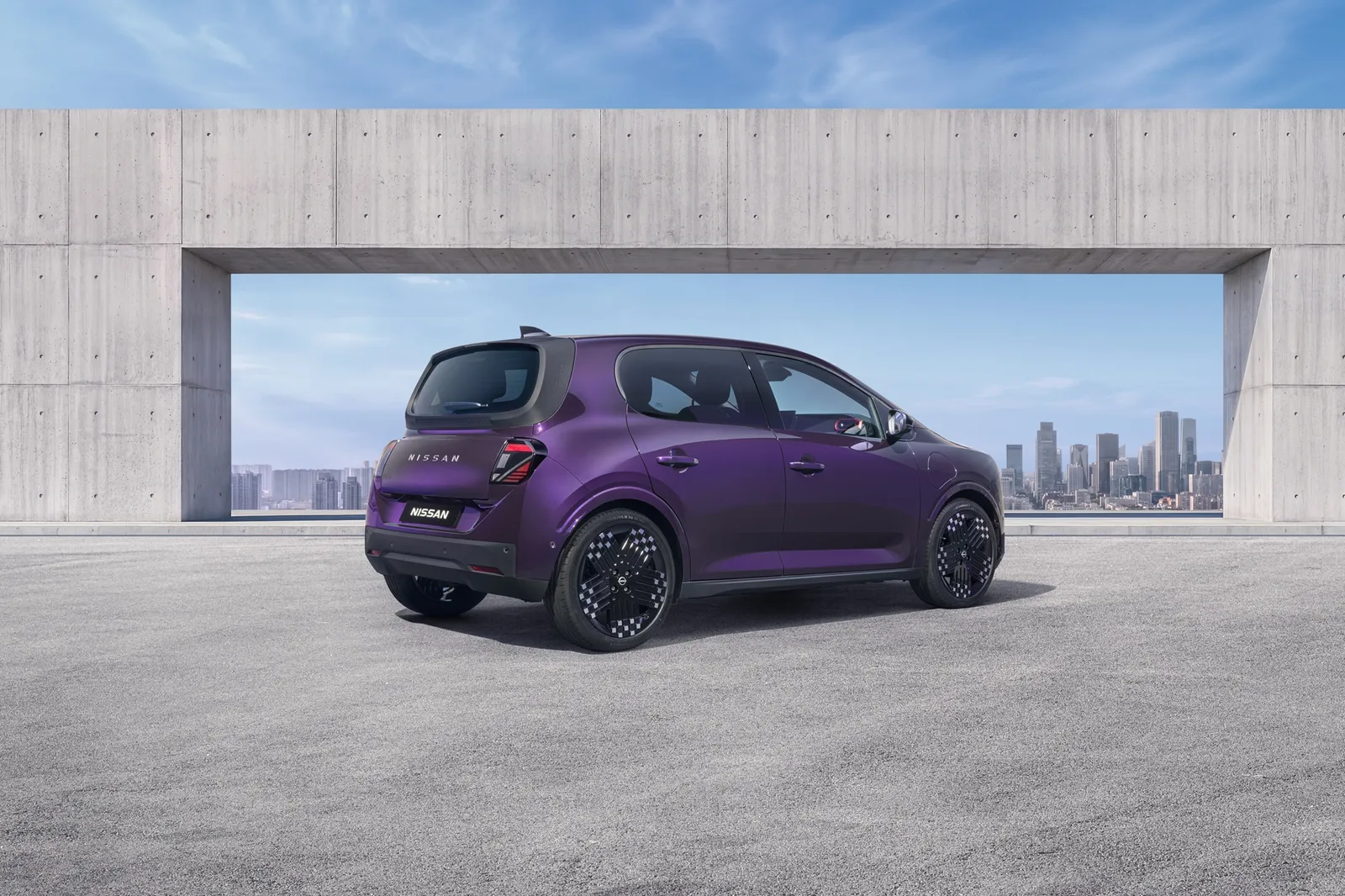
Colour choices will include Wonder Purple and Gear Blue. Nissan has also incorporated hidden “23” details, a reference to the Japanese pronunciation of two and three as “ni-san”. These touches form part of an effort to give the small EV a recognisable character.
Masato Koyama, lead exterior designer at Nissan Global Design, said: “Its compact dimensions make it a natural fit for Europe’s cities, but we’ve worked hard to maximise the space within them, creating a cabin that feels open, practical and surprisingly roomy.”
The manufacturing arrangement continues Nissan’s collaboration with Renault. Nissan says working with partners helps it bring new electric vehicles to market more efficiently, with the Slovenian production site supplying a model engineered specifically for European customers.
For now, the PIXO’s appeal rests on a combination of compact size, flexible seating and equipment that includes rapid charging from the entry point of the range. Its price will determine how convincingly Nissan can deliver on the promise of a more accessible electric car. Buyers should get a clearer picture from December, ahead of the first deliveries in early 2027.