
Nissan UK launches research project on autonomous driving
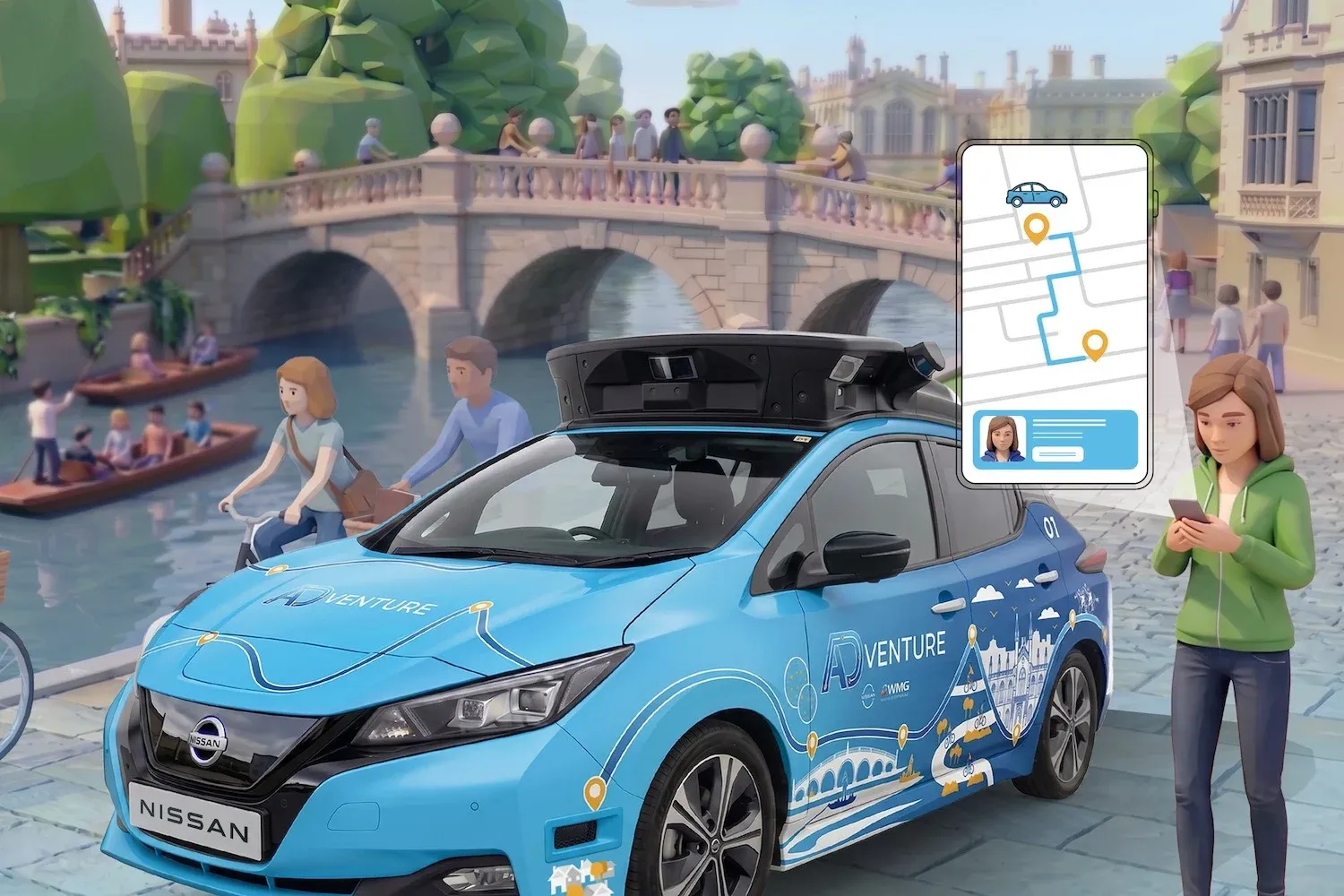
Nissan has launched the “ADventure” research project in Cambridge, UK. With support from the British government, the company aims to explore how autonomous passenger transport services can be safely introduced into real communities.
Graphic: Nissan
The Nissan Technical Centre Europe (NTCE) in Cranfield, together with the Warwick Manufacturing Group (WMG) at the University of Warwick, is leading a research project named “ADventure” funded by the British government with three million pounds. The goal is to introduce a mobility service in communities across the UK that utilizes autonomous driving technologies (AD).
This focuses not only on vehicle technology itself but also examines how an autonomous mobility service can function under real-world conditions. Working together with local authorities, commuters, and residents, the project aims to explore how future autonomous driving technologies can create societal value, improve mobility and accessibility, and help solve local traffic problems. According to Nissan, one possible use case is transporting a person who cannot drive themselves to a medical appointment autonomously.
"This project is an important step forward for autonomous mobility in the UK," says Nissan executive David Moss. "With support from the British government, we are expanding research on autonomous vehicles beyond central London to another city. This allows us to gain insights into how these services can function for different population groups and in real-world settings."
Nissan uses Cambridge as a testing ground
The famous university town of Cambridge, located north of London, was chosen as the real-world test site for implementing a mobility service that is intended to be scaled across the entire United Kingdom in the future. Cambridge was selected after a rigorous selection process due to its reputation and expertise as one of Britain’s leading centers for transportation innovation and research in autonomous mobility. According to Nissan, several pioneering initiatives in autonomous driving have already been launched there, making the city an ideal environment to explore how autonomous services can complement local transportation networks and meet the needs of the population in the future.
In collaboration with WMG and PAVE UK (Partners for Automated Vehicle Education UK), the project focuses on three key areas:
- Developing mobility services for cities and communities – how autonomous mobility can complement existing transportation networks and address local needs.
- Building trust among passengers – what people need to feel well-informed, safe, and integrated when using future autonomous mobility services.
- Testing the technology under real conditions – how autonomous driving systems could function safely and effectively in public road traffic.
"The UK is a leader in the field of autonomous driving," says Blair McDougall, Minister for Reindustrialization at the UK’s Department for Business, Energy & Industrial Strategy. "Our 'Modern Industrial Strategy' brings together industry and academia to support innovators shaping the future of transportation. By promoting cutting-edge technologies along with the necessary investments to scale up key projects, we help companies like Nissan drive growth and create jobs across the UK — thereby strengthening the UK’s leadership role in this rapidly growing sector."
ADventure will use an existing test vehicle based on the 2022 Nissan Leaf, which has already been utilized in previous research projects in the UK. Nissan leverages its expertise in autonomous driving from earlier initiatives such as HumanDrive, ServCity, and evolvAD. These projects have helped gather more knowledge about how autonomous driving technology functions in various driving conditions, according to the company.
As part of concluding “ADventure,” a demonstration drive on public roads in Cambridge is planned to show how autonomous mobility services can one day contribute to a more connected and barrier-free transportation system for communities across the country.