
Nissan Pixo: Electric city car with LFP battery and 259 km range
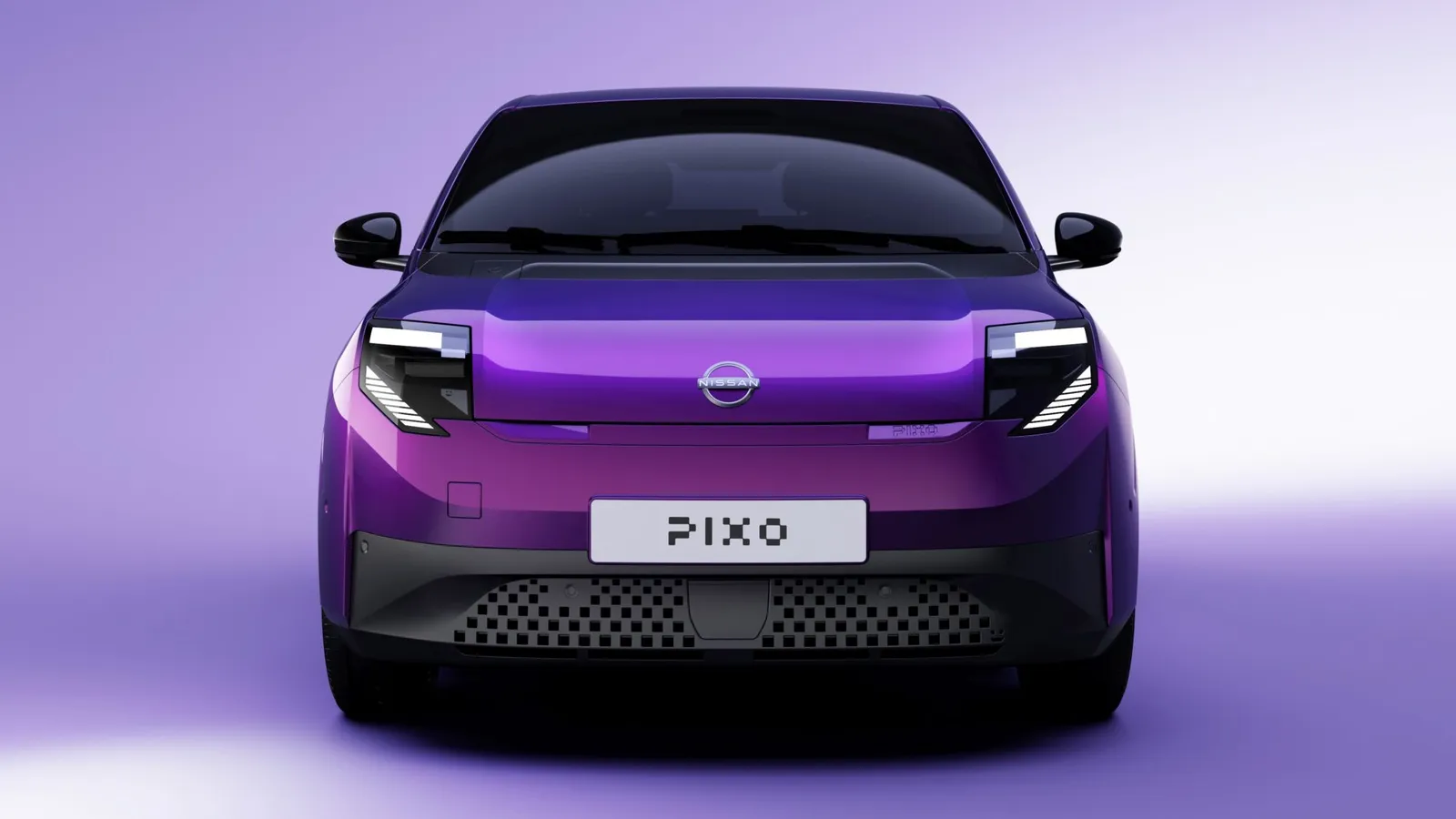
Nissan has introduced the Pixo, an electric city car built by Renault in Slovenia. It features a 27.5-kWh LFP battery, a WLTP range of up to 259 km, and supports fast charging at 50 kW DC as well as bidirectional charging at 11 kW AC.
Advertisement
Nissan has unveiled the Pixo, a new all-electric city car. Positioned in the A-segment, it was developed specifically for use in European cities according to the manufacturer. Nissan designed the vehicle itself, while it is produced by Renault’s partner at its Novo Mesto plant in Slovenia. The Pixo expands Nissan’s electric lineup in Europe at the lower end of the market. First deliveries are scheduled for early 2027.
Powertrain, Battery, and Range
The Pixo is powered by an electric motor with a capacity of 60 kW (82 HP). Nissan has not yet provided details on torque, acceleration, or top speed.
The energy is supplied by a lithium-iron-phosphate (LFP) battery with a capacity of 27.5 kWh. According to Nissan, this is the first model in the brand’s lineup in Europe to use this battery chemistry. The manufacturer claims a range of up to 259 kilometers under WLTP standards, though this is still subject to approval. As such, the Pixo is clearly aimed at users who primarily travel in urban areas and surrounding regions.
A one-pedal driving mode is standard, allowing the vehicle to accelerate, decelerate, and come to a stop on its own using only the accelerator pedal in stop-and-go traffic.
Charging Capacity and Times
At DC fast charging stations, the Pixo can charge at up to 50 kW. A charge from 15% to 80% is said to take around 28 minutes. The DC port is standard across all trim levels.
AC charging offers up to 11 kW. According to technical specifications, AC charging is bidirectional, meaning the vehicle can also supply power. The specific applications Nissan has in mind for this feature are not clear from the available information. Charging processes and vehicle functions can be controlled via the MyNissan app.
Display
Dimensions, Interior, and Design
The Pixo is 3,796 millimeters long, 1,790 millimeters wide (without mirrors) and 1,512 millimeters high. The wheelbase is 2,492 millimeters, and the ground clearance is 140 millimeters. Its turning circle is 9.9 meters.
Nissan states that up to four adults can fit in the interior. The rear seats can be moved individually in the longitudinal direction to provide more legroom or storage space as needed. The trunk volume is 356 liters according to VDA standards, including a compartment of 50 liters for charging cables. With the rear seats folded down, the volume increases to 1,221 liters. Additionally, there is 18 liters of storage space in the interior.
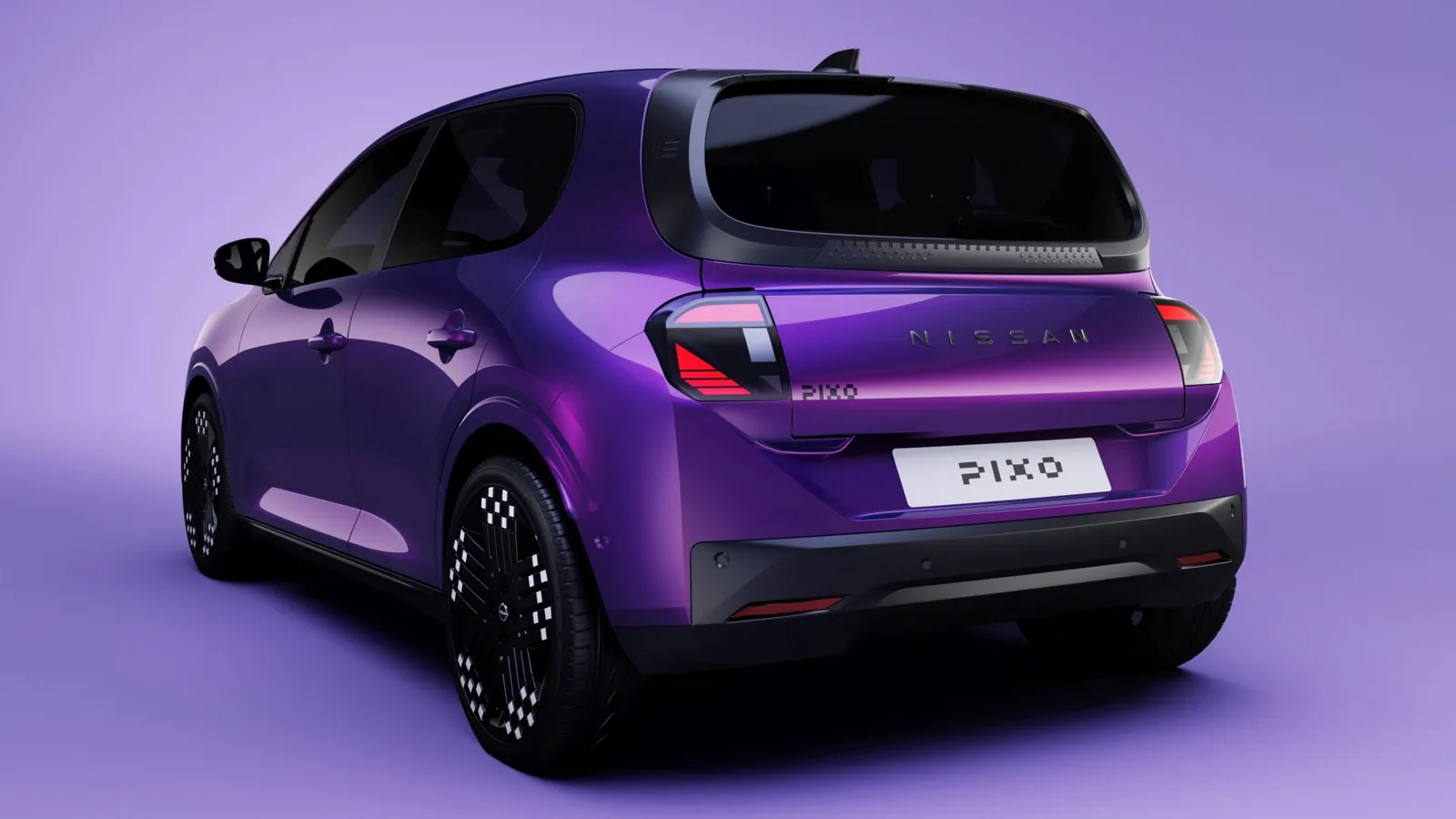
Nissan opts for a boxy design with smooth surfaces. The front and rear lights feature a pixel-inspired style, while the front bumper is designed to resemble a robot’s face. Additionally, Nissan has incorporated several hidden “23” motifs throughout the vehicle, a reference to the brand name, as “Ni” and “San” mean two and three in Japanese. Among the available colors are Midnight Purple and Authentic Blue.
Infotainment and Assist Systems
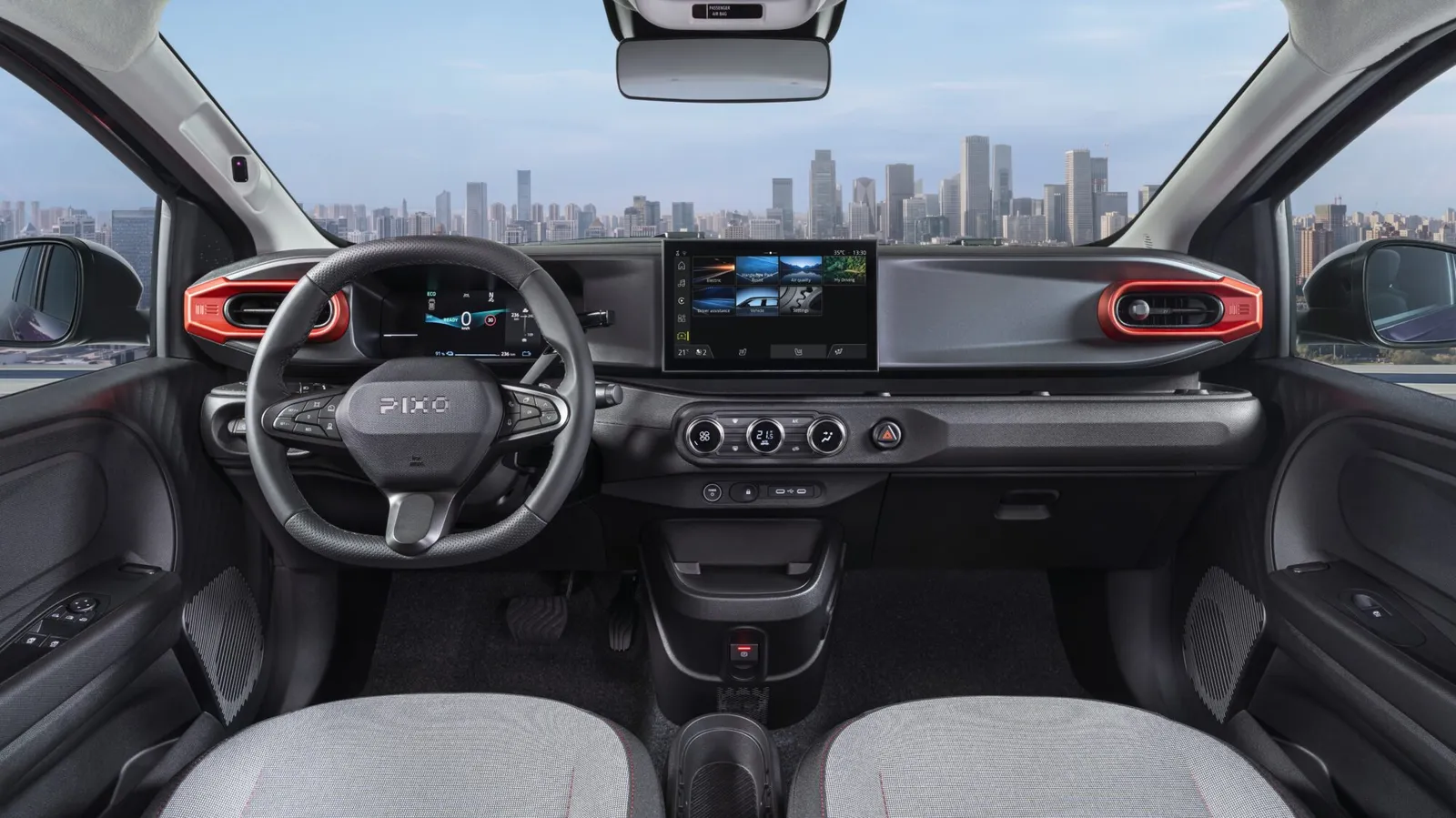
In the cockpit, Nissan combines a 7-inch driver display with a 10-inch touchscreen for infotainment. The system is based on Google’s built-in technology and includes the Gemini voice assistant, which will be available in 16 languages at launch. It supports navigation, media, and communication via voice input and is designed to learn the driver’s preferences over time. Facial recognition is used to identify drivers and load their personalized settings.
Standard features among the assistive systems include an adaptive cruise control with stop-and-go functionality, an emergency braking assistant, a lane-keeping assist, and a hands-free parking function.
Production and Availability
The Pixo is the result of a collaboration between Nissan and Renault. Nissan notes that sharing expertise shortened the development time. The model is manufactured at Renault’s plant in Novo Mesto, Slovenia. Nissan cites rising fuel costs as one reason for making the switch, as they make electric vehicles more attractive to many customers.
Nissan plans to announce prices, country-specific trim options, and details on pre-orders in December 2026. The first vehicles are expected to be delivered to customers in early 2027.
Advertisement