
Nissan Pixo: an electric return to the A-segment
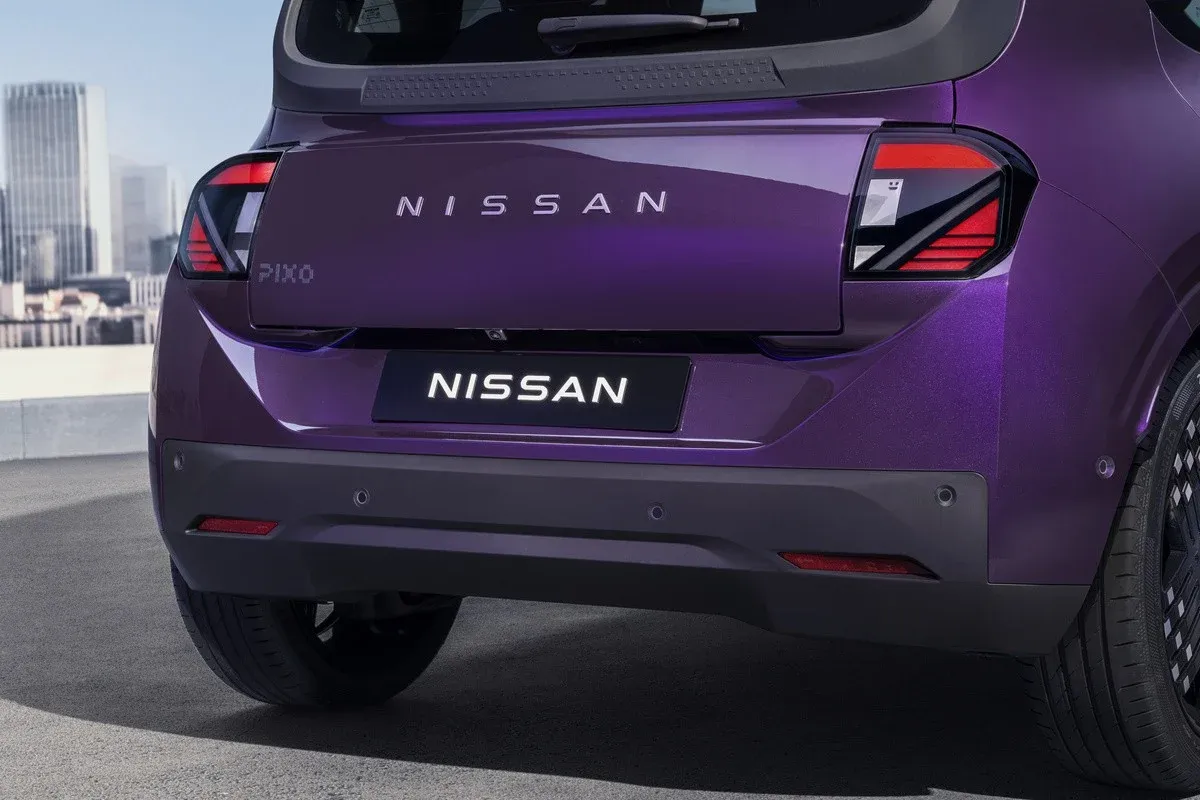
Nissan has unveiled its electric city car, the Pixo. The model marks the brand’s return to the European A-segment and shares its technical underpinnings with other electric vehicles based on Renault’s RG-EV platform. As such, the performance specifications come as no surprise: Nissan’s partner Renault has equipped the Pixo with its well-documented electric small-car powertrain, already introduced earlier this year. What is notable, however, is that the Nissan derivative matches the equipment level of the Renault E-Twingo entirely, while the new Dacia Spring, with its optionally available DC charging capability, is clearly positioned below its two sister models.
The group’s strategy is clear: Dacia targets price-sensitive customers with its stripped-down equipment, Renault capitalises on nostalgia with the Twingo E-Tech Electric, and Nissan brings an entry-level electric car to market without the dull budget-model attitude. The Japanese manufacturer has been responsible solely for the design of the Nissan Pixo. However, even this – with its flat, rising windscreen – is reminiscent of the E-Twingo once you know of their kinship. That said, Nissan has at least attempted to differentiate the two with features such as pixel-inspired lighting. More on that shortly.
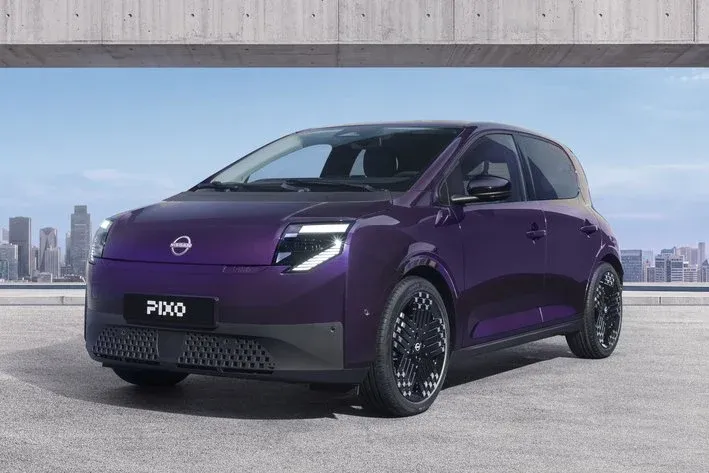
Image: Nissan
- 1/6
- 2/6
- 3/6
- 4/6
- 5/6
- 6/6
It’s been known since last year that Nissan was planning to introduce a new electric city car for the European market, positioned below the Nissan Micra, which is related to the Renault 5. Initially, the name Wave was circulating, but Nissan ultimately opted for Pixo. This name was previously used between 2009 and 2013 for a combustion-powered microcar based on the Suzuki Alto, which was built in India. Notably, the Pixo stands out within Nissan’s lineup as the first electric vehicle to feature an LFP battery.
Nissan Pixo offers range of up to 259 km
This brings us to the key specs of the electric microcar: the Pixo is a front-wheel-drive vehicle and houses the familiar combination of a 60 kW electric motor and a 27.5 kWh LFP battery. Nissan states a range of up to 259 km – placing it between the Dacia Spring (up to 250 km) and the E-Twingo (up to 263 km). The Pixo comes with standard DC fast charging at 50 kW and an 11 kW AC onboard charger that also supports bidirectional charging. Nissan specifies a DC charging time of 28 minutes from 15 to 80 per cent SoC. However, the more common charging range from 10 to 80 per cent is likely to take 30 minutes for the Pixo, in line with its sister models. The following table shows the largely identical performance data for the Pixo and E-Twingo:
| | Nissan Pixo | Twingo E-Tech Electric |
| --- | --- | --- |
| Drive | FWD | FWD |
| Power | 60 kW | 60 kW |
| Torque | 175 Nm | 175 Nm |
| Acceleration | n/a | 12.1 s |
| Top speed | n/a | 130 km/h |
| WLTP range | 259 km | 263 km |
| Battery capacity | 27.5 kWh | 27.5 kWh |
| DC charging power | 50 kW | 50 kW |
| DC charging time 10-80% | 30 min | 30 min |
| Price | n/a | <€20,000 |
In terms of dimensions, the A-segment electric car measures 3,796 x 1,790 x 1,512 mm with a wheelbase of 2,492 mm. The only noticeable difference from the E-Twingo is in width: the Nissan derivative is seven centimetres wider than its French counterpart. Nissan itself emphasises that “clever packaging maximises interior space, comfortably accommodating up to four adults.” As with the E-Twingo, individually adjustable rear seats are said to increase flexibility and, when needed, provide additional storage space for larger items (a feature not available in the Dacia Spring). Incidentally, the Pixo offers a boot capacity of up to 356 litres – including a 50-litre compartment for charging cables.
Youthful colours, but not as bold as Renault’s
Nissan’s own claim is to offer “a small all-electric city car… that combines practical yet distinctive design with intuitive cutting-edge technology.” The Pixo is said to embody “a fresh, distinctive character ato Nissan’s growing electric vehicle range.” Visually, the Japanese manufacturer achieves this with a new design language that differs significantly from the slightly larger Micra, unveiled in 2025 (which is also built by Renault and shares its technology with the Renault 5). Highlights of the Pixo include pixel-inspired lighting, a uniquely shaped front end with a voluminous grille, and the Twingo-typical flat, rising windscreen, as well as a steeply sloping rear. The colour palette, with options such as Midnight Purple and Authentic Blue, is intended to appeal to a younger audience but is not as bold as Renault’s.
In terms of connected technology, Nissan relies on a Google ecosystem. The Pixo comes with Gemini, an AI assistant – a first for Nissan in the A-segment. At launch, Gemini will be available in 16 languages and support navigation, entertainment, and communication via natural voice interaction. Google services for navigation, real-time route planning, and seamless connectivity are also on board. All services are controlled across all trim levels via a 7-inch driver display and a 10-inch infotainment touchscreen (the latter is not part of the base equipment in the Dacia Spring). In terms of driver assistance systems, features such as adaptive cruise control, lane-keeping assist, and hands-free parking are included as standard. One-pedal technology is also available.
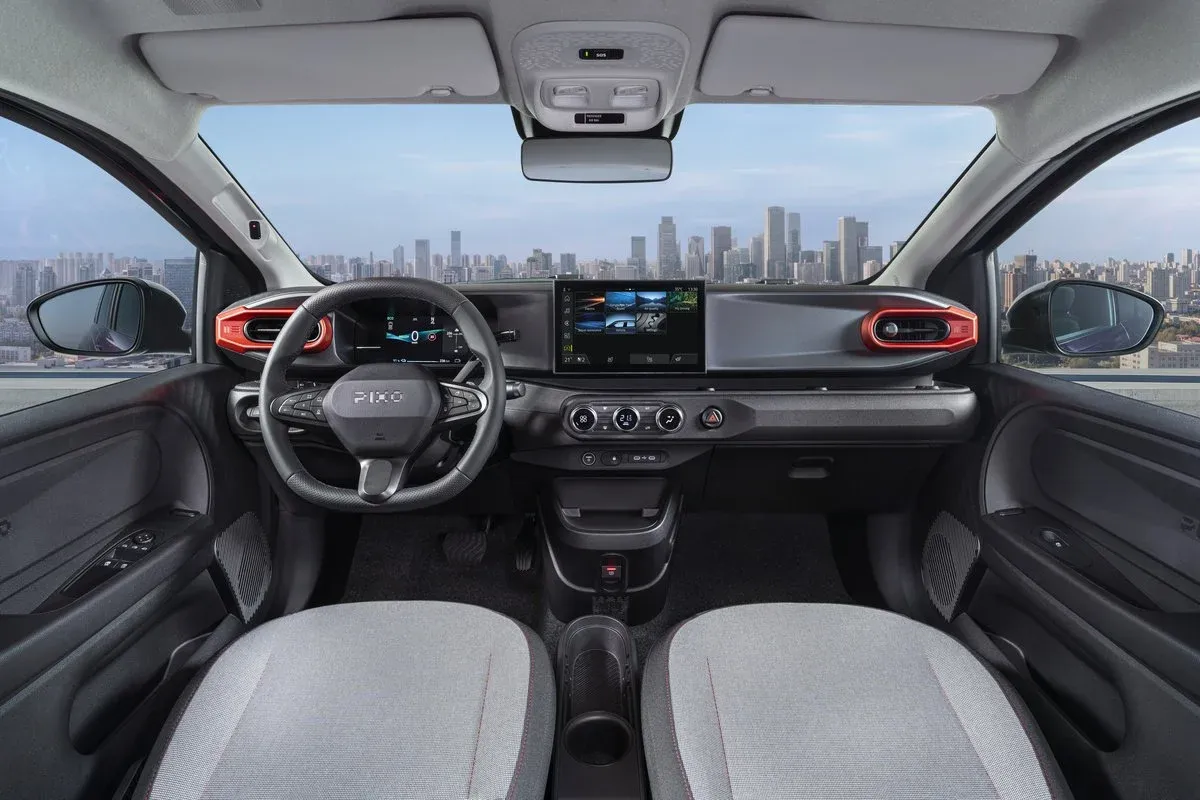
Image: Nissan
- 1/4
- 2/4
- 3/4
- 4/4
According to the Japanese brand, the development of the new Pixo demonstrates “Nissan’s Vision in action – combining customer-focused innovation with partners to bring new electric vehicles to market more efficiently.” This is partly thanks to strong support from China: the Renault Group’s dedicated ‘ACDC’ electric vehicle research and development centre in Shanghai contributed the entire engineering for the crucial powertrain, a.k.a. “China Speed.” Renault recently emphasised that its Chinese facility has advanced the projects by working closely with local partners and new industrial companies – specifically CATL for battery design and Shanghai e-drive for the powertrain.
Nissan Pixo deliveries to begin in early 2027
Nissan emphasises that the Pixo, despite its partial Chinese DNA, was “developed specifically for European customers” and will be produced at Renault’s Novo Mesto plant in Slovenia – just like the E-Twingo and Dacia Spring. The first deliveries are scheduled for early 2027. Prices, market-specific equipment, and pre-order information will be announced “from December onwards”. However, the price is unlikely to be far from that of its French sister model – which, as is well known, starts at €19,990 Euro.
“We believe the future of electric mobility isn’t about building bigger vehicles with more technology, it’s about building smarter vehicles that fit naturally into people’s lives.” commented Clíodhna Lyons, Vice President Product, responsible for brand and marketing strategy at Nissan AMIEO. “PIXO has been designed specifically for Europe and specifically for our cities, delivering everything customers need from an EV, without unnecessary complexity,” said Lyons, who also highlighted Nissan’s broad electrification approach: “As fuel costs continue to rise, our focus remains simple: giving customers practical alternatives that help reduce the cost of every journey. Whether through our rapidly expanding EV line-up or our highly efficient e‑POWER Hybrid technology, Nissan is delivering electrified solutions that lower running costs without compromising convenience”
What is clear is that Nissan’s current and future product portfolio is tied to Renault – and vice versa. The two companies have long been partners. Renault temporarily held 43.4 per cent of Nissan, while Nissan owned 15 per cent of Renault. This asymmetric relationship was restructured in 2024. Since then, both automakers have held 15 per cent in each other’s companies. In March 2025, Renault and Nissan made a further adjustment to their partnership and explicitly announced at the time that Renault would develop and produce a derivative of the new electric Twingo for Nissan starting in 2026. Voilà: the now-unveiled Nissan Pixo.