
Nissan Leaf (2026), first impressions. Everything is better, a solid car. But the market is highly matured
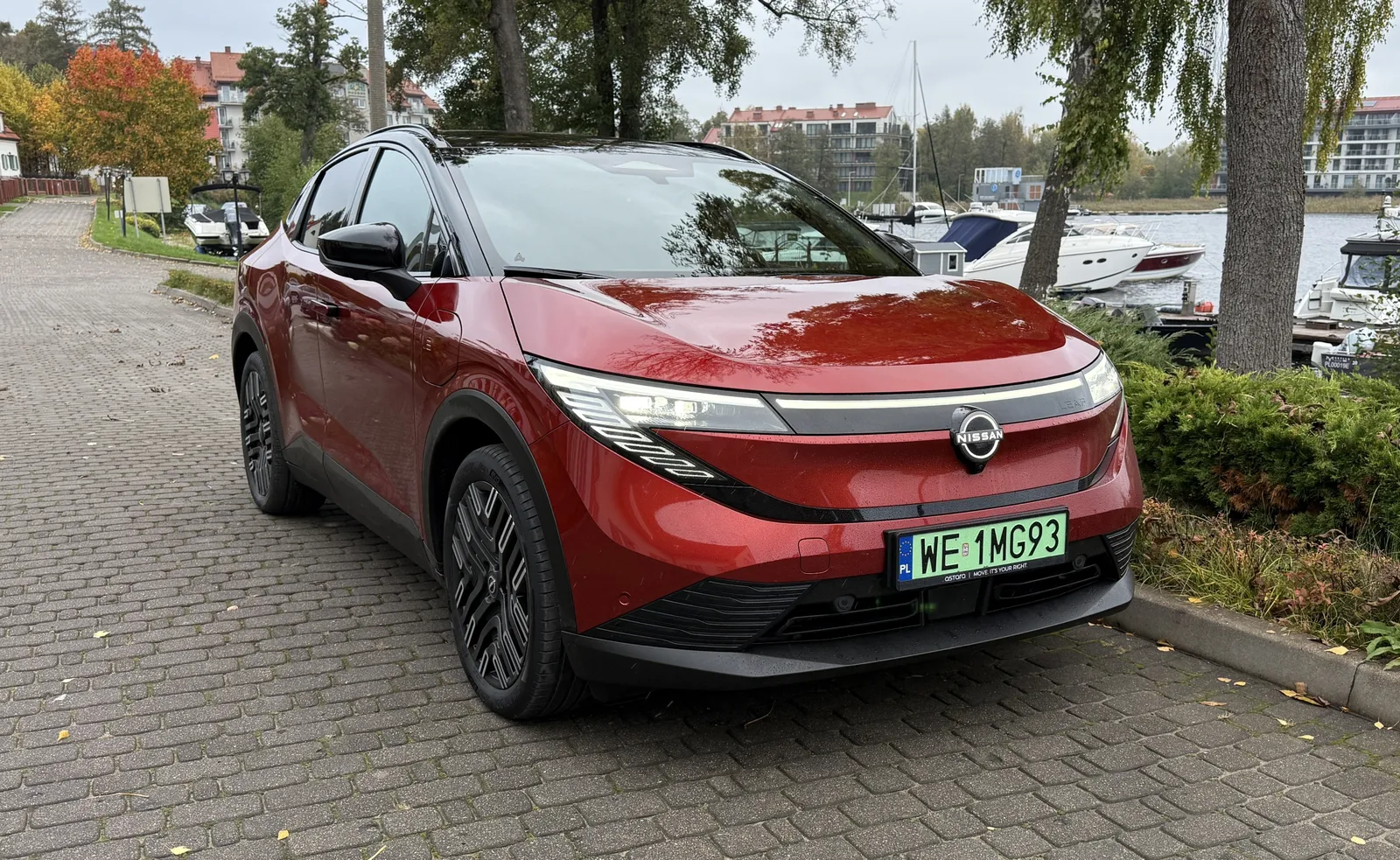
Thanks to Astar Poland, we had the opportunity to test the 2026 Nissan Leaf briefly on the roads of Mazury. Aside from a few minor nuances, the car made a good first impression on us. In many ways, it is better than the Ariya, far superior to the Nissan Leaf ZE1, and if it were priced the same as the Volkswagen ID.3 Neo, we would seriously consider which one to choose. Because the Nissan Leaf ZE2 has been thoroughly thought through and refined. Hopefully, that’s enough.
Nissan Leaf ZE2, specifications
Table of contents
Nissan Leaf ZE2, specifications
Nissan Leaf ZE2, review
Disadvantages
General impressions
Driving experience
Software, uff!
Range and charging
Summary
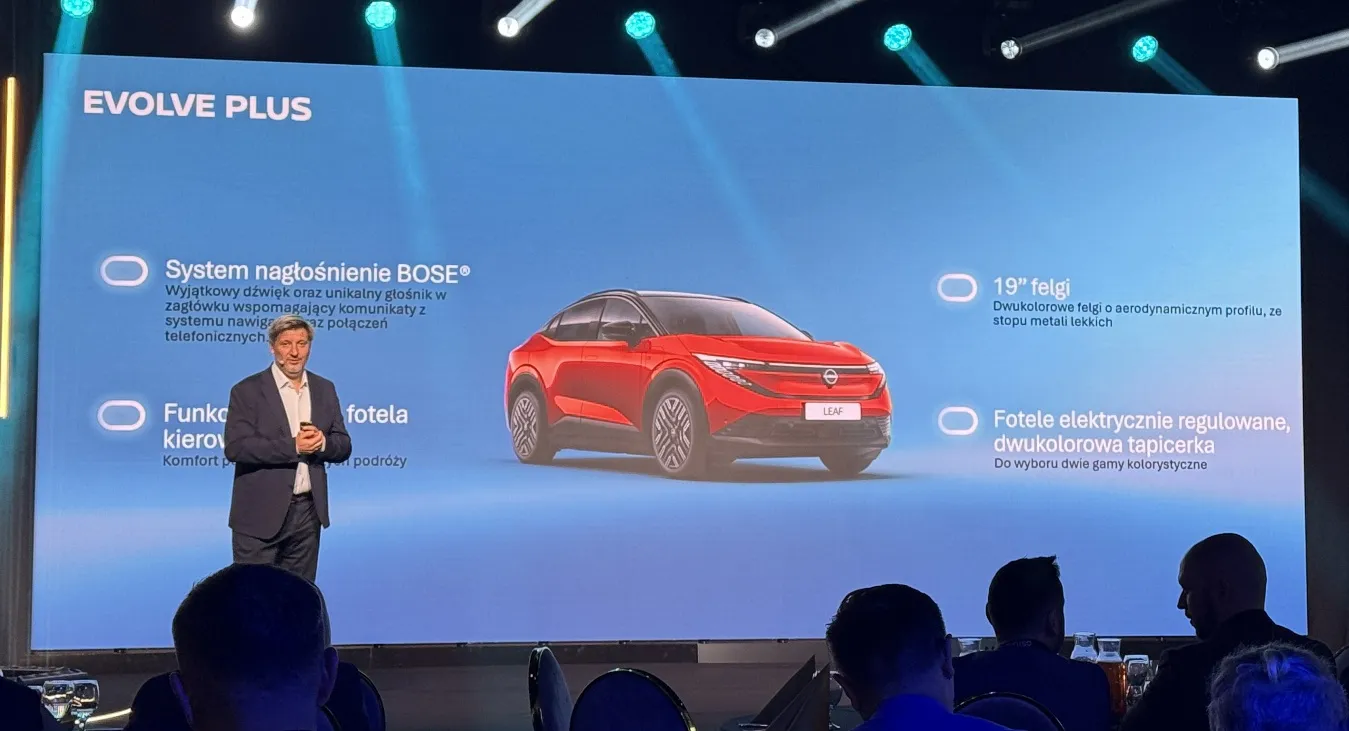
The car we drove was in the top Evolve Plus trim level and had the following technical specifications:
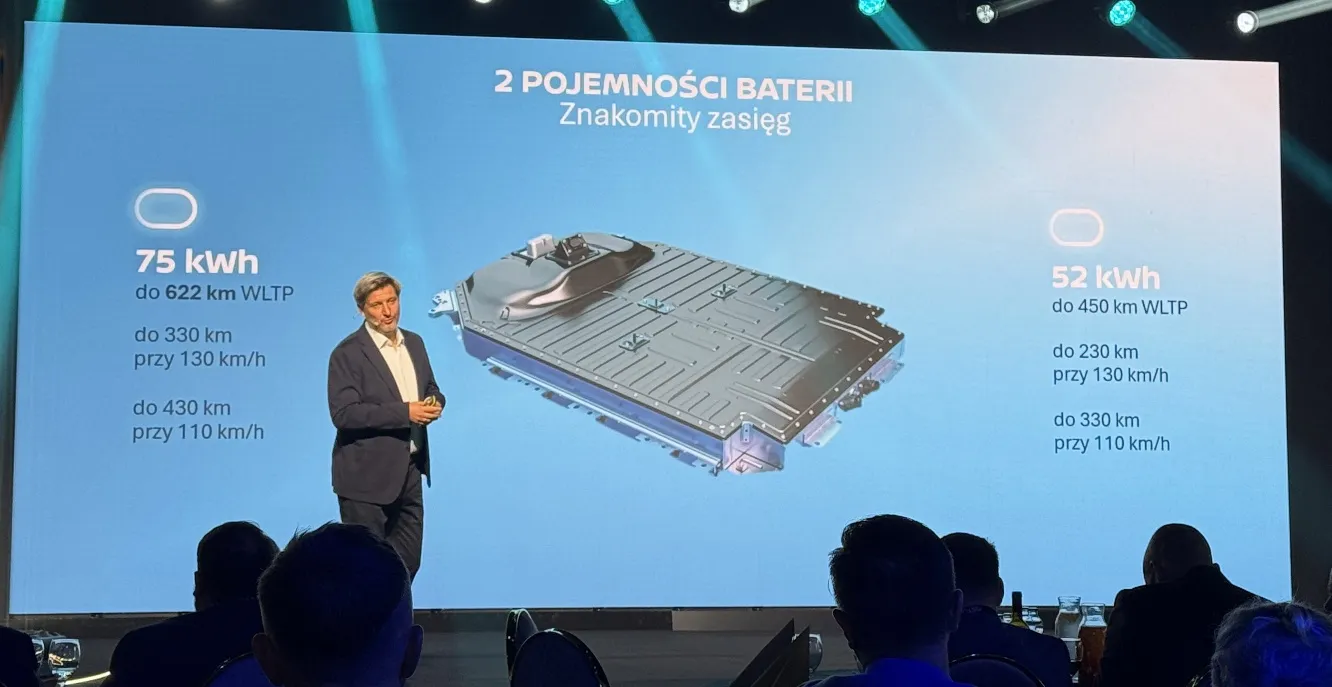
battery capacity: 78 (75) kWh,
Range: 598 WLTP units (19-inch wheels),
Charging 10-80 percent: 35 minutes,
Power: 160 kW/217 HP, 355 Nm, front-wheel drive,
Infotainment: Android Automotive, including navigation with charging stops based on Google Maps,
Length: 4.35 meters (C/C-SUV),
Wheelbase: 2.69 meters,
Some notable features: Bose audio system with 9 speakers, adaptive headlights, electrically tintable glass roof, headrest speaker for calls, driver seat massage function,
Price: 199,900 Polish zlotys.
Nissan Leaf ZE2, review
Disadvantages
Since we live in Poland, we need to start with complaints, that is, the disadvantages. Here are those we noticed or identified on our own: we didn’t test charging, which was the Achilles’ heel of both the Leaf ZE1 (battery overheating) and the Ariya (low maximum power output, a mediocre performance curve). We also didn’t test energy consumption at different speeds (although we have some observations). We didn’t test the autopilot either, as it wouldn’t activate on any of the local roads.
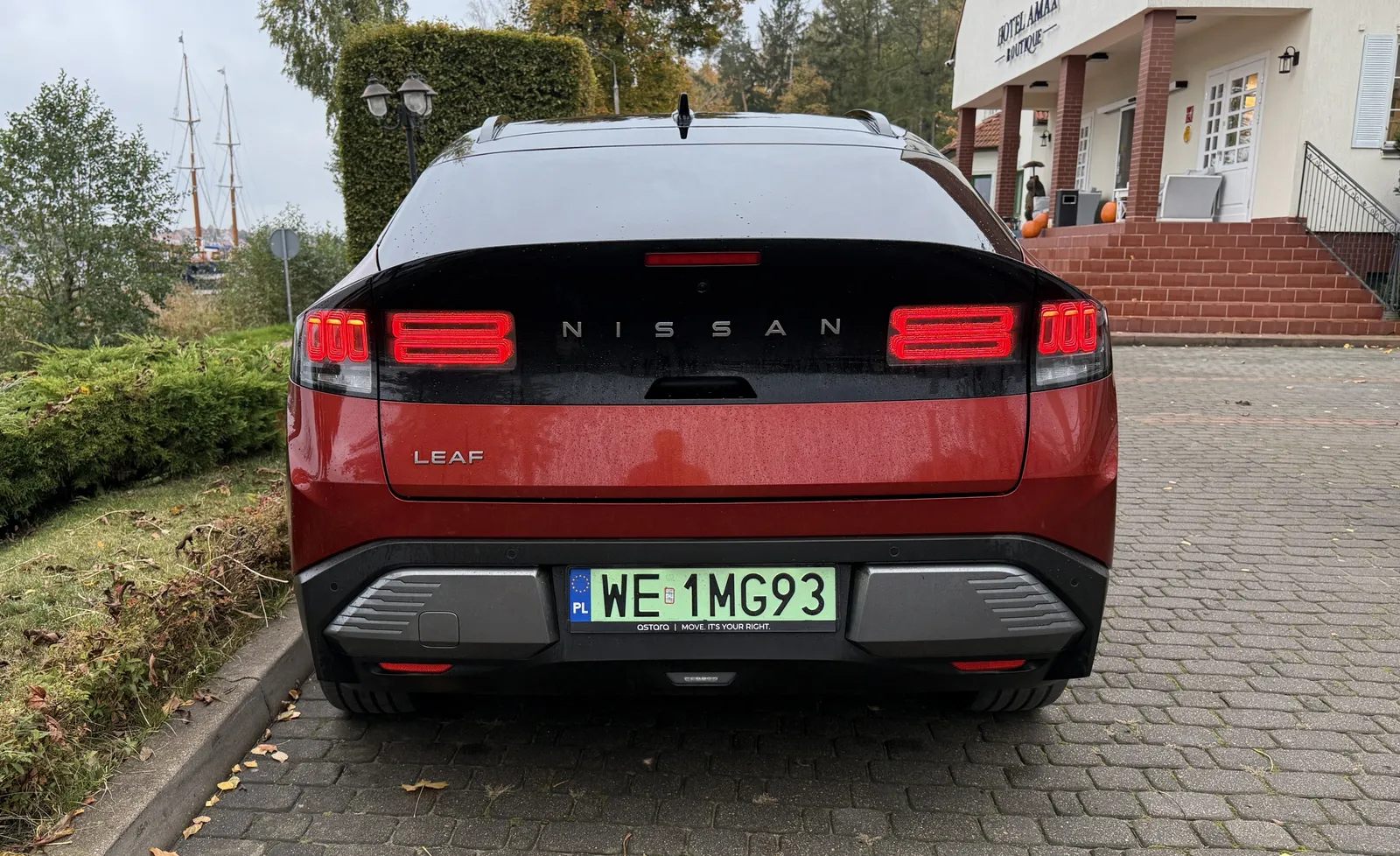
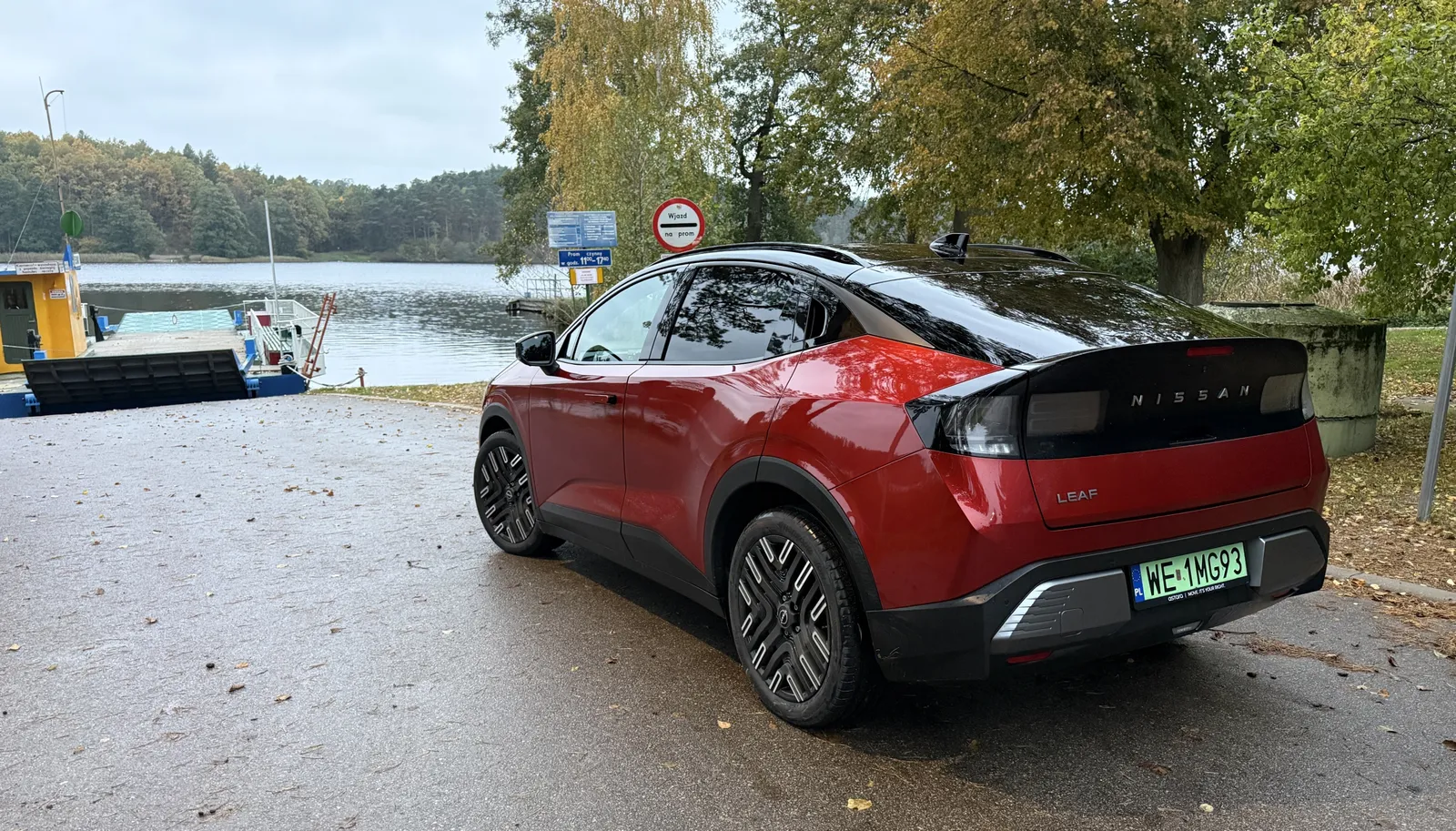
Reading from the left side, the rear lights form 3-2 2-3, san-ni ni-san. Those who have practiced judo or karate know that ets-ni-san-szi-go is just the beginning of the pumping motion, with some hope for a break appearing at džu-san... The 2-3 pattern (which is “ni-san”) appears in various places on the new Nissan Leaf.
It also lacks one-pedal driving, though there is control over regen level via levers and the ability to stop when the vehicle ahead does (regen plus radar-controlled brakes). The car can still lose traction on wet surfaces. The front mirror blocks signs on curved roads. Rear visibility is poor. Charging time is worse than competitors’ (but the Japanese claim it’s acceptable based on their research). The noise level isn’t as good as that of the Ariya. The software still needs refinement. This car should have been released at least three years ago, ideally from the previous generation.
Dariusz Hałas from iMagazine.pl also noted that Google’s voice assistant isn’t fully aware it’s driving a car, since “Mercedes understands the command ‘I’m cold,’ but the Leaf doesn’t.”
Overall Impression
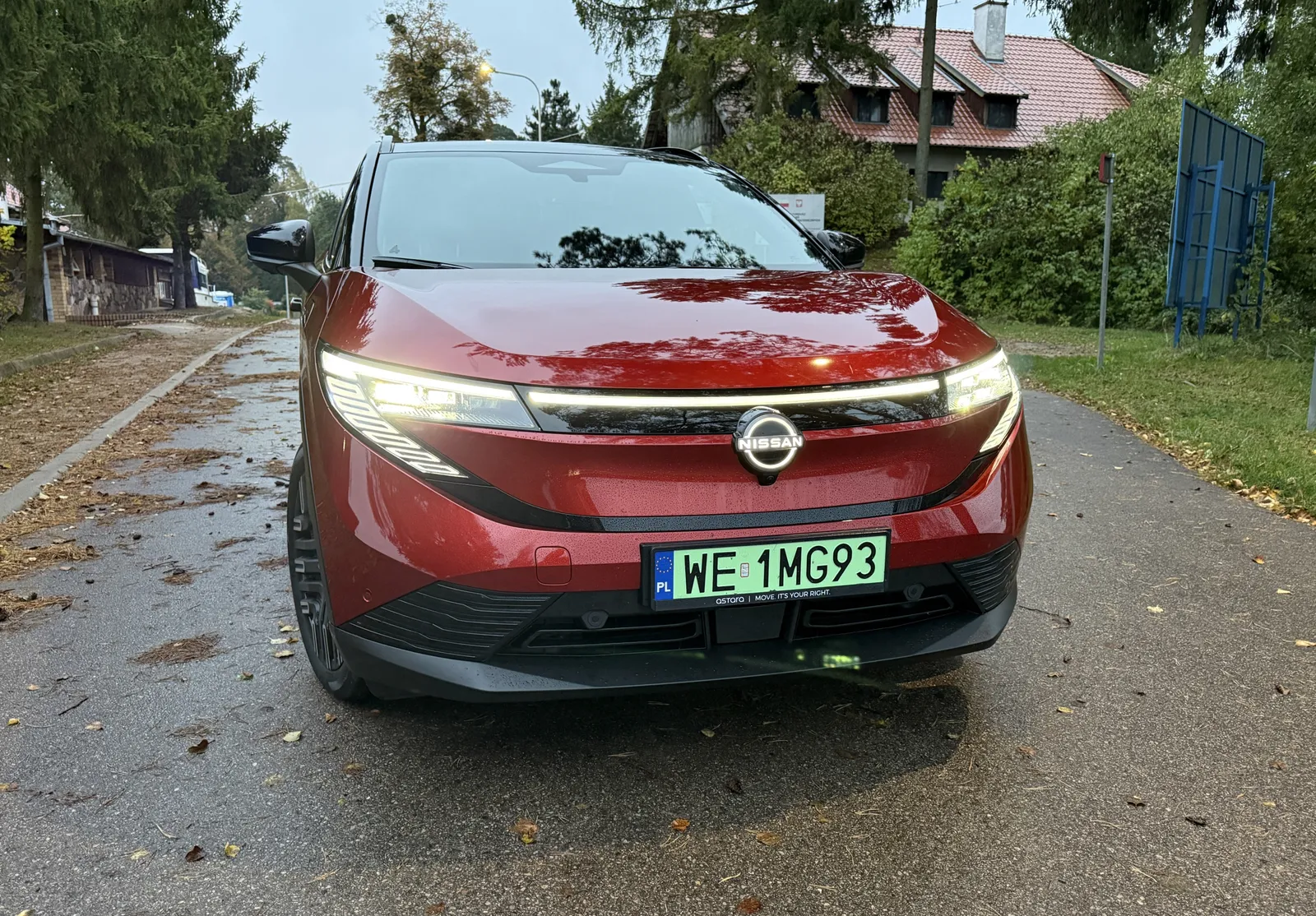
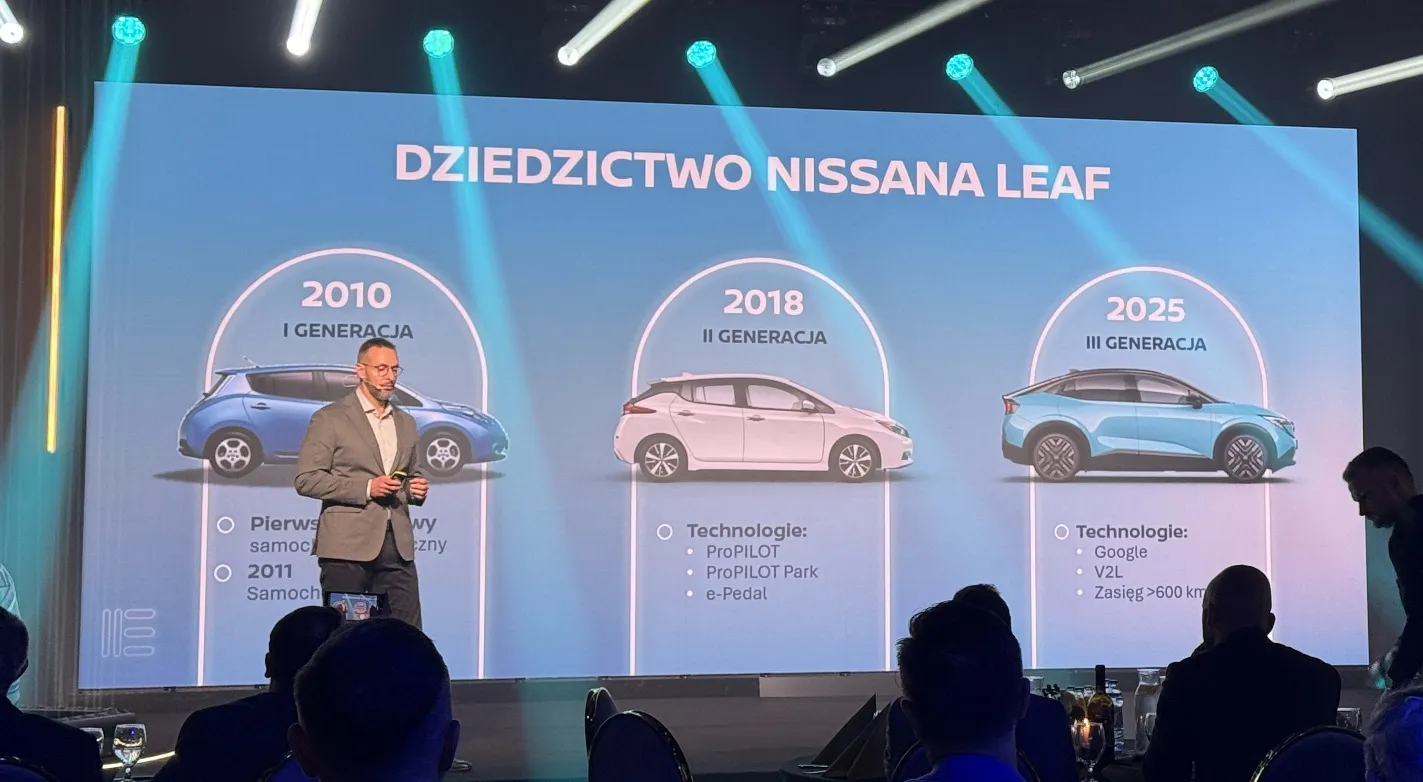
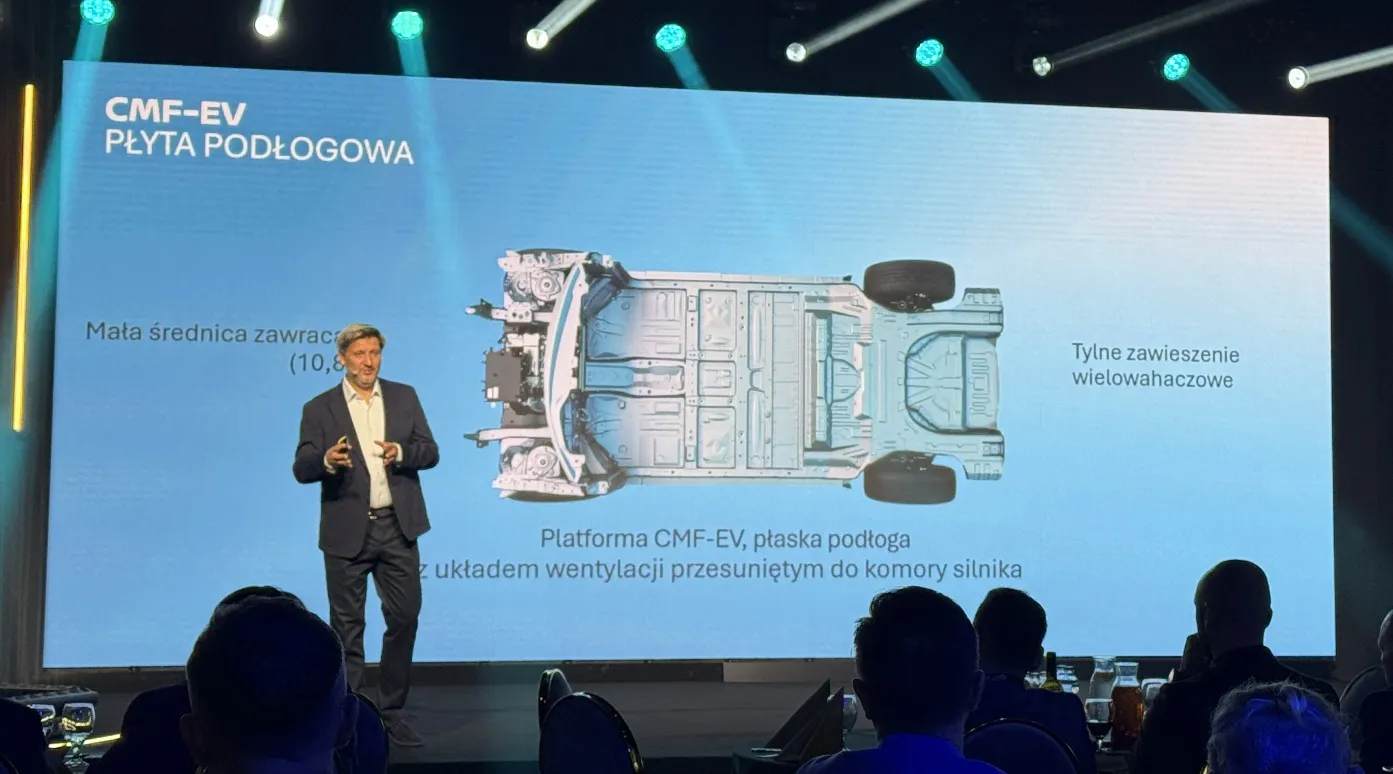
Visually, the new Nissan Leaf bears no resemblance to previous generations of the Nissan Leaf at all; it is much more similar to the Nissan Ariya — and that’s good. Technologically, it’s similar as well, having been built on the CMF-EV platform from the Renault-Nissan-Mitsubishi alliance, which is now called AmpR Medium at Renault. An interesting detail is the lithium-ion cells: they have been produced since December 2025 at a facility in the United Kingdom, right next to the car factory. So they’re from Europe — if local patriotism played a big role for someone.
In terms of length and dimensions, the new Leaf appears large, yet it is actually 14 centimeters shorter than the Leaf ZE1, with a wheelbase that is only 1 centimeter smaller. Visually, its substantial and imposing shape reveals its true size inside: the Elektrowoz editor (1.9 meters tall) either sat a bit too high, with the mirror blocking a significant portion of the side view (see photos below), or sat low to get the best view — in that case, the passenger’s feet barely fit under the seat while the editor had the seat back right against his knees.
The photo is taken from a straight-driving driver’s perspective, with the lens at eye level. On the winding roads in Masuria, the mirror mount and the mirror itself cover a large portion of the road, requiring the driver to lean over to see what’s coming or what sign is by the road. In this photo, the mirror blocks out the most important element of the scene, which is...
..the cat on the fence. Which could just as easily be a traffic light. Here, my head (and the phone lens) is tilted 10-15 centimeters toward the windshield.
When a tall driver has a tall passenger behind them, they should consider how to adjust the seat. We recommend the middle position as a compromise between the driver’s and passenger’s ergonomics. With children, there’s no problem at the back.
It should be added that the rearview mirror on the windshield side was oddly bare, as if it lacked a casing. Strangely enough, it remained slightly dimmed the whole time (photo number 1 above). In foggy and rainy weather in the forest, this wasn’t helpful. Overall, however, the interior ergonomics are well thought out. We couldn’t adjust to some cars at all (Leapmotor B05), others required getting used to (Renault Scenic E-Tech), some were uncomfortable (Peugeot E-5008), while in the Leaf we quickly found a position that worked for us, so with hands at 2:45 o’clock, both elbows had support. Soft support, too! After two hours of driving, we didn’t feel any discomfort in any part of our body.
Driving
Compared to Chinese electric cars, which are usually tuned more softly, the Leaf shows that Nissan has been selling vehicles in Europe for years. It’s firm enough to ensure stable handling (aided by the steering resistance), but soft enough not to compromise comfort. The noise insulation is weaker than that of the Ariya (due to the lack of laminated front windows), but the difference isn’t significant, at least at speeds up to 100 km/h. As mentioned earlier, the car can lose traction even while driving on wet roads. Nissan could have electronically limited torque (compare to Kia), but that would make the car weaker in theory.
The software, uff!
The use of the Android Automotive system allows the car to communicate route information to us through an intuitive interface. It works like Google Maps on a phone, but it can also recommend appropriate charging stops. Our test routes were too short to verify this fully, but in Renault and Volvo models, the system provides excellent suggestions — we believe it will be similar here as well. What relieved us greatly is that there are no plans at the moment for charging stop navigation to be a paid feature. In vehicles based on the MEB+ platform, this function requires a subscription after a certain period, and other manufacturers are also gradually moving toward charging for key software features.
Here we see what might be Nissan Leaf’s biggest advantage over the ID.3 Neo.
A look inside the Nissan Leaf through the glass. There’s ambient lighting (does anyone really like that), updated dashboards with key information and a nice background, and navigation with the familiar Google Maps interface.
What about Google Assistant and deeper integration, as mentioned by our quoted source Dariusz Hałas? Let’s say we don’t see the average consumer being interested in that. I would recommend the Nissan Leaf more to my father (70+ years old), who would prefer a fairly traditional climate control system under the screen, navigation with an interface he’s familiar with, regular buttons on the steering wheel, along with a seat positioned higher for easier entry, and a range that allows him to reach his grandchildren with just one stop to charge—because that’s about the distance he drives to Warsaw. gadget enthusiasts might consider the new Leaf too conventional—a car they’d be more likely to find suitable in Teslas or Chinese brands.
And then there are those buttons in the cockpit for selecting the driving direction. Aesthetically? Mediocre, like something from another world, plus each one seems to come from a slightly different era. Functionally? Amazing: R is close because it requires attention during operation. D is far away because you just press it and drive. They don’t get confused with the wiper lever, they’re not distracting, and you forget about them after using them once. Just like in Teslas, where the direction is selected on a screen:
The safety systems beep normally, quite pleasantly. These sounds can be muted, though I actually liked them in the Nissan. They provide more information (see: German cars) rather than being distracting with a cacophony (see: Chinese cars, South Korean cars), meaning they help ensure compliance with regulations. That’s exactly what’s intended. The new Leaf surprised us only once: at one point it started screaming loudly that the driver had fallen asleep. Either something went wrong with it or it detected an approaching eclipse in our area...
Range and Charging
On our routes with many dynamic starts, accelerations, and decelerations, but exclusively on urban and suburban roads, the Nissan Leaf 78 (75) kWh averaged 19.2 kWh/100 km, resulting in a range of 390 kilometers on the battery at around 10 degrees Celsius. This is neither exceptionally good nor particularly bad considering the 19-inch wheels. During slow, steady driving (only at the very beginning), we saw around 15 kWh/100 km. This is exactly what we expect in the city under similar weather conditions.
It’s a bit unfortunate that the Evolve+ version forces the use of the largest 19-inch wheels…
As for charging: well. The manufacturer claims 27 minutes at a 20-80 percent range and 35 minutes when expanding the range to 10-80 percent. That’s quite a long time, slightly more than competitors in this segment (twenty-something to 31 minutes). However, the Japanese have a valid reason that makes sense: tests on actual electric vehicle drivers show they prefer to stop for either 15 minutes or longer stops of 30 minutes or more. That’s why the first part of the charging curve was optimized to pack as much energy as possible into the battery (almost flat), while the second part follows a more normal charging pattern. There’s logic behind this.
Summary
The new Nissan Leaf ZE2 is not going to have an easy time. It offers a spacious cabin within a compact design along with numerous software updates, but the appeal of its former name seems to have faded, and competition exists that can be better, larger, offering longer ranges or shorter charging times. That’s why we hope a strategy similar to the one used in the United States will be adopted in Europe. There, the car is offered at such a price and with such financing options that it has become practically the cheapest electric vehicle on the market.
Even the base Engage trim version of the Nissan Leaf comes standard with features such as autopilot, a heat pump (large battery), and 360-degree cameras. Google software (including navigation) is only available in the Advance version.
Those looking for a C-segment model, considering the VW ID.3 Neo or Kia EV3, should definitely take a look at the Leaf as well. It’s best to get the higher trim level with a larger battery.
Editor’s note from Elektrowozu: Astara Poland did well by inviting internet creators alongside journalists. Automotive journalists might be a bit biased, viewing the new Leaf through the lens of older versions or the Nissan Ariya [as shown in the attached image – editor]. Meanwhile, the new Nissan Leaf (2026) is truly a completely new vehicle that requires a fresh perspective, so internet creators can convey more about the car and do so better than automotive media.
Article Rating
Reader Ratings
[Total: 2 votes Average: 3]
Don’t miss new content — CLICK and FOLLOW Elektrowoz.pl on Google News. You might also be interested in the following ads: