
The Nissan Kicks will arrive in Europe as a series hybrid. Sunderland receives 170 million pounds and a third market.
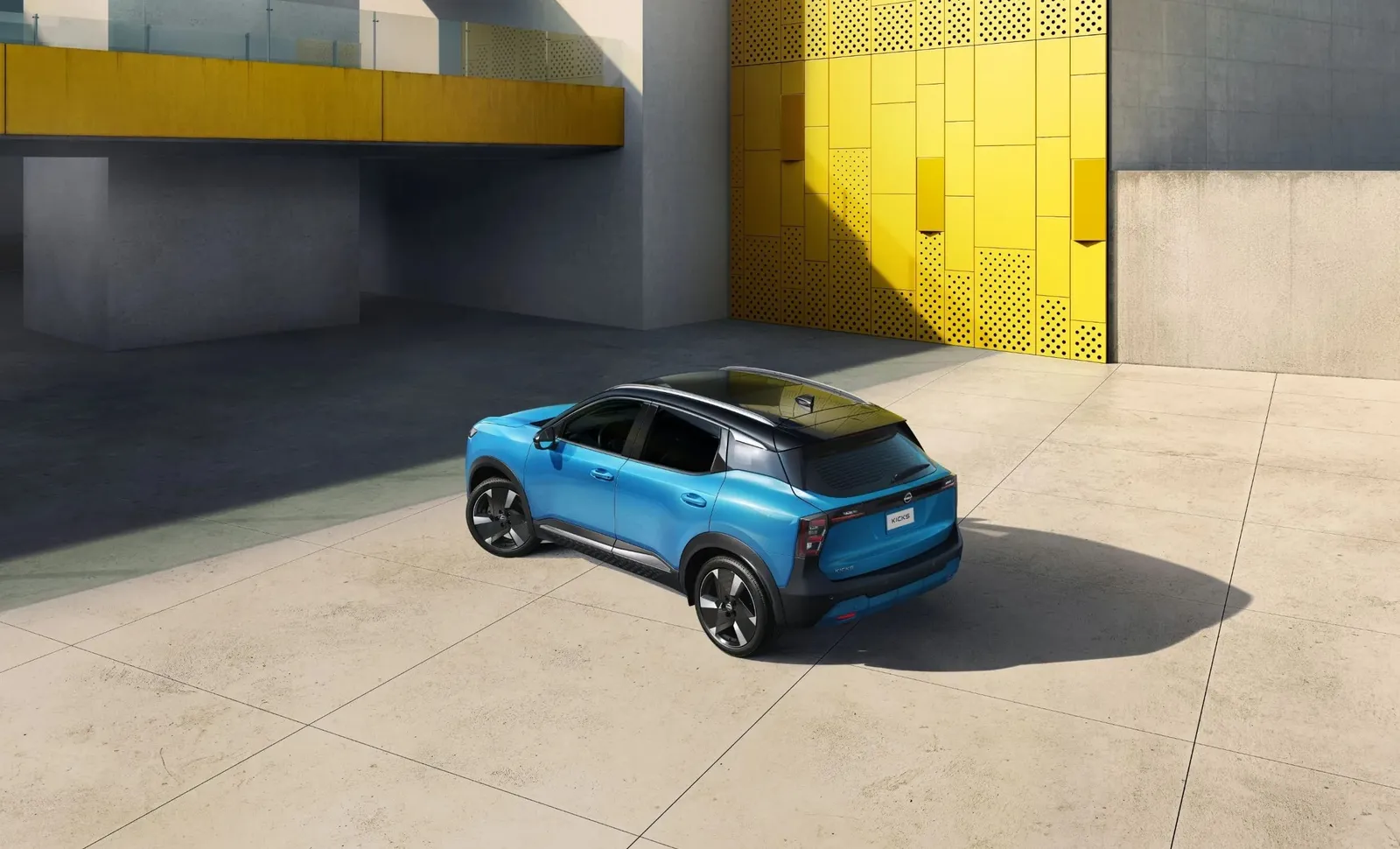
Nissan confirmed that the Kicks e-Power will go on sale in Europe, the UK, and Turkey, with production starting at the Sunderland plant. The manufacturer will invest 170 million pounds, or around 198 million euros, to adapt the facility. This is an interesting move, as alongside new electric vehicles, Nissan is introducing to Europe a car that drives like an EV but cannot be plugged in.
Table of Contents
Show
Hide
For years, the Kicks avoided Europe, although it wasn’t a niche model globally. The model debuted in 2016 and is now available in over 70 countries, with total sales exceeding 1.8 million units. Now, a decade after its launch, Nissan believes there is room for it in our market as well.
Kicks for Europe: a large B-SUV, but not electric
The European Nissan Kicks will be produced in Sunderland alongside the Leaf, Qashqai, and Juke models. This is a significant decision for the factory itself, as it is celebrating its 40th anniversary and has built 12 million cars since 1986. The Kicks will become the fourth model produced there, and for this specific vehicle, the British plant will be its fourth manufacturing location after Japan, Mexico, and Brazil.
The car itself is not small. It measures 4365 mm in length, placing it in the category of larger B-SUVs according to European standards, with some aspects even approaching the compact segment. For comparison, the Nissan Juke is 4210 mm long, so the Kicks is clearly larger than it. As competitors, the Toyota C-HR, Hyundai Kona, and Volkswagen T-Roc with hybrid powertrains are the most relevant options.
This also says a lot about Nissan’s strategy. The brand isn’t sticking to the simple slogan of “all electric” these days. The Leaf remains an electric car, and the new Juke will go electric as well, but alongside them Nissan sees room for series hybrids. And it’s not surprising, as European customers still prefer buying hybrids, especially in the crossover segment.
e-Power: the hybrid that most closely resembles an electric car
The most interesting feature of the Kicks is its e-Power drive system. In practice, it’s a series hybrid. The electric motor always drives the wheels, while the internal combustion engine has no mechanical connection to the wheels and functions solely as a power generator.
This sets Nissan’s solution apart from Toyota’s or Hyundai’s traditional full hybrids, where the gasoline engine can directly power the vehicle under certain conditions. In the Kicks, the driver thus experiences a feel more similar to that of an EV. The car starts and accelerates like an electric vehicle, but it draws energy not from a charger, rather than from gasoline and a small traction battery. It’s somewhat like a range extender, but without charging from an outlet.
It sounds reasonable, though it also has an obvious limitation. It remains a combustion engine vehicle in terms of operation and emissions. We can’t charge it at home, take advantage of cheaper night-time electricity, or travel short distances purely on electric power like with a plug-in model. Therefore, Nissan sells more of an electric vehicle impression than true full electrification.
What we know about the specifications
Nissan has not yet provided full specifications for the European version. The closest reference is the Japanese specification, as the Kicks e-Power is already available there with a third-generation drive system.
In Japan, the system consists of:
a 1.4-liter, 3-cylinder gasoline engine
An engine producing 97 horsepower or 72 kW of power
A front electric motor producing 141 horsepower or 105 kW of power
An optional rear electric motor producing 67 horsepower or 50 kW of power
A lithium-ion battery
An optional e-4ORCE all-wheel drive system
If Europe receives the same lineup, the base version will be front-wheel drive, with an AWD variant potentially available at higher trims. As of now, there is no confirmation that all versions will make it to our market. Nothing specific is known either about European performance, fuel consumption, or battery capacity. Without this information, it’s difficult to fairly assess whether the Kicks will remain just a novelty or a real competitor to the hybrid bestsellers.
In addition to the Kicks, Nissan is preparing two electric vehicles for Europe
The news about the Kicks didn’t appear out of nowhere. Nissan has simultaneously confirmed two more electric models for Europe.
The first is the Nissan Pixo, a small urban EV set to make its debut next week. This model will be closely related to the Renault Twingo Electric and the second-generation Dacia Spring. However, it will not be produced in Sunderland but at Renault’s plant in Novo Mesto, Slovenia. It is intended to be a budget-friendly urban electric vehicle with a Nissan-inspired front end and its own unique design. This move makes sense because Nissan itself will not develop a platform from scratch for the lowest price segment.
The second is the third-generation Nissan Juke, which is scheduled to be produced in Sunderland starting in 2027 exclusively as an electric vehicle. This is more significant than the Kicks itself, as the Juke has been one of the brand’s pillars in Europe, and transitioning this model to a BEV will show whether Nissan can still succeed in the popular segment not only with its name but also with its products.
In the background is also the Leaf, produced in Sunderland as well, along with the electric Qashqai. The latter was supposed to get a battery version, but the project was halted. That’s why the Kicks’ debut as a series hybrid appears to be a stopgap measure, or perhaps just a safety net. Nissan doesn’t have a ready-made electric vehicle in all its key segments today, so it relies on e-Power where the market is still willing to accept it.
What this move says about Nissan
On paper, the Kicks seems like a bridge between the old and new worlds, but by 2026 such bridges must already be properly valued. Do you think a hatchback hybrid still makes sense in Europe, or is it just Plan B for manufacturers who are late with electric vehicles?