
Nissan is investing in selenium-based cathodes, C/SCAM, to use them in solid-state batteries. They will be “cheaper than those in China”.
Portal Electrek reported that Nissan is one of the companies using selenium-based cathode materials (NES CAM, C/S CAM) developed by startup Gelion. These materials enable the production of lithium-sulfur batteries, Li-S, in Western countries “at a lower cost than in China.” Selenium cathode technology is expected to be integrated into Nissan’s solid electrolyte batteries by 2028, with commercial prototypes developed by Gelion in collaboration with TDK appearing earlier. Hopefully, the name C/S CAM won’t prove to be significant…
Sulfur Will Save Nissan
The report recently released is the result of a collaboration between Gelion, Nissan’s Technical Center in Europe (NTCE), and Oxford University. Gelion claims to have developed cathode materials that use cheaper selenium trapped in nanostructures instead of expensive cobalt and costly nickel (referred to as NES CAM or C/S CAM). Complete Li-ion cells using S/CAM cathodes cost more than 13 percent less than those with NCx cathodes, even if the latter are manufactured in the United States, while the former (Li-NCx) come from factories in China.

The difference is even greater when looking at the materials themselves: while the cost of high-nickel cathodes is estimated at 73 zlotys per kilogram, cathodes made from iron phosphate cost around 16 zlotys per kilogram, and for sulfur-based cathodes it’s only about 9 zlotys per kilogram. Sulfur is readily available everywhere; in many countries it is “produced” by desulfurizing emissions from coal-fired power plants, while in other places it arises as a byproduct of oil processing.

It is worth noting that the difference between the raw materials themselves (9 vs 73 zł/kg) and the ready-to-use cells is enormous—only about -13 percent for Li-S compared to Li-NCM. This shows us how much of the savings from raw materials are consumed by the costs required to transform the element into a porous nanostructure suitable for use inside cells.
Gelion claims to have already developed prototype button-type Li-S and Na-S (sodium-sulfur) cells in collaboration with TDK. It is also working with a Japanese company on pouch-type cells, with the first prototypes reportedly set to be ready in the second half of this year. These are intended to be multi-layered like traditional Li-ion cells, but they will come out of the laboratory rather than a factory. Commercial samples are expected to appear in 2027, with the technology planned for implementation in Nissan’s solid-electrolyte cells by 2028.

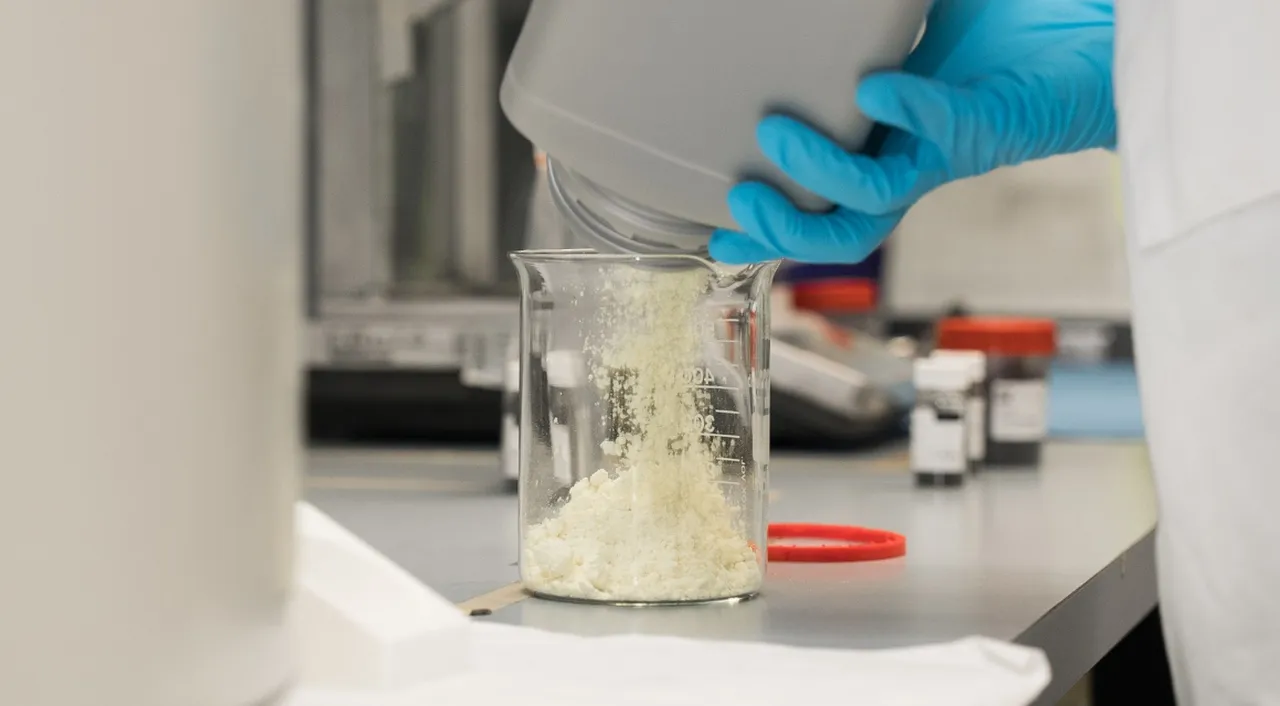
Preparing a sulfur-based solution to create the Gelion cathode precursor
The Japanese automaker aims to combine two experimental technologies (solid electrolyte + sulfur-based cathode) to significantly increase the energy density of Li-ion batteries and reduce their production costs. Will it succeed? It’s hard to say, but it’s possible. Will this save Nissan? Unlikely, unless these cells end up in the next generation of Nissan GT-R, whose performance will ignite everyone’s imagination.
Article rating
Readers’ ratings
[Total: 4 votes Average: 5]
Don’t miss new content—CLICK and FOLLOW Elektrowoz.pl on Google News. You might also be interested in the following ads: