
Nio introduces a 925V motor that also helps charge the battery at over 200 kW at 400V charging stations.
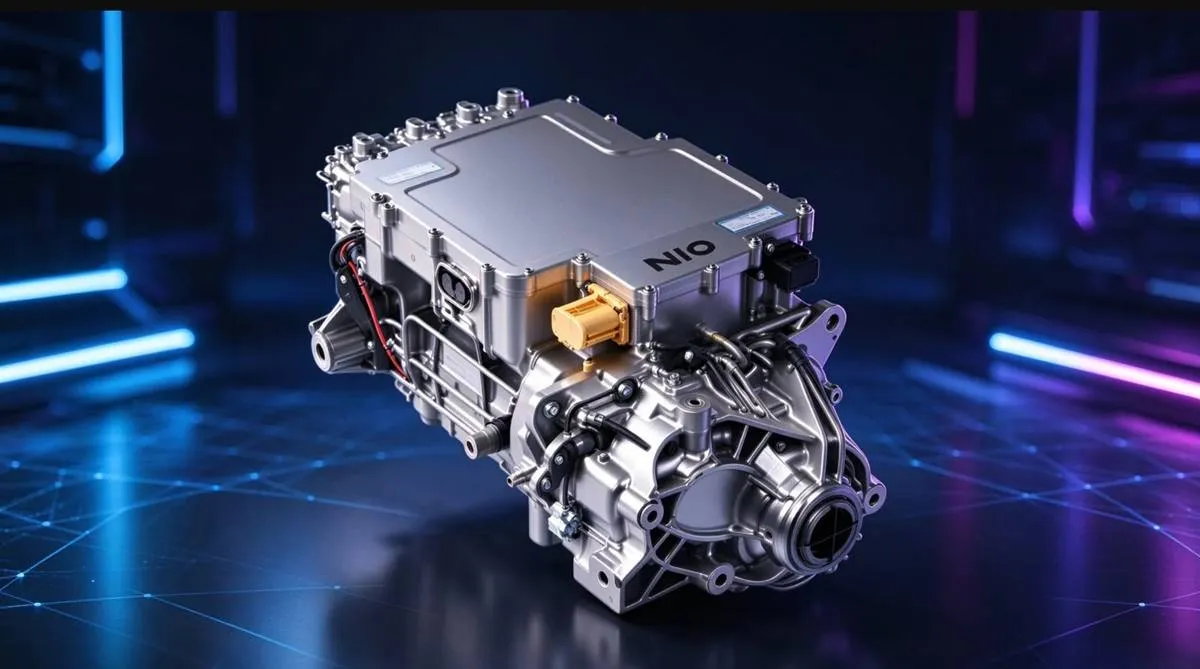
Electric motors still have room for improvement, not just in terms of power or efficiency. Nio has developed a system designed to make better use of the same hardware: in addition to moving the car, it utilizes some of its components to facilitate charging at stations with lower voltage than the battery.
Often, having an 800-volt or higher system does not mean faster charging, as power and speed also depend on the charging station. When reaching a 400V station, the car’s power and performance can plummet, drastically slowing down the charging process. This is something Nio’s development aims to minimize.
The architecture operates at 925 volts, requiring particularly careful control of electrical insulation. The challenge lies not only in designing a compact and powerful motor but also in ensuring that its materials and connections can withstand such high voltage for years, even under high temperatures, vibrations, and demanding operating conditions.
A motor that does more than just move the car
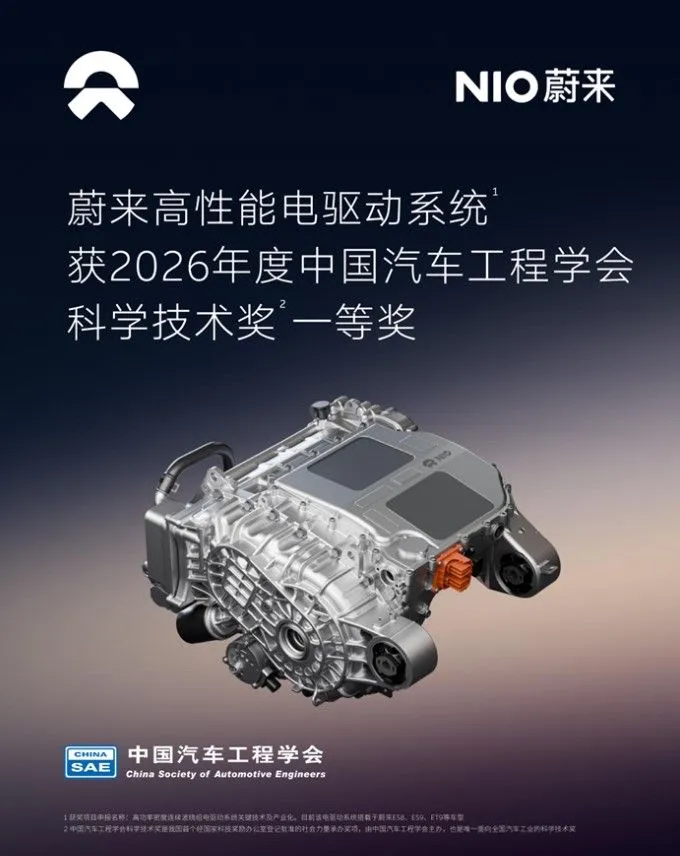
One of the key elements is the W-Pin winding, which uses continuous rectangular copper conductors. Unlike conventional fork-type designs made up of numerous segments joined by soldering, this approach reduces the number of intermediate electrical connections. As a result, it requires working with long, rigid pieces whose shape and insulation must remain intact throughout manufacturing.
The process uses 12 flat copper conductors, each five meters long, which are shaped using precision tools to create 24 bends. Manipulating them without unwanted deformation is already challenging; doing so without damaging their insulating coating is even more delicate, as a defect could compromise the entire winding.
Among the figures released, the engine’s power density stands at 19.06 kW/kg, equivalent to 25.9 horsepower per kilogram. The controller, on the other hand, achieves 226.92 kW per liter, which is equivalent to 308.5 horsepower per liter.
The team initially tried a method that involved rotating the conductors 180 degrees during folding. However, repeated rotations caused stretching and threatened the insulation. The solution was to replace it with a flat-forming process, avoiding those successive rotations.
According to the project data released, the process controls an insulating layer of 0.14 millimeters and maintains the motor’s assembly tolerances within 0.02 millimeters. These measures help explain why industrialization plays such a crucial role in this development: manufacturing a functional unit is only part of the task; repeating it consistently is another.
To test the system’s durability, it was operated continuously at high temperatures for 1,300 hours without failure. Another program ran for over 500 hours under simulated conditions at 5,500 meters altitude, with high voltage, electronic switching up to 15,000 times per second, and sudden increases in engine speed.
The unit was also subjected to random vibrations on three axes up to 5.5 g and temperatures ranging from −40 to +85 degrees for over two months. Altitude adds a particular challenge: lower atmospheric pressure can reduce the insulating capacity of air, making the operation of high-voltage components more demanding.
Another significant feature is its voltage-raising function during charging, with a maximum declared power of 202.78 kW (276 HP). The system utilizes the motor windings as inductance and the inverter’s switching elements to raise the voltage of the direct current coming from the charger.
This allows the electricity from a lower-voltage station to be adapted to a high-voltage battery without the need for a separate voltage booster converter dedicated to that task. The motor does not become an independent charging point: its components are involved in the electrical conversion required to utilize certain stations.
It also does not mean the car can receive that power at any charger. The outcome depends on what the station can supply and the conditions of the car itself. The figure stated corresponds to the peak of the voltage boosting function, not a constant power level throughout the charging session.
The technology went into production in December 2024 and, according to project information, it is used in the Nio ET9, ES8, and ES9, as well as the Onvo L90 and L80. The development has also resulted in 146 granted patents and contributions to six Chinese national automotive standards.
The interesting aspect of this solution is the combination of functions. Nio aims to increase power density and make use of the propulsion system during charging, thereby reducing the need for specialized components. For drivers, the practical value will lie in how this integration translates into efficiency, reliability, and the ability to use chargers with different voltages.
Source | Auto Anhuinews