
NIO and Geely are focusing on a shared network. The goal is an open charging and battery swapping ecosystem.
In short:
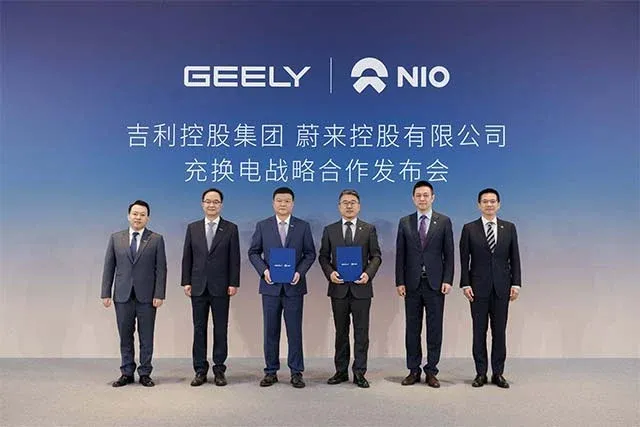
NIO and Geely have reached an agreement covering battery swapping, charging, capital investment, and the development of shared technical standards.
A Geely subsidiary will hold 30 percent of shares in NIO Power.
The goal? To create an open charging and battery swapping ecosystem in China.
NIO has built over 4,000 battery swapping stations in China.
Geely’s company, Haohan Energy, currently operates around 2,500 charging stations.
NIO and Geely: a game involving billions of yuan and thousands of stations.
The Asian electric vehicle market is once again eager to take the lead. Rather than competing solely on range, charging capacity, or autonomous technologies, major manufacturers are increasingly seeking an advantage through... collaboration on infrastructure. The latest example of this is the strategic alliance between NIO and Geely Holding Group, which includes battery swapping, vehicle charging, development of technical standards, and mutual capital investment.
NIO stated that its Geely subsidiary will acquire a 30 percent stake in NIO Power, the company’s battery charging and swapping arm. The deal will be completed by injecting 100 percent of the shares in Yiyi Internet Technology, a firm specializing in battery swapping services for commercial vehicles, along with 640 million yuan in cash (366 million zł). According to NIO, this implies a valuation of NIO Power at around 16 billion yuan (over 9 billion zł).
Meanwhile, NIO will hold a 10 percent stake in Haohan Energy, a Geely-owned company developing smart charging services. Both firms also plan to integrate their respective infrastructure networks to expand coverage and improve efficiency.
However, the significance of this agreement goes beyond financial matters. The partners intend to jointly develop unified standards for battery swapping in passenger vehicles, with Geely developing models compatible with the battery swap system and NIO Power providing the infrastructure and swapping services. Industry media note this as a significant shift from a concept that has so far been almost exclusively NIO’s domain.
Three minutes instead of charging
The battery swap technology has long been one of the most distinctive elements of the brand’s strategy. Instead of waiting for minutes or even hours at a charger, drivers can go to an automated station and replace a depleted battery with a charged one in about three minutes.
According to Reuters, NIO has already built over 4,000 battery swap stations in China. The company aims to increase this number to 10,000 by 2030, capable of meeting an annual energy demand of over 10 billion kWh. As of the end of September 2026, the company’s network included 9,433 charging and battery swap stations, of which 4,126 were Power Swap Stations, along with 5,307 charging stations equipped with a total of 30,598 charging points.
The infrastructure has already handled over 220 million charging and battery swapping services, of which more than 125 million were battery swaps alone.
Geely brings its own fast charging network and technology
NIO is not however the only player investing billions in energy infrastructure. Geely is simultaneously developing its own ecosystem. Haohan Energy currently operates around 2,500 charging stations with over 12,000 charging points in 232 Chinese cities.
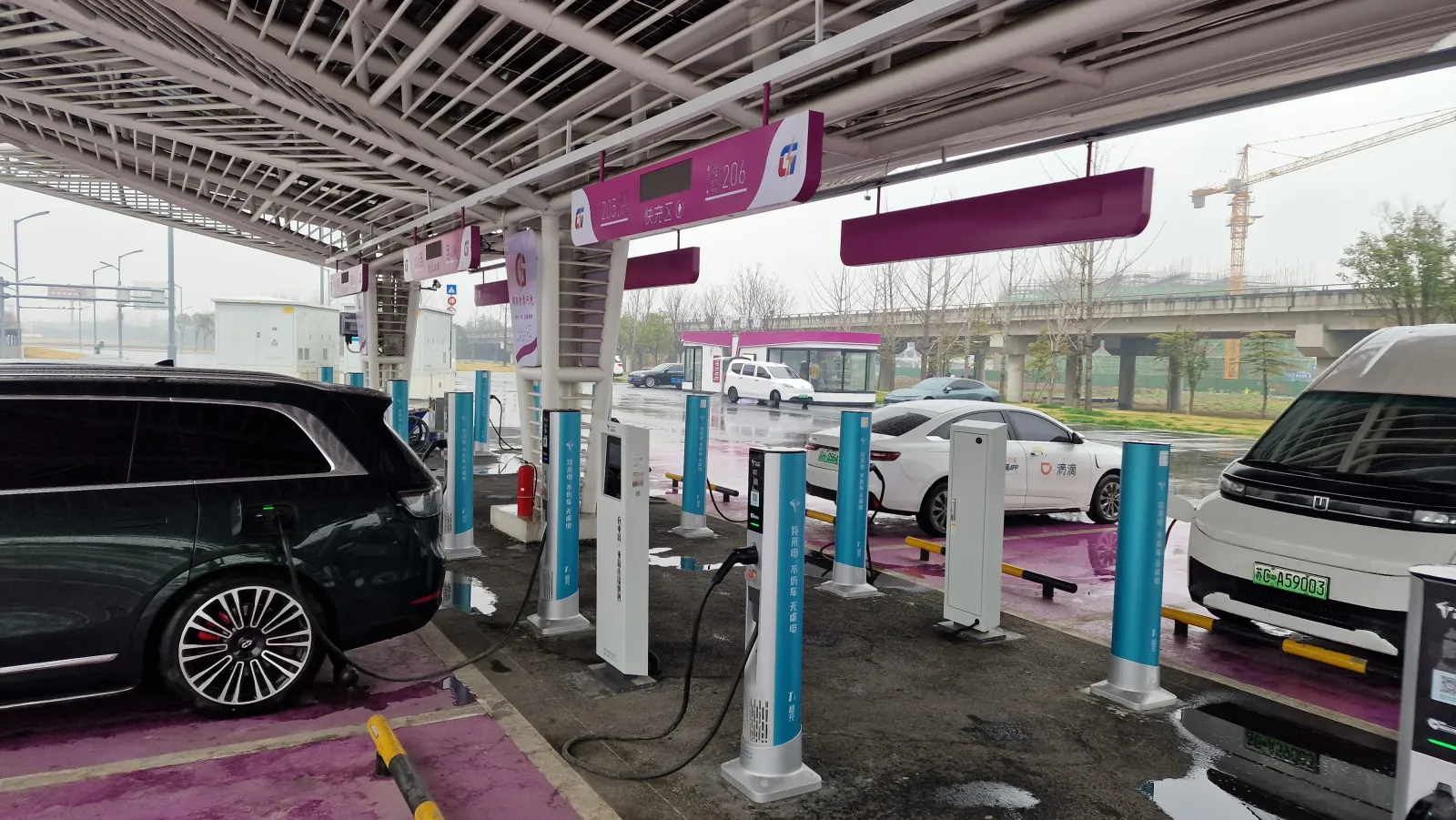
The plans are ambitious. By the end of 2027, Geely aims to have a network of over 22,000 charging stations and more than 100,000 charging points. Over 15,000 of these are expected to be smart charging stations utilizing artificial intelligence-based solutions. This is particularly interesting in light of Geely’s recent presentation of a new charging technology.
Reuters recalls that Geely Auto’s subsidiary unveiled last week a solution that allows a vehicle to be charged in about four minutes — we also covered this on Elektromobilni.pl. Chinese manufacturers are increasingly competing not only in the field of battery swapping but also in ultra-fast charging.
End to the standard war?
The partnership between NIO and Geely aligns with a broader trend observed in China’s electric vehicle market. Over the years, manufacturers have developed their own closed charging and battery swapping ecosystems. This has resulted in massive investment costs but also limited interoperability among infrastructure systems. Now, as NIO’s founder, president, and CEO William Li emphasized, the goal of this partnership is to move beyond traditional competition among manufacturers and foster collaboration in areas such as technology, standards, operations, assets, and capital. Meanwhile, Andy An Conghui, president of Geely Holding Group, stated that charging infrastructure should be viewed as a shared resource serving the entire electric vehicle ecosystem.
This could prove particularly important for the further development of battery swap technology, as one of the biggest barriers so far has been the tight dependence between the vehicle’s design and a specific station system. Geely’s entry into NIO’s ecosystem could be the first step toward creating a more universal standard, writes CarNewsChina.
A signal for the entire industry
The market reaction was positive. Reuters reported a 3.2 percent rise in NIO’s stock price after the deal was announced. This is not surprising, as the partnership not only brings in a new investor and additional capital for NIO but also increases the chances of broader adoption of battery swap technology beyond the manufacturer’s own brands.
Oskar Włostowski