
Niño Becerra warns of AI’s impact: lower wages and greater inequality, even in the electric vehicle industry
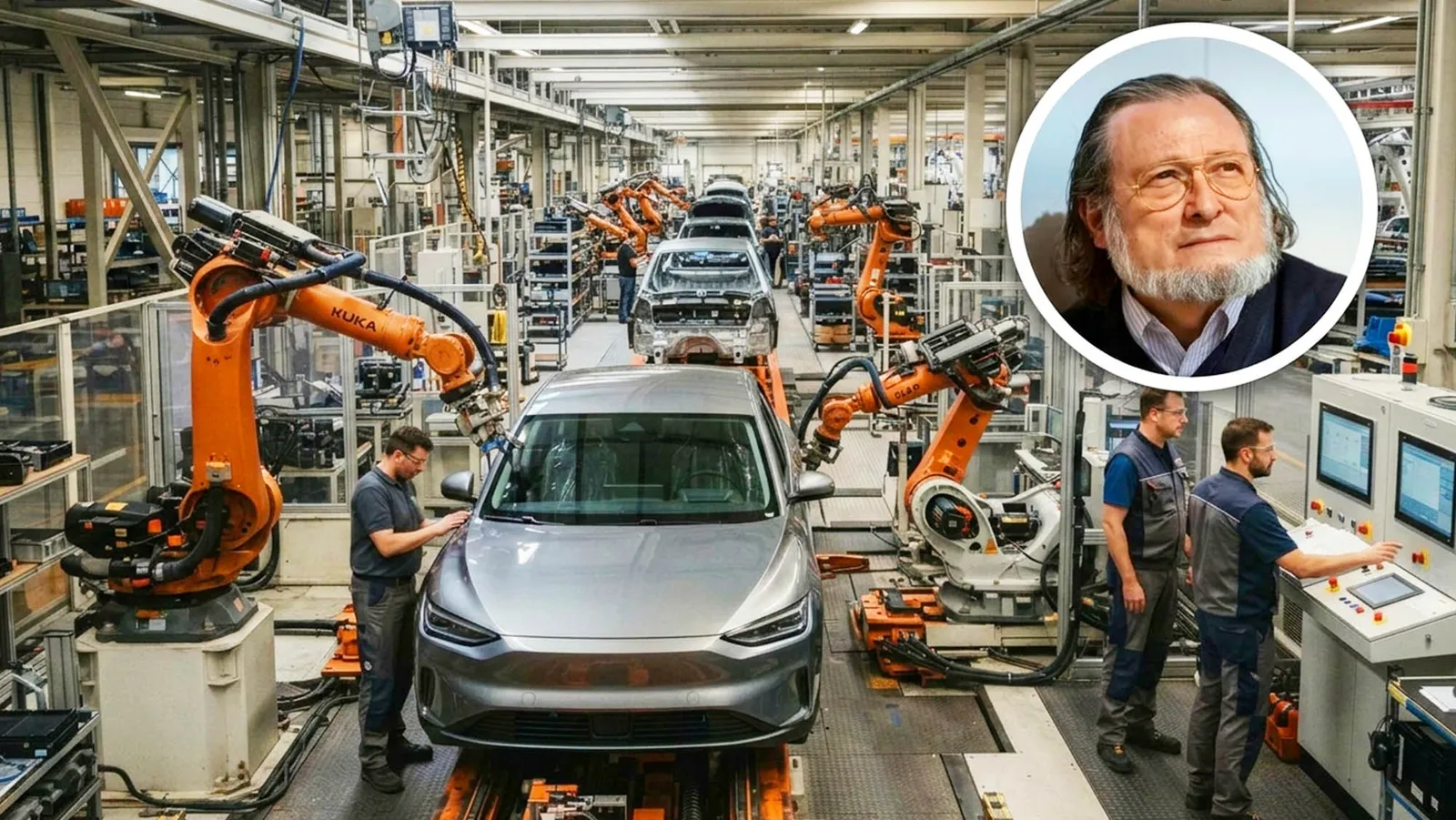
Economist Santiago Niño Becerra has once again questioned the optimism surrounding artificial intelligence. While acknowledging the potential of this technology to transform society, he believes its chances of contributing to a more balanced economic model are hindered by a much deeper obstacle: the capitalist system itself and humanity’s tendency to accumulate wealth.
The professor drew on reflections by American essayist Jeremy Rifkin, whom he acknowledges as an influence, regarding a different way of understanding artificial intelligence. Rather than focusing efforts on developing machines that can surpass human capabilities, Rifkin suggests viewing it as a “distributed cognitive infrastructure” capable of expanding our understanding of natural and social systems.
Niño Becerra warns of more poverty and inequality due to AI
The economist believes it would be a “wonderful” idea, but he doesn’t think it can be implemented within the current economic model. To achieve this, he argues, it would be necessary to abandon capitalism and move toward a system that views the Earth as a network of interdependent processes.
The economist argues that the historical evolution over the past 2,000 years has followed precisely the opposite direction, with the exception of a few small and short-lived communities. In his view, greed and accumulation are part of human nature and have reached their peak expression with capitalism.
His conclusion is pessimistic: he finds no reason to believe that this trend will disappear in the future, even with a technological revolution on the scale of artificial intelligence.
The economist’s reflections are not limited to the economic model. In another post on his X account, Niño Becerra directly addressed the consequences that artificial intelligence could have on workers’ employment and incomes.
His argument is based on one possibility: that certain professional tasks that currently require human labor can be completed in fewer hours thanks to automation and AI systems.
In principle, working fewer hours to achieve the same results could be seen as an improvement in productivity. However, Niño Becerra warns that if this reduction in hours also means fewer paid hours, workers would receive lower salaries. Additionally, social contributions and tax revenues associated with those earnings would decrease.
The economist’s prediction is a scenario of “more poverty and more inequality.” It is not an inevitable consequence of technology, but rather the risk that the benefits from increased productivity will not translate into improved economic conditions for the population.
The core issue is who reaps the value generated by artificial intelligence: the companies that automate their processes or the workers whose roles and working hours change as a result.
The automotive industry is also part of this transformation
This debate has a direct impact on the automotive industry, which is undergoing two major simultaneous transformations: the electrification of transportation and the integration of artificial intelligence into vehicles and their manufacturing processes.
In electric vehicles, AI enables improved battery management, adjusted range estimates, and optimized charging cycles. It can also coordinate recharges by considering electricity grid demand, availability of renewable energy, and electricity prices.
The International Energy Agency (IEA) identifies these applications as some of the areas where artificial intelligence can bring the greatest benefits to electric vehicles. It also highlights its role in advanced driver assistance systems and the development of autonomous driving functions.
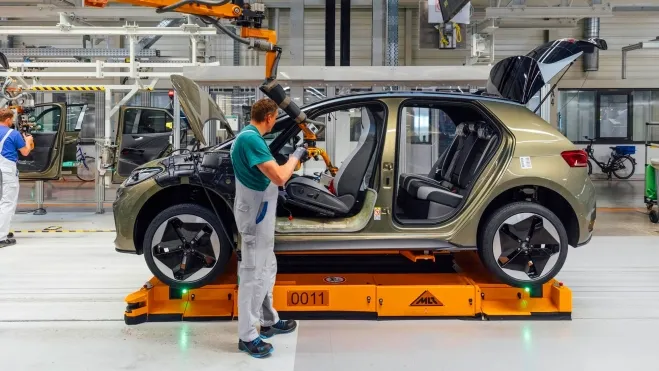
But the transformation isn’t limited to the final product. Automobile factories are increasingly incorporating robotics, predictive analytics, and intelligent systems to manage production, detect errors, and reduce manufacturing times. This changes the staffing needs and professional skills required by manufacturers.
Niño Becerra’s warning takes on an industrial dimension here: increasing productivity through automation does not guarantee that economic benefits will be distributed among workers.
AI Also Presents a New Energy Challenge
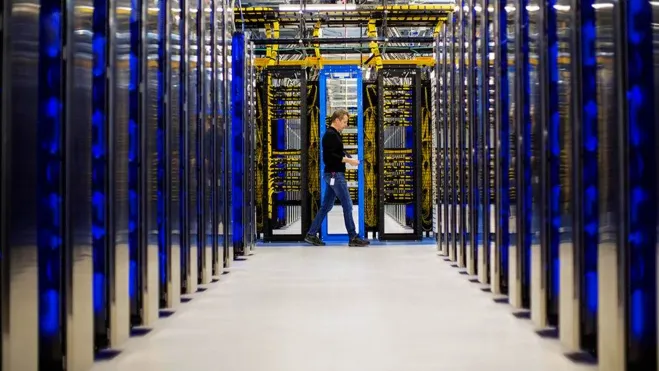
There is another connection between artificial intelligence and electric mobility: the electricity consumption required to keep the data centers running that train and operate these systems.
AI experts estimate that global data center electricity consumption will rise from around 485 TWh in 2025 to approximately 950 TWh by 2030. In other words, it will nearly double in five years and account for about 3% of total global electricity demand. During the same period, consumption by data centers dedicated specifically to AI will triple.
This growth coincides with the expansion of electric mobility, which requires new charging infrastructure and greater network flexibility.
In Spain, pure electric and plug-in hybrid cars reached 225,616 registrations in 2025, up 94.6% from the previous year and accounting for 19.6% of the market. For the first time, sales of 100% electric cars exceeded 100,000 units, according to ANFAC data.
AI can help manage this new energy landscape more effectively, but it also increases electricity demand and requires investment in generation, grids, and storage.
The question isn’t how much AI can do, but who benefits from it.
Santiago Niño Becerra’s reflection raises a question that directly impacts the future of electric mobility: will artificial intelligence serve to improve economic efficiency and living standards, or will it primarily enable companies to produce more with fewer workers and concentrate a larger share of the profits?
Electric vehicles represent an opportunity to transform transportation, while artificial intelligence can accelerate their development and enhance their energy integration. However, neither of these innovations alone guarantees a more balanced distribution of wealth.
The economist’s warning points in exactly that direction. Technological progress can be enormous, but its social consequences will depend on how the economy is organized and who reaps the benefits of increasing productivity.