
The new Dacia Spring is seeing strong sales growth and remains under €20,000.
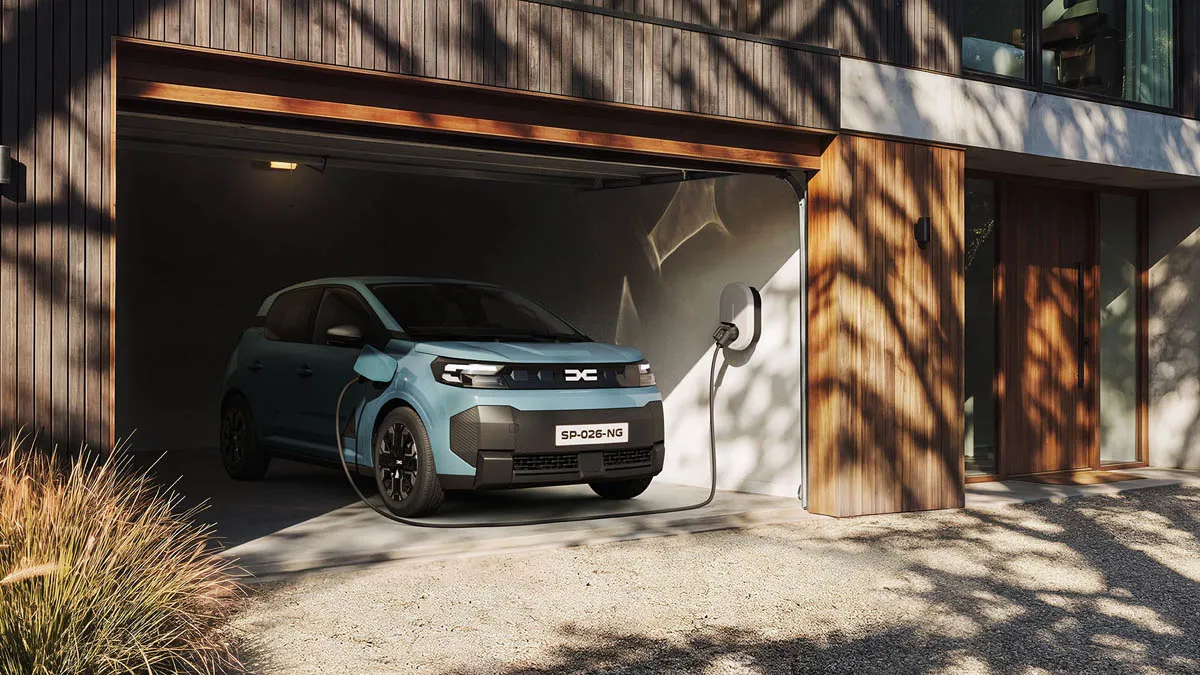
The new Dacia Spring is hardly comparable to its predecessor. It’s larger, more spacious, and more powerful, featuring a completely new electric platform and a range of up to 250 kilometers. Yet Dacia maintains the key principle of the Spring: the price stays under €20,000.
The new Dacia Spring is truly a complete refresh
With the previous update to the Spring, only the exterior changed, but many aspects remained unchanged underneath. With this second generation, Dacia is taking a more thorough approach. The new Dacia Spring is built on Renault Group’s new RG-EV Small platform and will now be produced in Europe, specifically in Novo Mesto, Slovenia.
That platform is part of a new development method within Renault Group that aims to enable car development in less than two years. This is important for Dacia, as lower development costs should ultimately help keep the selling price low.
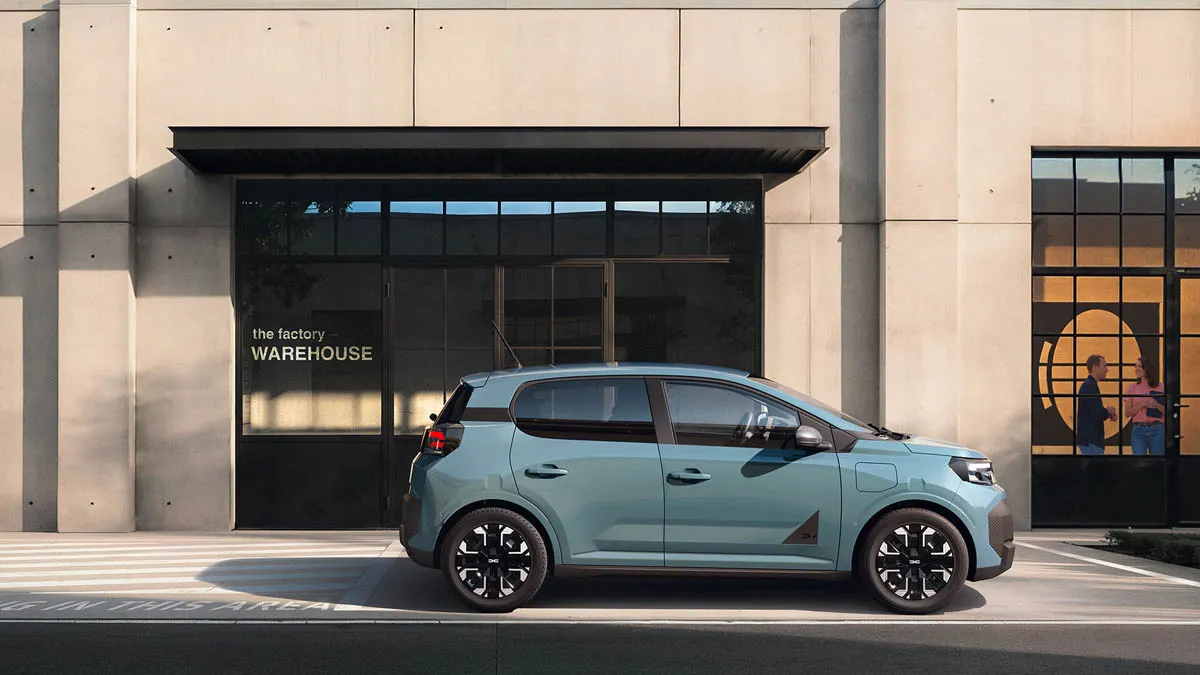
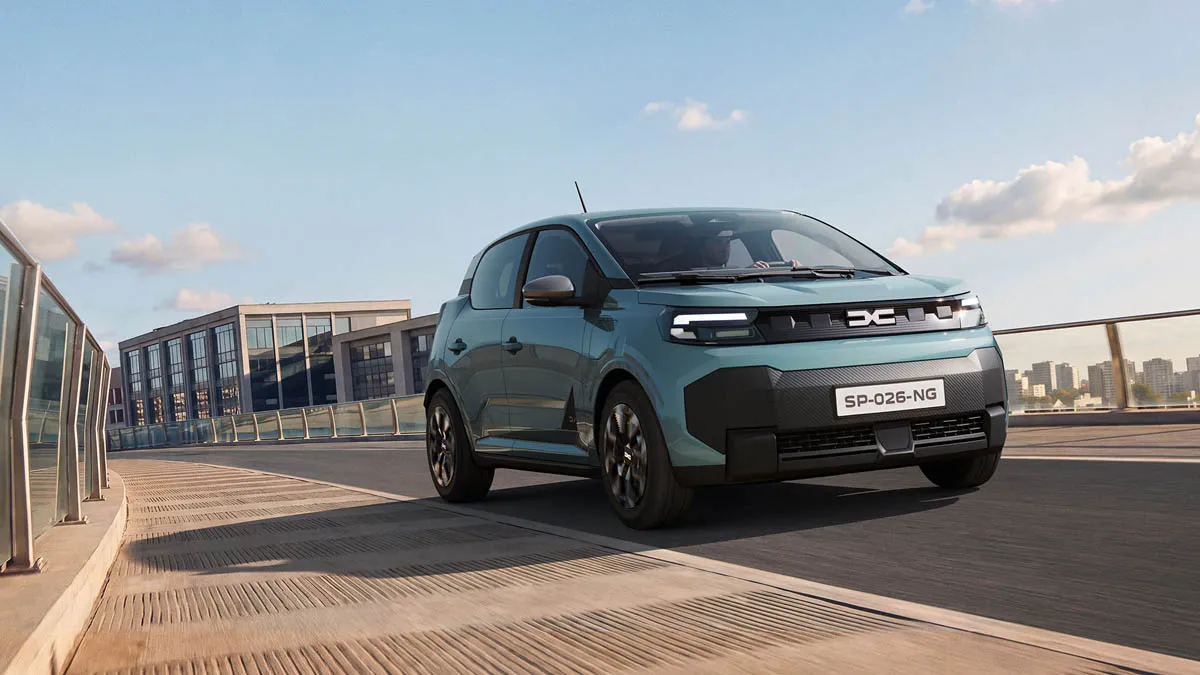
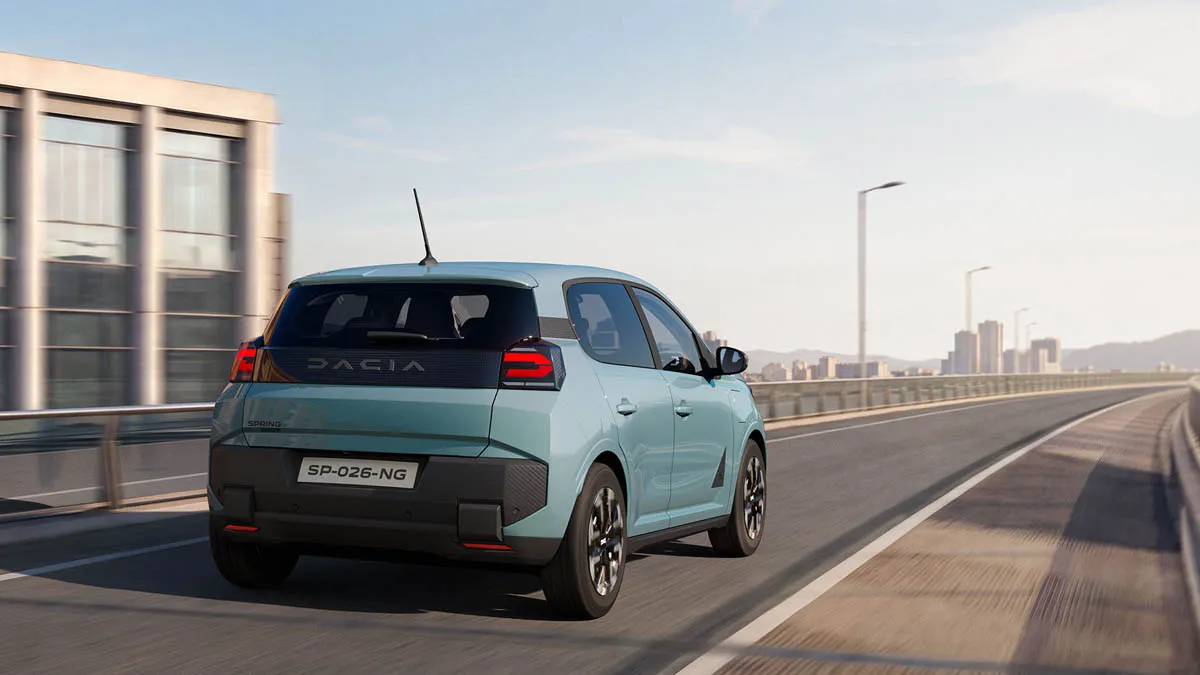
The dimensions have changed considerably. With a length of 3.85 meters, the Spring is about 15 centimeters longer than its predecessor. The increased width is particularly noticeable, adding around 18 centimeters with a width of 1.74 meters, excluding side mirrors. This not only gives the Spring a broader and more robust appearance but also provides more space for passengers.
More space, 337 liters of cargo area, and even a frunk
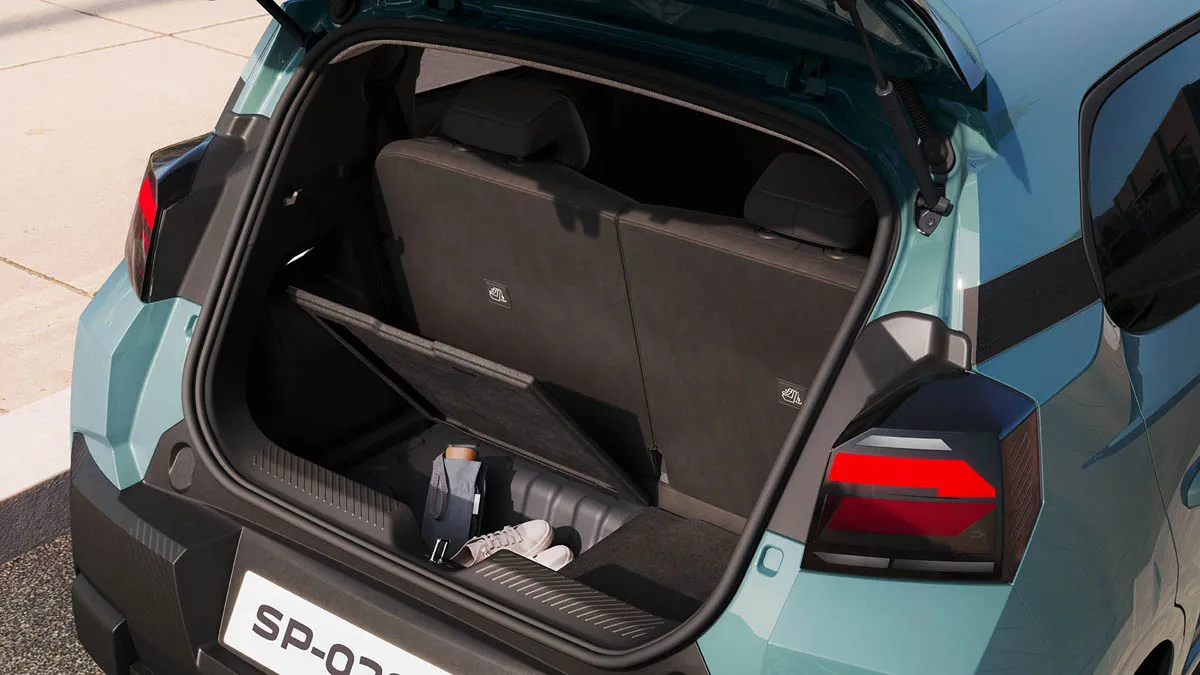
The extra space is utilized quite efficiently. Dacia claims it has one of the most spacious interiors in the electric A-segment. The cargo area also increases to a maximum of 337 liters. With the rear seat that folds in two equal parts, the loading capacity reaches up to 1,283 liters.
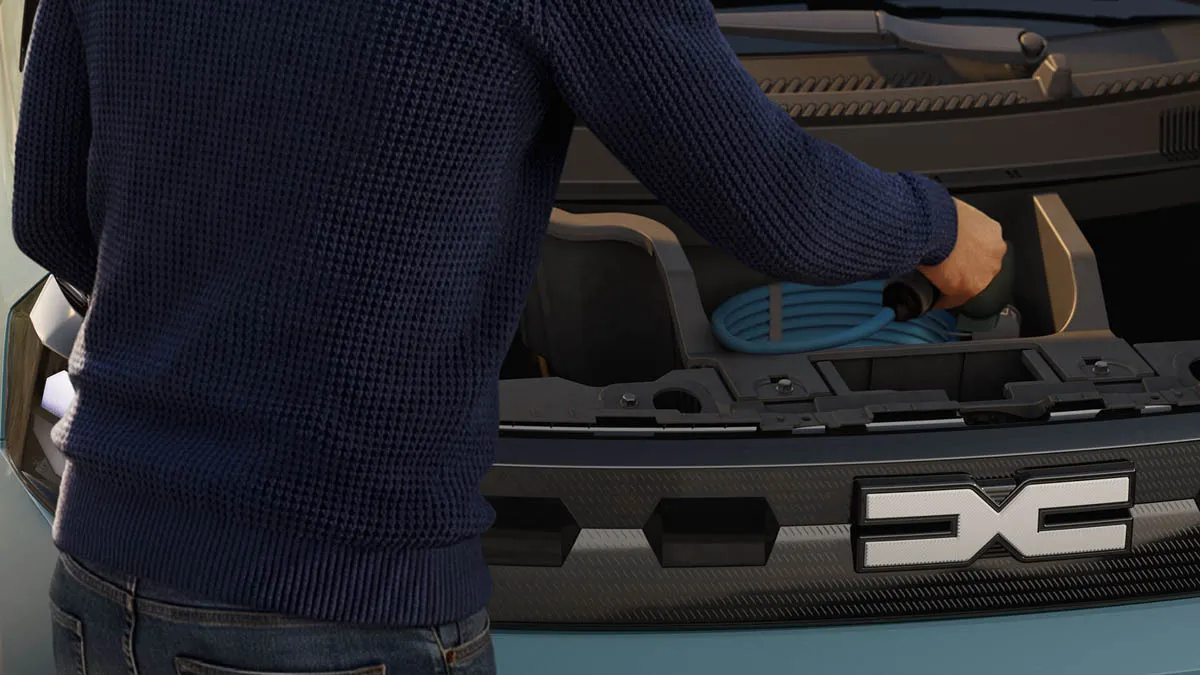
Notably, Dacia has also included an optional frunk. This storage space under the hood holds 18 liters and is particularly useful for charging cables or other items you prefer not to store among the luggage.
The new Spring is clearly much more versatile than its predecessor. That first generation made electric driving appealing mainly through its low price and simple design. Yet it managed to convince us back then: in 2022, the Dacia Spring won the Compact Class of EV of the Year at e-Drivers. The new generation tries to retain that affordable character while adding more space, power, and comfort. While the original car impressed primarily with its low price and compact exterior dimensions, Dacia aims to make the successor a true everyday car.
New Dacia Spring gets 250 kilometers of range
Anderneath the floor lies an LFP battery pack with a usable capacity of 27.5 kWh. This is still modest by current EV standards, but Dacia chooses this intentionally. The brand claims a maximum combined WLTP range of 250 kilometers.
The electric motor delivers 60 kW, or 80 horsepower, and 175 Nm of torque. The 0 to 100 km/h acceleration time is 12.1 seconds, with a top speed of 130 km/h. This keeps the Spring focused on efficient daily commuting, but its performance is less limited than that of the first generation.
The relatively low weight also helps with this. The new Spring weighs 1,212 kilograms. This is remarkably low for an electric car and eliminates the need for a larger battery pack to achieve a usable range. According to Dacia’s data, current Spring owners drive an average of 34 kilometers per day. In three-quarters of cases, the car is charged at home. For many users, a range of 250 kilometers would mean that charging isn’t necessary every day.
50 kW fast charging remains optional
When it comes to charging, Dacia intentionally keeps the standard version simple. The new Spring comes standard with a 6.6 kW AC onboard charger. According to Dacia, charging from 15% to 80% using a 7 kW wallbox takes about 2 hours and 55 minutes.
Those who want more charging options can choose the Fast Charge Pack. It provides the Spring with an 11 kW AC onboard charger and the ability to fast charge at up to 50 kW of direct current. Charging from 15% to 80% takes 28 minutes with a suitable DC fast charger. At a three-phase 11 kW charging station, the same charge takes 1 hour and 55 minutes.
50 kW may not sound impressive among modern electric cars, but the small battery pack works in the Spring’s favor here. Less energy needs to be charged compared to an EV with a battery pack of 70 or 80 kWh, for example.
In addition, V2L is available as part of a Charge Pack. This allows energy from the battery pack to be used for external electrical devices via a 220V connection. For example, it can be used to charge an e-bike or connect smaller electrical appliances.
The interior also makes significant progress
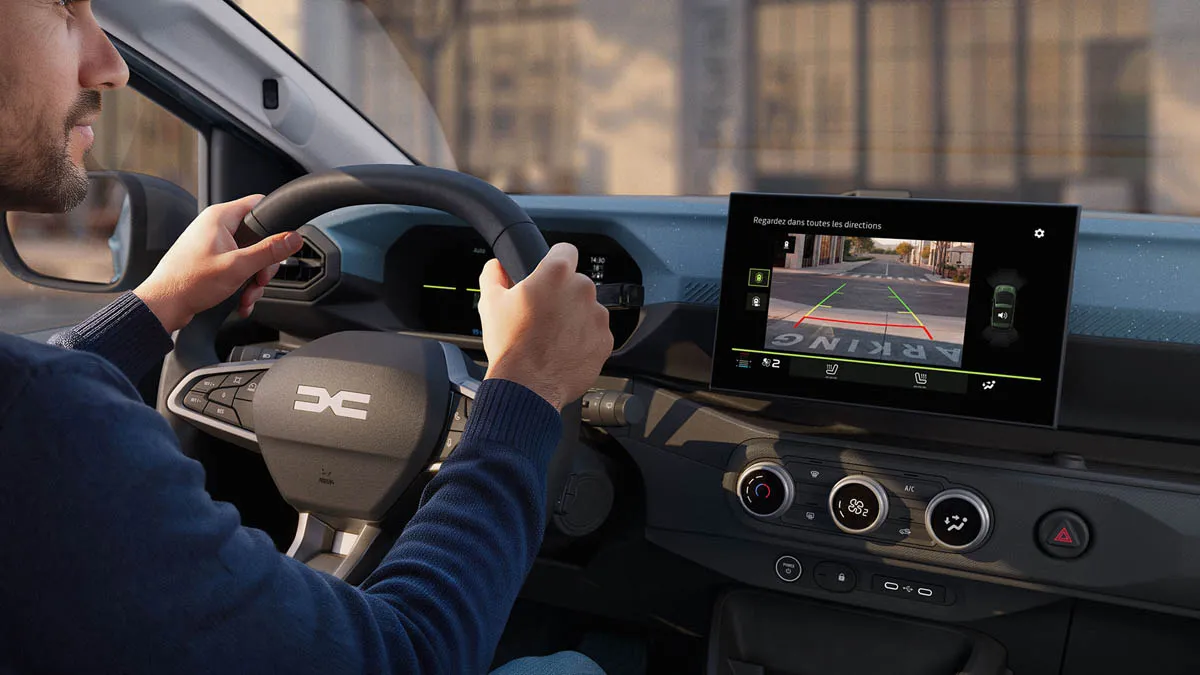
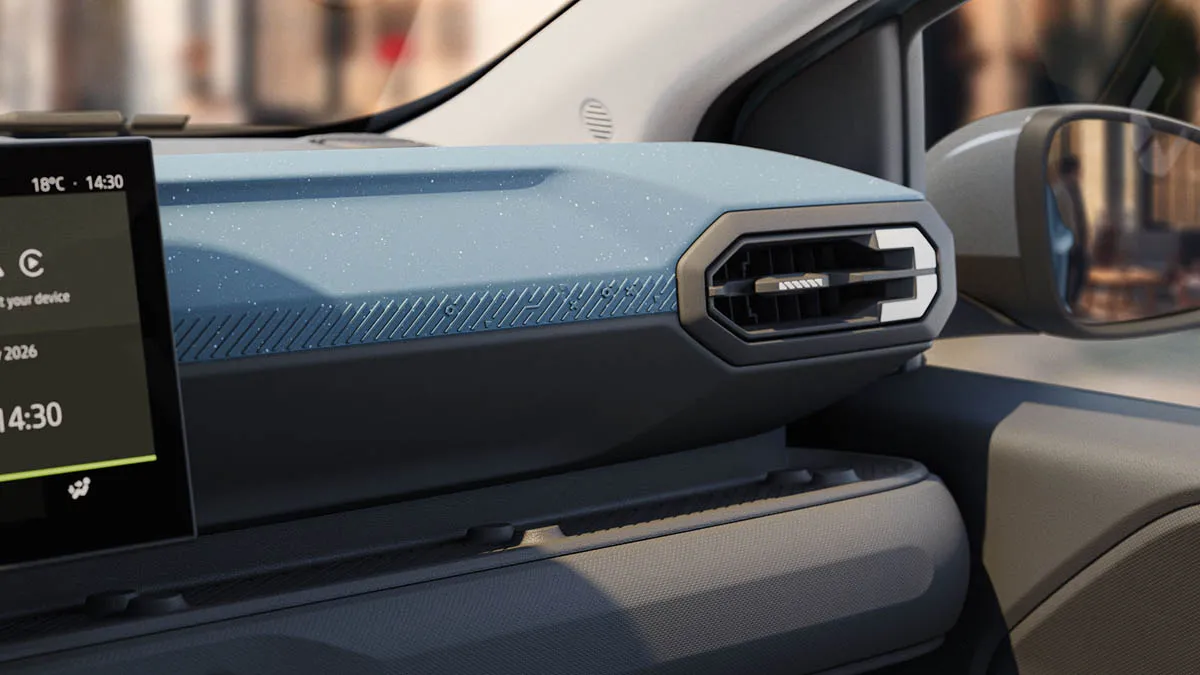
Inside, Dacia tries not to completely eliminate its budget-oriented features, but the equipment becomes noticeably more modern. All trims come equipped with a 7-inch digital instrument panel. The Spring Expression uses Media Control, in which the driver’s smartphone plays a key role for functions such as media and navigation. The phone is assigned a fixed spot on the dashboard for this purpose.
The luxury Journey version comes with Media Nav Live, featuring a central 10.1-inch touchscreen, navigation, connected services, and wireless Apple CarPlay and Android Auto. A rearview camera and a handsfree key fob are also part of the standard equipment. Practical improvements are just as interesting. The driver’s seat is now not only adjustable in position but also in height. Additionally, the steering wheel can be adjusted both vertically and horizontally. It is in aspects like these that the new generation should feel much more mature than its predecessor.
Expression and Journey keep the offerings straightforward
Dacia opts for only two trims: Expression and Journey. Both are equipped with the same 60 kW electric motor, the same 27.5 kWh LFP battery pack, and standardly the same 6.6 kW AC onboard charger.
The Expression features 15-inch steel wheels and includes manual air conditioning, rear parking sensors, electric front windows, electrically adjustable exterior mirrors, and Media Control.
The Journey comes equipped with 16-inch wheels, a rear-view camera, hands-free access, and a 10.1-inch multimedia system. Dacia maintains a simple lineup structure in this regard, with the technical basics remaining unchanged regardless of the trim level.
Dutch price stays below €20,000
The price is perhaps the most important figure for now. Dacia Nederland confirms that the new Dacia Spring will have a starting price of less than €20,000. However, the exact Dutch starting price has not yet been announced.
Dacia still provides no specific details in the current press release regarding when Dutch customers will be able to order the new Spring or when the first vehicles will be delivered. The final price list and details on its launch in the Dutch market will therefore be released later.
This is significant because it is ultimately the price that determines how strong the Spring’s position will be. The market for compact electric cars has become more competitive in recent years, with an increasing number of alternatives appearing around the €20,000 price point. Therefore, Dacia seems to have done everything possible to make the Spring more spacious and practical without raising its original price tier.
No longer interesting only because it’s cheap
The new Spring appears to be a much more serious car than the first generation. The battery pack remains small and 50 kW fast charging doesn’t set any records, but it’s offset by a low weight, 250 kilometers of WLTP range, and surprisingly ample space. Especially the combination of just 3.85 meters in length, 337 liters of trunk space, and a price under €20,000 could be attractive. With the old Spring, you had to overlook various shortcomings mainly because it was cheap. With this new generation, Dacia seems determined to create a car that is also inexpensive.
We won’t know if this works in practice until we can drive it. But on paper, the second generation takes exactly the steps the Spring needed: more space, more power, a more modern interior, and a more useful range, while Dacia stays true to the psychologically significant €20,000 threshold.
Text: Marc Verweij