
New BMW i3 test: Even diehard gasoline drivers will start to doubt
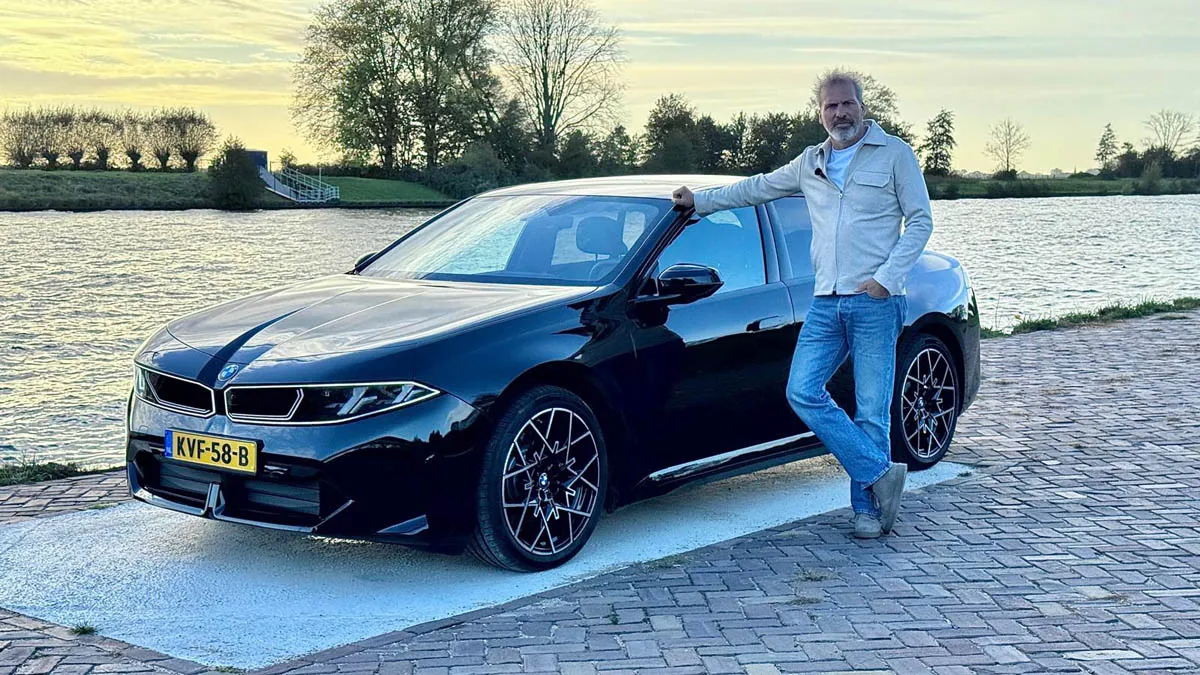
The new BMW i3 50 xDrive impresses greatly with a WLTP range of 912 kilometers and 400 kW fast charging. But how does this all-electric 3 Series actually drive? In this BMW i3 50 xDrive review, we discover that BMW has done its homework particularly well in another area.
No more compromises on range?
There it is, the new BMW i3. The electric 3 Series designed to put an end to one of the most persistent objections to electric driving. You know the type—drivers who only want to switch to electric vehicles if they can travel as far as with their gasoline cars without needing to charge constantly. With this BMW, that argument is at least much less convincing.
On birthdays and parties, we still often hear it: electric driving is fine, but only without compromises. Indeed, some electric cars still require extra planning. However, that is changing quite rapidly. A range of 700 to 800 kilometers is no longer unusual in more expensive EVs. Reaching 900 kilometers remains much more challenging, though Lucid has already surpassed that mark. Such ranges usually come with a significantly higher price tag.
BMW claims a maximum WLTP range of 912 kilometers for the i3 50 xDrive. That is an exceptionally long range for an electric sports sedan with all-wheel drive and 469 horsepower. Moreover, it isn’t a theoretical future model—the car is already listed at a price.
BMW i3 50 xDrive Test: Great Value for Money
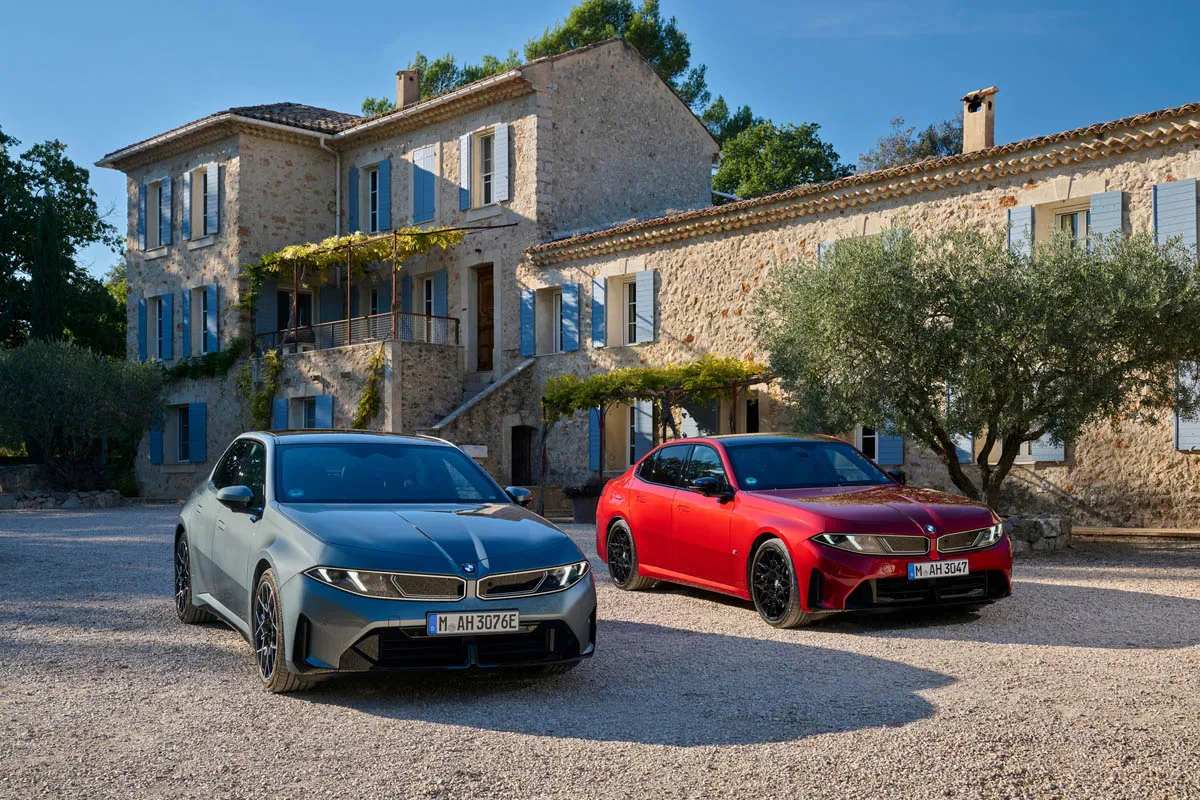
The impressive range doesn’t come out of nowhere. Beneath the floor lies a battery pack with a usable capacity of 108.7 kWh. That’s a substantial amount of energy, especially for a sedan. The i3 shares its technical foundation with the BMW iX3, which also utilizes BMW’s Neue Klasse technology.
The price is particularly interesting. According to the official Dutch price list, the BMW i3 50 xDrive starts at €63,301. It’s certainly not cheap, but given its power, battery capacity, and range, it has a competitive price. A Tesla Model 3 Long Range and Polestar 2 Long Range are cheaper, but offer less range on paper and slower charging speeds. The electric Mercedes C-Class now also has a strong competitor in this segment.
One tier below is the BMW i3 40 xDrive. For €57,891, you get all-wheel drive as well, but with 374 horsepower, a smaller battery pack with approximately 83 kWh of usable capacity, and a maximum WLTP range of 710 kilometers. For just over €5,500 more, the 50 xDrive offers nearly 100 more horsepower and more than 200 kilometers extra in theoretical range. In this case, we would seriously consider the more powerful version.
BMW also has more variants in the pipeline. A rear-wheel-drive version is coming, along with a more sporty M60 xDrive. A Touring model is also on the horizon. But for now, the focus is on this i3 50 xDrive.
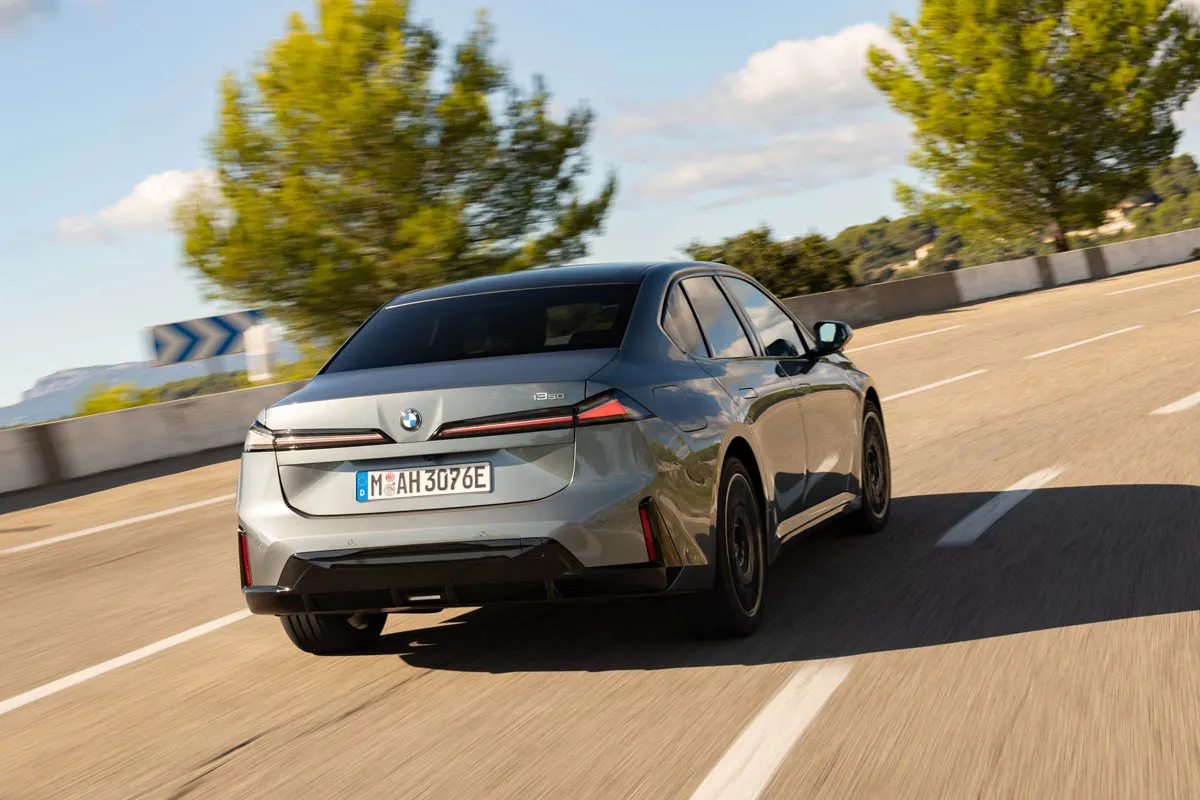
400 kW fast charging makes a difference
A long driving range is pleasant, but at least as important is the speed at which you can recharge on the road. BMW does this exceptionally well. Thanks to the 800V architecture, the i3 50 xDrive can achieve a peak power of 400 kW under favorable conditions. We tried this during our test, and indeed, 400 kW is achievable.
Of course, you need to find a suitable fast charger for this. Additionally, battery temperature, charging status, and surrounding conditions influence the actual charging capacity. According to BMW, the i3 can gain up to 423 kilometers of WLTP driving range in ten minutes under ideal conditions. This doesn’t mean you’ll actually gain that much real-world range in every situation, but it shows how fast charging is now possible.
Home charging also deserves attention. The i3 comes standard with an 11 kW onboard charger, but 22 kW AC charging is available as an option. With such a large battery pack, we would definitely consider that option. However, a 22 kW charging station at home only makes sense if the electrical outlet can actually deliver that power. For many households, this requires an upgraded electrical connection.
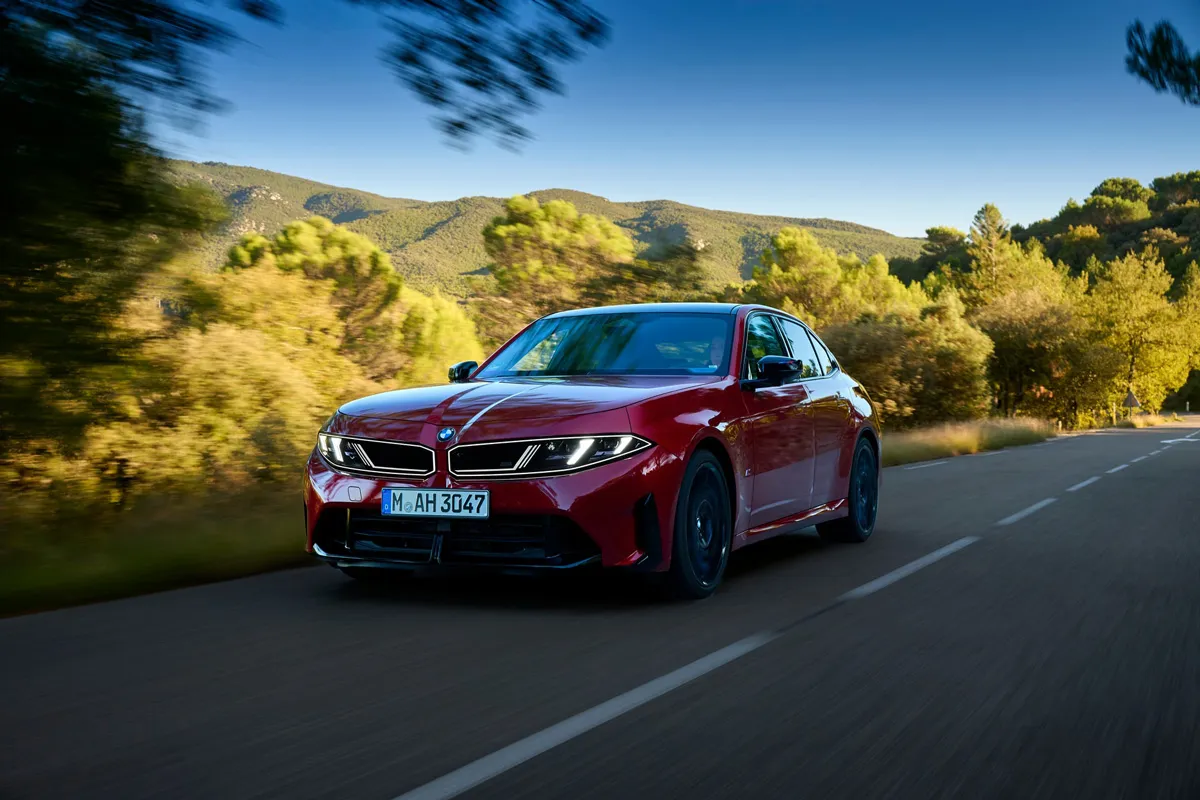
Fortunately, the i3 still drives like a BMW
But let’s not forget the most important thing: driving. After all, you don’t buy a BMW solely because of the battery capacity. A comfortable seating position, precise handling, and a chassis that engages the driver while driving are equally important.
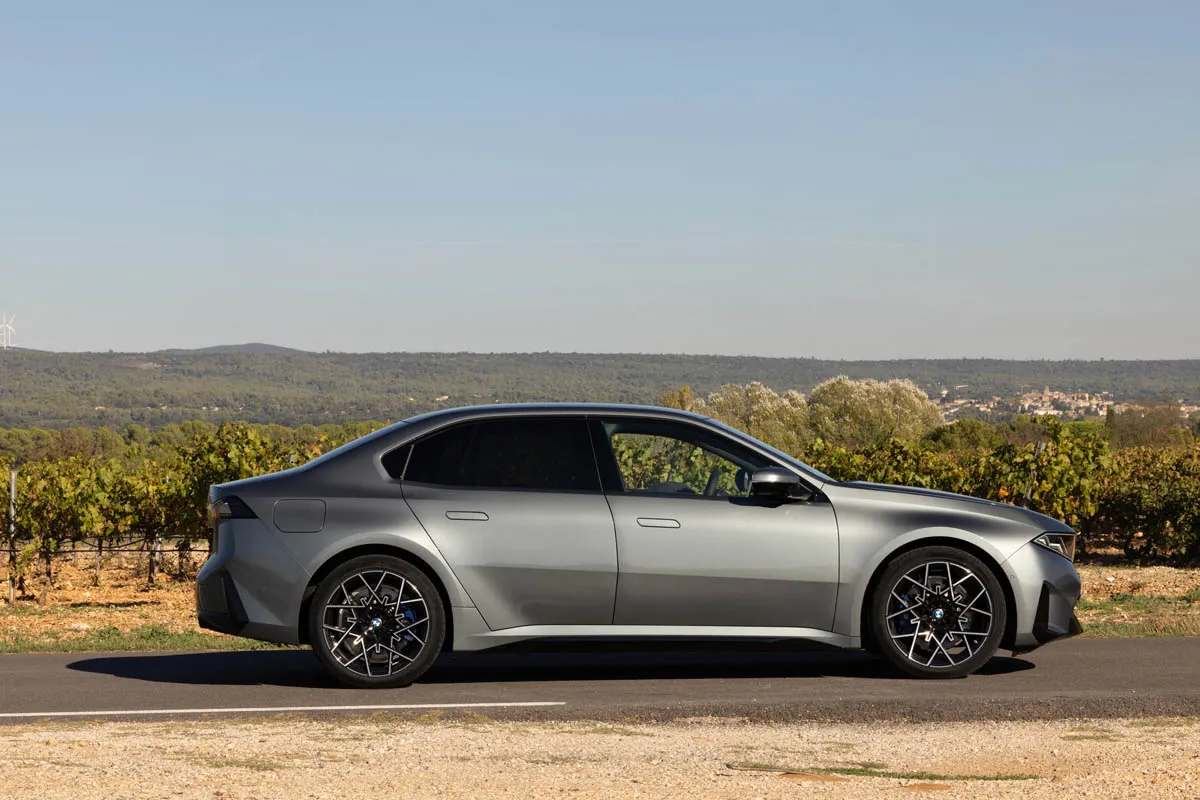
BMW has managed to retain much of this character in the new i3. However, something becomes noticeable right away when getting in. You sit lower than in a traditional BMW 3 Series. The floor is relatively high due to the battery pack, so the distance between the seat and the floor is different from what you’re used to. During the first few kilometers, we even looked for a way to lower the driver’s seat further.
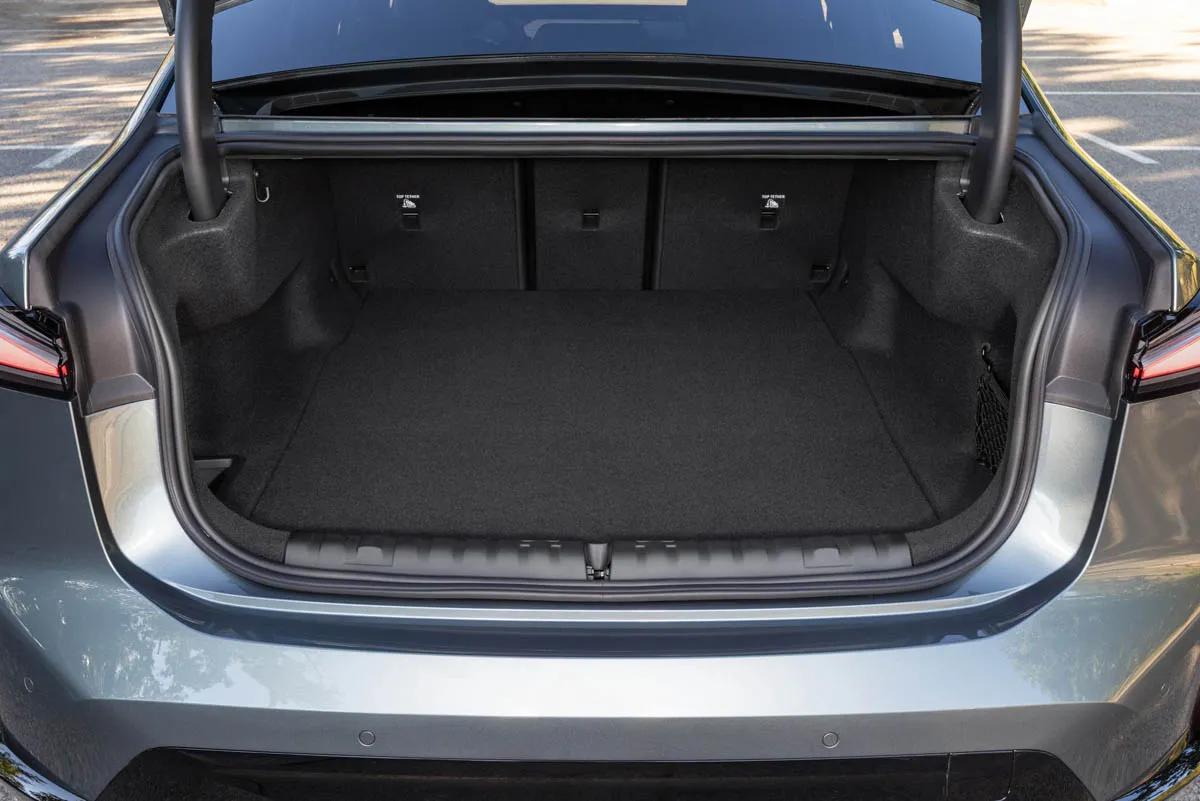
After a few days, it becomes less noticeable, but it doesn’t really matter if it disappears completely. You can also feel that the electric drivetrain requires space behind the vehicle. It’s difficult to fit your feet under the front seats, while the headroom and knee space aren’t particularly generous for taller adults. Those who travel frequently with a family will likely find the iX3 to be a better companion for road trips. However, it is significantly more expensive in a comparable configuration.
Steering feel
The steering feel is best described as light but precise. The electric power steering provides enough feedback to let you sense what’s happening under the car. This is convenient, as this BMW has no shortage of performance with 469 horsepower and 645 Nm of torque. It can reach 100 km/h in just 4.7 seconds from a standstill.
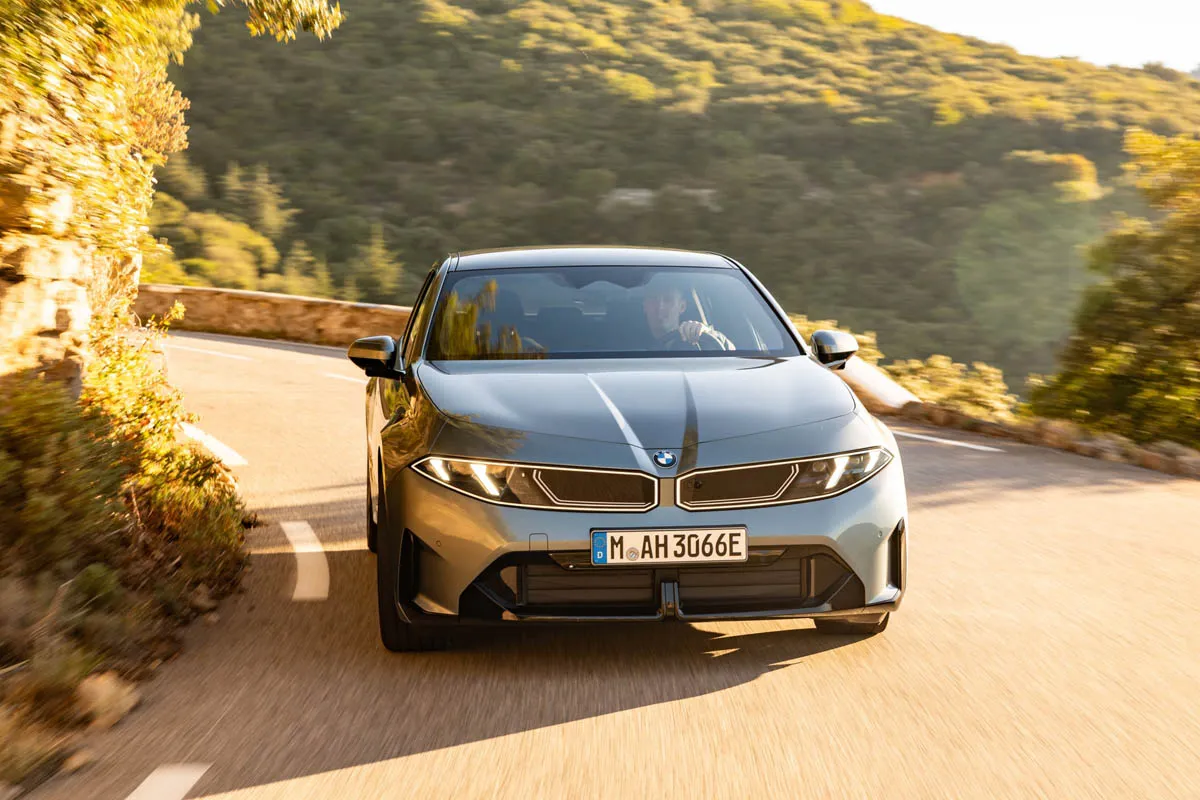
Yet it wasn’t so much the speed that impressed us during our test. It was primarily the comfort. The test car didn’t have adaptive dampers or a particularly sporty suspension. Still, BMW manages to achieve a remarkably pleasant balance between control and agility. Imperfections are handled smoothly, while the car responds with surprising precision in corners.
The two electric motors provide all-wheel drive and exceptional grip. Even when pushing the power hard, the i3 remains under control. You can tell the suspension is built to handle more than what you’d typically demand on public roads. Forget the possibility of drifting; for that, you’d need to wait for the rear-wheel-drive version.
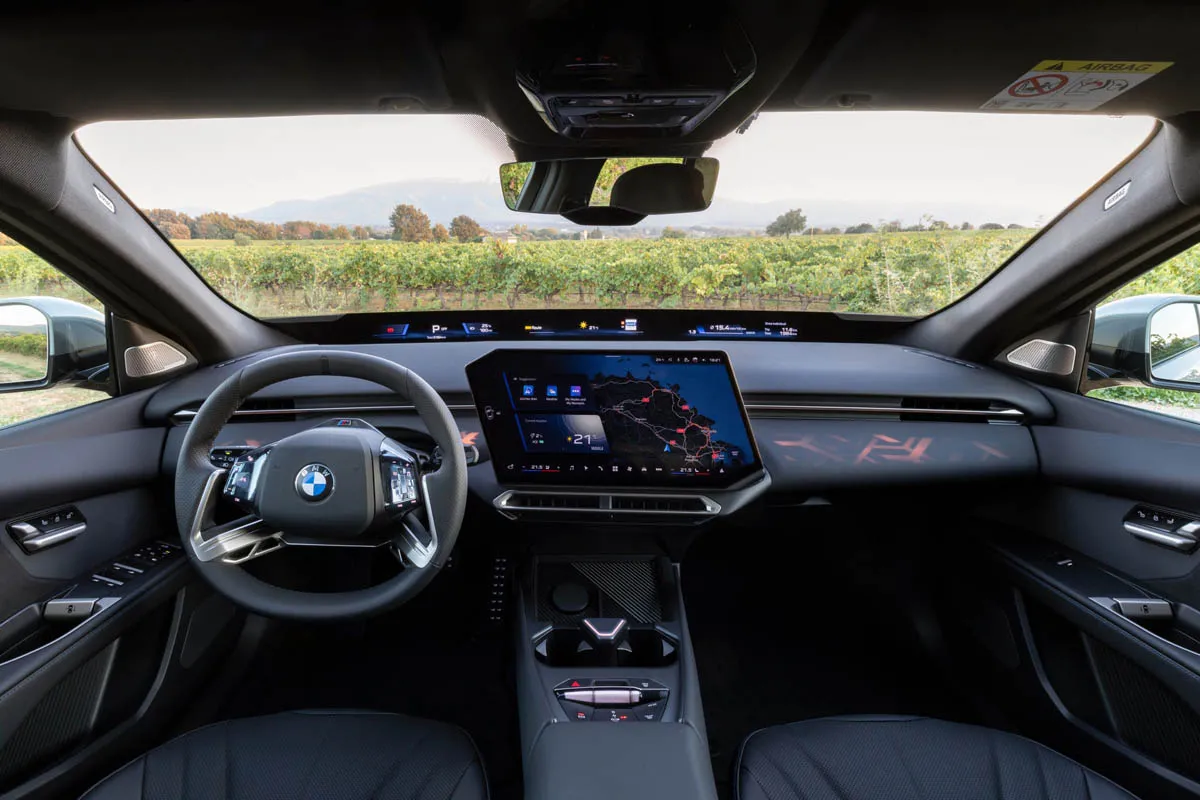
A beautiful interior with a user guide
Inside, BMW opts for a strikingly modern layout. The wide Panoramic Vision display at the bottom of the windshield is easy to read and provides plenty of information without requiring constant attention to the central screen. Those who find the extensive display distracting, such as during a night drive, can limit it or turn it off temporarily.
The infotainment system works smoothly and the menu structure is logically organized. However, it takes time to become familiar with all the functions and settings. There is simply an enormous amount to operate and adjust. During the first few days, we had to frequently search for certain options. Once we got used to it, the system worked well, but a bit more simplicity wouldn’t hurt.
As for fuel consumption, we can be satisfied for now. During our short week with the BMW i3 50 xDrive, our average consumption was 18.1 kWh per 100 kilometers. This is an excellent result for a four-wheel-drive sedan with nearly 470 horsepower. If you convert that consumption to usable battery capacity, you’d theoretically get around 600 kilometers. This isn’t a measured range test, but it does give a more realistic idea of what you can expect under similar conditions.
The BMW i3 Makes the Switch Much Easier
The new BMW i3 50 xDrive demonstrates how far electric driving has come today. With a maximum WLTP range of 912 kilometers and 400 kW fast charging, two common concerns about electric driving are largely addressed. But perhaps more importantly, the i3 is simply a compelling BMW to drive.
The chassis is comfortable without being soft, the handling is precise, and performance is never an issue. However, this is balanced by a somewhat high seating position, limited rear space, and a fairly extensive infotainment system. Those who prioritize space might want to consider the iX3 instead. But for those who enjoy driving a 3 Series and are still delaying the switch to electric, this i3 offers a particularly strong argument.
Text: Werner Budding, Camera: Rob Steltman