
No wings, no pedals, no driver: Lidl gets this autonomous truck moving on public roads
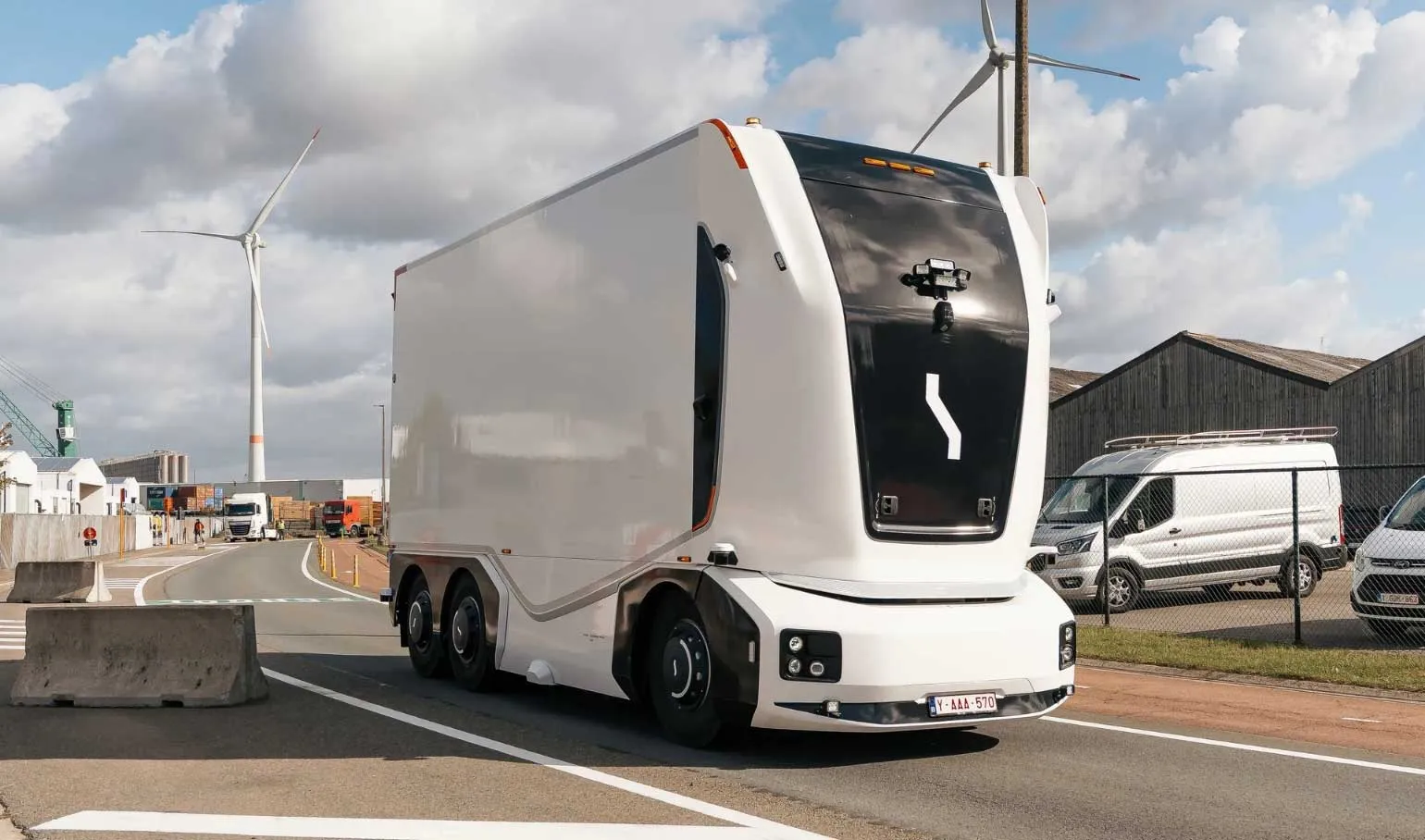
Lidl is testing an extremely radical autonomous electric truck in Germany: it has no steering wheel, no pedals, and no driver aboard. Developed by Einride, this vehicle is now operating on public roads.
In Edermünde, near Kassel, Lidl has been experimenting with a SAE 4 level autonomous vehicle since September 2026 to handle deliveries between its distribution center and a nearby store. What’s unique about it is that the truck operates without a safety driver onboard and was designed from the start without a traditional driving compartment.
For Einride and Lidl, this experiment represents a new milestone. It is no longer just about testing a prototype in a closed site: the vehicle is now operating on German public roads among other traffic. This trial is authorized by the Kraftfahrt-Bundesamt (KBA), Germany’s federal authority responsible for vehicle certification.
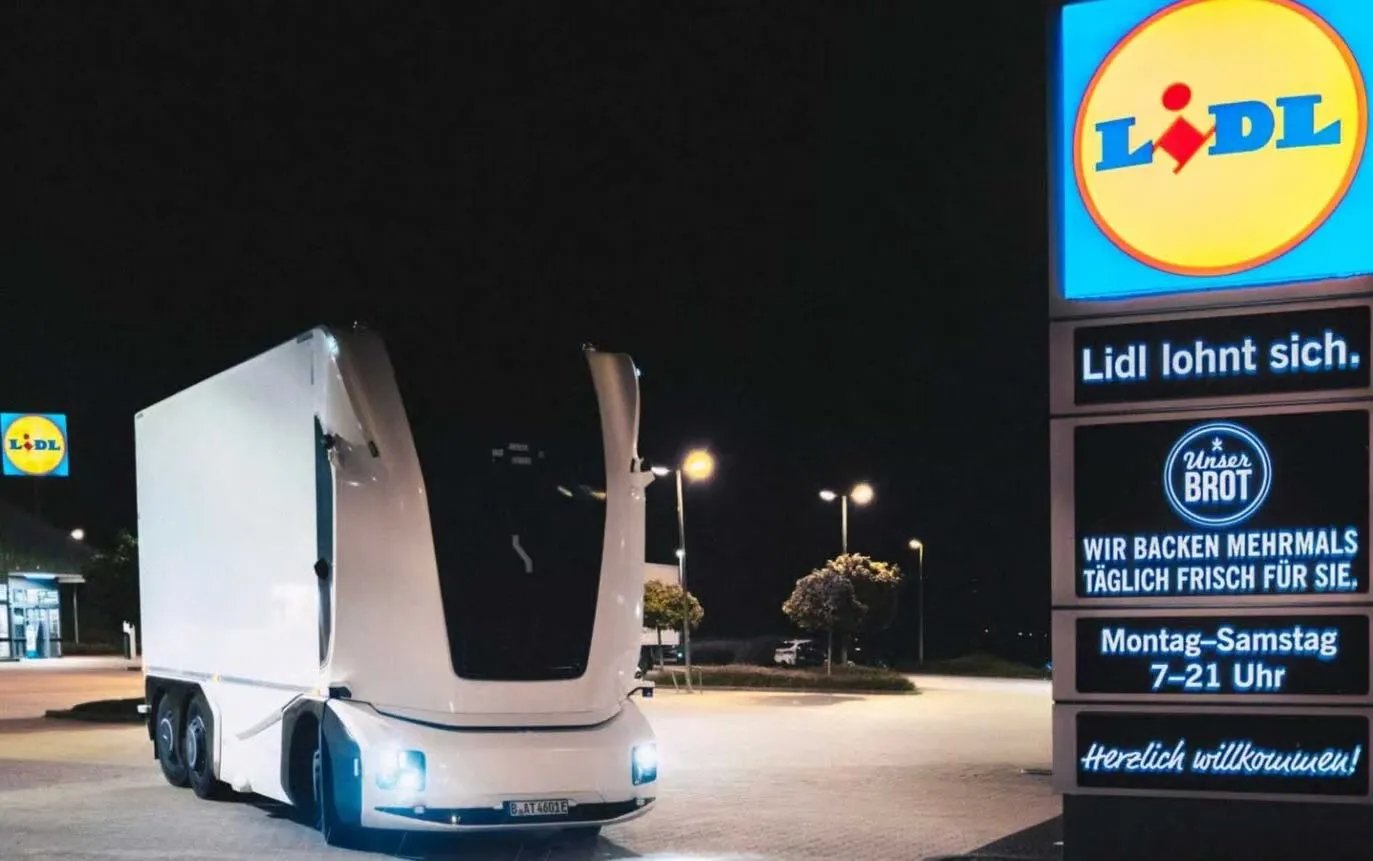
A driverless, cabin-less Lidl electric truck
The vehicle used in this pilot program is called eBot by Einride. Previously known as the Gen 2 Rigid Large, it was designed entirely around autonomous driving. As such, it has no steering wheel, accelerator pedal, or brake pedal intended for a backup driver.
As part of the trial, its speed is limited to 25 km/h. In terms of practical use, the eBot can transport up to 15 euro pallets per trip between Lidl’s logistics center and the store it serves.
The lack of a driver does not mean the truck is completely unattended. Einride relies on a remote technical monitoring system that can intervene in case of critical situations. It is this architecture—an autonomous vehicle without a traditional cab and remote supervision—that the Swedish company has been working on since its inception.
A Long-standing Partnership
The partnership between Lidl and Einride dates back to before this new German test. As early as 2017, the retailer experimented with the T-Pod in Sweden, one of the first prototypes developed by the company. Since 2020, the two companies have also been using electric trucks with human drivers as part of their logistics collaboration in Scandinavia. Their goal now is to achieve 832,000 kilometers of transportation per year, which would represent a 76% increase compared to the current level.