
New Zealand offers $21 million in loans for EV chargers
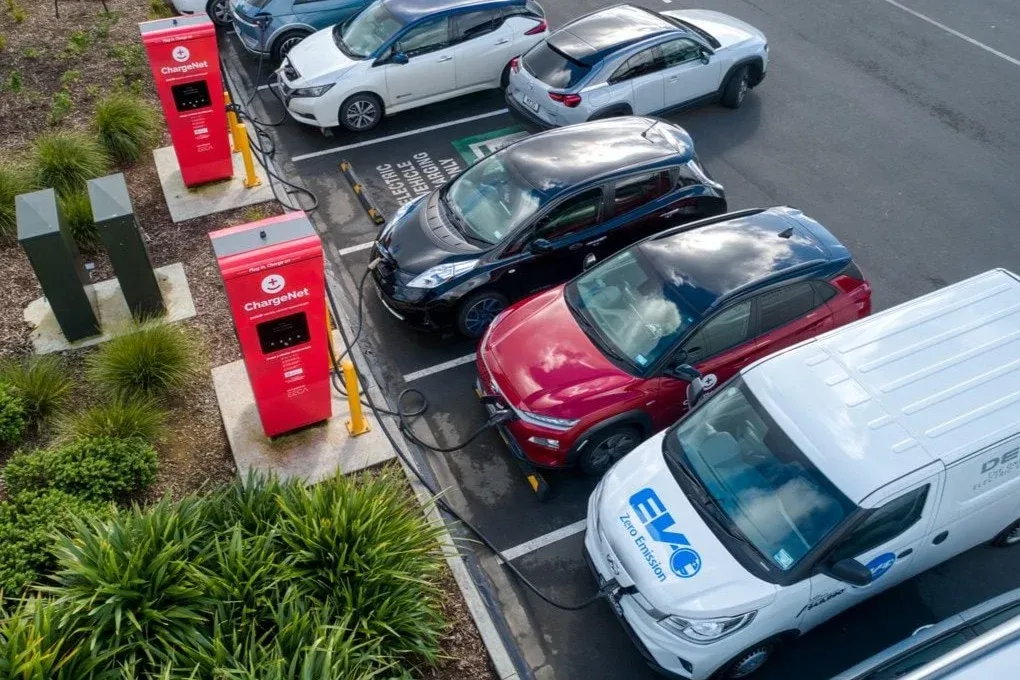
New Zealand has opened a second funding round for public charging infrastructure as it targets 10,000 charge points by 2030. Around NZ$21 million will be available as zero-interest loans covering up to half of eligible project costs.
The second round is aimed at charge point operators planning portfolios of public charging sites across New Zealand. National Infrastructure Funding and Financing (NIFFCo), a government-owned infrastructure financing agency, will award the loans through an open procurement process.
The programme offers financing for up to 50 per cent of eligible project capital costs at zero interest, with a maximum term of twelve years. The latest NZ$21 million funding round follows the first round announced in March. Those loans are supporting charging operator ChargeNet and energy company Meridian Energy in deploying 2,574 new public charge points. According to the government, these projects will more than double New Zealand’s existing public charging network.
“Round one demonstrated strong market demand for the programme and showed concessionary loans can successfully unlock significant private sector investment,” said Transport Minister Chris Bishop.
The government ultimately wants 10,000 public charge points in operation by 2030, equivalent to roughly one charger for every 40 electric vehicles. Before the current charging programme began, New Zealand had just over 1,800 public charge points, which the government says represented one of the lowest charger-to-EV ratios among OECD countries.
Bishop described the investment challenge as ‘a classic chicken-and-egg situation,’ with charging companies reluctant to invest before EV numbers increase and drivers hesitant to switch without sufficient public charging infrastructure.
Energy Minister Simeon Brown sees concessionary financing as a way of addressing that investment gap. “Concessionary loans lower the cost of capital and help overcome the challenge that charging infrastructure often needs to be built before demand is fully established,” he said.
Reaching the 10,000-point target will nevertheless require a considerable acceleration in deployment. An estimated 174 chargers would have to be installed each month until 2030 – more than were installed during the whole of 2025.
Alongside the financing programme, the government is working on minimum standards for EV chargers and has changed planning rules to allow most chargers in public places to be installed without consent. It is also requiring electricity retailers and generators to offer time-of-use tariffs, which can provide lower electricity rates for charging during off-peak periods.