
New Nissan Pixo arrives as sub-£20k electric city car with 161-mile range and Renault Twingo underpinnings
News
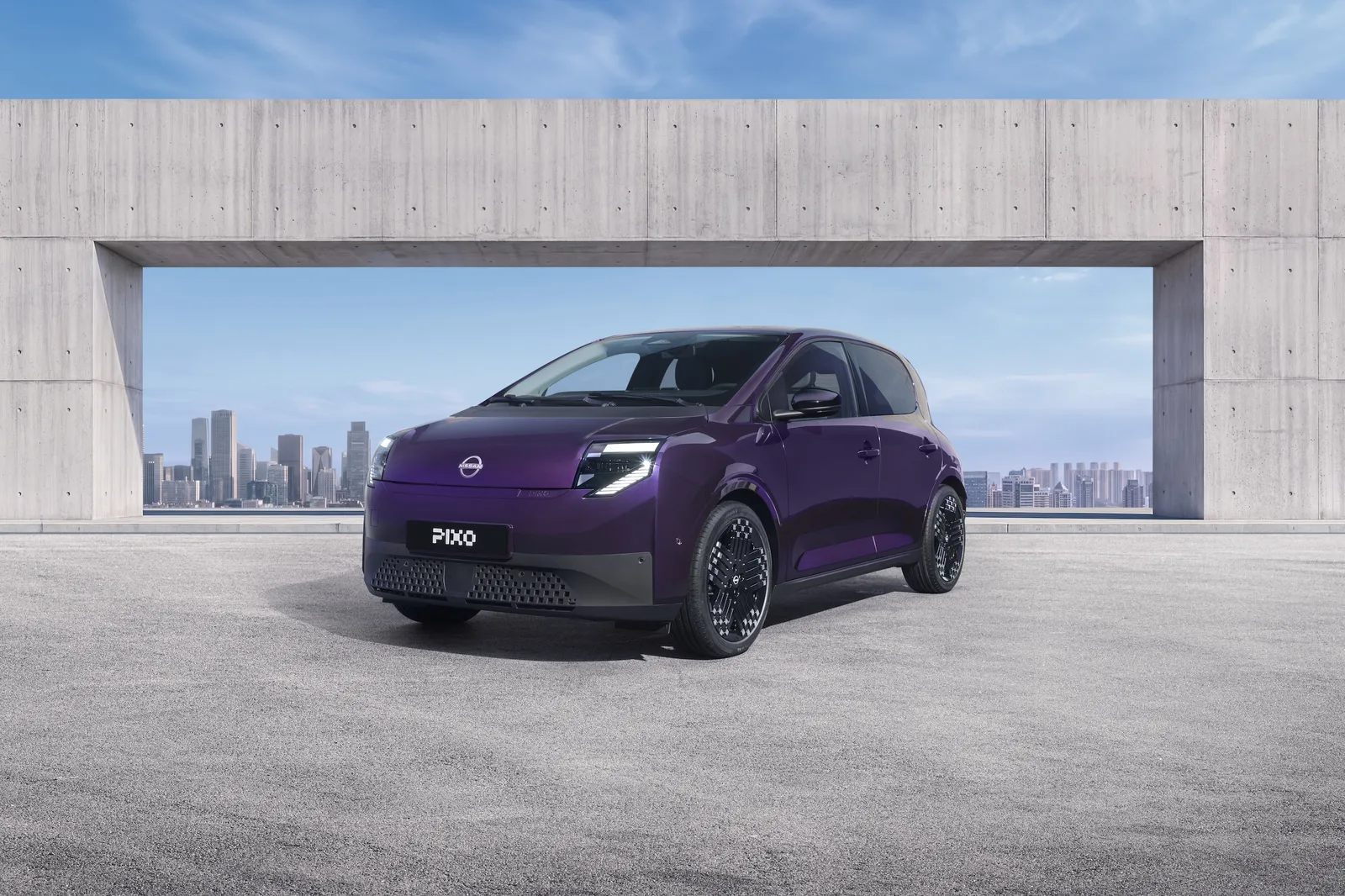
Nissan has just thrown its hat into the rapidly-growing electric city car ring with its funky new Pixo.
GE
George East
23 September 2026 · 5 min read
Following an absence of 12 years, Nissan has announced that the Pixo will make a return in early 2027 as an EV model based on the new, all-electric Renault Twingo.
Measuring just shy of 3.8 metres, the A-segment Pixo EV will not only compete with the Twingo in the fast-growing electric city car space, other rivals will include the Honda Super-N, its Romanian sibling, the Dacia Spring, plus the forthcoming Volkswagen ID Up! and the returning Citroen 2CV.
Sitting beneath the Renault 5-based Micra in Nissan’s EV hierarchy, the Japanese firm hasn’t yet announced pricing for the Pixo. However, it is expected to be priced from around £18,000 to £20,000. Given that Nissan builds the Pixo alongside the Twingo at Renault’s Revoz factory in Novo Mesto, Slovenia, it also expected to qualify for the £1,500 Electric Car Grant (ECG).
New Nissan Pixo design
The electric Nissan Pixo’s relation to the Twingo is immediately evident, given both cars share the same doors, windows, and rear quarter panels to keep costs down.
Yet that’s where the visual similarities end. The new Pixo gets pixel-inspired front LED headlights incorporated into the front end, while a sharper bumper paired with a flatter, more defined bonnet gives the Japanese car an almost Kei-car appearance.
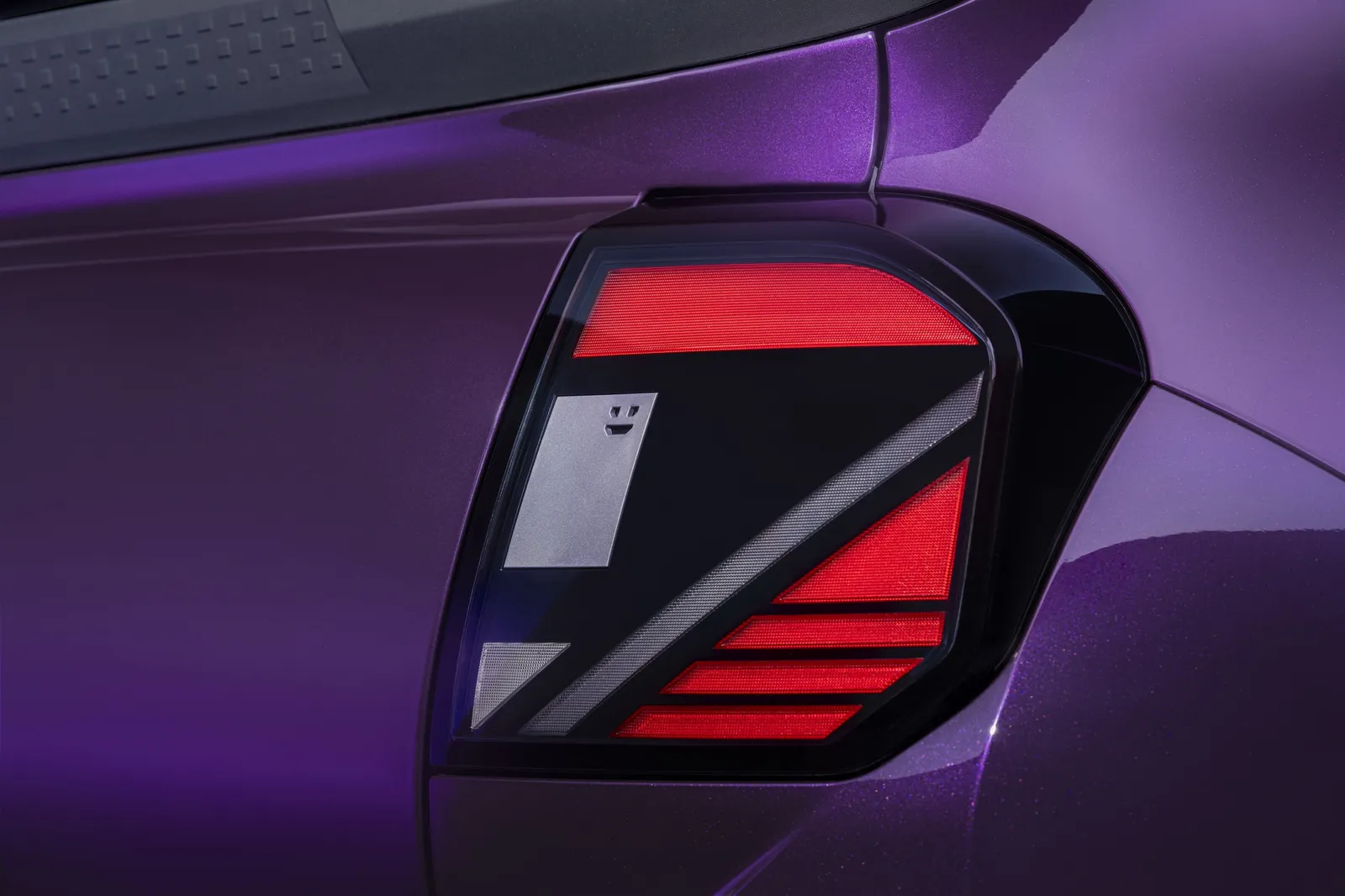
Around the back, the Pixo gets a rear bumper and new rear lights, yet the Twingo’s ‘TV box’ rear window surround remains. Like its big brother, the all-electric Leaf, this component features a Japanese ‘Ni-San’ ‘Easter Egg’ etched into the plastic, along with several other hidden surprises around the car.
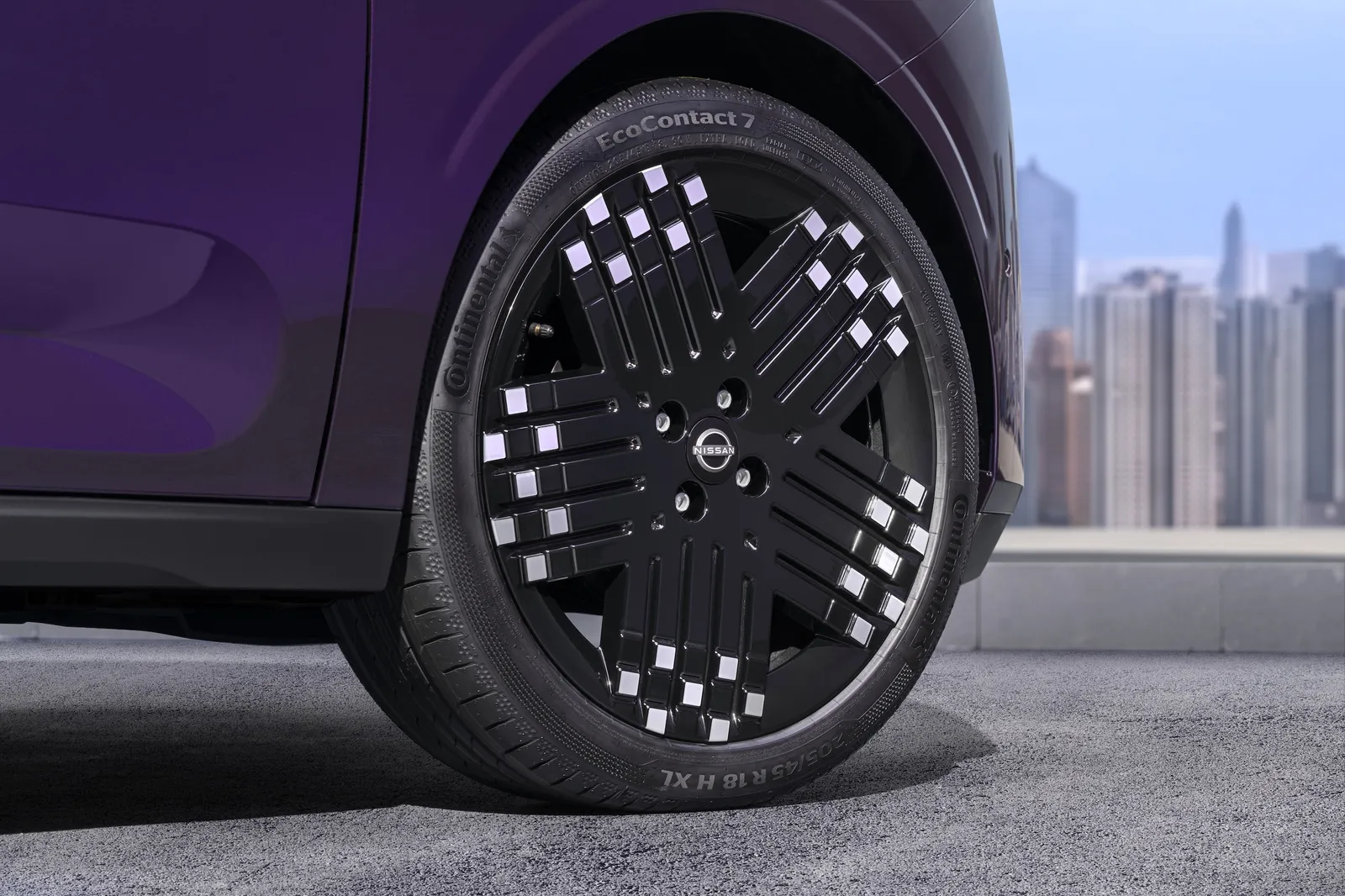
In addition to the front and rear lights, the pixel theme carries over to the five-spoke wheels, which were fitted to the display car in the images issued by the Japanese manufacturer. Wheel sizes range from 16-inches to 18-inches, and the Pixo will be available in a variety of vibrant colours including purple and blue.
Nissan Pixo EV cabin, practicality, and tech
Once again, the electric Pixo shares its basic dashboard, three physical controls to adjust the cabin temperature temperature, and its steering wheel with the electric Twingo. Instead of the Nissan logo, ‘Pixo’ wording sits in the centre of the wheel.
Nissan has dropped the Twingo’s lozenge-form upper panel, in favour for something more wedgy in-keeping with the car’s pixel theme. In general, the dashboard appears to be mounted higher than in its French sibling.
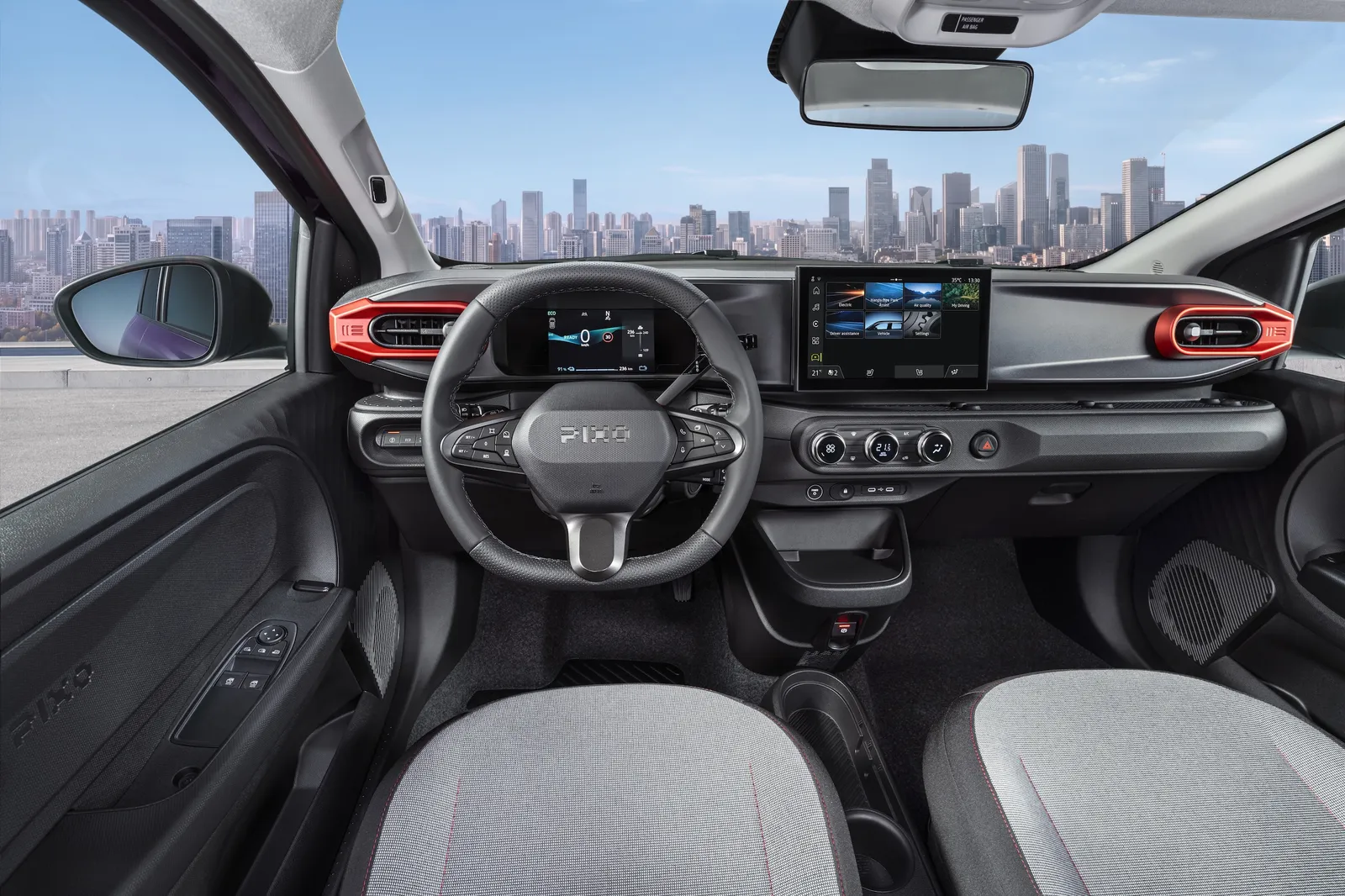
The new Pixo’s cabin packs 11 litres worth of storage space, including a small central shelf for a mobile phone, a dual-space cupholder between the two front seats, and a Hyundai Inster-esque lip running across the middle of the dashboard.
Nissan has yet to announce colour schemes for the interior, but it has quoted 356 litres of boot capacity with the rear seats in place, or 1,221 litres with them folded. The latter is partially due to an under-floor storage section for charging cables. While the Nissan Pixo inherits its sliding second row of seats from the Twingo to free-up rear leg room and/or boot space, it doesn’t benefit from the Dacia’s Spring’s clever split floor.
Like the Leaf and the Micra, the Pixo runs on Google built-in for its navigation system, and is the first Nissan to run on Google’s Gemini AI assistant. A 10-inch infotainment screen is positioned in the centre of the dashboard, while a seven-inch display sits behind the steering wheel. The latter’s settings can be adjusted by the wheel’s physical switchgear.
Range, battery, and tech
The Nissan Pixo is designed to be a city car, suggesting big journeys will be somewhat of a big ask. Nonetheless, the smallest Nissan EV yet comes with a front-mounted electric motor with 80bhp and 129 lb-ft of torque. This results in a 0-62mph time of 12.1 seconds.
Paired with the Twingo’s 27.5kWh battery, the Pixo is good for 161 miles on a single charge, which is more than enough for day-to-day driving given the average Brit drives between 10 and 20 miles each day.
The biggest difference between the Pixo and the Twingo is that the former charges at 50kW instead of 80kW, translating into a 10%-80% charging time of around 28 minutes. In addition to 11kW AC charging, Nissan offers the Pixo with some ‘big car tech’ options including bi-directional Vehicle-to-Load (V2L) charging and cabin pre-conditioning via the Nissan app.
Adaptive cruise control, land departure warning, hands-free parking and one-pedal driving are also standard safety equipment, while a tight 9.9-metre turning circle looks to take any additional stress out of inner-city driving.