
The new A110 is meant to show how sporty an electric Alpine can be
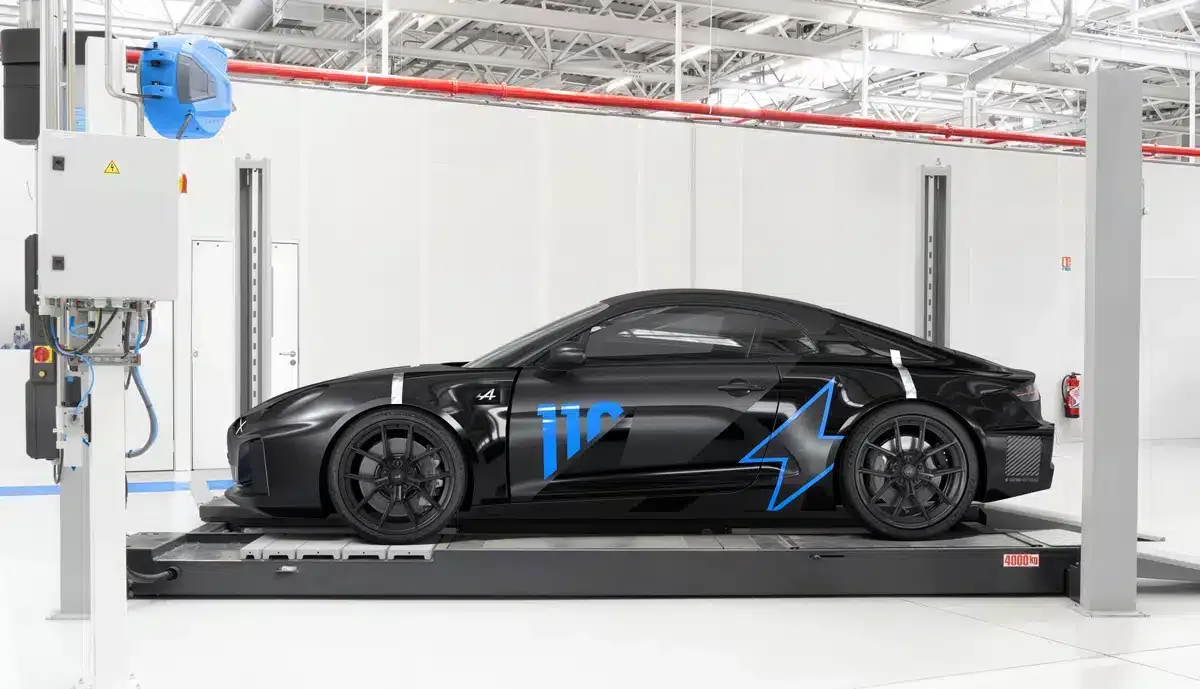
Image: Alpine
Alpine CEO Philippe Krief plans to refocus the Renault subsidiary on sporting agility, viewing the new all-electric A110 as a key step in this direction. The A110 Future prototype shown this year (featured in the article) is designed to be very low, agile, and fast, while maintaining consistent performance, Krief said in an interview with Edison. To achieve this, Alpine is developing a two-part battery, an 800-volt system, cell-to-pack technology, and specialized cells with high energy density.
Torque vectoring features a closed control loop with continuous feedback, designed to regulate vehicle behavior based on speed, lateral acceleration, and steering angle. The A110 remains rear-wheel driven, while the Alpine Performance Platform allows for all-wheel drive, which is available in other models.
Krief states that the standard version weighs around 1500 kilograms, with further reductions planned in subsequent developments. The battery is expected to be approximately 80 kWh, enabling a range of around 500 kilometers. Meanwhile, energy requirements have been designed so that the car can deliver full performance for 20 minutes. According to the Alpine CEO, the new electric-generation model will drive very well — “even better than the car we have today.”
The Alpine CEO cites design, agility, and consistently available performance as key features of the A110. Market launch is scheduled for late next year, with Krief prioritizing quality over timing: “We only have one try. And we need to get it right.” The architecture could also accommodate a combustion engine, though this is not planned at present. To do so, the rear crash structures would simply need to be shifted by about 20 millimeters in total.
95 percent of the components in the new A110 are set to be new, with Krief highlighting the biggest visual change inside the cabin. The Alpine design will be refined while retaining its distinctive features. The cockpit will be completely redesigned. For the Nordschleife, Alpine aims for a time under seven minutes with standard tuning, without an aerodynamics package or racing tires, and each production car is supposed to be able to achieve this time over three laps according to Krief’s vision.
The model planning has been changed from the 2023 announcement: By 2030, the new generation of A110 is planned as an electric car, followed by a convertible and then a 2+2 seater, all on the same platform and electric. A larger SUV was originally associated with entering the U.S. market but was put on hold after political changes in that country. Alpine intends to focus first on the A110 and gradually establish the brand in Europe, Asia, and eventually North America. A larger vehicle will be reconsidered later. The electric city car A290 and the battery-powered crossover A390 have already been introduced.
Regarding production volumes, Krief Alpine is “closer to Ferrari than to Porsche.” Ferrari produces between 13,000 and 15,000 cars per year, while Porsche produces around 300,000. Alpine produced roughly 10,000 vehicles last year and expects slightly over 18,000 in 2026. Krief also emphasizes that the closeness to Ferrari relates only to volume, not price or positioning, as Alpine still lacks the necessary brand strength in these areas.
Also interesting
About the author
Thomas Langenbucher is an expert in electromobility with experience in the automotive and financial industries. Since 2011, he has been covering electric vehicles, sustainable technologies, and mobility solutions for ecomento.de. Learn more.
Reader interactions