
Neptune Energy advances Altmark lithium project
Neptune Energy is preparing to start lithium production in Germany's Altmark region in 2030. In the second pilot phase, the Hanover-based company and Fraunhofer IEG are now testing different adsorbent materials for future industrial-scale lithium extraction.
After evaluating various direct lithium extraction (DLE) technologies, Neptune Energy is now working with the Fraunhofer Institute for Energy Infrastructures and Geothermal Systems IEG to refine a suitable adsorption process. The ALE (Altmark Lithium Extraction) project aims to extract lithium precursors from deep thermal water in Germany’s Altmark region.
With the project, Neptune Energy aims to support the domestic supply of critical raw materials. The company plans to gradually start commercial lithium production from 2030 and reach up to 25,000 tonnes of lithium carbonate equivalent (LCE) per year during the 2030s. According to Neptune Energy, that would provide enough lithium for the batteries of around 500,000 electric vehicles annually.
Northern Saxony-Anhalt hosts one of the world’s largest lithium resources associated with a specific project, with proven resources of 43 million tonnes of lithium carbonate equivalent. The lithium is dissolved in thermal water at depths of 3,000 to 4,000 metres and contained in the rock’s fine pore spaces. Neptune Energy plans to bring the thermal water to the surface through wells and extract the lithium using DLE technology.
“During Pilot Phase I last year, we investigated various DLE technologies available worldwide to assess their suitability for the conditions in the Altmark region. Following tests using ion-exchange and adsorption processes, adsorption technology proved to be the most promising for the conditions in the Altmark region. We now intend to further develop this process in collaboration with Fraunhofer IEG,” explained Joachim Sluet, Midstream Manager and head of pilot projects at Neptune Energy.
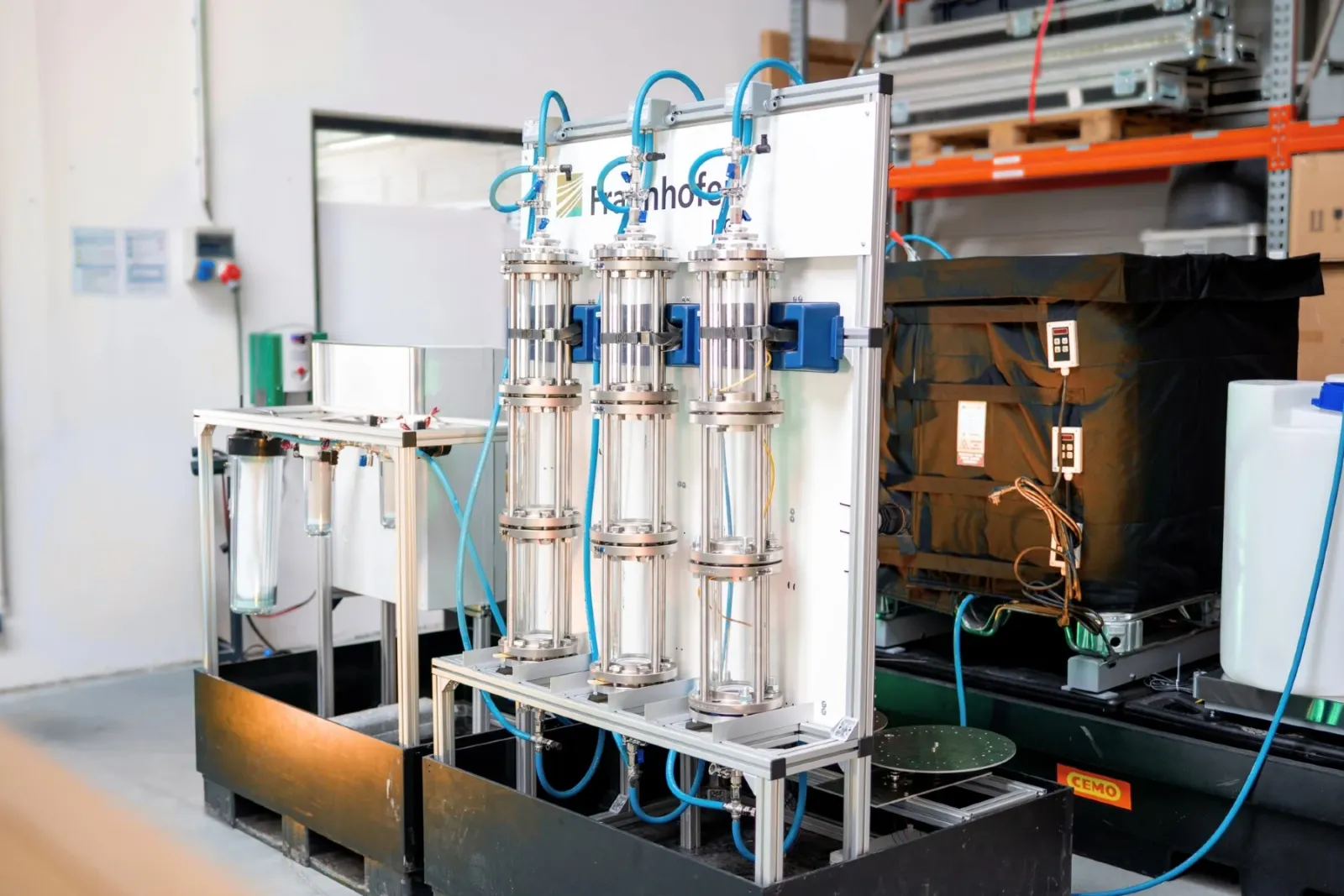
In the second pilot phase, Neptune Energy and Fraunhofer IEG will test and evaluate different adsorbent materials over the coming months using a DLE pilot plant developed by the institute. The adsorbents selectively bind lithium ions from the thermal water. The lithium is then separated from the material again, resulting in a highly concentrated lithium chloride solution.
“This can be processed in further steps to produce battery-grade lithium carbonate or lithium hydroxide monohydrate – the raw material for the European battery and electric mobility industry,” the project initiators state.
For the first test phase, Neptune Energy selected Evonik Catalysts to supply the adsorbent material, which the company says showed high performance and stability in preliminary tests. Evonik is also supporting the pilot programme with on-site process and application expertise.
The pilot plant can process up to 1,000 litres of thermal water per day and extracts the lithium in an oxygen-free environment. It operates three adsorbent columns simultaneously, allowing the adsorption and desorption of lithium ions to take place almost simultaneously, according to the project team.
“The DLE pilot plant developed in collaboration with Fraunhofer IEG is providing us with important insights into selecting the optimal adsorbent material for the brine from the Altmark region. This brings us another step closer to industrial-scale lithium production from the Altmark region,” added Dr Axel Wenke, Director of New Energy & Business Development.
Neptune Energy’s core business is oil and gas production, but the company has been expanding into other areas, including domestic lithium production. According to Neptune Energy, its operations and those of its predecessor companies span more than 135 years. One of those companies, Erdöl Erdgas Gommern, began producing natural gas in the Altmark region in 1969 and was later acquired by Neptune Energy.