
German scientists report progress with silicon batteries. They have exceeded a thousand cycles.
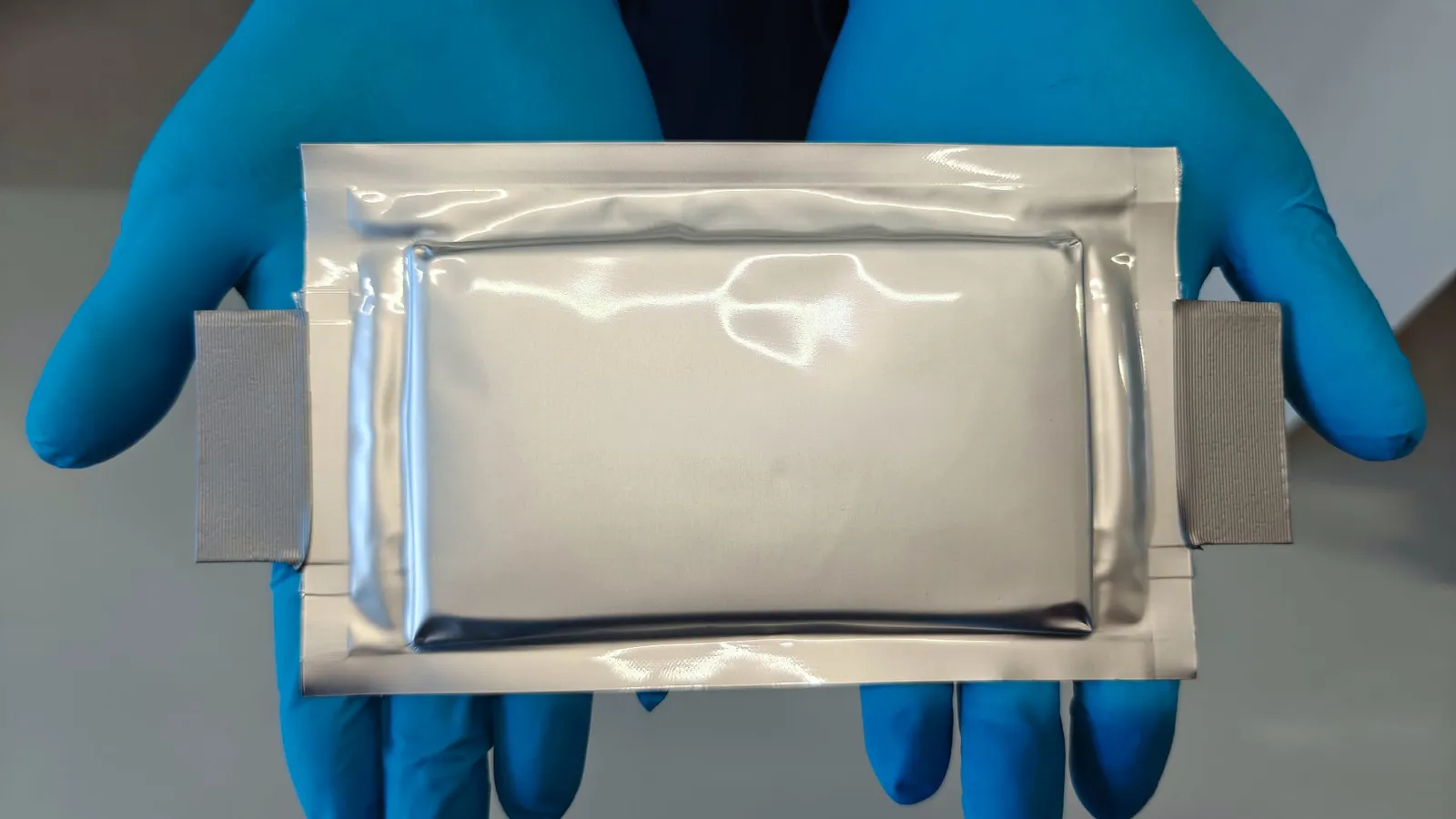
Silicon promises more energy for batteries, but durability is a concern. German scientists have now tested cells that survived over a thousand full cycles.
Silicon passes durability test
Researchers from Germany’s Fraunhofer ISE tested lithium-ion cells with silicon-rich anodes. After more than 1,000 full cycles, they retained over 83% of their original capacity during a check measurement. This result comes from the StrOboBatt project.
Durability is one of the main obstacles to wider use of anodes with high silicon content. The institute considers overcoming a thousand cycles while maintaining at least 80% capacity to be an important performance goal that the development of these cells aims to achieve.
The tested cells have a capacity of 25 Ah, forty layers, and a soft pouch-type casing. They were produced on a semi-automatic line at the institute’s research center. These are therefore multi-layer cells in an industrially used format, not just the material itself.
The energy density has room to grow
The research cell achieved an energy density of 280 Wh/kg. In the industrially optimized version, scientists expect around 330 Wh/kg. The second figure is currently an estimate of the design’s potential, not a measured result from this test.
The anode combines silicon, carbon, and graphite. The silicon-carbon composite makes up 51% of its active material, which is not the same as 51% pure silicon. On the other side of the cell, there is a high-nickel NMC cathode.
A higher energy density can help store more energy at the same mass of cells. In electric vehicles, this could contribute to a longer driving range. However, the specific benefits also depend on the design of the entire battery, its cooling system, and weight.
Pressure plays an important role
An external mechanical pressure was an important part of the test. At a value of 1,000 kPa, or approximately 10 bars, the cells exceeded the specified lifespan limit. At a lower pressure of 300 kPa, or 3 bars, the usable capacity declined much more rapidly.
Pressure helps maintain contact between the electrode materials and prevents them from separating from the substrate. Therefore, for future applications, only the chemical composition will not be decisive. The mechanical design and securing of the cells also play a significant role.
Scientists have also observed an increasing gap between the capacity under slow controlled discharge and operation at 1C. Therefore, the 83% retention rate alone does not fully reflect performance under higher loads. The results are promising, but the institute does not specify a timeline for commercial deployment.
Sources:
original text / Mobilizujeme.cz
Fraunhofer ISE
Don’t miss
They installed a gasoline engine in Tesla. Now companies in the Obrist group are going bankrupt
Alza reduced the price of a great car accessory. It costs only 92 CZK, and Czechs are praising it
It has solar panels on the wheels. The new electric bike promises a range of up to 225 kilometers