
Nearly 12,000 Californians switch to EVs thanks to MyFirstEV rebate
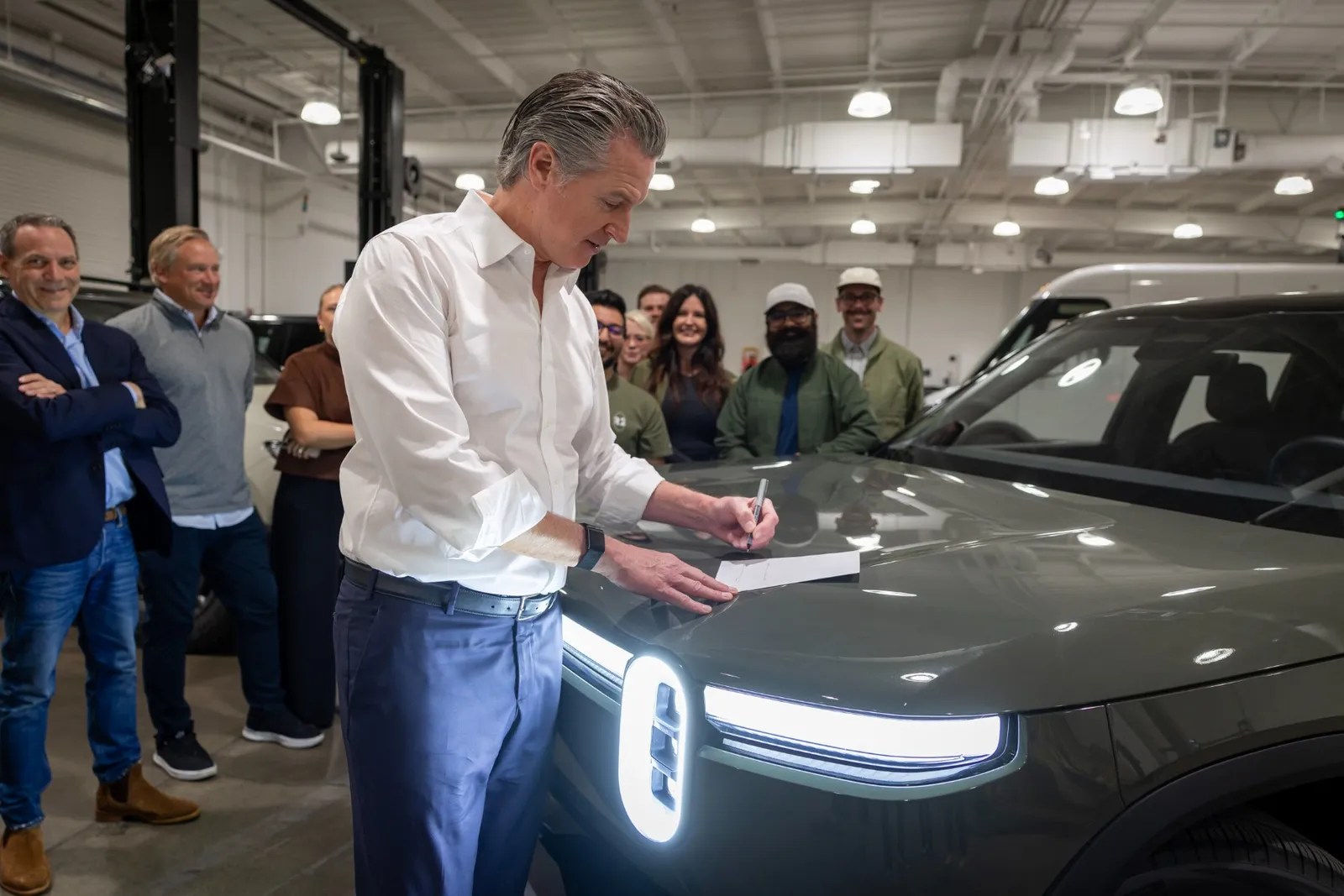
Gavin Newsom, the Governor of California, has revealed that nearly 12,000 people have purchased their first zero-emission vehicle using the state's MyFirstEV scheme. Launched in August, the scheme provides an 'instant' rebate of $3,500 for eligible new vehicles or $1,750 for used ones, with the discount applied at the point of sale.
Image: California State Government
The programme is open to California residents buying or leasing their first ‘zero-emission vehicle’, including both BEVs and hybrids. New vehicles must have a recommended retail price of no more than $50,000, while used vehicles must cost no more than $25,000 and be sold through a manufacturer’s pre-owned vehicle programme.
So far, the State of California has committed $135.5 million to MyFirstEV, with participating automakers matching the funding dollar for dollar. Participating manufacturers include Ford, GM, Honda, Hyundai, Kia, Lucid, Nissan, Rivian, Subaru, Tesla, Toyota and Volvo. The combined $271 million is intended to make EVs more accessible without requiring buyers to apply for reimbursement post-purchase.
In a statement, Newsom said: “Twelve thousand Californians bought their first electric car and said goodbye to the gas pump. That’s nearly twelve thousand drivers who no longer pay the price of Donald Trump’s reckless Iran war every time they fill up. This is what affordability and economic security look like: money back in families’ pockets, good-paying jobs here at home, and an America that’s done letting foreign wars and unstable global oil markets set the price of getting to work. California is just getting started.”
Governor Newsom’s announcement comes just as it was revealed that zero-emission vehicles accounted for 19.1 per cent of all new car sales in the state during Q3 of 2026. The state has said residents have purchased almost 2.8 million ‘ZEVs’ to date.
As electrive reported in August, MyFirstEV was introduced after the US federal government ended consumer tax credits for zero emission vehicle purchases. This was against the backdrop of California expanding the electricity infrastructure underpinning its transition to electric mobility. At the time, battery storage capacity had reached 21,112 MW, up from less than 700 MW in 2019. Around 18,000 MW of that was grid-scale storage, with another roughly 3,000 MW installed at homes, schools, farms and businesses.