
National Highways trials Hyundai IONIQ 9 electric patrol SUVs
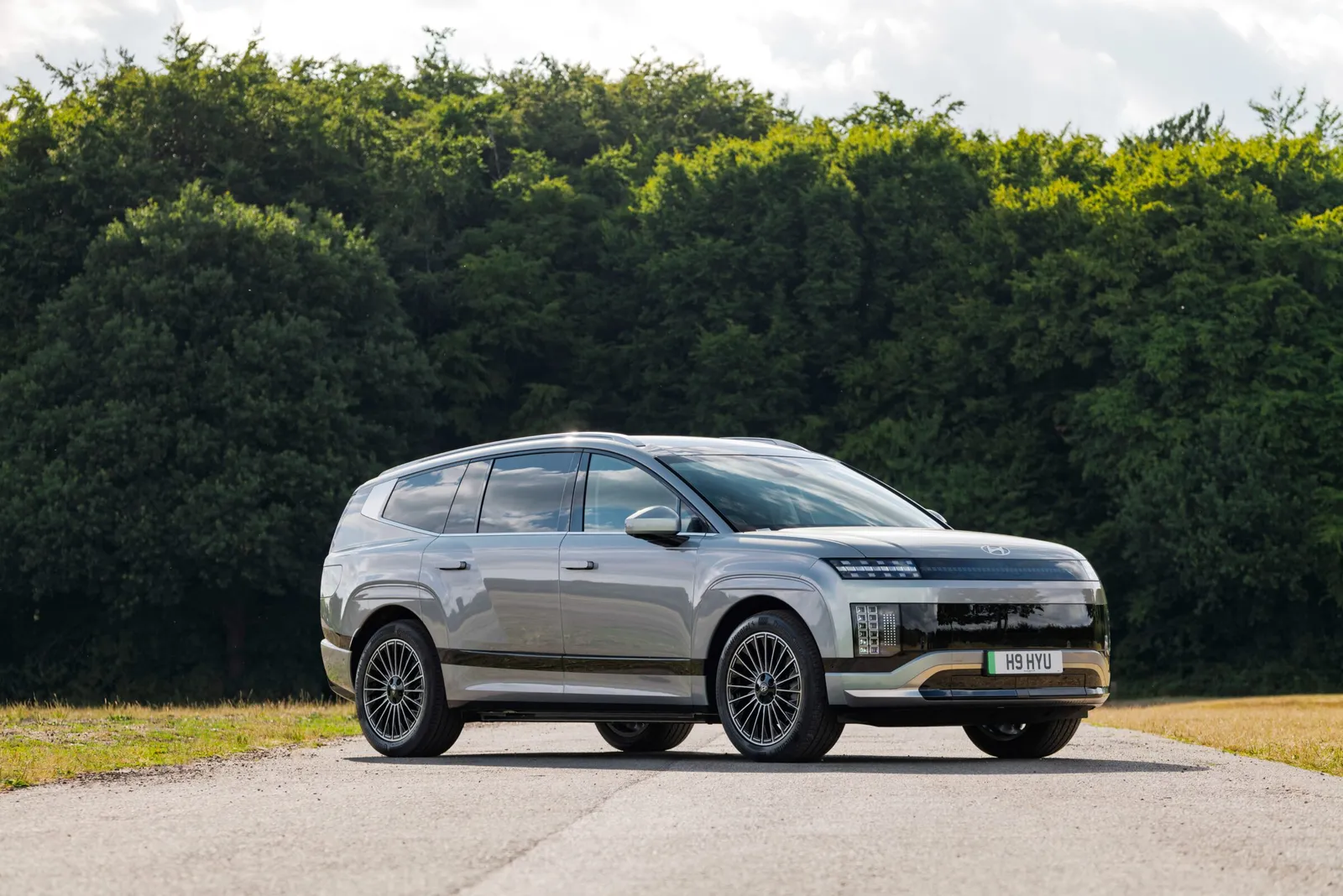
National Highways has taken delivery of four Hyundai IONIQ 9 electric SUVs for a trial as Traffic Officer vehicles on England’s motorways and major A-roads, with further purchases under consideration before the end of 2026.
The seven-seat models have been converted for frontline duties, carrying emergency warning equipment, communications systems and incident messaging boards. The trial will assess whether the large battery-electric Hyundai can meet operational demands, including the time needed for charging and the practicalities of carrying specialist equipment.
Any additional orders will depend on the results. Hyundai’s announcement on 21 September did not specify how long the assessment will run, where the four vehicles will be based or how many more National Highways might buy.
For EV fleet operators, the work should provide a useful test of a large electric SUV outside conventional company-car use. The vehicles will be assessed while supporting road users and responding to incidents, with their suitability judged in the converted specification required by Traffic Officers.
Hyundai quotes a 110.3kWh battery and a WLTP range of up to 385 miles for the IONIQ 9. That range is a figure for the production model, rather than a published result from the equipped National Highways vehicles. The real-world range delivered will be crucial when considering how much driving a patrol vehicle can complete between charges. Specialist equipment adds to what the vehicle must carry, while the demands of its working day differ from the standardised test used to produce a showroom range figure. Establishing its performance in service is part of the purpose of the trial.
Ashley Andrew, President of Hyundai & Genesis UK, said: “This trial demonstrates IONIQ 9’s capability in demanding real-world roles, combining zero-emission performance, practicality and rapid charging to support National Highways’ vital work.”
The deployment produces no tailpipe emissions from driving. National Highways will also assess equipment integration and charging performance, alongside the broader question of whether the vehicles are suitable for Traffic Officer duties. Hyundai has not released findings from that assessment.
Richell Vehicle Conversions, known as RVC, prepared all four SUVs. Each carries National Highways livery and high-visibility markings, with emergency lighting and the on-board equipment needed for incident response. The work extends beyond fitting decals and a roof lightbar, with a separate electrical system for the warning equipment and a bespoke arrangement for carrying kit.
The specification gives National Highways a vehicle equipped for the trial from delivery, allowing the assessment to cover the conversion alongside the underlying electric SUV. A dedicated 240Ah lithium auxiliary battery powers the emergency warning suite. It is electrically separate from the vehicle’s own battery, giving the conversion a distinct power supply for this equipment. The announcement does not detail how the auxiliary battery is recharged or how long it can support the warning systems between charges.
The warning installation includes a lightbar and a 100W bullhorn, together with amber and red LEDs. Further lights are fitted to the wing mirrors, rear screen and tailgate, giving the converted SUV warning equipment at several points around its body.
A flip-up Standby Traffic Commander matrix board provides incident messaging. This is supported by a bespoke load-carrying system engineered by RVC to house the radio, Inseego telematics and CCTV equipment. The conversion therefore brings together the visible roadside warning hardware and the communications equipment carried inside.
Hyundai has not supplied a payload figure for the completed vehicles or stated how much their specialist equipment weighs. Those details would be needed to establish the remaining carrying capacity of the converted SUVs, rather than relying solely on the space available in the standard passenger model. In its regular configuration, the IONIQ 9 offers up to 908 litres of load space with the third row folded. That provides a starting point for accommodating Traffic Officer equipment, although Hyundai has not published a separate luggage-volume measurement after RVC’s installation.
The model’s seven-seat designation describes the underlying passenger vehicle. The announcement does not specify the seating arrangement used during patrol duties or say whether all seven positions remain available with the operational equipment aboard. For this application, the layout and accessibility of the fitted equipment will be more relevant than the family-car seating headline.
Charging is another part of the assessment. The IONIQ 9 uses Hyundai’s Electric-Global Modular Platform, or E-GMP, and has an 800V electrical architecture supporting ultra-rapid charging. Hyundai presents this as a means of limiting the time vehicles spend off duty while replenishing their batteries.
However, the announcement gives no charging-time measurement for the trial vehicles and does not identify the charging facilities National Highways will use. There is also no published account of how charging will fit around shifts or incident-response requirements. The operational assessment should help establish how the vehicle’s charging capability translates into availability for duty.
For a fleet making purchasing decisions, that relationship is as relevant as the maximum distance available from a full battery. A vehicle needs sufficient charge when it is required, and its charging arrangements must fit the work assigned to it. The trial will assess charging performance in the context of National Highways’ operations.
No purchase price or conversion cost has been disclosed for the four SUVs. Hyundai has also provided no comparison of their running costs with those of the vehicles already used by National Highways. The announcement consequently offers no basis for calculating a financial saving from a larger order.
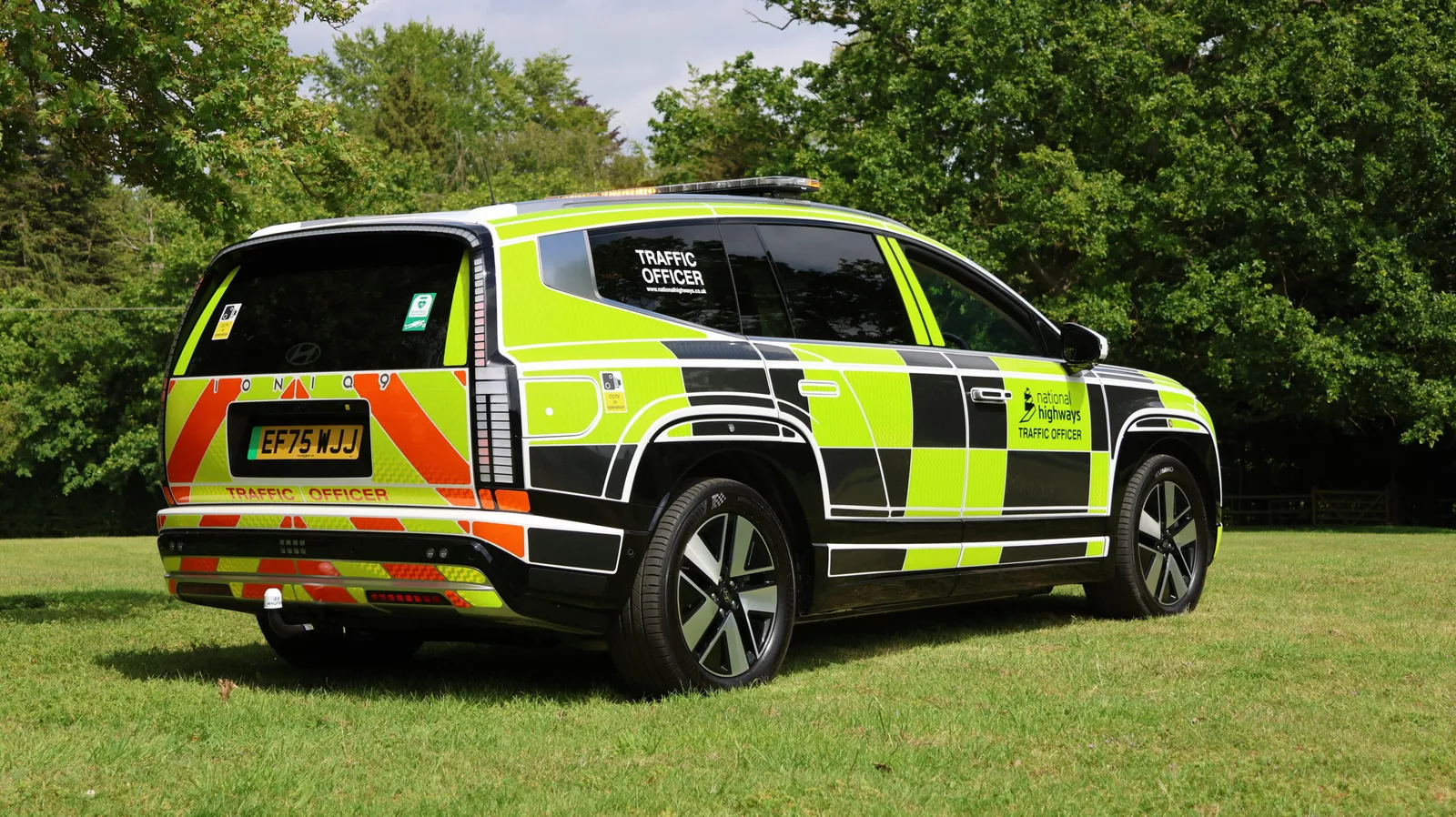
The immediate commitment remains four vehicles. Further purchases are being considered during 2026, subject to the outcome of the trial, rather than confirmed as part of a wider replacement programme. No procurement timetable beyond that has been announced.
The IONIQ 9 joined Hyundai’s UK range in 2025, adding a full-size electric SUV to a line-up that includes the smaller IONIQ 5 and KONA Electric. Its combination of a large battery and substantial interior space has now secured it an opportunity in a specialist fleet role.
Hyundai says the converted vehicles carry the full complement of equipment required for frontline duties. National Highways’ assessment will determine whether the finished package is suitable for further purchases, including how effectively its equipment installation and charging performance support the work. For now, the four SUVs give Traffic Officers a chance to put those claims to the test on England’s road network.