
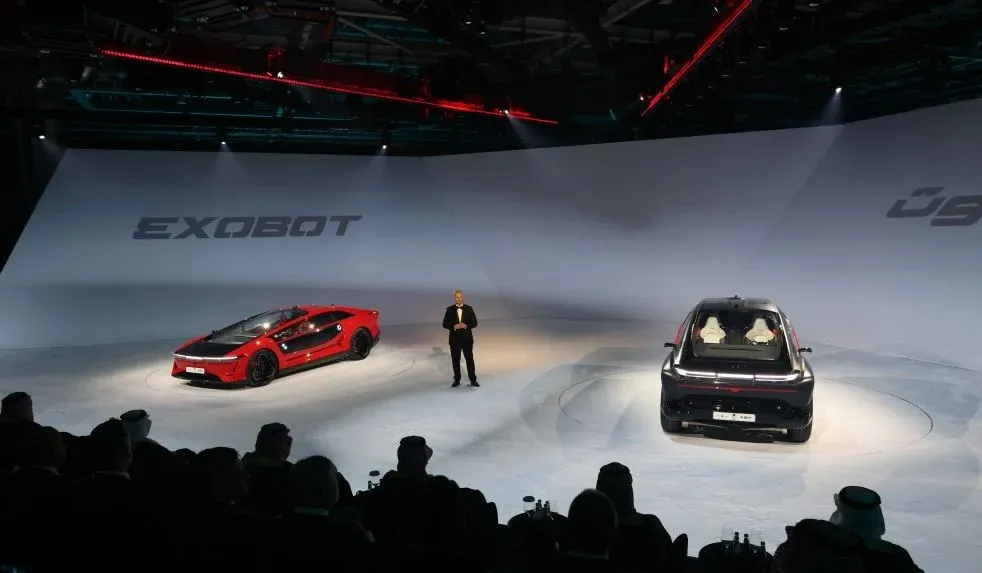
The brand’s birth in the desert. CEER showcased the EXOBOTs
In short:
Saudi Arabia is taking another step toward making its economy independent of oil
The first Saudi car manufacturer, CEER, unveiled two new electric models named EXOBOT
The futuristic sedan and SUV are set to go on sale in 2027
The brand is part of a broader plan to create a regional automotive industry hub
CEER is a joint venture between a Saudi sovereign wealth fund and Foxconn – the same company that wants to invest in Poland to build an electric car factory
CEER and the first EXOBOT models
For decades, and still to this day, Saudi Arabia has been primarily associated with oil exports. However, Riyadh is now investing increasingly in industries of the future, with automotive being one of the pillars of this future. A symbolic moment in this transformation was the world premiere of the first CEER vehicles in King Abdullah Economic City.
Two fully electric models were unveiled at the event, namely a sedan and an SUV. Interestingly, both vehicles share the name EXOBOT and are part of a planned lineup of seven models set to hit the market by the end of the decade, according to China’s Xinhua news agency.
According to Reuters, sales of both models in Saudi Arabia are set to begin early next year. The manufacturer is also announcing further launches, including not only battery-powered vehicles but also plug-in hybrid models and internal combustion engine cars. This reflects changing market expectations and a more cautious approach to the pace of electrification.
"We wanted to ensure the world sees what Saudi Arabia is capable of," said CEER President Jim DeLuca, as quoted by Reuters.
Futuristic design inspired by Saudi culture
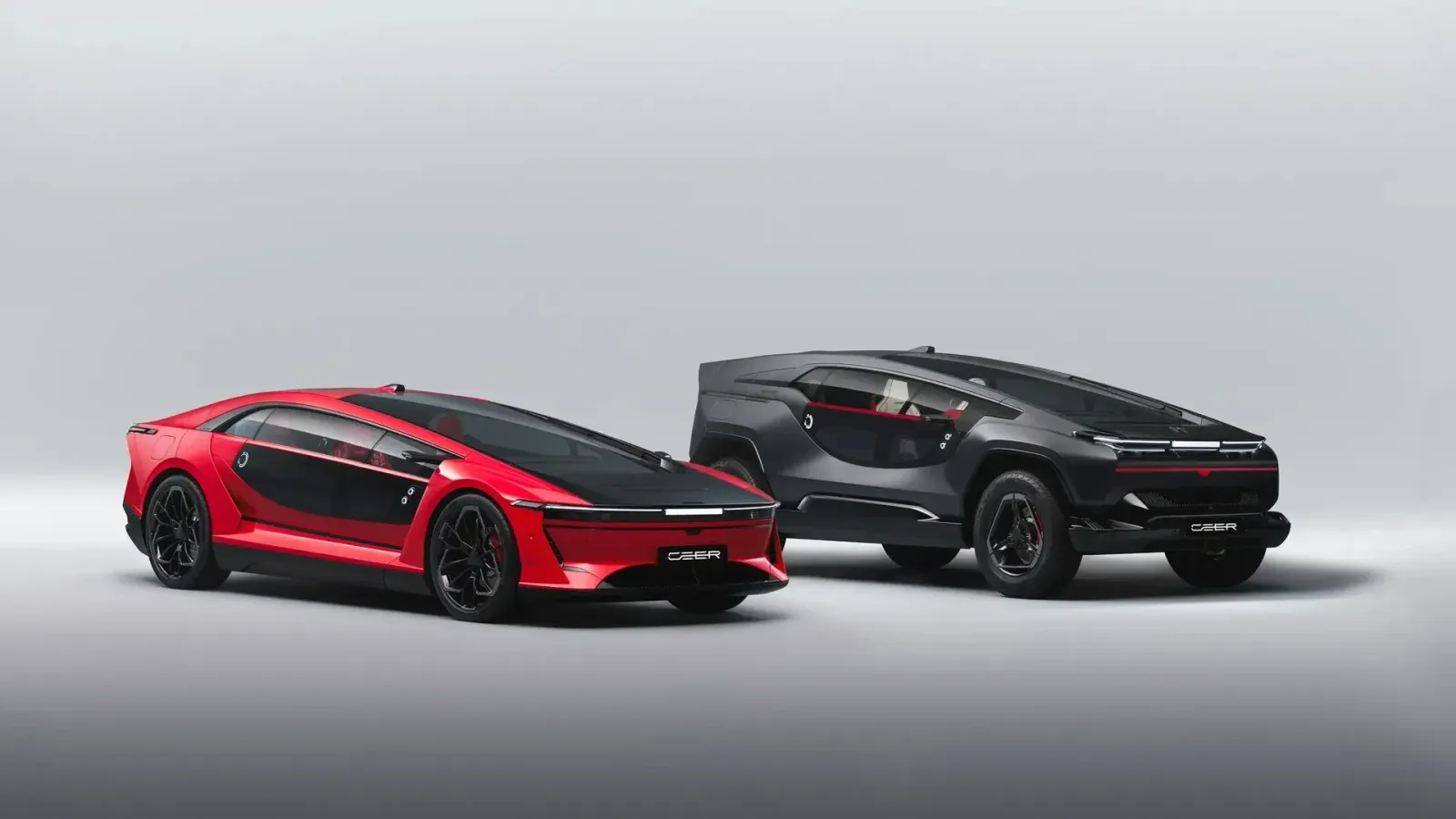
The first photos of EXOBOT show that CEER does not intend to compete solely on price. Reuters highlights its style reminiscent of the movie “Tron,” with distinctive doors that open upward. The manufacturer calls them “Shahin Wing Doors,” drawing inspiration from the flight of the shahin falcon, one of the region’s symbols.
According to information released by CEER, designers were inspired by the landscape of Saudi Arabia, local culture, and the ancient architecture of Hegra. An interesting detail is also the 32 light segments located at the front and rear of the vehicle. This references the year 1932, when the modern Kingdom of Saudi Arabia was established.
The sedan measures 5.26 meters in length, while the SUV is 5.02 meters long. Both models are therefore considered large premium vehicles in terms of size. The manufacturer also highlights the use of a huge 2.4-meter front windshield tilted at 15 degrees, which is intended to improve aerodynamics and reduce interior heating.
Up to 1111 HP and supercar performance
Although CEER did not initially reveal the full technical specifications at the launch, the details appeared... on the manufacturer’s website. In its top EXOBOT configuration, it features a triple-engine powertrain with all-wheel drive. The maximum power is said to reach 1111 HP, with a torque of 1500 Nm. According to the manufacturer, the sedan accelerates from 0 to 100 km/h in 2.1 seconds, while the SUV takes 2.4 seconds.
The limited First Edition version will be available for sale first. In this case, both models feature 850 horsepower and a 112 kWh battery. The manufacturer claims a range of up to 670 km for the sedan and 560 km for the SUV according to the NEDC cycle. Thanks to the 800 V architecture, charging from 10% to 80% should take less than 30 minutes.
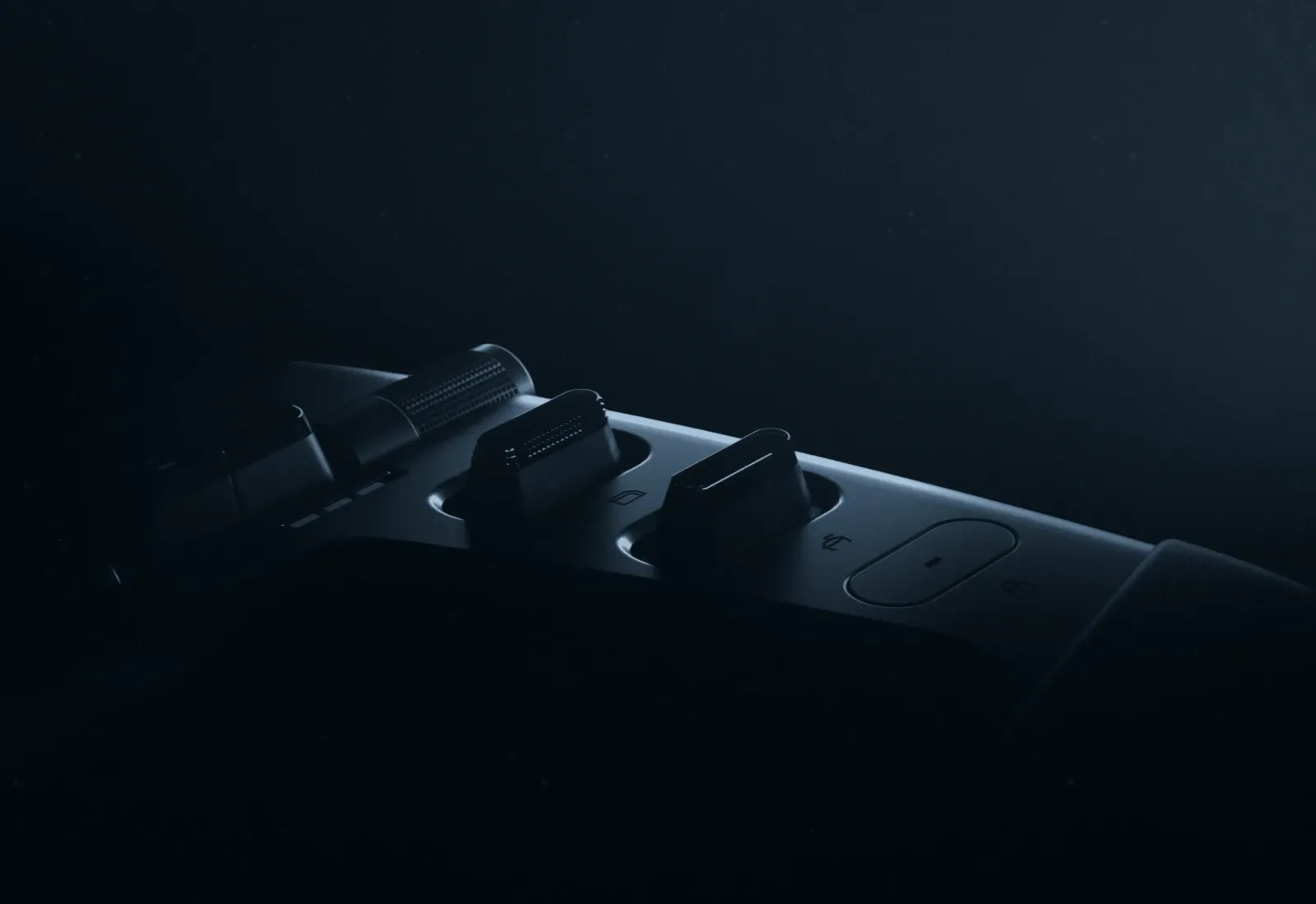
What’s inside? Among other things, there’s a steer-by-wire system without any mechanical connection between the steering wheel and wheels, a flexible rear axle, as well as a curved 48-inch Digital Horizon display with an 8K resolution that spans the entire width of the cockpit.
A design bigger than the brand itself
It should be noted here that the debut of EXOBOT is more than just a launch of new cars, as CEER is a joint venture between Saudi Arabia’s sovereign wealth fund, Public Investment Fund (PIF), and Taiwan’s tech giant Foxconn, known for producing consumer electronics. The same company that plans to invest in Poland to build an electric vehicle factory.
Reuters recalls that Foxconn is responsible for the electrical architecture of the cars, while BMW provides engineering support. Global component suppliers such as Lear, Benteler, Shin Young, and China’s Fangxin are also involved in the project’s development, having set up production facilities in Saudi Arabia — according to BMW Blog.
This is where the significant difference lies compared to previous attempts to establish a local automotive industry. Recall that over a decade ago, the plan to build a Jaguar Land Rover factory failed, and Toyota abandoned its investment in 2019 due to high labor costs and a lack of local suppliers (editor’s note).
But today the situation looks different. According to data cited by Electric-Vehicles.com, CEER already employs around 2,300 people and is pursuing a strategy to raise the local component ratio to 45% by 2034. The company has also signed multi-billion-dollar contracts with local suppliers, and its facility in King Abdullah Economic City is set to become the largest automotive manufacturing site in the Middle East, notes agbi.com.
A component of Saudi Arabia’s economic transformation
The prime minister’s appointment was given special significance by Saudi Arabia’s crown prince and prime minister, Mohammed bin Salman, who also heads the PIF fund.
"Introducing the first CEER vehicles to the market is another step in building a sustainable and prosperous industrial ecosystem in Saudi Arabia," he said in a statement cited by Xinhua. He added that the project aims to "strengthen the automotive sector as one of the drivers of economic growth by attracting investments, developing local talent, and expanding the role of the private sector, which will help position Saudi Arabia as a leading regional and global hub for this industry."
Riyadh’s ambitions are very large. The Ministry of Investment targets producing 500,000 electric vehicles per year by 2030. CEER is one of three automotive projects supported by PIF, along with the Lucid factory and a joint Hyundai plant.
Conclusion?
Will Saudi Arabia truly become a new player on the global automotive stage? That will only be clear in a few years. Nevertheless, EXOBOT is living proof that the kingdom no longer wants to be merely an exporter of energy resources. It also aims to export its own cars. This could be one of the most interesting automotive stories of the next decade.
Oskar Włostowski